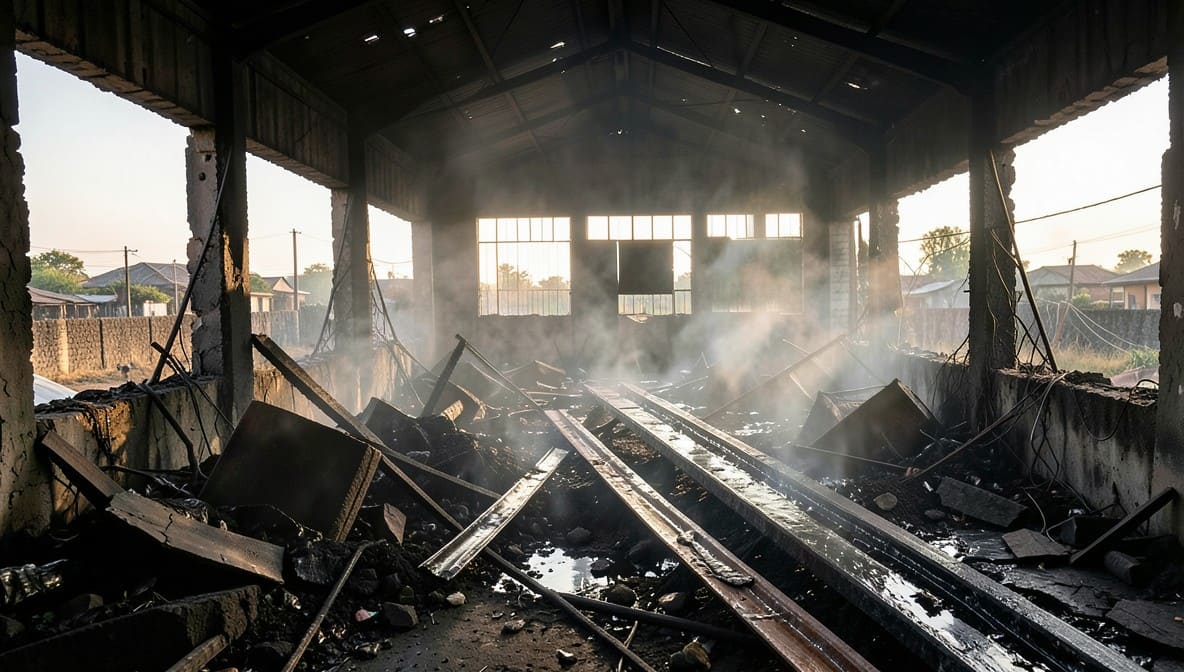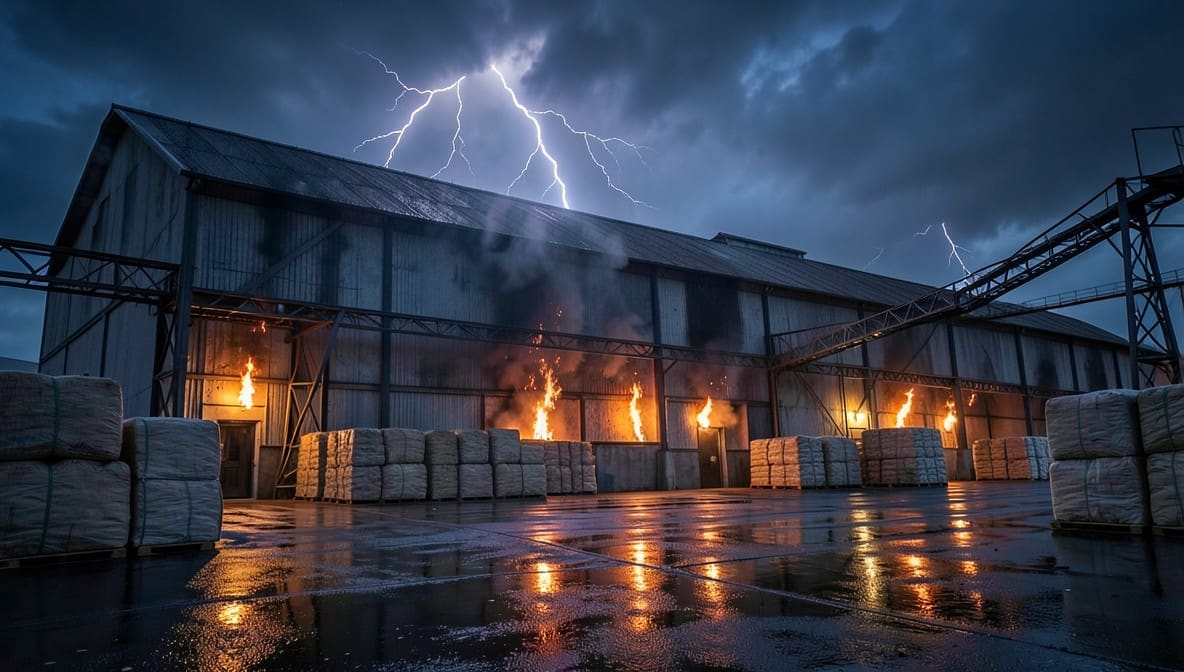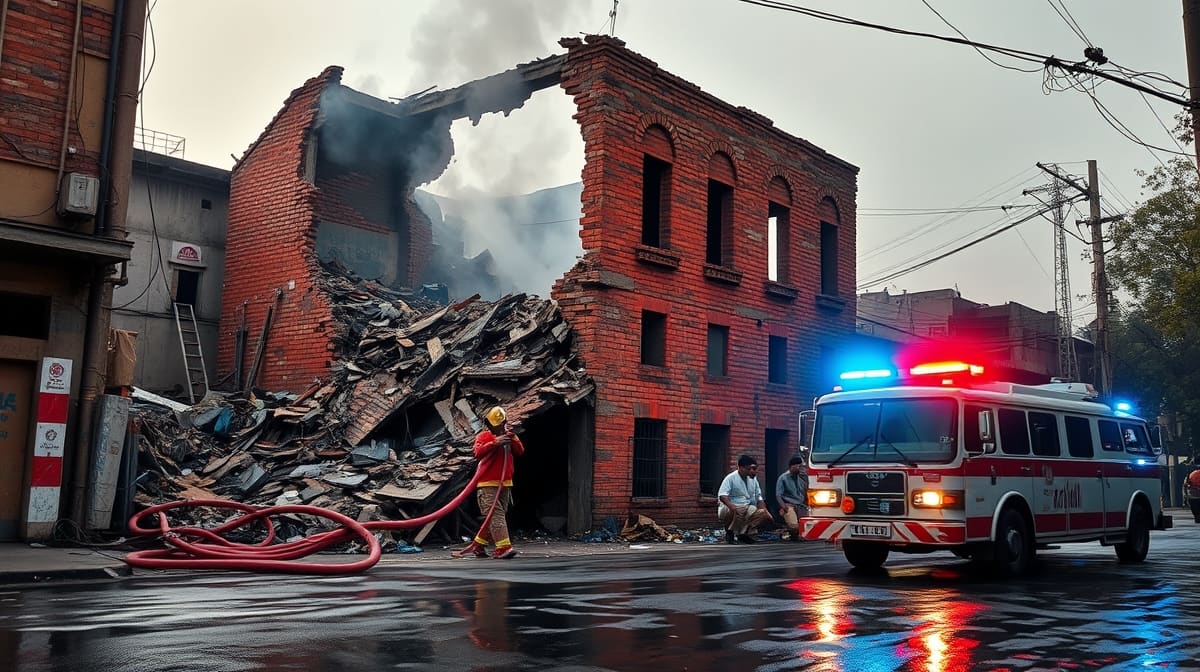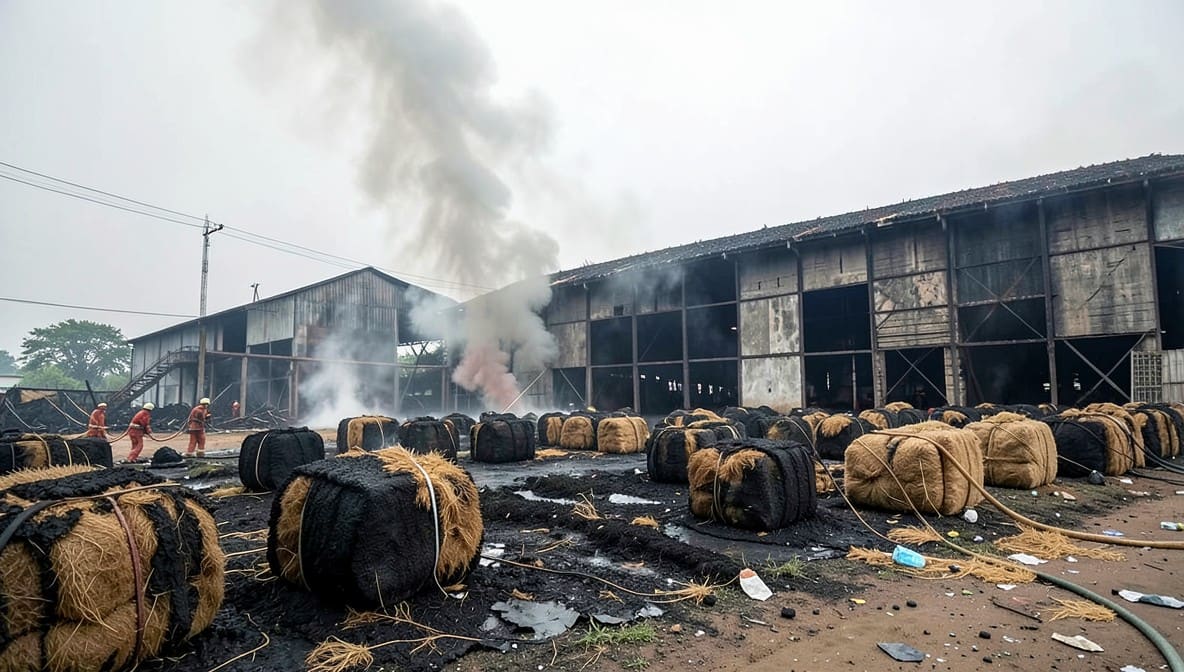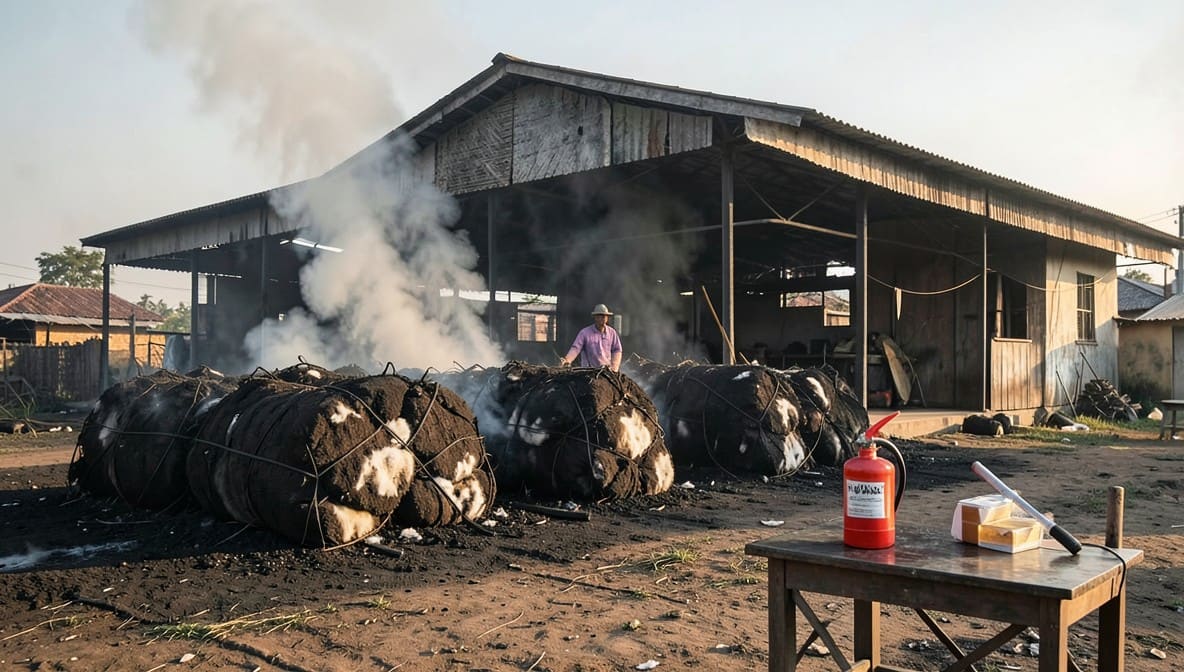
The Maharashtra State Consumer Disputes Redressal Commission has held that an insurer cannot repudiate a fire insurance claim on hyper-technical grounds such as unauthorized construction or absence of fire-fighting equipment without establishing a direct causal connection between the alleged breach and the cause of loss. The Commission awarded the claim amount of Rs. 87,33,324 with 9% interest from the date of repudiation, plus compensation and costs.
Background & Facts
The Dispute
The complainant, M/s Mateshri Textiles, a proprietary concern run by Mr. Abhishek Mahendrakumar Dhanresha, operates a textile manufacturing unit producing towels and napkins in the MIDC Area, Akkalkot Road, Solapur. To safeguard business assets against unforeseen perils, the complainant obtained three fire insurance policies from United India General Insurance Co. Ltd. covering the factory building, plant and machinery, stock of finished and semi-finished goods, and raw materials. The total sum insured across the three policies amounted to Rs. 91,50,000. The policies were issued after a thorough inspection and photographic documentation of the factory premises by the insurer's agents.
Key Facts
- 21/07/2017: An accidental fire broke out in the factory premises at approximately 2:45 p.m. due to an electrical short circuit.
- The complainant immediately intimated the Police, Fire Department, Electrical Inspector, and the opponent insurance company.
- The opponent appointed a surveyor who inspected the site.
- The complainant submitted a comprehensive claim assessing the total loss at Rs. 87,33,324, backed by primary records, police panchnama, fire brigade reports, and surveyor intimation.
- 16/07/2018: After a prolonged delay of approximately one year, the opponent repudiated the claim vide letter dated 16.07.2018.
- Grounds of repudiation: (a) unauthorized construction on the ground and second floors where the fire occurred; (b) unauthorized electricity connection on the second floor; (c) absence of fire extinguishing appliances, allegedly constituting negligence and breach of general condition clause 3 of the policy.
- The opponent relied heavily on the Fire Brigade's Survey Certificate dated 29.08.2017, which noted the absence of fire safety measures.
- The opponent further contended that the complainant failed to produce authentic documentary evidence from an accounting expert to substantiate the exact quantum of stock lost.
Procedural History
- Consumer Complaint No. SC/27/CC/18/1064 filed under Section 12 of the Consumer Protection Act, 1986, alleging deficiency in service and unfair trade practice.
- Notice issued to the opponent; written statement filed admitting policy issuance but justifying repudiation.
- Hearings conducted; pleadings, affidavits, and documentary evidence perused.
- 21/10/2026: Final order pronounced by the Commission.
Relief Sought
The complainant prayed for allowance of the complaint, payment of the claim amount of Rs. 87,33,324 with interest, compensation for mental agony and harassment, and litigation costs.
The Legal Issue
The central question was whether the repudiation of a fire insurance claim on grounds of unauthorized construction, unauthorized electricity connection, and absence of fire-fighting equipment - without establishing a causal nexus between these alleged breaches and the electrical short circuit that caused the fire - constitutes deficiency in service and unfair trade practice under the Consumer Protection Act, 1986.
Arguments Presented
For the Complainant
The complainant argued that the insurance policies were issued after due inspection of the premises, and the insurer cannot subsequently rely on pre-existing structural deviations to repudiate a legitimate claim. The fire was caused by an accidental electrical short circuit, an extraneous peril covered under standard fire policies. The complainant relied on Bajaj Allianz General Insurance Co. Ltd. vs. Bhupender Gahlawat (First Appeal No. 70 of 2014), where the National Commission held that repudiation on hyper-technical grounds without establishing direct causal connection constitutes deficiency in service. The complainant submitted detailed claim documents, police panchnama, fire brigade reports, and surveyor intimation, which sufficiently demonstrated substantial loss.
For the Opponent
The opponent contended that the complainant suppressed material facts regarding unauthorized and additional construction on the second floor where the fire allegedly originated. It relied on the Fire Brigade's Survey Certificate dated 29.08.2017 noting absence of fire safety measures. The opponent asserted that the complainant failed to produce authentic expert accounting evidence regarding the stock lost, and that any breach of policy terms absolved the insurer of liability.
The Court's Analysis
The Commission examined the established principle that an insurance policy is issued only after due inspection of the premises by the insurer's agents or surveyors. Having accepted the premium and issued the policies with open eyes, the opponent cannot subsequently take refuge under pre-existing or alleged structural deviations to repudiate a legitimate claim, unless it is proven that such deviations fundamentally altered the risk parameters and were fraudulently concealed with a nexus to the peril insured.
"In commercial and industrial establishments, minor regulatory or safety compliance shortcomings - unless expressly warranted as a condition precedent to the contract's attachment in unequivocal terms - cannot form the sole basis to reject a claim arising from an accidental fire caused by an electrical short circuit. Insurance contracts are meant to indemnify losses against accidental hazards; they cannot be interpreted hyper-technically to defeat the very purpose of insurance cover."
The Commission found the ground of absence of fire-fighting equipment untenable. The fire broke out due to an accidental electrical short circuit, which is an extraneous peril covered under standard fire policies. The opponent failed to establish any deliberate fraud or active concealment that caused the fire. The reliance on Bajaj Allianz General Insurance Co. Ltd. vs. Bhupender Gahlawat was apt: repudiation on hyper-technical grounds without establishing a direct causal connection between the alleged breach and the cause of loss constitutes deficiency in service.
Regarding the quantum objection, the Commission noted that the complainant had submitted a detailed claim assessing the loss at Rs. 87,33,324 backed by primary records, police panchnama, fire brigade reports, and surveyor intimation. The surveyor appointed by the opponent visited the site immediately after the incident. The wholesale repudiation on liability grounds rendered the assessment of quantum secondary, but the material on record sufficiently demonstrated substantial loss suffered by the complainant.
The Verdict
The Commission partly allowed the consumer complaint. It directed the opponent insurance company to pay the claim amount of Rs. 87,33,324 along with interest at 9% per annum from the date of repudiation (16.07.2018) until the date of actual realization. Additionally, the opponent was directed to pay Rs. 1,00,000 as compensation for mental agony and harassment, and Rs. 50,000 towards litigation costs. Copies of the order were to be provided to both parties free of cost.
What This Means For Similar Cases
Causal Nexus Is Non-Negotiable For Repudiation
Insurers cannot rely on technical breaches of policy conditions - such as unauthorized construction or missing fire-safety equipment - to deny claims unless they prove a direct causal link between the breach and the insured peril. An electrical short circuit causing fire is an independent accidental event; the absence of fire extinguishers or unauthorized floors does not cause a short circuit. Practitioners must demand that insurers demonstrate causa causans, not merely condicio sine qua non.
Pre-Issuance Inspection Binds The Insurer
Where the insurer has conducted a thorough inspection and photographic documentation before issuing the policy, it is estopped from later alleging that visible structural features (additional floors, electricity connections) constitute concealment or misrepresentation. The burden shifts to the insurer to prove fraudulent concealment that altered the risk profile. Counsel should obtain and preserve the pre-issuance survey report and photographs as evidence.
Hyper-Technical Repudiation Attracts Costs And Compensation
The Commission's award of Rs. 1,00,000 for mental agony and Rs. 50,000 litigation costs, over and above the claim amount with 9% interest from the repudiation date, signals that unjustified claim denial carries financial consequences. Practitioners should specifically plead and quantify mental agony and litigation expenses in the complaint, not merely seek the claim amount.
- Always obtain and retain the insurer's pre-policy inspection report and photographs.
- In claim repudiation cases, frame the issue as: "Does the alleged breach have a causal nexus with the peril insured?"
- Cite Bajaj Allianz v. Bhupender Gahlawat for the proposition that hyper-technical repudiation without causal nexus is deficiency in service.
- Claim interest from the date of repudiation, not from the date of loss or filing of complaint.
- Plead specific compensation for mental agony and harassment with supporting particulars.