The Allahabad High Court has reaffirmed that land recorded as a pond (Pokhari) in revenue records cannot be lawfully privatized, even by long-term possession or claims under the U.P. Zamindari Abolition and Land Reforms Act, 1950. This judgment provides critical clarity on the inviolability of public water bodies in rural revenue records and mandates immediate remedial action by revenue authorities.
Background & Facts
The Dispute
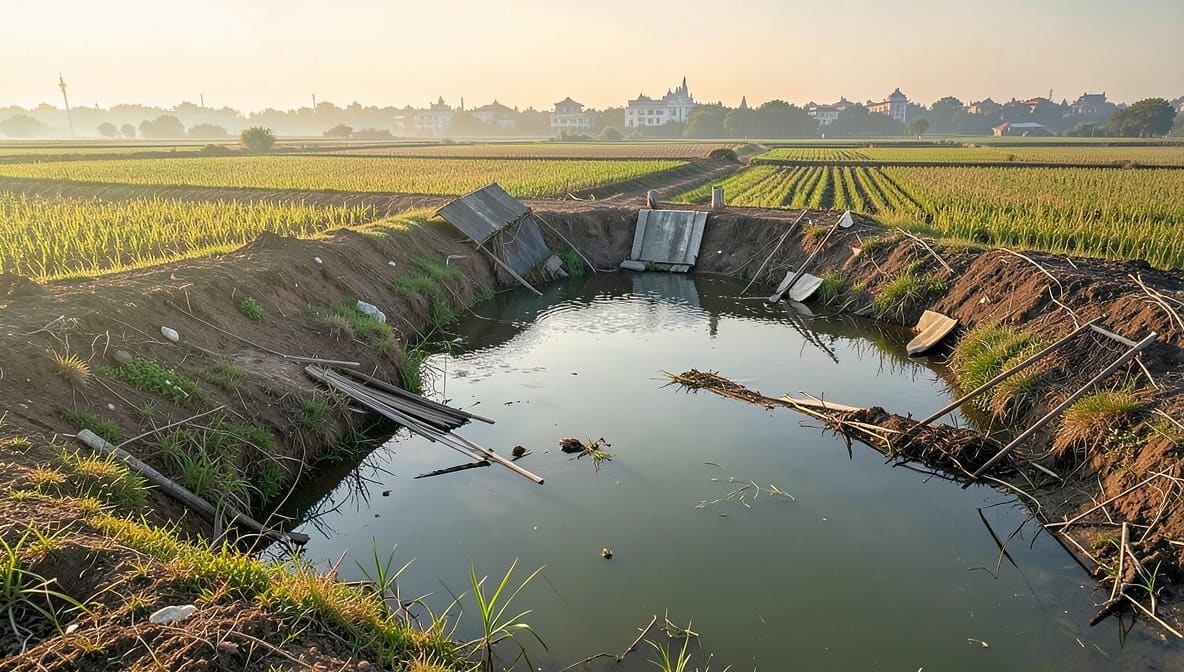
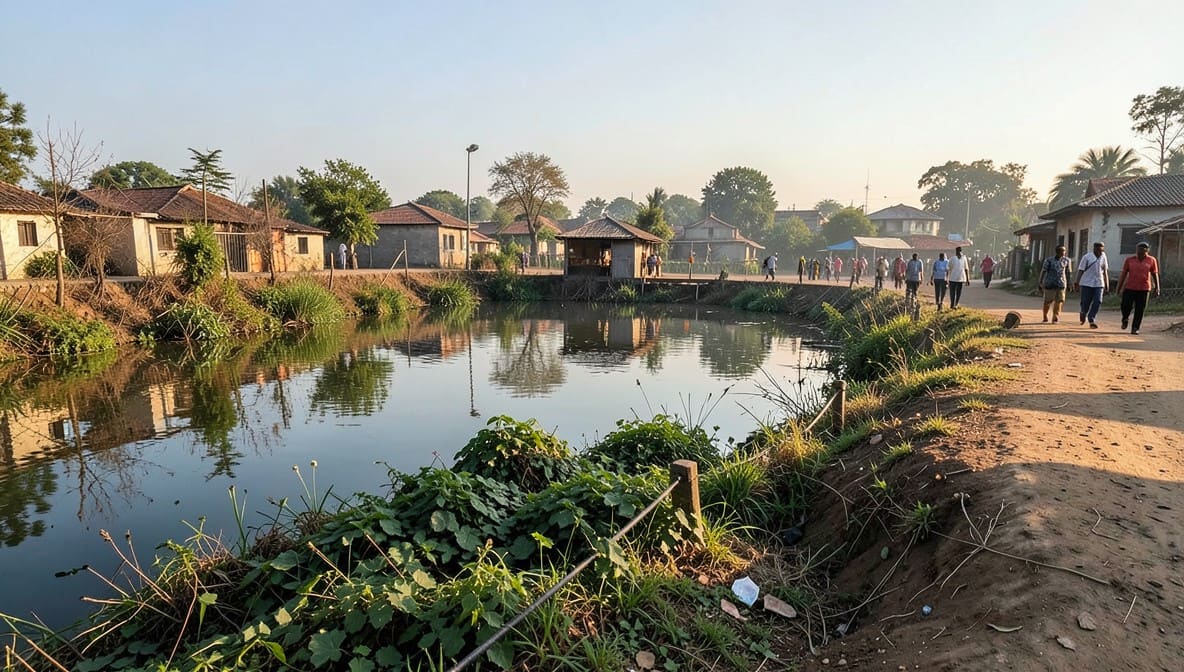
The petitioner, Narayan Tripathi, filed a Public Interest Litigation seeking removal of illegal encroachments on Plot No. 933, measuring 0.053 hectare, recorded in the revenue records of Village Jogiya, Ghughli Buzurg, Tehsil Sadar, District Maharajganj as a pond (Pokhari). The encroachment is allegedly carried out by Respondent No. 5, a private individual, who has constructed structures and used the land as appurtenant to his house. A portion of the plot also serves as a pathway used by villagers, with no construction over it.
Key Facts
- Plot No. 933 is officially recorded in the revenue records as a pond (Pokhari)
- The plot measures 0.053 hectare and is adjacent to Village Abadi
- Respondent No. 5 has been using a portion of the plot as land appurtenant to his house
- An interlocking pathway exists from Plot No. 933 to Plot No. 993 (recorded as Chak Marg), used by villagers
- Respondent No. 5 filed Civil Suit No. 8 of 2004 against the Gaon Sabha, claiming rights over 0.05 acre of Plot No. 933
- The plaint in Civil Suit No. 8 of 2004 does not contain any specific relief or averment relating to Plot No. 933
- The Deputy District Magistrate, Sadar, Maharajganj, issued an instruction dated 11.02.2026 acknowledging the encroachment but without specifying any remedial action
Procedural History
- 180 of 2026: Public Interest Litigation filed before the Allahabad High Court
- 11.02.2026: Instruction issued by Deputy District Magistrate, Sadar, Maharajganj, acknowledging encroachment but not initiating restoration
- 14.05.2026: Judgment delivered by Hon’ble Justice Arun Kumar
The Parties' Positions
Petitioner: Argued that the pond is a public resource recorded in revenue records and cannot be lawfully appropriated by any individual, regardless of possession or pending civil litigation. Emphasized that the suit filed by Respondent No. 5 does not substantiate any legal claim over the pond.
Respondent No. 5 (Private Encroacher): Relied on the pendency of Civil Suit No. 8 of 2004 to assert a claim of right over the land, invoking Section 9 of the U.P. Zamindari Abolition and Land Reforms Act, 1950.
State and Gaon Sabha: Did not dispute the encroachment but failed to demonstrate any action taken to restore the pond despite the acknowledgment by the Deputy District Magistrate.
Relief Sought
The petitioner sought a direction to the State and revenue authorities to remove the encroachment on Plot No. 933, restore the pond to its original condition, and initiate proceedings under the U.P. Revenue Code, 2006 against the encroacher.
The Legal Issue
Can a private individual claim ownership or possessory rights over land officially recorded as a pond (Pokhari) in revenue records by invoking Section 9 of the U.P. Zamindari Abolition and Land Reforms Act, 1950, and does the pendency of a civil suit bar revenue authorities from taking action for restoration?
Arguments Presented
For the Petitioner
The petitioner’s counsel argued that ponds recorded in revenue records are public assets under the control of the Gaon Sabha and cannot be alienated or privatized. He emphasized that Section 9 of the U.P. Zamindari Abolition Act, 1950, which confers rights on former tenants or intermediaries, does not extend to land classified as a pond. He further contended that the civil suit filed by Respondent No. 5 does not contain any specific claim over Plot No. 933 and cannot operate as a legal bar to revenue proceedings. He cited the principle that revenue records are prima facie evidence of title and that public water bodies are protected under the doctrine of public trust.
For the Respondent/State
The State and Respondent No. 5 argued that the pendency of Civil Suit No. 8 of 2004 creates a legitimate dispute over title, and therefore, the revenue authorities should refrain from taking action until the civil court decides. They contended that Respondent No. 5 has been in long-term possession and that the land has been used as appurtenant to his house for decades, thereby acquiring a prescriptive right. The State did not dispute the encroachment but claimed procedural delays in initiating action.
The Court's Analysis
The Court examined the nature of Plot No. 933 as recorded in the revenue records and held that its classification as a pond (Pokhari) is conclusive for the purposes of revenue law. The Court observed that the U.P. Zamindari Abolition and Land Reforms Act, 1950, was enacted to abolish intermediaries and vest land in the actual cultivators, but it does not extend to land classified as a pond, tank, or other public water body. The Court noted that Section 9 of the Act confers rights only on land that was previously held by zamindars or talukdars and does not cover land reserved for public use.
"Even if the respondent no.5 is claiming right under Section 9 of the U.P. Zamindari Abolition and Land Reforms Act, 1950 over the said land, no right shall accrue over any portion of the plot no.933 recorded as Pond."
The Court further held that the pendency of a civil suit does not prevent revenue authorities from initiating proceedings for removal of encroachment on public land. The civil suit, which lacks any specific claim over Plot No. 933, cannot be used as a shield to perpetuate illegal occupation. The Court emphasized that revenue records are the primary evidence of land classification and that the State has a duty to protect public resources.
The Court also noted the failure of the Deputy District Magistrate to take any concrete action despite acknowledging the encroachment. This inaction, the Court held, amounts to dereliction of statutory duty under the U.P. Revenue Code, 2006.
The Verdict
The petition was disposed of with directions. The District Magistrate, Maharajganj, is directed to initiate appropriate proceedings for the restoration of Plot No. 933 recorded as a pond and removal of encroachments. The petitioner is permitted to file an application under Section 67 of the U.P. Revenue Code, 2006 read with Rule 66 of the U.P. Revenue Code Rules, 2016 before the Tehsildar, Sadar, Maharajganj, within 15 days of this order. If filed, the Tehsildar shall register the case and decide it within three months, ensuring removal of the encroachment if no legal impediment exists.
What This Means For Similar Cases
Revenue Records Override Civil Claims
- Practitioners must argue that classification of land as a pond, tank, or nullah in revenue records takes precedence over private civil claims, even if possession is long-standing
- Civil suits claiming title over such land cannot be used to stall revenue enforcement actions
- The burden shifts to the encroacher to prove the land was never a public water body, not to the State to prove it was
State Has Non-Discretionary Duty to Protect Public Land
- Revenue authorities cannot delay action on encroachments citing pending litigation
- Failure to act despite acknowledgment of encroachment constitutes administrative negligence
- Petitioners may now invoke Section 67 of the U.P. Revenue Code, 2006 as an expedited remedy for removal of encroachments on public land
- This judgment empowers citizens to initiate proceedings directly before the Tehsildar without waiting for state action
Public Trust Doctrine Applies to Rural Water Bodies
- Ponds recorded in revenue records are held in public trust, even in non-urban areas
- Any privatization or conversion of such land is void ab initio
- This principle reinforces the legal status of all water bodies in revenue records, regardless of current use or neglect
- Legal aid organizations and environmental groups may now use this precedent to challenge encroachments on village ponds across Uttar Pradesh