The Supreme Court has definitively held that subordinate revenue officers lack statutory authority to reclassify land falling under Section 132 of the Uttar Pradesh Zamindari Abolition and Land Reforms Act, 1950. This judgment reinforces the inviolability of public utility land and invalidates any administrative attempt to circumvent statutory prohibitions on conferring bhumidhari rights.
Background & Facts
The Dispute
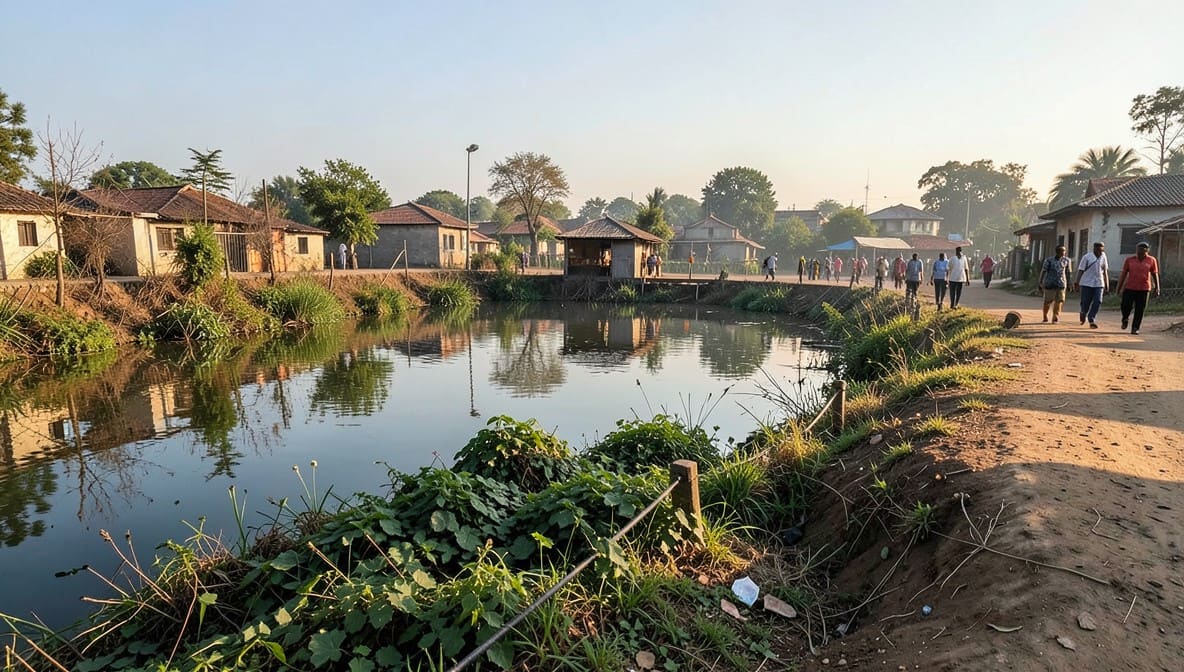
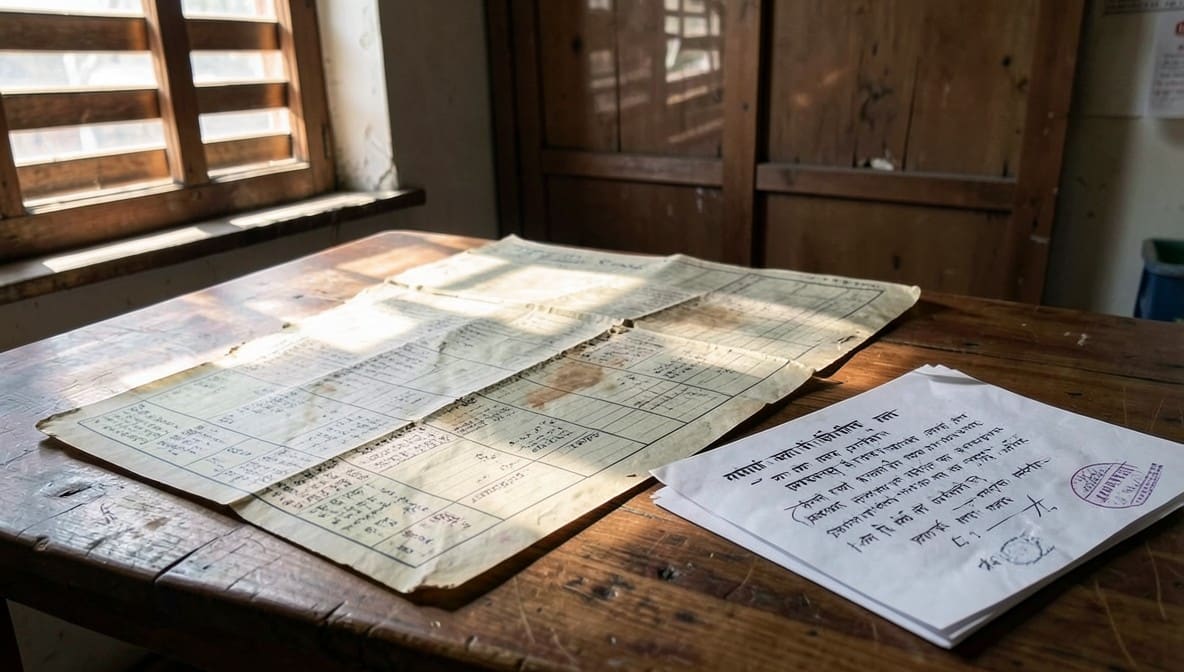
The dispute centers on the validity of pattas granted to the appellant, Babu Singh, over land in District Hardoi, Uttar Pradesh, originally recorded as Category-6 land under the U.P. Land Records Manual. Category-6 land includes barren, uncultivated, or non-agricultural land such as pasture, water bodies, roads, and sites. The land in question was specifically identified as khalihan and pasture land, which are communal resources protected under Section 132 of the U.P. Zamindari Abolition and Land Reforms Act, 1950. Despite this classification, the Sub-Divisional Officer, on 31.10.1992, reclassified the land from Category-6 to Category-5 (cultivable land) and granted pattas to the appellant and others. This reclassification formed the basis for subsequent consolidation proceedings and the allocation of chaks in 2013.
Key Facts
- The land was recorded in Category-6 in the khatauni as per Paragraph A-124 of the U.P. Land Records Manual prior to 31.10.1992.
- The Lekhpal submitted a report on 05.04.1992 recommending reclassification to Category-5.
- The Revenue Inspector and Naib Tehsildar submitted similar recommendations on 12.04.1992 and 16.04.1992 respectively.
- The Sub-Divisional Officer approved the reclassification on 31.10.1992 and granted pattas to the appellant.
- The appellant was recorded as a bhumidhar with non-transferable rights in the revenue records.
- The land was brought under consolidation operations under the U.P. Consolidation of Holdings Act, 2004.
- On 01.07.2013, possession of the chak was delivered to the appellant.
- The Consolidator’s report dated 08.02.2016 revealed the land was historically recorded as public utility land (khalihan and pasture) under Section 132 of the Abolition Act.
- On 30.05.2016, the State and Land Management Committee filed an application under Section 198(4) seeking cancellation of the pattas.
- The District Collector referred the matter to consolidation authorities on 27.10.2017.
- The Consolidation Officer passed an order on 12.02.2019 expunging the appellant’s name and restoring the land to its original Category-6 status.
Procedural History
- 19.08.1994: Additional Collector, Hardoi, dismissed an earlier application under Section 198(4) for cancellation of pattas, holding no prima facie evidence of execution.
- 04.08.1999: Additional Commissioner, Lucknow Division, dismissed the revision against the 19.08.1994 order.
- 08.02.2016: Consolidator’s report submitted to Assistant Consolidation Officer, identifying land as public utility.
- 12.02.2019: Consolidation Officer ordered expungement of appellant’s name and restoration of original khata.
- 2021: Writ petition filed before the High Court challenging the 12.02.2019 order.
- 2023: High Court dismissed the writ petition, upholding the Consolidation Officer’s order.
- 2026: Civil Appeal filed before the Supreme Court.
The Parties' Positions
The appellant contended that the Sub-Divisional Officer had authority under Paragraph Ka-155-Ka of the U.P. Land Records Manual to reclassify land and that the pattas were valid. He further argued that the 2019 order was barred by res judicata due to the 1994 and 1999 orders.
The respondents contended that the land was permanently classified as public utility under Section 132, that no subordinate officer could alter its category, and that the pattas were void ab initio.
Relief Sought
The appellant sought quashing of the Consolidation Officer’s order dated 12.02.2019, restoration of his name as bhumidhar, and recognition of his rights over the land. He also sought a declaration that the reclassification of 31.10.1992 was valid.
The Legal Issue
The central question was whether a Sub-Divisional Officer possesses statutory authority under the U.P. Zamindari Abolition and Land Reforms Act, 1950, to reclassify land from Category-6 (public utility) to Category-5 (cultivable), thereby enabling the grant of bhumidhari pattas, when Section 132 expressly prohibits such rights on such land.
Arguments Presented
For the Appellant
The appellant’s counsel relied on Paragraph Ka-155-Ka of the U.P. Land Records Manual, arguing that Clause 9 permits the Assistant Collector or Sub-Divisional Officer to change the category of khata from one class to another. He contended that this provision conferred jurisdiction to reclassify land and that the pattas granted in 1992 were valid. He further argued that the 1994 and 1999 orders rejecting cancellation of pattas barred subsequent proceedings under res judicata.
For the Respondent
The respondents’ counsel submitted that Section 132 of the Abolition Act explicitly prohibits bhumidhari rights on pasture and khalihan land. They argued that only the State Government may alter the classification of public utility land under Section 77(2) of the U.P. Land Revenue Code, 2006, and that subordinate officers have no such power. They emphasized that Paragraph Ka-155-Ka governs tenure entries of existing khatedars, not land categorization. They also contended that the 1994 order did not adjudicate the legality of the pattas, only their execution, and thus res judicata did not apply.
The Court's Analysis
The Supreme Court undertook a rigorous statutory interpretation of the U.P. Zamindari Abolition and Land Reforms Act, 1950, and the U.P. Land Records Manual. The Court observed that Section 132 of the Act is a prohibitory provision, explicitly excluding pasture land, khalihan, and other public utility lands from the conferment of bhumidhari rights. The Court held that the legislative intent behind Section 132 is to preserve communal resources and prevent their diversion for private benefit.
"Section 132 of the Abolition Act, expressly prohibits the conferment of bhumidhari rights in respect of public utility lands, including pasture lands and khalihan. If the submissions advanced on behalf of the appellant were to be accepted, it would permit subordinate officers to circumvent this express prohibition through the simple expedient of re-categorising land in revenue entries, thereby defeating the legislative intent entirely."
The Court rejected the appellant’s reliance on Paragraph Ka-155-Ka, clarifying that the provision governs changes in tenure classification (khata) of existing holders, not the reclassification of land itself. The Manual’s authority is subordinate to the Act, and cannot override statutory prohibitions. The Court emphasized the principle of quando aliquid prohibetur ex directo, prohibetur et per obliquum - what cannot be done directly cannot be done indirectly.
The Court further noted that Section 117(6) and Section 77(2) of the U.P. Land Revenue Code, 2006, vest the exclusive power to alter public utility land classification in the State Government, requiring written reasons, equivalent land reservation, and public interest assessment. This deliberate restriction confirms that no subordinate officer may exercise such power.
Regarding res judicata, the Court held that the 1994 order dismissed the application on the ground of non-establishment of execution of pattas, not on their validity. Since the legality of the pattas was never adjudicated, the doctrine of res judicata did not apply.
The Court also cited Hinch Lal Tiwari v. Kamala Devi and Jagpal Singh v. State of Punjab to underscore that public utility land cannot be lawfully diverted through administrative manipulation, even during consolidation proceedings.
The Verdict
The appeal was dismissed. The Supreme Court upheld the High Court’s judgment, affirming that the Sub-Divisional Officer’s reclassification of land from Category-6 to Category-5 on 31.10.1992 was without jurisdiction. The pattas granted on that basis were declared void ab initio. The Consolidation Officer’s order dated 12.02.2019 expunging the appellant’s name and restoring the land to its original Category-6 status was validated. No costs were awarded.
What This Means For Similar Cases
Public Utility Land Cannot Be Reclassified by Subordinate Officers
- Practitioners must challenge any attempt to reclassify land under Section 132 as ultra vires, regardless of revenue record entries.
- Revenue officers who issue pattas on such land act without jurisdiction, and their orders are void ab initio.
Res Judicata Does Not Shield Invalid Pattas
- A prior dismissal of a cancellation petition on procedural grounds (e.g., lack of proof of execution) does not bar a subsequent challenge on substantive grounds (e.g., statutory prohibition).
- Courts will examine whether the earlier order adjudicated the merits of the claim.
Consolidation Proceedings Do Not Validate Illegal Grants
-
Even if land is included in consolidation proceedings and chaks are allotted, this does not cure a prior illegal grant.
-
Consolidation authorities are duty-bound to correct erroneous records, even decades after the fact.
-
Always verify land classification under Section 132 before advising on land acquisition or patta applications.
-
Challenge any revenue order reclassifying pasture, khalihan, or canal-bound land as cultivable.
-
Cite Jagpal Singh and Hinch Lal Tiwari to reinforce the public trust doctrine over communal land.