The Chennai Regional Bench of the Customs, Excise & Service Tax Appellate Tribunal has clarified a critical boundary in excise law: the mechanical processing of waste plastic bottles into flakes does not amount to 'manufacture' under the Central Excise Act, 1944. This ruling resolves a long-standing dispute over the levy of excise duty on recycled PET flakes and reinforces the judicial principle that mere physical transformation without emergence of a new commercial commodity cannot trigger excisable liability.
Background & Facts
The Dispute
M/s. Shree Renga Polymers, an appellant engaged in recycling waste Polyethylene Terephthalate (PET) bottles, was assessed for central excise duty on the PET flakes it produced and cleared between March 2010 and September 2016. The Commissioner of Customs, Jaipur, issued show cause notices alleging that the process of converting waste PET bottles into flakes constituted 'manufacture' under Section 2(f) of the Central Excise Act, 1944, and that the final product was classifiable under Central Excise Tariff Item (CETI) 3915 90 42 as 'parings of PET plastics'. The total duty demand amounted to Rs. 9,86,03,755, with Rs. 1,05,80,286 paid under protest.
Key Facts
- The appellant sourced used PET bottles from waste collectors and recycling channels.
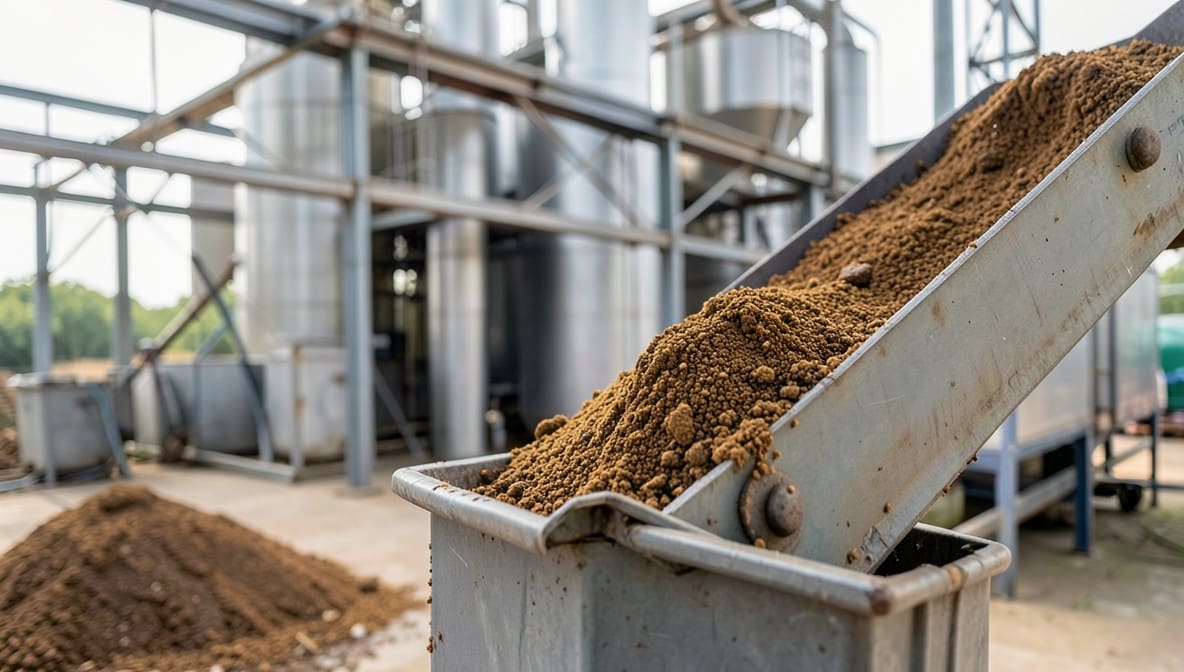
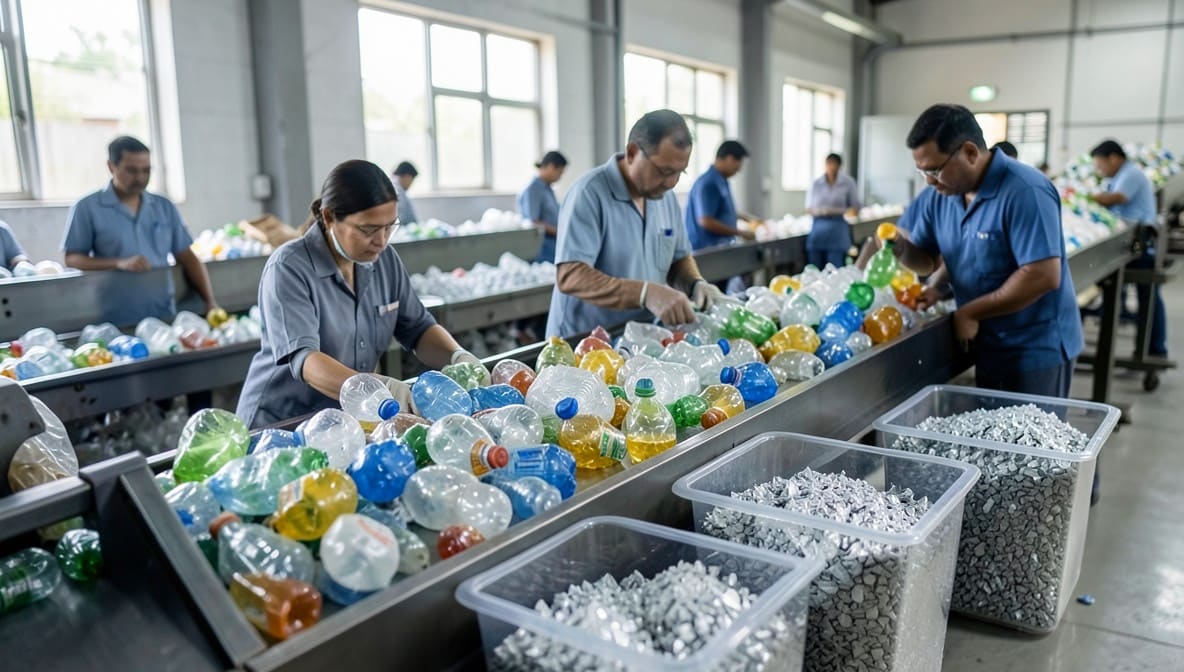
- The process involved: (i) sorting out non-PET materials (PVC, aluminium, paper, iron, stone); (ii) crushing bottles into small pieces called 'flakes'; (iii) washing flakes to remove sand and dirt; (iv) hot washing with caustic soda or cleaning reagents where necessary; (v) rinsing with fresh water; and (vi) drying, packing, and clearance.
- The final product, termed 'PET Flakes' by the appellant and 'parings of PET bottles' by the department, retained the chemical composition of PET.
- The appellant classified the flakes under CETI 3907 60 (Polyethylene Terephthalate in primary form) and claimed exemption under Notification No. 4/2006-CE and Notification No. 12/2012-CE.
- The department rejected the exemption claims and reclassified the product under CETI 3915 90 42.
- The department relied on Wikipedia to assert that intrinsic viscosity of PET decreased during recycling, indicating chemical change.
Procedural History
- 21.09.2010: First show cause notice issued for March - April 2010.
- 08.06.2011: Second notice for September - December 2010.
- 08.06.2012: Third notice for January - October 2011.
- 29.10.2012: Fourth notice for October 2011 - May 2012.
- 12.06.2013: Fifth notice for June 2012 - April 2013.
- 09.04.2014: Sixth notice for April 2013 - January 2014.
- 19.01.2015: Seventh notice for February 2014 - September 2014.
- 23.06.2015: Eighth notice for October 2014 - March 2015.
- 15.12.2015: Ninth notice for April 2015 - September 2015.
- 10.04.2017: Tenth notice for October 2015 - September 2016.
- 31.05.2019: Commissioner issued order-in-original confirming duty demand of Rs. 9,86,03,755, with interest and penalty.
- 25.02.2026: Hearing before CESTAT Chennai.
- 09.04.2026: Final order passed allowing all 12 appeals.
The Parties' Positions
For the Appellant
- The process involved only physical cleaning and size reduction; no chemical synthesis or polymerization occurred.
- The input (waste PET bottles) and output (PET flakes) remained chemically identical PET.
- The product retained its identity as PET; only form changed from bottle to flake.
- Relied on Supreme Court precedents: Delhi Cloth and General Mills, Mahalaxmi Stores, Crane Betel Nut Powder Works, Pio Food Packers, and Faridabad Iron & Steel Traders Association.
- Argued that Wikipedia is not a reliable source for legal determination.
- Contended that the Tribunal’s earlier order dated 25.09.2018 addressed classification only, not manufacture.
For the Respondent
- The process resulted in a new product with distinct market name ('parings of PET bottles') and use (as feedstock for recycled PET bottles and fibres).
- Intrinsic viscosity reduction indicated chemical degradation, constituting transformation.
- Relied on the Tribunal’s 2018 order and Servo-Med Industries to argue that market recognition and end-use change qualify as manufacture.
- Asserted that classification under CETI 3915 90 42 was correct under Chapter Notes 3 and 6 of Chapter 39.
Relief Sought
The appellant sought:
- Setting aside of the Commissioner’s order dated 31.05.2019.
- Cancellation of excise duty demand of Rs. 9,86,03,755.
- Refund of Rs. 1,05,80,286 paid under protest.
- Cancellation of interest and penalty.
- Declaration that PET flakes are not subject to excise duty.
The Legal Issue
The central question was whether the process of sorting, crushing, washing, and drying waste PET bottles into flakes constitutes 'manufacture' under Section 2(f) of the Central Excise Act, 1944, such that excise duty becomes leviable.
Arguments Presented
For the Appellant
The appellant relied on a series of Supreme Court judgments establishing that 'manufacture' requires the emergence of a new article with a distinctive name, character, or use. In Delhi Cloth and General Mills, the Court held that mere change is insufficient; transformation into a commercially distinct product is essential. In Mahalaxmi Stores, crushing boulders into gitti was held not to be manufacture. In Crane Betel Nut Powder Works, crushing betel nuts with spices was held not to create a new product. In Pio Food Packers, slicing pineapples and canning them retained the identity of the fruit. The appellant argued that PET flakes are merely a physical form of the same PET material, used for recycling, and retain the same chemical identity. The reliance on Wikipedia was challenged as legally impermissible under HP India Sales Pvt. Ltd. v. CC, Nhava Sheva.
For the Respondent
The department contended that the final product, known in trade as 'parings of PET bottles', had a distinct market identity and end-use as feedstock for recycled PET products. It argued that the reduction in intrinsic viscosity, as per Wikipedia, indicated chemical degradation, thereby satisfying the test of transformation. It relied on Servo-Med Industries to argue that market recognition and functional change can constitute manufacture. It also cited the Tribunal’s 2018 order, asserting issue estoppel.
The Court's Analysis
The Tribunal undertook a rigorous analysis of the legal definition of 'manufacture' under Section 2(f) of the Central Excise Act, 1944, and the jurisprudence developed by the Supreme Court. It emphasized that the test is not merely physical change, but whether a new commercial commodity emerges with a distinctive name, character, or use.
"Manufacture implies a change, but every change is not manufacture and yet every change of an article is the result of treatment, labour and manipulation. But something more is necessary and there must be transformation; a new and different article must emerge having a distinctive name, character or use."
The Tribunal examined the process step-by-step and found no evidence of chemical synthesis, polymerization, or alteration of PET’s molecular structure. The washing and crushing operations were purely mechanical and aimed at cleaning and size reduction. The product remained PET, albeit in flake form.
The Court explicitly rejected the Commissioner’s reliance on Wikipedia as a source of scientific evidence. Citing HP India Sales Pvt. Ltd. v. CC, Nhava Sheva, the Tribunal held:
"The courts and adjudicating authorities should rather make an endeavour to persuade the Counsels to place reliance on more reliable and authentic sources."
The Tribunal further distinguished the 2018 Tribunal order, noting that it addressed classification under Chapter Notes 3 and 6, not the issue of manufacture. The department’s argument that market recognition alone constitutes manufacture was rejected, as the Supreme Court in Faridabad Iron & Steel Traders Association held that mere change in tariff item does not imply manufacture.
The Tribunal applied the four-category framework from Servo-Med Industries: the present case fell squarely within Category 1 - where goods remain exactly the same after the process. The PET flakes were not a new product; they were waste PET bottles rendered usable for recycling.
The Verdict
The appellant succeeded. The Tribunal set aside the Commissioner’s order dated 31.05.2019 in its entirety. The demand for central excise duty of Rs. 9,86,03,755 was cancelled. The amount of Rs. 1,05,80,286 paid under protest was directed to be refunded without interest. Interest and penalty were also cancelled. All 12 appeals were allowed.
What This Means For Similar Cases
Physical Processing Alone Does Not Constitute Manufacture
- Practitioners can now confidently argue that mechanical processes like crushing, washing, sorting, and drying of recyclable materials - whether PET, steel, stone, or textiles - do not amount to manufacture if the chemical identity remains unchanged.
- The burden remains on the department to prove emergence of a new commercial commodity, not merely a change in form.
Reliance on Non-Authentic Sources Is Legally Invalid
- Online crowd-sourced platforms like Wikipedia cannot be used to establish technical or chemical facts in tax adjudication.
- Departments must rely on certified lab reports, scientific literature, or expert testimony to prove chemical transformation.
Classification Cannot Substitute Manufacture Analysis
- A product’s classification under a different tariff heading does not automatically imply manufacture.
- Courts will examine the nature of the process independently, regardless of classification or trade nomenclature.
Recycling Industry Gains Legal Clarity
- Recyclers of plastic, metal, and other waste materials can now operate without fear of excise liability for basic processing.
- This judgment supports circular economy initiatives by removing a regulatory barrier to waste-to-resource conversion.
No New Product, No Duty
- The core takeaway: if the end product is still the same substance, just in a different physical form, excise duty cannot be levied.
- This principle applies equally to recycled paper, glass, textiles, and other materials processed for reuse.
The Burden of Proof Lies with the Department
- The department must prove not just change, but transformation into a new article.
- Mere market perception or trade terminology is insufficient to establish manufacture.
Precedent Consolidated
- This judgment reinforces and consolidates the Supreme Court’s consistent jurisprudence from Delhi Cloth to Servo-Med, making it binding on all adjudicating authorities.
- Future cases involving recycling, reprocessing, or remanufacturing of waste materials will now be decided under this clear legal framework.
Practical Takeaway for Practitioners
- In defending clients in excise disputes involving recycling, focus on: (1) chemical identity preservation, (2) absence of polymerization or synthesis, (3) lack of new market function, and (4) reliance on authoritative scientific sources.
- Challenge any reliance on Wikipedia or informal trade terms as legally inadequate.
- Argue that the process is merely 'preparation for reuse', not 'manufacture'.
Limitation on Departmental Overreach
- This judgment curbs the department’s tendency to impose duty on recycling activities under the guise of 'manufacture'.
- It affirms that excise law is not a tool for revenue maximization but a legal framework grounded in statutory definitions and judicial precedent.
Future Implications
- Similar cases involving recycled HDPE, PVC, or aluminum may now be resolved in favor of recyclers.
- The judgment may influence policy on Extended Producer Responsibility (EPR) schemes by clarifying that recycling processors are not manufacturers under excise law.
Key Citation for Future Arguments
- Delhi Cloth and General Mills v. Union of India - foundational test for manufacture.
- Pio Food Packers v. State of Kerala - identity preserved despite processing.
- HP India Sales v. CC, Nhava Sheva - rejection of Wikipedia as legal evidence.
- Servo-Med Industries v. CCE - four-category framework for determining manufacture.
This judgment provides a robust legal shield for India’s recycling sector and clarifies the limits of excise jurisdiction over waste processing activities.
Final Note
The Tribunal’s decision is not merely procedural; it is doctrinal. It reaffirms that the law must distinguish between economic utility and legal classification. Recycling is not manufacturing. Waste is not a new product. And Wikipedia is not a statute.
Legal Principle Applied
Manufacture under Section 2(f) requires emergence of a new commercial commodity with distinctive name, character, or use - not mere physical transformation.