The Customs, Excise and Service Tax Appellate Tribunal (CESTAT) Chandigarh has clarified a critical principle in indirect tax jurisprudence: when an assessee pays excise duty on a final product - regardless of whether the process constitutes manufacture - the Cenvat credit previously availed on inputs is deemed effectively reversed, rendering recovery of such credit unlawful. This ruling resolves a long-standing ambiguity in the application of Rule 14 of the Cenvat Credit Rules, 2004.
Background & Facts
The Dispute
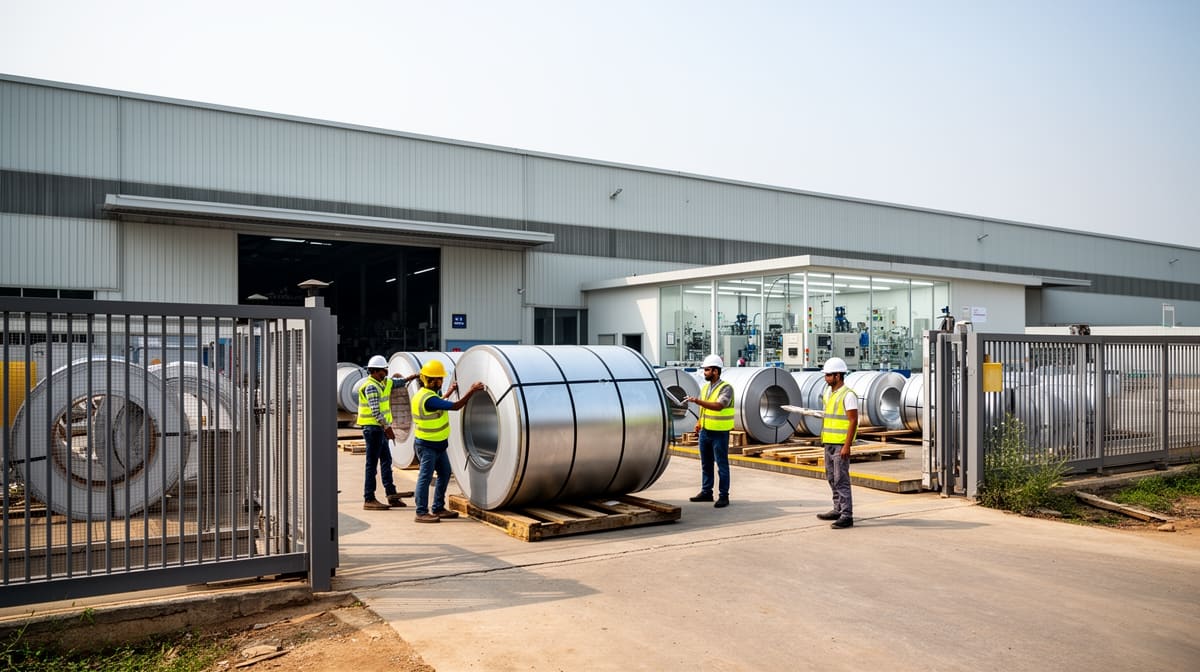
The dispute arose between the Commissioner of Central Excise & CGST, Rohtak (Appellant/Revenue) and M/s Dharam Industries (Respondent/Assessee), a manufacturer of stainless steel products including sheets, coils, stair railings, and furniture classified under Tariff Items 72199013 and 73089090 of the Central Excise Tariff Act, 1985. The Assessee had availed Cenvat credit on raw materials, capital goods, and input services under the Cenvat Credit Rules, 2004. The Department alleged that the Assessee’s process - polishing stainless steel sheets/coils and applying satin finish (No. 4), mirror finish (No. 8), or PVD coating - did not amount to "manufacture" under the law, and therefore, the Cenvat credit availed was inadmissible.
Key Facts
- The Assessee was registered under Central Excise and availed Cenvat credit from 2014 onwards.
- The process involved surface finishing of stainless steel sheets/coils: polishing and applying adhesive plastic film or PVD coating.
- The finished products were cleared under the same tariff item (72199013) as the raw material.
- The Assessee paid central excise duty on the final product at the time of clearance.
- For the period November 2011 to March 2012, the Commissioner (Appeals) had previously accepted the Assessee’s claim that the finished product was commercially distinct and eligible for Cenvat credit (Order-in-Appeal No. 556-557/SVS/RTK/2023 dated 22.10.2013).
- The Department issued two Show Cause Notices (SCNs):
- SCN dated 03.01.2017: for period December 2014 to March 2016, demanding Rs. 2,29,38,046/- as reversal of Cenvat credit.
- SCN dated 06.03.2018: for period April 2016 to June 2017, demanding Rs. 2,43,22,602/- as reversal of Cenvat credit.
- Total demand including interest and penalties: Rs. 4,72,60,648/-.
- The Assessee contended that the finished products had distinct commercial characteristics (satin/mirror finish, PVD coating) and were sold as new products in the market.
- The Assessee had paid excise duty on the final product in amounts exceeding the Cenvat credit availed, using the PLA account.
Procedural History
- 03.01.2017: First SCN issued for period December 2014 to March 2016.
- 06.03.2018: Second SCN issued for period April 2016 to June 2017.
- 31.07.2019: Commissioner of Central Excise & CGST, Rohtak, passed Order-in-Original, rejecting the demand. Held that while the process did not amount to manufacture, the Cenvat credit was effectively reversed through payment of higher duty on final product.
- 18.12.2025: Hearing before CESTAT Chandigarh.
- 13.04.2026: Final Order passed by CESTAT.
The Parties' Positions
For the Appellant (Revenue)
- Argued that the process of polishing and coating did not result in a new product with distinct name, character, or use, and therefore did not constitute manufacture under Rule 2(k) of the Cenvat Credit Rules, 2004.
- Contended that Cenvat credit on inputs, capital goods, and input services was inadmissible under Rule 3 and Rule 9.
- Asserted that Rule 14 of the Cenvat Credit Rules, read with first proviso to Section 11A(4) of the Central Excise Act, 1944, mandated recovery of inadmissible credit.
- Claimed that extended period of limitation was rightly invoked for the period December 2014 to March 2016, as the Assessee had suppressed the true nature of the activity.
For the Respondent (Assessee)
- Argued that the finished products (satin finish No. 4, mirror finish No. 8, PVD coated) were commercially distinct and had different market value and use.
- Submitted that excise duty paid on final product exceeded the Cenvat credit availed, resulting in net revenue gain to the exchequer.
- Relied on the prior favorable order dated 22.10.2013 for the same activity.
- Contended that extended period could not be invoked because there was no suppression, fraud, or wilful misstatement; the duty payment was transparent and known to the Department.
- Argued that the SCN for April 2016 to June 2017 was barred by limitation as it was a subsequent notice and the extended period had already been invoked in the earlier SCN.
Relief Sought
The Revenue sought to set aside the Commissioner’s order and recover Rs. 4,72,60,648/- as inadmissible Cenvat credit, along with interest and penalties. The Assessee sought confirmation of the Commissioner’s order and dismissal of the appeal.
The Legal Issue
The central question was whether Cenvat credit availed on inputs can be recovered under Rule 14 of the Cenvat Credit Rules, 2004 when the assessee has paid excise duty on the final product in an amount exceeding the credit availed, even if the process undertaken does not amount to "manufacture" under the law.
Arguments Presented
For the Appellant
The Revenue relied on Rule 2(k) and Rule 3 of the Cenvat Credit Rules, 2004, which restrict credit to inputs used in manufacture of dutiable final products. It argued that since no manufacture occurred, the credit was inherently inadmissible. It cited Rule 14 and first proviso to Section 11A(4) of the Central Excise Act, 1944, to assert that recovery was mandatory. It further contended that the Assessee’s payment of duty on the final product was irrelevant to the legality of credit availed, and that the Department’s revenue loss was real because the credit was improperly utilized. The Revenue also argued that extended period was invokable due to alleged suppression of facts.
For the Respondent
The Assessee relied on the principle that once duty is paid on the final product, the credit availed is effectively reversed, regardless of whether the activity constitutes manufacture. It cited the Commissioner’s prior order dated 22.10.2013, which had accepted the same position. It emphasized that the Department had received more duty than the credit availed, and that the Assessee acted in bona fide belief. It further argued that extended period could not be invoked because the activity was not concealed and the duty payment was known to the Department.
The Court's Analysis
The Tribunal began by acknowledging the Department’s position that the process of polishing and coating stainless steel did not result in a new product with distinct name, character, or use, and therefore did not constitute manufacture under Rule 2(k) of the Cenvat Credit Rules, 2004. The Tribunal agreed with this finding, noting that the final product remained classified under the same tariff item as the input.
However, the Tribunal turned to the critical issue: whether the inadmissible credit could be recovered under Rule 14 when the Assessee had paid excise duty on the final product in excess of the credit availed. The Tribunal examined the Commissioner’s reasoning and found it legally sound.
"The Assessee had cleared their final product on payment of excise duty which is more than the CENVAT Credit availed by them on capital goods and input services."
The Tribunal emphasized that Rule 3(5) of the Cenvat Credit Rules permits removal of inputs without manufacture upon payment of an amount equal to the credit availed. Although the Assessee did not follow this exact procedure, the Tribunal held that the practical effect was identical: the credit was effectively reversed through actual payment of duty exceeding the credit amount.
"Since the amount paid on the clearance of their final products... is more than the Cenvat credit availed by them, the Cenvat credit availed stands more than reversed and there is no need to recover the same again."
The Tribunal further noted that the Department had retained the duty paid on the final product, meaning no revenue loss occurred. To demand reversal of credit in such circumstances would amount to double taxation and unjust enrichment of the exchequer.
The Tribunal also rejected the Revenue’s contention that extended period of limitation applied. It held that the Assessee had not suppressed facts; the duty payment was transparent and known to the Department. The Tribunal relied on settled jurisprudence that extended period cannot be invoked where the issue is one of legal interpretation, not concealment.
Finally, the Tribunal upheld the Commissioner’s finding that the second SCN (April 2016 - June 2017) could not invoke extended period as it was a subsequent notice and the extended period had already been invoked in the first SCN.
The Verdict
The Revenue’s appeal was dismissed. The Tribunal upheld the Commissioner’s Order-in-Original dated 31.07.2019. The Cenvat credit of Rs. 2,29,38,046/- for December 2014 - March 2016 and Rs. 2,43,22,602/- for April 2016 - June 2017 was not recoverable. No interest or penalty was imposed. The Department was directed to retain the excise duty paid on the final product, which exceeded the credit availed.
What This Means For Similar Cases
Credit Reversal Through Duty Payment Is Sufficient
- Practitioners may now argue that if an assessee pays excise duty on a final product in excess of the Cenvat credit availed - even if the process is not manufacture - the credit is deemed reversed under the principle of equitable adjustment.
- Recovery under Rule 14 is not automatic; the net revenue impact must be assessed.
Extended Period Cannot Be Invoked for Legal Ambiguities
- Where the issue is whether a process constitutes manufacture, and the assessee pays duty in good faith, extended period under Section 11A(4) is not applicable.
- This shields taxpayers from retrospective demands when legal interpretation is unsettled.
Precedent from Prior Orders Is Binding in Similar Circumstances
- A prior favorable order on identical facts (even if from a different period) creates a strong presumption of consistency.
- Departments must either distinguish the facts or appeal the prior order before initiating fresh proceedings.
Practical Takeaways
- Taxpayers should maintain records of duty payments on final products and compare them with Cenvat credit availed.
- If duty paid exceeds credit, document this clearly in replies to SCNs.
- Avoid admitting to suppression; emphasize transparency and bona fide belief.
- Use prior favorable orders as binding precedent in identical factual scenarios.