The Bombay High Court has reaffirmed that insurers cannot escape liability under motor accident claims merely by alleging policy breaches without adducing evidence. This judgment reinforces the principle that pleadings without proof are legally inert, setting a clear precedent for claimants and insurers alike in claims adjudicated under the Motor Vehicles Act, 1988.
Background & Facts
The Dispute
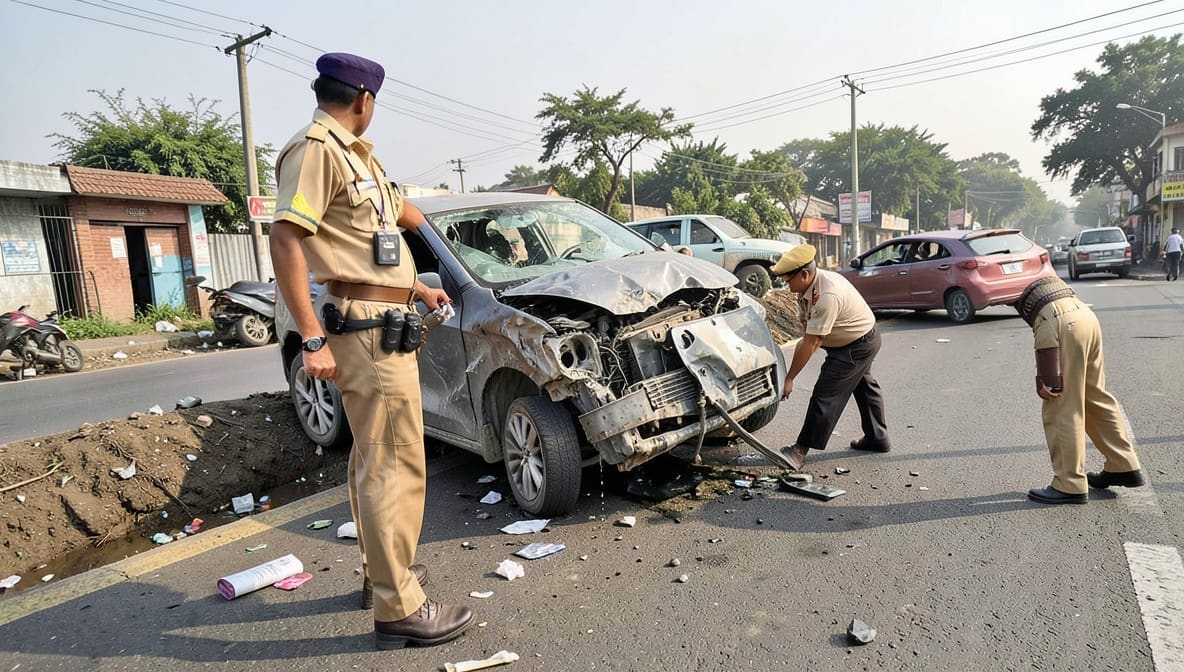
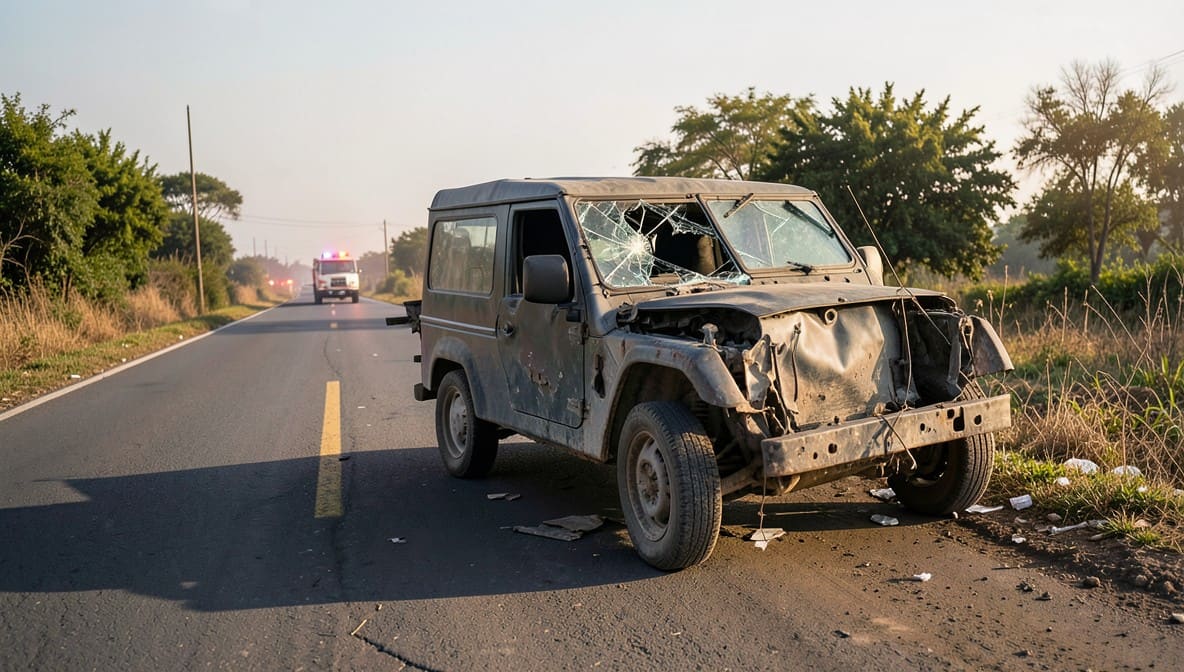
Three separate Motor Accident Claims Petitions (Nos. 22/2007, 27/2007, and 29/2007) were filed before the Motor Accident Claims Tribunal (M.A.C.T.), Gadchiroli, seeking compensation for the deaths of family members in a motor vehicle accident that occurred on 20.03.2007 at approximately 7:00 a.m. on the Sironch-Alapalli Road within the jurisdiction of Aheri Police Station, District Gadchiroli. The deceased were passengers in a Tata Sumo four-wheeler, which collided with a tree due to rash and negligent driving by its driver. All claimants were dependents of the deceased.
Key Facts
- The Tata Sumo was registered as a private vehicle and insured with The Oriental Insurance Co. Ltd. under a liability-only policy.
- At the time of the accident, the vehicle was carrying 13 passengers, exceeding its seating capacity.
- The driver’s license status was disputed, with the insurer alleging it was invalid.
- The claimants included widows, minor children, and parents of the deceased across the three petitions.
- No independent evidence was presented by the insurer to substantiate claims of policy breach.
Procedural History
- 20.03.2007: Motor accident occurred, resulting in multiple fatalities.
- 2007: Motor Accident Claims Petitions filed before M.A.C.T. Gadchiroli (Nos. 22/2007, 27/2007, 29/2007).
- 04.11.2009: M.A.C.T. passed judgment and award:
- Petition No. 22/2007: Rs. 3,76,800/- with 9% interest from 19.08.2008
- Petition No. 27/2007: Rs. 2,66,600/- with 9% interest from 27.03.2008
- Petition No. 29/2007: Rs. 2,42,000/- with 9% interest from 27.03.2008; Rs. 50,000/- each for minors to be deposited as fixed deposits until majority
- 06.03.2012: Respondent No. 3 (Dilip Mohurle) deleted from proceedings by Registrar (Judicial).
- 2011: First Appeals Nos. 316/2011 and 344/2011 filed by insurer against the award.
- 2013: First Appeal No. 506/2013 filed by insurer in the third claim.
- 18.03.2026: Division Bench of Bombay High Court (Nagpur Bench) heard appeals.
The Parties' Positions
Appellant (The Oriental Insurance Co. Ltd.):
- Contended that the Tata Sumo was insured as a private vehicle with no additional premium paid for passenger coverage.
- Alleged breach of policy terms due to overloading (13 passengers) and invalid driver’s license.
- Argued that these breaches voided liability under the policy.
Respondents (Claimants):
- Maintained that the insurer failed to lead any evidence to substantiate its allegations.
- Emphasized that the insurer had not appeared in proceedings except to file written statements.
- Asserted that the M.A.C.T. correctly applied the burden of proof.
Relief Sought
The insurer sought setting aside of the M.A.C.T.’s award dated 04.11.2009, arguing that it was legally unsustainable due to alleged policy breaches. The claimants sought dismissal of the appeals and confirmation of the award, including interest and fixed deposit directives for minors.
The Legal Issue
Can an insurance company deny liability under a motor vehicle liability policy solely on the basis of unproven allegations of policy breach, such as overloading or invalid license, when no evidence is adduced before the Motor Accident Claims Tribunal?
Arguments Presented
For the Appellant
The insurer’s counsel argued that the Tata Sumo was insured as a private vehicle under a liability-only policy, which by its terms did not cover commercial or excessive passenger carriage. The presence of 13 passengers constituted a material breach of policy conditions, and the driver’s alleged lack of a valid license further invalidated coverage. Reliance was placed on policy clauses restricting passenger capacity and requiring a valid license. The insurer contended that the M.A.C.T. erred in ignoring these contractual terms.
For the Respondent
The claimants’ counsel countered that the insurer had not led any evidence to prove the allegations of overloading or invalid license. The insurer had not examined any witnesses, produced the policy document, or submitted any inspection reports. The M.A.C.T. correctly held that bald pleadings without proof cannot form the basis for exoneration. The claimants relied on the principle that the burden of proving policy breach lies squarely on the insurer.
The Court's Analysis
The Court emphasized that under Section 147 of the Motor Vehicles Act, 1988, the insurer’s liability is statutory and arises upon proof of an accident involving a insured vehicle. While insurers may raise defenses based on policy exclusions, such defenses are not self-executing. The burden of proving a breach of policy conditions rests entirely on the insurer.
"The insurance company has not tendered evidence. Not only that even the evidence of the concern witnesses for the applicant is not controverted by the insurance company. The insurance company never appeared and participated the proceedings except submitting written statement. Therefore, mere bald contentions of the insurance company that there were 13 passengers, the driver was not having valid driving licence so as to infer that there was breach and that too for claiming exoneration cannot be accepted."
The Court held that the M.A.C.T.’s observation was legally sound. Written statements, without supporting evidence, are insufficient to discharge the insurer’s burden. The insurer’s failure to appear, cross-examine witnesses, or produce documents rendered its allegations speculative. The Court reiterated that in claims adjudicated under the Motor Vehicles Act, the Tribunal is empowered to act on the basis of evidence on record, and the insurer cannot rely on technicalities without substantiation.
The Court further noted that the insurer’s conduct - filing written statements but not participating in hearings - amounted to a waiver of its right to contest facts. The M.A.C.T. was justified in accepting the claimants’ evidence as uncontroverted and awarding compensation accordingly.
The Verdict
The appeals were dismissed. The insurer’s liability under the policy was upheld. The compensation amounts awarded by the M.A.C.T. are confirmed: Rs. 3,76,800/-, Rs. 2,66,600/-, and Rs. 2,42,000/- respectively, with interest at 9% from the dates specified (19.08.2008 and 27.03.2008). The fixed deposits of Rs. 50,000/- each for the minors are to be maintained until majority, with accrued interest used for their welfare. The insurer is permitted to withdraw any amounts already deposited under the award, and the claimants are entitled to withdraw the full compensation along with accrued interest. The record is to be sent back to the M.A.C.T. for implementation.
What This Means For Similar Cases
Burden of Proof Rests on the Insurer
- Practitioners must insist that insurers produce documentary proof (policy terms, inspection reports, license verification) to invoke exclusions.
- Mere allegations in written statements without evidence are legally insufficient to defeat claims.
- Claimants should object to insurer’s non-appearance and request the tribunal to treat allegations as admitted.
Policy Exclusions Are Not Self-Enforcing
- Insurers cannot rely on technical breaches (overloading, license status) unless they prove them with admissible evidence.
- Courts will not infer breaches from unverified assertions, especially in claimant-favoring statutory regimes like the MV Act.
- This judgment strengthens claimants’ position in cases where insurers delay or avoid participation.
Procedural Non-Compliance by Insurers Is Costly
- Failure to appear in hearings or lead evidence constitutes a waiver of defense.
- Claimants should move for ex parte findings where insurers remain absent after notice.
- Tribunals and courts are increasingly disinclined to grant relief to insurers who treat proceedings as procedural formalities.