The Gauhati High Court has clarified that an insurance company cannot escape liability under the Motor Vehicles Act merely by alleging that the driver of the offending vehicle held an expired license. The burden lies squarely on the insurer to prove not only the breach of policy condition but also that such breach was due to the insured’s negligence and materially contributed to the accident.
Background & Facts
The Dispute
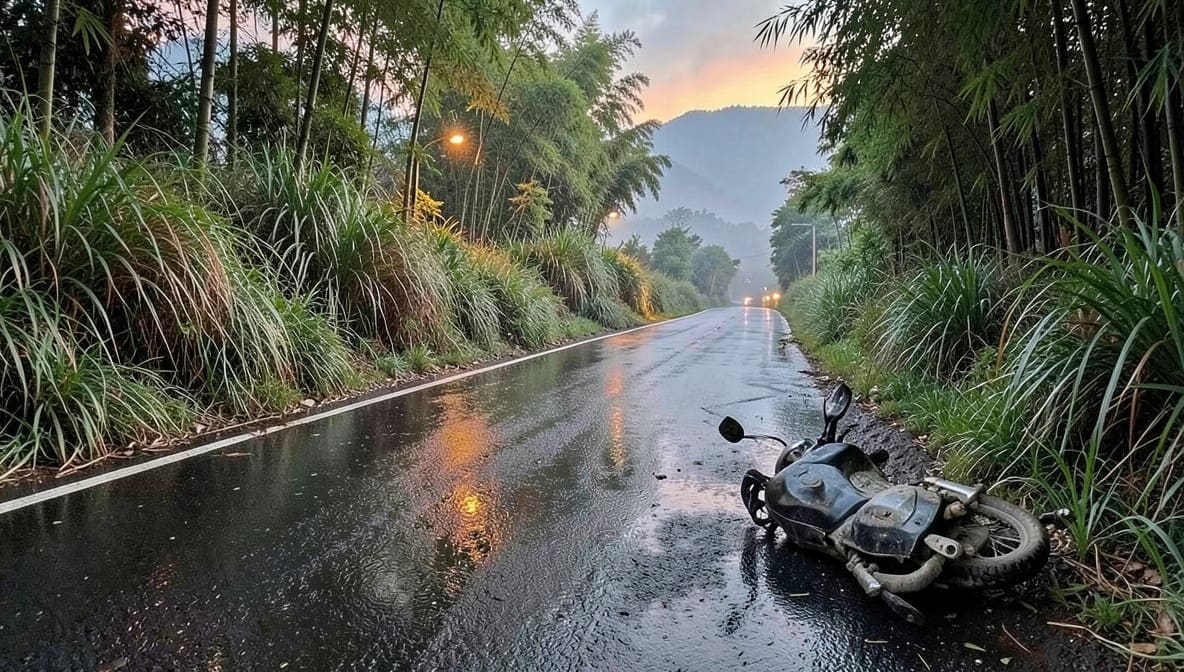
On 26.04.2013, at approximately 12:30 pm, Subhash Chandra Yadav was struck and killed by a mini city bus bearing registration No. AS-25-A-6593 while walking on the left side of MRD Road, New Guwahati. The bus was driven by Utpal Talukdar and owned by Bhuboneswari Sharma. Subhash Chandra Yadav’s wife, Mrs. Sushila Devi, and their six children filed a claim petition under Section 166 of the Motor Vehicles Act, 1988 before the Motor Accident Claims Tribunal, No. 2, Kamrup (Metro), Guwahati. The claim case was registered as MAC Case No. 1218/2013.
Key Facts
- The deceased, Subhash Chandra Yadav, was employed with the Food Corporation of India (FCI) and earned a gross monthly salary of Rs. 23,388 in March 2013, the last month before his death.
- He was survived by his wife (Claimant No. 1) and six children: five daughters and one son.
- The eldest daughter was 19 years old at the time of deposition on 26.04.2015, meaning all six children were minors at the time of the accident on 26.04.2013.
- The driver, Utpal Talukdar, held a driving license that expired on 02.10.2009 and was not renewed.
- The insurance company, The Oriental Insurance Co. Ltd., contended that the owner permitted an unlicensed driver to operate the vehicle, thereby breaching policy conditions.
- The insurer submitted a report from an investigator (Exhibit A) citing the District Transport Officer (DTO), Nalbari, to establish the license’s invalidity.
- The insurer examined two defense witnesses (DW-1 and DW-2) to prove the license’s lapse.
- The claimants examined three witnesses, including the widow as PW-1, who confirmed the deceased’s income and dependency of all children.
Procedural History
- 26.04.2013: Fatal accident occurred.
- 2013: Claim petition filed before Motor Accident Claims Tribunal (MAC Case No. 1218/2013).
- 14.07.2016: Tribunal rejected insurer’s application to summon DTO Nalbari, citing lack of challenge by claimants to insurer’s witnesses.
- 05.09.2016: Tribunal awarded Rs. 24,48,576 to Claimant No. 1 (widow) only, rejecting claims of children on grounds of non-dependency. Deducted 50% of deceased’s income for personal expenses.
- 06.01.2026: Hearing before Gauhati High Court.
- 20.04.2026: Judgment delivered by Justice Mridul Kumar Kalita.
The Parties' Positions
For the Appellant (Oriental Insurance Co. Ltd.):
- Argued that the driver’s license expired on 02.10.2009 and remained un-renewed until the accident on 26.04.2013.
- Claimed that Exhibit A (investigator’s report referencing DTO) and testimony of DW-1 and DW-2 were uncontroverted, as claimants did not cross-examine them.
- Asserted that this constituted a breach of policy condition, absolving the insurer of liability.
- Cited National Insurance Co. Ltd. v. Swaran Singh (2004) and other precedents to argue that insurer cannot be made liable unless breach is proven to be the insured’s fault.
- Contended that High Court lacks power under Article 142 to direct insurer to pay and recover later.
For the Respondents (Claimants 1 - 7 and Owners/Driver):
- Argued that mere existence of an expired license does not absolve the insurer.
- Emphasized that the insurer failed to prove the insured’s negligence in permitting the unlicensed driver to operate the vehicle.
- Stated that the DTO, Nalbari, was the only competent authority to authenticate license status, and his non-examination rendered Exhibit A inadmissible as proof.
- Cited National Insurance Co. Ltd. v. Swaran Singh (2004) and General Insurance Co. Ltd. v. Geeta Devi (2024) to affirm that insurer must prove both breach and contributory fault.
- Argued that the Tribunal’s rejection of the summons application did not preclude it from later rejecting the evidence as insufficient.
Relief Sought
By Appellant:
- Set aside the Tribunal’s award.
- Declare insurer not liable due to breach of policy condition.
- Direct claimants to recover compensation from owner/driver.
By Cross-Objectors (Claimants 1 - 7):
- Enhance compensation by including children as dependents.
- Reduce deduction for personal expenses from 50% to 1/5th (20%) as per Pranay Sethi.
- Include compensation for loss of parental consortium.
- Increase interest rate and ensure payment of arrears.
The Legal Issue
The central question was whether an insurer can avoid liability under Section 149 of the Motor Vehicles Act, 1988, solely on the ground that the driver held an expired license, without proving that the insured owner was negligent and that such breach materially contributed to the accident.
Arguments Presented
For the Appellant
The appellant relied on National Insurance Co. Ltd. v. Swaran Singh (2004) and Oriental Insurance Co. Ltd. v. Mohiuddin Molya (2022) to argue that the insurer’s liability is conditional upon the insured’s compliance with policy terms. It contended that the uncontroverted testimony of DW-1 and DW-2, coupled with Exhibit A, established a clear breach: the driver had no valid license for over four years. The insurer argued that the Tribunal erred by requiring the DTO’s testimony, which was unnecessary since the report was duly exhibited. It further claimed that the High Court cannot compel insurers to pay and recover later, citing Beli Ram v. Rajinder Kumar (2020).
For the Respondent
The respondents countered that the insurer failed to discharge its burden of proving negligence on the part of the owner. They cited National Insurance Co. Ltd. v. Swaran Singh (2004) and General Insurance Co. Ltd. v. Geeta Devi (2024) to emphasize that mere invalidity of license is not a defense unless the insurer proves the insured failed to exercise reasonable care. They argued that the DTO’s report, unauthenticated by the officer himself, was hearsay and inadmissible. The Tribunal’s earlier rejection of the summons application did not bind it to accept the evidence; it retained discretion to assess sufficiency. The respondents also argued that the insurer’s failure to challenge the summons order waived any objection to the Tribunal’s reasoning.
The Court's Analysis
The Court began by rejecting the appellant’s challenge to the identity of Claimant No. 1, noting that her signature on the deposition form before the Tribunal matched her signature on the vakalatnama before the High Court, thereby confirming her identity despite the thumb impression on the original claim petition.
The Court then turned to the core issue: whether the insurer could avoid liability due to the driver’s expired license. It extensively analyzed National Insurance Co. Ltd. v. Swaran Singh (2004), quoting:
"To avoid its liability towards the insured, the insurer has to prove that the insured was guilty of negligence and failed to exercise reasonable care in the matter of fulfilling the condition of policy regarding use of vehicle by a duly licensed driver or one who was not disqualified to drive at the relevant time."
The Court emphasized that the insurer’s burden is twofold: (1) prove the breach (expired license), and (2) prove the insured’s negligence in permitting such use. The mere existence of an expired license, without evidence of the owner’s failure to verify the driver’s credentials, does not suffice.
The Court found the insurer’s reliance on Exhibit A - an investigator’s report referencing the DTO - to be legally insufficient. The DTO, as the official custodian of driving license records, was the only competent authority to authenticate the license status. The absence of the DTO’s testimony rendered the report hearsay and unreliable.
The Court further held that the Tribunal’s earlier rejection of the insurer’s application to summon the DTO did not preclude it from later rejecting the evidence as inadequate. The Tribunal retained the discretion to assess the probative value of evidence independently. The Court stated:
"This Court is of considered opinion that the insurance company has failed to establish the breach of policy condition by the insured by adducing admissible and cogent evidence."
Regarding the quantum of compensation, the Court found the Tribunal’s 50% deduction for personal expenses erroneous. Citing Pranay Sethi (2017), it held that where the deceased leaves more than six dependents, the deduction should be one-fifth (20%) of income. The deceased left seven dependents - wife and six children - all minors at the time of death. The Court recalculated the annual income as Rs. 2,52,591 after tax, added 30% for future prospects (Rs. 3,28,368), deducted one-fifth (Rs. 65,673), yielding a dependency loss of Rs. 36,77,730.
The Court also awarded Rs. 40,000 each to the seven dependents for loss of consortium - Rs. 40,000 to the widow (spousal) and Rs. 40,000 each to the six children (parental), totaling Rs. 2,80,000. Funeral expenses and loss of estate were fixed at Rs. 15,000 each, as per Pranay Sethi.
Total compensation: Rs. 39,87,730. Interest fixed at 7.5% per annum from the date of filing the claim petition (2013) until realization.
The Verdict
The appeal was dismissed. The cross-objection was allowed in part. The Court directed the Oriental Insurance Co. Ltd. to pay a total compensation of Rs. 39,87,730 to the seven claimants, with interest at 7.5% per annum from 26.04.2013 until realization. The amount shall be divided equally into seven shares. For the six minor children, Rs. 3,00,000 from each share shall be deposited in a fixed deposit in a nationalized bank until they attain majority. The insurer must deposit the amount with the Motor Accident Claims Tribunal within six weeks of the judgment.
What This Means For Similar Cases
Insurance Liability Cannot Be Avoided by Hearsay Evidence
- Practitioners must now insist that insurers produce authenticated records from the licensing authority (DTO/RTO) to prove license invalidity.
- Investigator reports or third-party affidavits referencing official records are insufficient without the official’s testimony.
- Failure to summon the DTO, even if initially rejected, does not validate unauthenticated documents.
Burden of Proof Is Strictly on the Insurer
- Mere existence of an expired license is not a defense; the insurer must prove the insured’s negligence in permitting the unlicensed driver.
- Courts will apply the "fundamental breach" test: was the breach so material that it contributed to the accident? Absent such proof, liability remains.
- The Swaran Singh principle is now firmly entrenched: insurer bears the burden of proving both breach and negligence.
Compensation Calculations Must Align with Apex Court Guidelines
-
Where the deceased leaves more than six dependents, personal expense deduction must be 1/5th (20%), not 50%.
-
Loss of parental consortium is now explicitly recognized for minor children, with Rs. 40,000 per child as the standard.
-
Interest must be calculated from the date of filing the claim petition, not from the date of award.
-
Always verify the number of dependents and their ages at the time of death to determine correct deduction.
-
Always claim loss of parental consortium for minor children and cite Pranay Sethi and Magma General Insurance v. Nanu Ram.
-
Never accept insurer’s reliance on unauthenticated documents - demand official records.