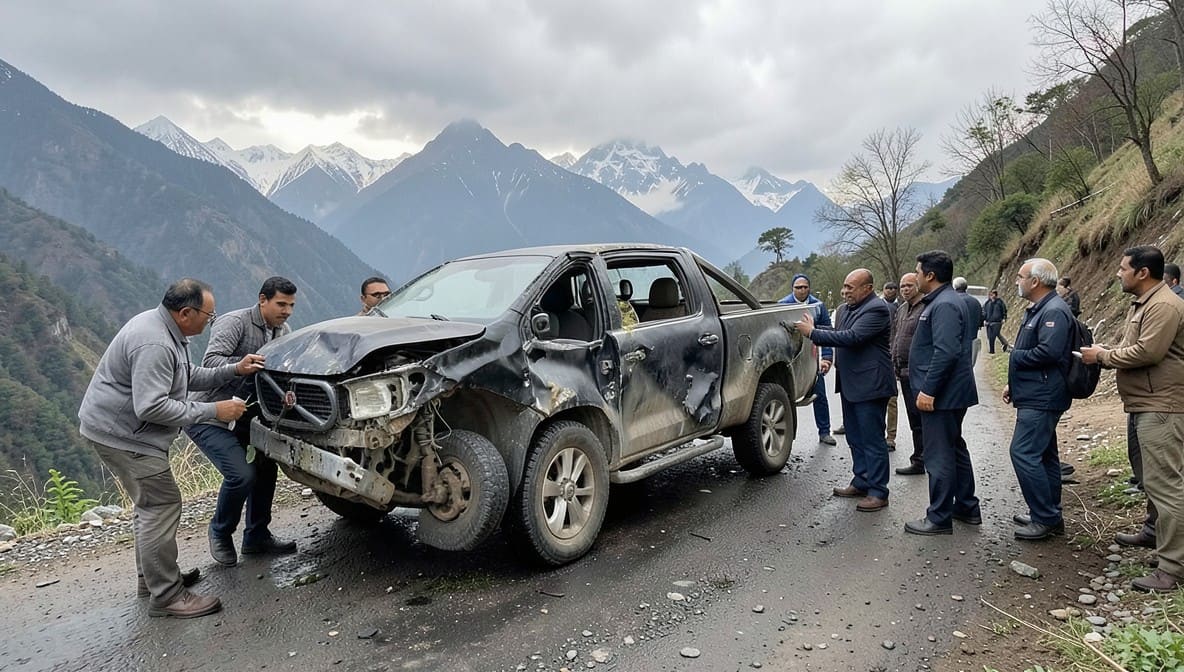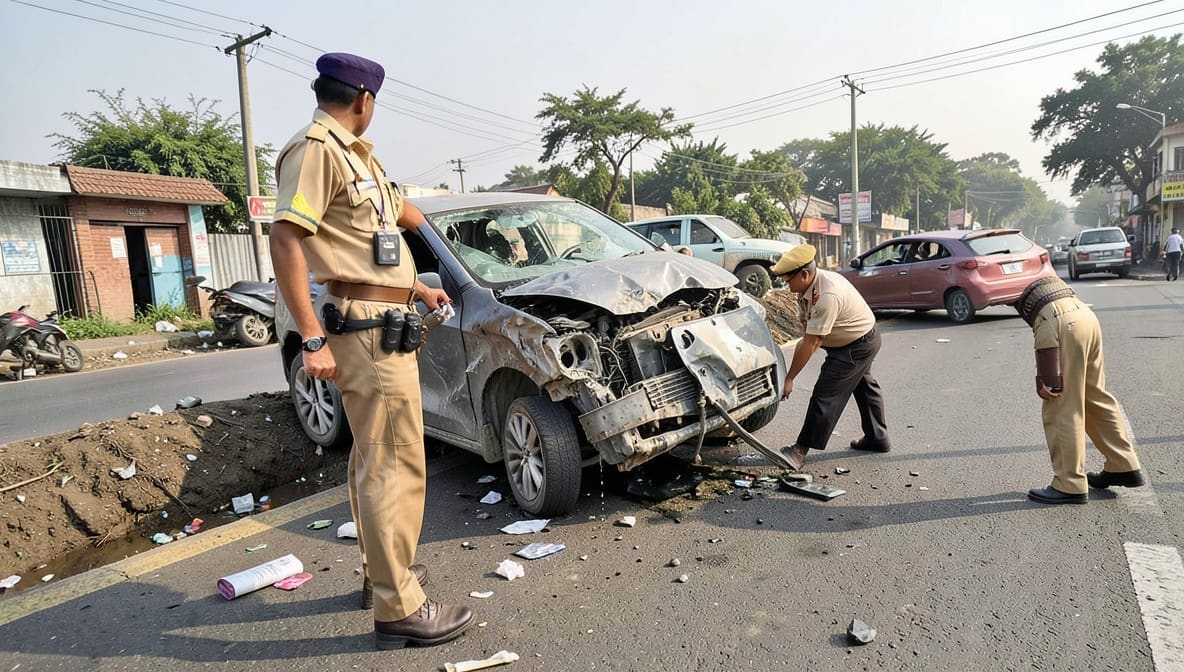
The Chhattisgarh High Court has clarified that an insurer cannot evade statutory liability under the Motor Vehicles Act merely by alleging suppression of material facts by the insured, absent concrete proof of intentional misrepresentation. This ruling reinforces the principle that third-party compensation rights are sacrosanct and must be protected irrespective of contractual disputes between insurer and insured.
Background & Facts
The Dispute
The claim arose from a fatal motor accident on 13.03.2011, in which six-year-old Sahil, a student at the Anganwadi in Banjaridand, Koriya, died due to rash and negligent driving of a pickup vehicle bearing registration number MP-18-GA-0458. The driver of the vehicle was Non-Appellant No.1, Rajendra Prasad Sahu, and the owner was Non-Appellant No.2, Mahendra Kumar Sahu. The vehicle was insured with Respondent No.2, Bajaj Alliance General Insurance Company Limited.
Key Facts
- The accident occurred at 07:30 AM on 13.03.2011
- The claim petition was filed under Section 166 of the Motor Vehicles Act, 1988 seeking compensation of Rs. 20,25,000
- The deceased was a minor with no dependents; claimants were his parents
- The offending vehicle had a seating capacity of three persons
- The insurance policy (Ex.D3C) issued by Bajaj Alliance was valid from 13.03.2011 to 12.03.2012
- The premium for the policy was duly paid and acknowledged by the insurer’s witness, Rishabh Pandey
- The previous insurance policy with Oriental Insurance Company (Ex.NA3-2C) had expired on 18.10.2010
- In the Bajaj Alliance policy, the expiry date of the prior policy was incorrectly stated as 12.03.2011
- No signed declaration or application form from the insured was produced by the insurer to prove the owner knowingly furnished false information
Procedural History
- 13.03.2011: Fatal accident involving minor Sahil
- 2011: Claim petition filed before Motor Accident Claims Tribunal, Manendragarh (MACC No.118/2014)
- 22.10.2016: Tribunal awarded Rs. 2,60,000 with 7% interest against the owner and driver, exonerating the insurer
- 02.04.2026: Appeal filed under Section 173 of the Motor Vehicles Act, 1988 heard and decided by the Chhattisgarh High Court
Relief Sought
The appellants sought setting aside of the Tribunal’s award that held them jointly liable for compensation, and requested that liability be shifted entirely to the insurer, Bajaj Alliance General Insurance Company Limited.
The Legal Issue
The central question was whether an insurer can avoid liability under Section 147 of the Motor Vehicles Act, 1988 by alleging suppression of the previous policy’s expiry date, when no signed document or admission from the insured proves intentional misrepresentation.
Arguments Presented
For the Appellant
Counsel for the appellants argued that the offending vehicle was duly insured at the time of the accident, as evidenced by the valid policy (Ex.D3C) issued by Bajaj Alliance, covering the period from 13.03.2011 to 12.03.2012. The accident occurred within this period, and the insurer had received the premium. The insurer’s own witness, Rishabh Pandey, confirmed the policy’s validity and payment. The insurer’s attempt to avoid liability based on a discrepancy in the previous policy’s expiry date was unsubstantiated by any document signed by the insured.
For the Respondent
Counsel for the insurer contended that the owner had suppressed the true expiry date of the previous policy (18.10.2010) by falsely stating it as 12.03.2011 in the application for the new policy. This, he argued, constituted material misrepresentation under Section 145 of the Insurance Act and voided the policy. He relied on the previous policy document (Ex.NA3-2C) and testimony from Oriental Insurance’s officer to establish the discrepancy.
The Court's Analysis
The Court examined the statutory framework under Section 147 of the Motor Vehicles Act, 1988, which mandates compulsory third-party insurance and imposes absolute liability on insurers to compensate victims, irrespective of the insured’s fault. The Court noted that while Section 149 permits insurers to avoid liability on grounds of fraud or misrepresentation, such avoidance requires clear and convincing proof.
"No signed document or declaration of the insured/owner has been produced by Non-Applicant No. 3/Insurance Company to establish that incorrect information regarding the expiry date of the previous policy was furnished by the owner of the offending vehicle."
The Court emphasized that the insurer bore the burden of proving intentional suppression. Mere discrepancy between two documents - one from the previous insurer and one from the current insurer - without corroboration from the insured’s application form or admission, was insufficient. The insurer’s witness admitted the policy was issued after receipt of premium and was valid on the date of accident. The Court held that the Tribunal erred in shifting liability to the owner and driver when the insurer failed to discharge its burden under Section 149(2).
The Court further observed that the purpose of compulsory insurance is to ensure prompt compensation to victims, and allowing insurers to escape liability on speculative grounds undermines this public policy objective.
The Verdict
The appeal was allowed. The Chhattisgarh High Court set aside the Tribunal’s award dated 22.10.2016 to the extent it held the owner and driver liable. The insurer, Bajaj Alliance General Insurance Company Limited, was directed to pay the compensation of Rs. 2,60,000 with interest at 7% from the date of the claim petition until realization. The owner and driver were exonerated from all liability. No order was made on costs.
What This Means For Similar Cases
Insurance Liability Cannot Be Avoided on Mere Discrepancies
- Practitioners must argue that insurers bear the burden of proving intentional misrepresentation under Section 149, not merely pointing to inconsistencies in documents
- Absent a signed application form or admission from the insured, insurers cannot void policies based on clerical or administrative errors
- Courts will prioritize victim compensation over technical defenses by insurers
Policy Validity Is Determined by Coverage Date, Not Application Errors
- If the policy is active on the date of accident and premium is paid, liability attaches regardless of prior policy inaccuracies
- Insurers must maintain proper records of insured declarations and obtain written confirmations
- Claims tribunals must scrutinize insurer claims of fraud with strict evidentiary standards
Procedural Compliance by Insurers Is Non-Negotiable
- Insurers must produce the insured’s application form, declaration, or correspondence to substantiate suppression claims
- Failure to do so renders the defense legally unsustainable
- This judgment reinforces that Section 147 is a social welfare provision and must be interpreted liberally in favor of victims