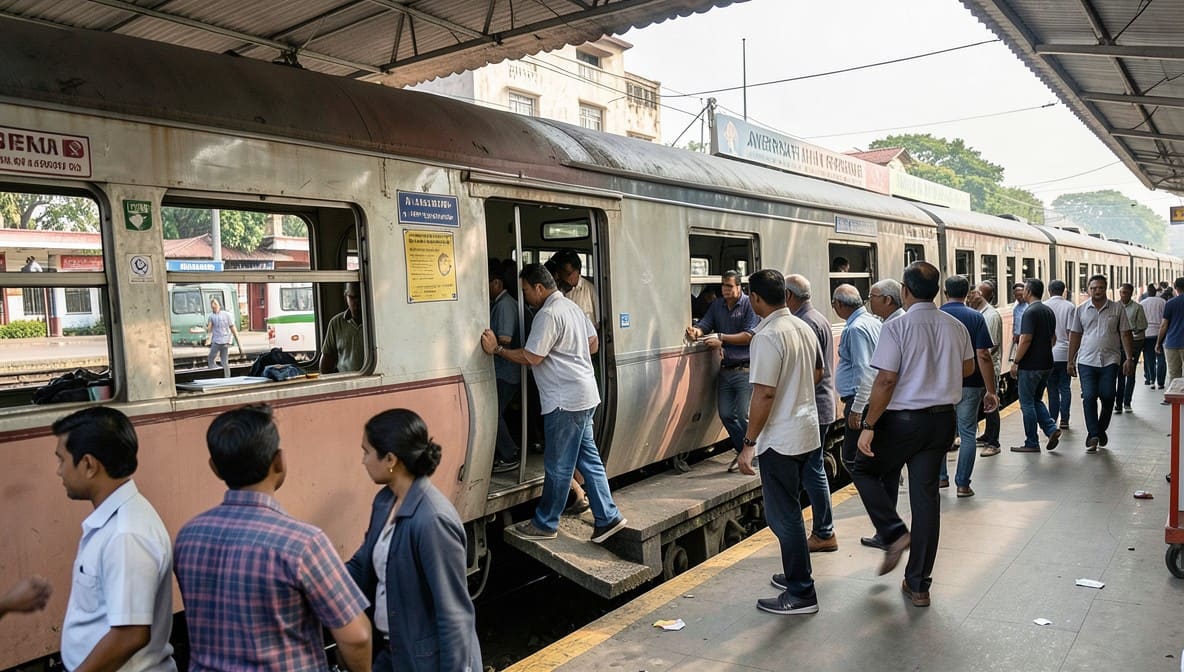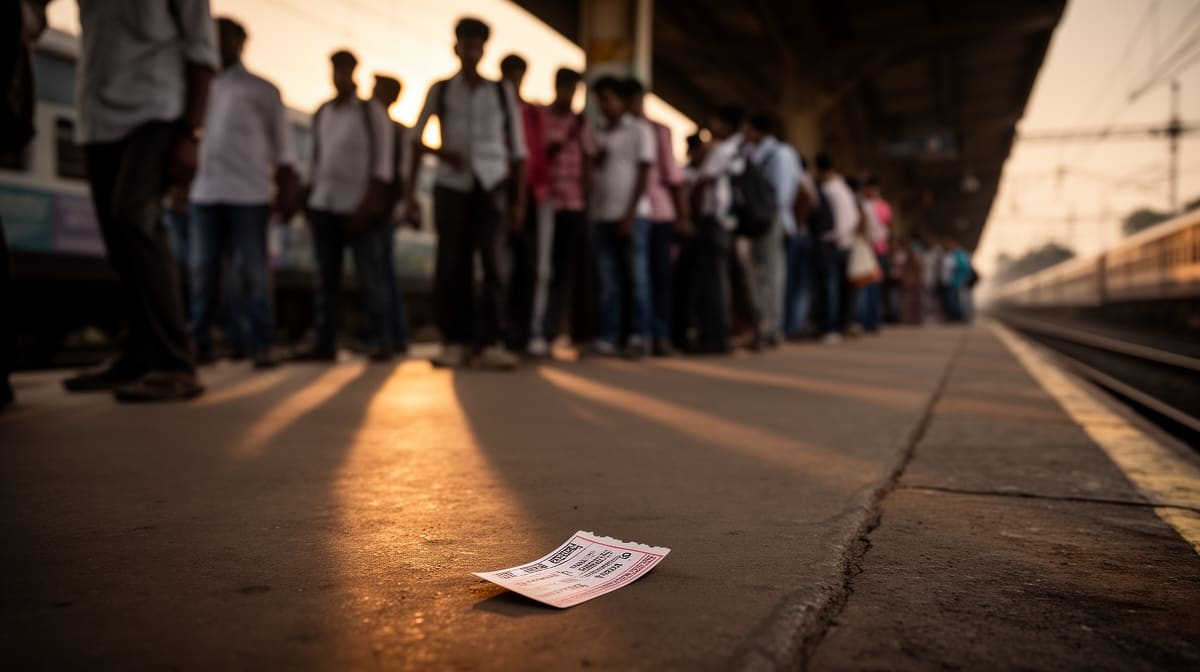
The Bombay High Court has clarified that an accidental fall from a train by a bonafide passenger with a valid ticket constitutes an 'untoward incident' under the Railways Act, 1989, entitling the deceased's legal heirs to statutory compensation. This judgment overturns a narrow interpretation by the Railway Claims Tribunal that required proof of trespass or negligence to deny liability, reinforcing the principle that railways bear strict responsibility for passenger safety.
Background & Facts
The Dispute
The appellant, Rajani Ravindra Pol, is the daughter of the deceased, Shyamal Sachin Salvi, who died on 28th December 2010 after falling from a Western Railway local train while travelling from Nallasopara to Santacruz with a valid season pass. She filed a claim before the Railway Claims Tribunal seeking compensation under the Railways Act, 1989, on the ground that her mother’s death resulted from an untoward incident. The Tribunal rejected the claim, holding that the death did not qualify as an 'untoward incident' because it allegedly resulted from the deceased crossing the track and being hit by a train.
Key Facts
- The deceased was a housemaid and held a valid season pass for daily travel on Western Railway.
- The incident occurred between 6:30 a.m. and 7:00 a.m. on 28.12.2010.
- The deceased was found dead on the railway track near Santacruz station.
- The Railway Claims Tribunal accepted that the deceased was a bonafide passenger but denied compensation on the basis that her death resulted from trespassing.
- No eyewitnesses to the fall or crossing were produced by the railways.
- The deceased had no history of trespassing or criminal activity.
Procedural History
- 28.12.2010: Incident occurred - deceased fell from train and died.
- 28.12.2010: Station Master’s Report filed - stated cause of death as "not known".
- 29.12.2010: Inquest panchnama prepared at hospital - panchas opined deceased was "hit by unknown local train".
- 05.01.2011: Police Report submitted - claimed deceased was crossing lane no. 4 and hit by train.
- 17.08.2012: Station Master’s report to GRP - reiterated cause as "not known"; Form No. 2 showed no indication of trespass, negligence, or criminal act.
- 2013: Claim filed before Railway Claims Tribunal.
- 31.01.2018: Tribunal rejected claim, holding death resulted from trespassing and thus excluded under Section 124A(c).
- 17.03.2018: Appeal filed before Bombay High Court as FA No. 619 of 2018.
- 17.10.2023: Court permitted amendment to reflect appellant’s married name.
The Parties' Positions
The appellant contended that the deceased was a bonafide passenger who suffered an accidental fall from the train, and that the railways failed to discharge their burden of proving trespass or negligence. The respondent contended that the nature of injuries and police reports indicated the deceased had crossed the track unlawfully, thereby excluding the claim under Section 124A(c) of the Railways Act.
Relief Sought
The appellant sought: (1) reversal of the Tribunal’s order dated 31.01.2018; (2) declaration that the death was an untoward incident; (3) compensation of Rs. 4,00,000 with 6% interest from 28.12.2010 until realization; (4) payment within 12 weeks; and (5) recognition of her married name for disbursement.
The Legal Issue
The central question was whether the death of a bonafide passenger who fell from a moving train, without evidence of trespass, negligence, or criminal act, qualifies as an "untoward incident" under Section 124A of the Railways Act, 1989, thereby entitling the legal heirs to compensation.
Arguments Presented
For the Appellant
Mr. Vaneet Khosla argued that the railways failed to produce any eyewitness or credible evidence to establish trespass or criminal conduct. He emphasized that the Station Master’s initial report stated the cause as "not known", and subsequent reports by police and Divisional Railway Manager were speculative and contradicted the primary record. He relied on the principle that railways are strictly liable for accidents involving passengers with valid tickets, and that the burden of proving exclusionary conditions under Section 124A(c) lies squarely on the railways. He cited Union of India v. Rameshwar Prasad to affirm that mere speculation based on injury patterns cannot substitute for evidence.
For the Respondent
Mr. Pratik Irpatgire contended that the nature of the injuries, as inferred from the inquest panchnama and police report, indicated the deceased had crossed the track, thereby invoking the exclusion under Section 124A(c) for "own criminal act". He argued that the Tribunal was entitled to draw reasonable inferences from the available documents and that the railways were not obligated to call medical experts in every case. He maintained that the absence of a direct eyewitness did not negate the cumulative inference of trespass.
The Court's Analysis
The Court conducted a meticulous review of all documents and found that the railways had failed to discharge their burden of proving exclusion under Section 124A(c). The Station Master’s Report, prepared immediately after the incident, explicitly stated the cause of death as "not known". This primary record carried greater weight than subsequent reports prepared days or months later.
"In the Station Master’s Report, there is no such reason given [of trespassing], and therefore report prepared by the police is on incorrect basis, which does not find its place in the Station Master’s Report."
The Court held that the inquest panchnama, prepared by lay panchas without direct observation, was inadmissible as evidence of fact. Similarly, the police report, which relied on unverified hearsay from the Station Master’s memo, was inherently unreliable. The Divisional Railway Manager’s report, which formed the basis of the Tribunal’s conclusion, was built on these flawed documents.
The Court further rejected the Tribunal’s reliance on the nature of injuries to infer trespass, noting that the Railway Claims Tribunal is not a medical or forensic body and cannot substitute expert opinion with speculation. The railways did not call any medical expert, track witness, or surveillance footage to substantiate their claim.
Regarding Section 147 and Section 124A(c), the Court observed that for exclusion to apply, there must be clear proof that the deceased entered the railway without lawful authority, misused the property, or refused to leave. None of these elements were established. The absence of any mention of trespass in the Station Master’s initial report was decisive.
The Court emphasized that the Railways Act is a welfare legislation designed to provide swift compensation to victims of railway accidents. The burden of proving exclusionary conditions is high and must be met with credible, contemporaneous evidence - not conjecture.
The Verdict
The appeal was allowed. The Court set aside the Railway Claims Tribunal’s order dated 31.01.2018 and held that the deceased’s death constituted an untoward incident under the Railways Act, 1989. The appellant is entitled to compensation of Rs. 4,00,000 with interest at 6% per annum from 28.12.2010 until realization, subject to a maximum cap of Rs. 8,00,000. The respondent must remit the amount within 12 weeks of receiving the appellant’s application with bank details. The respondent is directed to recognize the appellant’s married name for payment purposes.
What This Means For Similar Cases
Untoward Incident Includes Accidental Falls by Bonafide Passengers
- Practitioners must now argue that any accidental fall from a train by a ticket-holding passenger qualifies as an untoward incident, regardless of injury pattern.
- Railways cannot rely on speculative inferences from post-incident reports to invoke exclusions under Section 124A(c).
- The initial Station Master’s report is the most authoritative document and must be given primacy over later police or administrative reports.
Burden of Proof Lies with Railways to Establish Exclusion
- To deny compensation under Section 124A(c), railways must produce direct evidence of trespass, criminal act, or misuse - not circumstantial or inferential reasoning.
- Absence of eyewitnesses does not shift the burden to the claimant; the railways must affirmatively prove exclusion.
- Medical or forensic evidence is not mandatory, but if relied upon, it must be presented by the railways, not assumed by the Tribunal.
Documentary Evidence Trumps Speculative Conclusions
- Inquest panchnamas by lay panchas are not admissible as factual evidence of cause of death.
- Police reports based on unverified hearsay from railway officials are inadmissible.
- Any administrative report contradicting the initial Station Master’s report must be rejected unless independently corroborated.
Compensation Claims Must Be Processed Promptly
- The 12-week deadline for payment sets a clear compliance standard for railway authorities.
- Interest at 6% from the date of accident ensures timely redressal and discourages delay.
- Recognition of post-accident name changes (e.g., marriage) is now mandatory for disbursement.