The Delhi High Court has reaffirmed that railways are strictly liable for deaths occurring during train travel, provided the incident qualifies as an 'untoward incident' under the Railways Act, 1898. The judgment underscores that compensation cannot be denied on speculative inferences or hyper-technical scrutiny of evidence, especially where the legislation is designed to provide swift redress to victims.
Background & Facts
The Dispute
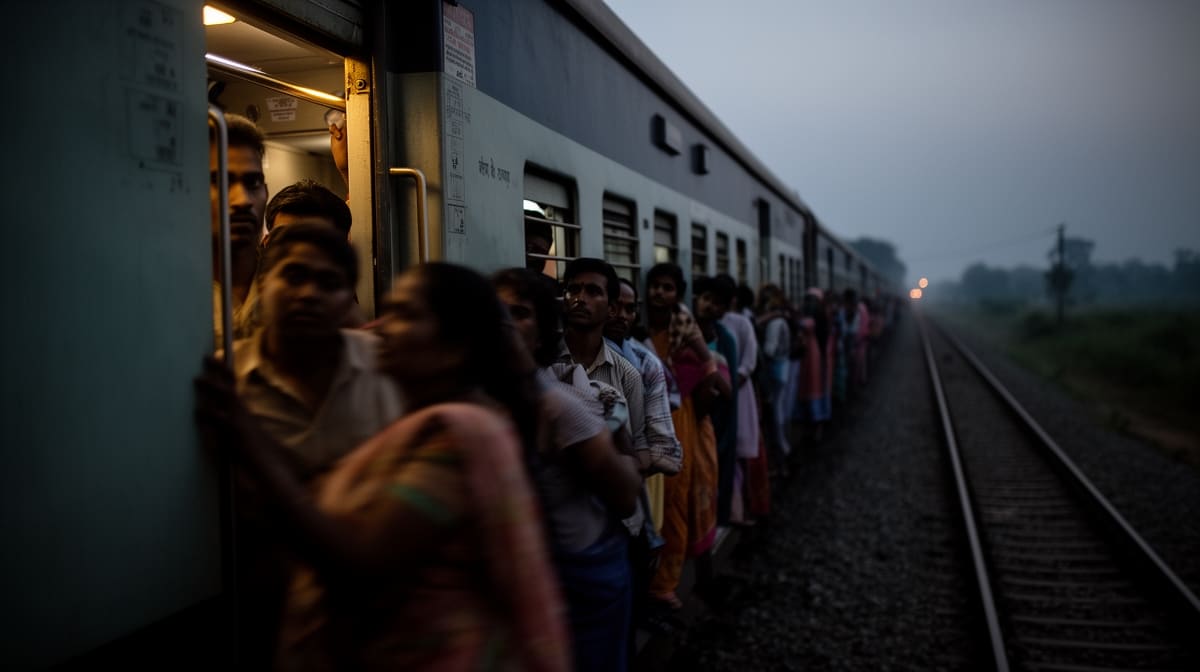
The appellant’s son died after falling from a moving passenger train near Shahdara Railway Station on 24.03.2011. The appellant claimed the deceased, a bona fide passenger, was pushed by a crowded compartment and fell onto the tracks, sustaining fatal injuries. The Railway Claims Tribunal dismissed the claim, citing lack of proof that the deceased was a ticketed passenger and suggesting the death resulted from murder.
Procedural History
- 24.03.2011: Deceased allegedly fell from Train No. 54057 near Shahdara
- 2011: Claim filed before Railway Claims Tribunal, Principal Bench, Delhi
- 21.05.2014: Tribunal dismissed claim, relying on DRM report, post-mortem findings, and non-recovery of ticket
- 2014: Appeal filed before Delhi High Court under Section 23 of the Railway Claims Tribunal Act, 1987
Relief Sought
The appellant sought compensation under Section 124-A of the Railways Act, 1898, arguing that the death constituted an 'untoward incident' and that the Railways failed to prove any statutory exception.
The Legal Issue
The central question was whether the Railways Act, 1898 imposes strict liability on the Railways for deaths arising from an 'untoward incident' under Section 124-A, even in the absence of proof of negligence or direct causation, and whether the burden of proving exceptions lies with the Railways.
Arguments Presented
For the Appellant
The appellant argued that once the occurrence of an untoward incident was reasonably established, the burden shifted to the Railways to prove an exception under the proviso to Section 124-A. Reliance was placed on Union of India v. Leela Devi and Union of India v. Prabhakaran Vijaya Kumar to assert that strict liability applies, and that the Tribunal erred by treating internal reports and minor time discrepancies as conclusive. The absence of a recovered ticket, in light of ocular testimony and severe injuries, could not negate passenger status.
For the Respondent
The Union contended that the Tribunal correctly found no proof of the deceased being a bona fide passenger, citing non-recovery of the ticket, conflicting timing of boarding, and the DRM report suggesting murder. It argued that without establishing the foundational fact of an 'untoward incident', liability under Section 124-A could not arise, and speculative inferences drawn from the post-mortem and DRM report were valid.
The Court's Analysis
The Court held that the Tribunal’s reliance on the DRM report - a non-judicial, internal departmental communication - as conclusive evidence of murder was legally impermissible. The report lacked corroboration through criminal proceedings and was not subject to cross-examination. The post-mortem report, while noting traumatic decapitation, did not establish homicidal intent or exclude railway impact.
"I have also commented in many judgments that the hyper-technical approach adopted by the Railways of requiring that the death must be 'as per the book' i.e., as per the expected set of events is a misconceived argument because there is no divine camera by which captures can be made and can be replayed so as to show the exact sequence of events of a fall from the train..."
The Court emphasized that beneficial legislation like the Railways Act must be interpreted liberally. Minor inconsistencies in testimony, such as approximate timing of ticket purchase, cannot override consistent ocular evidence of boarding. The absence of a ticket recovered from a mutilated body is not determinative of passenger status. The Court clarified that strict liability under Section 124-A is triggered upon establishment of an untoward incident, and the burden to prove exceptions under clauses (a) to (e) of the proviso rests squarely on the Railways, which failed to discharge it.
The Verdict
The appellant won. The Delhi High Court held that strict liability applies under Section 124-A of the Railways Act when an untoward incident is reasonably established, and the burden to prove exceptions lies with the Railways. The Tribunal’s dismissal based on speculative inferences was set aside, and the matter was remanded for compensation assessment.
What This Means For Similar Cases
Burden of Proof Shifts to Railways
- Practitioners must now argue that once an accident occurs during train travel, the Railways must prove the case falls within statutory exceptions
- Internal reports, without criminal substantiation, cannot substitute for admissible evidence
- Claims under Section 124-A are not defeated by absence of ticket if ocular testimony is credible
Minor Time Discrepancies Are Not Fatal
- Approximate timelines given by witnesses years after the incident are not grounds for rejection
- Courts must apply pragmatic standards in beneficial legislation, not rigid chronometric precision
- Focus must be on overall consistency of testimony, not isolated temporal gaps
Medical Evidence Cannot Infer Criminal Intent
- Post-mortem reports showing blunt force trauma do not equate to homicide
- Absence of explicit exclusion of railway impact means the incident remains within the ambit of 'untoward incident'
- Courts must avoid conflating medical findings with criminal conclusions without corroborative evidence