The Gujarat High Court has significantly expanded the scope of railway liability under the Railway Claims Tribunal Act, 1987, holding that a passenger’s death caused by a sudden jerk inside a train compartment qualifies as an untoward incident entitling the family to compensation. This ruling overturns a narrow interpretation by the Railway Claims Tribunal and reaffirms the Act’s remedial purpose.
Background & Facts
The Dispute
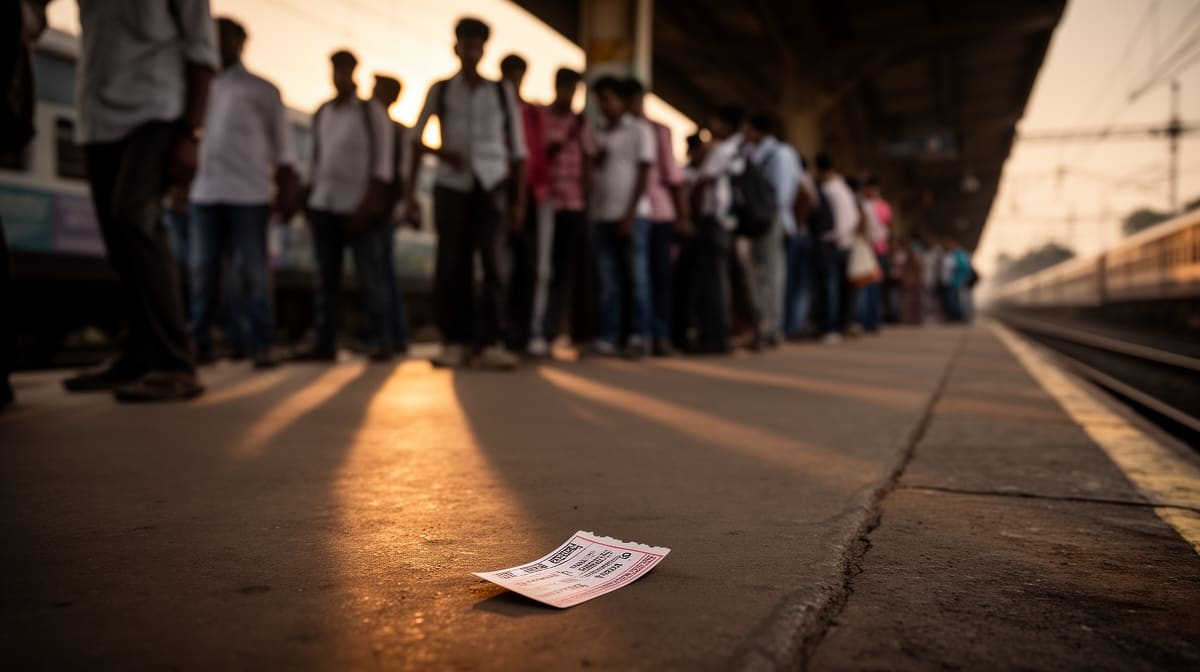
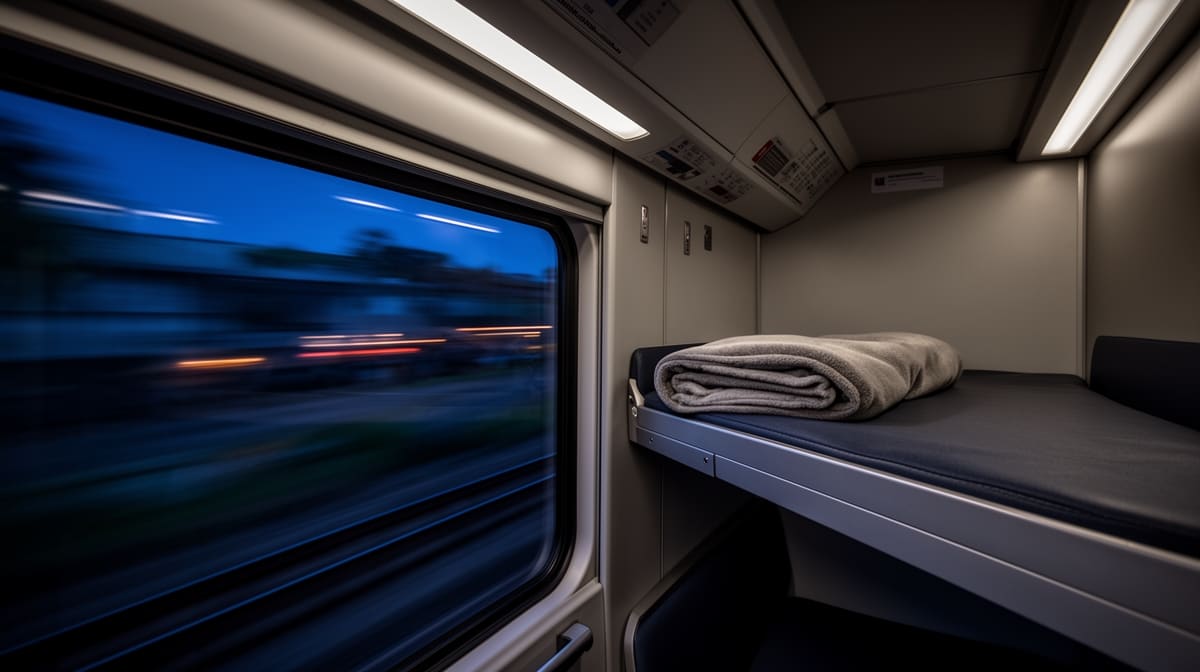
The appellants, legal heirs of the deceased Sadanand Brahmane, filed a claim before the Railway Claims Tribunal seeking compensation of Rs. 8 lakh plus interest for the death of their family member, who died on 31.01.2024 while travelling in Train No. 19008 Bhusawal - Surat Express. The deceased, holding ticket No. UHQ-22886948, was seated on the upper berth when a sudden jerk and jolt in the train caused him to fall to the floor. He was rushed to a private hospital but succumbed to his injuries.
Key Facts
- The deceased was a paying passenger travelling in a reserved compartment of a scheduled Indian Railways train.
- The incident occurred inside the train compartment, not on the platform or station premises.
- No external factor such as theft, riot, or collision was alleged; the cause was solely the sudden movement of the train.
- The claim was filed under Section 123(c) of the Railway Claims Tribunal Act, 1987, seeking compensation for an untoward incident.
- The Railway Claims Tribunal rejected the claim on the ground that the incident occurred within the train compartment and did not fall within the definition of ‘untoward incident’ under Section 123(c) or Section 124.
Procedural History
- 31.01.2024: Incident occurred during train journey from Bhusawal to Surat.
- 12.08.2025: Railway Claims Tribunal, Ahmedabad Bench, dismissed the claim (Case No. OA (Iiu)/ADI/630/2025) on the ground that intra-train accidents are excluded from ‘untoward incident’.
- 13.03.2026: First Appeal filed under Section 23 of the RCT Act heard by the Gujarat High Court.
Relief Sought
The appellants sought quashing of the Tribunal’s order dated 12.08.2025, and a direction to award compensation of Rs. 8 lakh with interest at 9% per annum from the date of death, or such other rate as deemed fit.
The Legal Issue
The central question was whether Section 123(c) of the Railway Claims Tribunal Act, 1987, excludes compensation for a passenger’s death caused by a sudden jerk or jolt occurring within the train compartment, or whether such an event falls within the inclusive definition of an ‘untoward incident’.
Arguments Presented
For the Appellant
Learned counsel Mr. Rathin P. Raval argued that Section 123(c) is a beneficial provision meant to provide relief to passengers and must be interpreted liberally, as held in Union of India v. Prabhakaran Vijaya Kumar (2008) 9 SCC 527. He emphasized that the phrase ‘any part of train carrying passenger’ in Section 124 explicitly includes the interior of the train. He relied on the Allahabad High Court’s decision in Union of India v. Narendra Kumar Gupta (2014 ACJ 2242), which held that intra-train accidents due to sudden movement are compensable under the Act.
For the Respondent
The Respondent, Union of India, contended that ‘untoward incident’ under Section 123(c) refers only to events like riots, collisions, derailments, or incidents occurring on station premises. The death due to a fall inside the train, they argued, was an accident of personal risk inherent in travel and not attributable to railway negligence or an ‘untoward’ event as contemplated by the statute.
The Court's Analysis
The Court rejected the Tribunal’s isolated reading of Section 123(c)(2) and emphasized that the provision must be read as a whole. The definition under Section 123(c) is inclusive, not exhaustive, and explicitly extends to passengers on platforms, booking offices, and waiting halls. The Court observed that the phrase ‘any part of train carrying passenger’ in Section 124 confirms that liability is not confined to station premises.
"Section 123(c) in fact widened the benefit of untoward accident and even if the railway is not involved in untoward accident, the railway has been held liable to pay compensation if a passenger travelling in the railway suffers injury or death."
The Court held that a sudden jerk causing a fall resulting in death is an event beyond the passenger’s control and falls squarely within the spirit of the Act. The Tribunal’s approach was termed ‘non-sensitive’ and contrary to the remedial nature of the legislation. The Allahabad High Court’s precedent was affirmed as directly applicable. The Court stressed that the Act’s purpose is to provide swift, liberal redress to victims of railway travel, not to impose technical barriers.
The Verdict
The First Appeal was allowed. The order of the Railway Claims Tribunal dated 12.08.2025 was quashed and set aside. The matter was remanded to the Tribunal to decide afresh, applying the full scope of Section 123(c) and Section 124 of the Act. The Tribunal was directed to complete the proceedings within eight weeks from the date of receipt of this order.
What This Means For Similar Cases
Intra-Train Accidents Are Compensable
- Practitioners must now argue that any injury or death occurring inside a train due to sudden movement, braking, or jolts qualifies as an untoward incident under Section 123(c).
- The burden shifts to the railway to prove the incident was not caused by operational negligence or mechanical failure.
Liberal Interpretation Overrides Technicality
- Courts will no longer accept narrow, literal readings of ‘untoward incident’ that exclude intra-train accidents.
- The Prabhakaran Vijaya Kumar precedent now binds all tribunals and high courts in interpreting the RCT Act.
Documentation and Evidence Strategy
- Claimants should collect: train ticket, medical reports, eyewitness statements, and train movement logs (if available).
- Emphasize the passenger’s status as a paying user of a public service, invoking the doctrine of non-delegable duty of care.