The Madurai High Court has established a clear procedural framework for the use of public riverbeds during major cultural festivals, rejecting unilateral denials of permission and mandating transparent competitive bidding. This judgment redefines how local authorities must balance public access, cultural rights, and fiscal accountability in temporary public space utilization.
Background & Facts
The Dispute
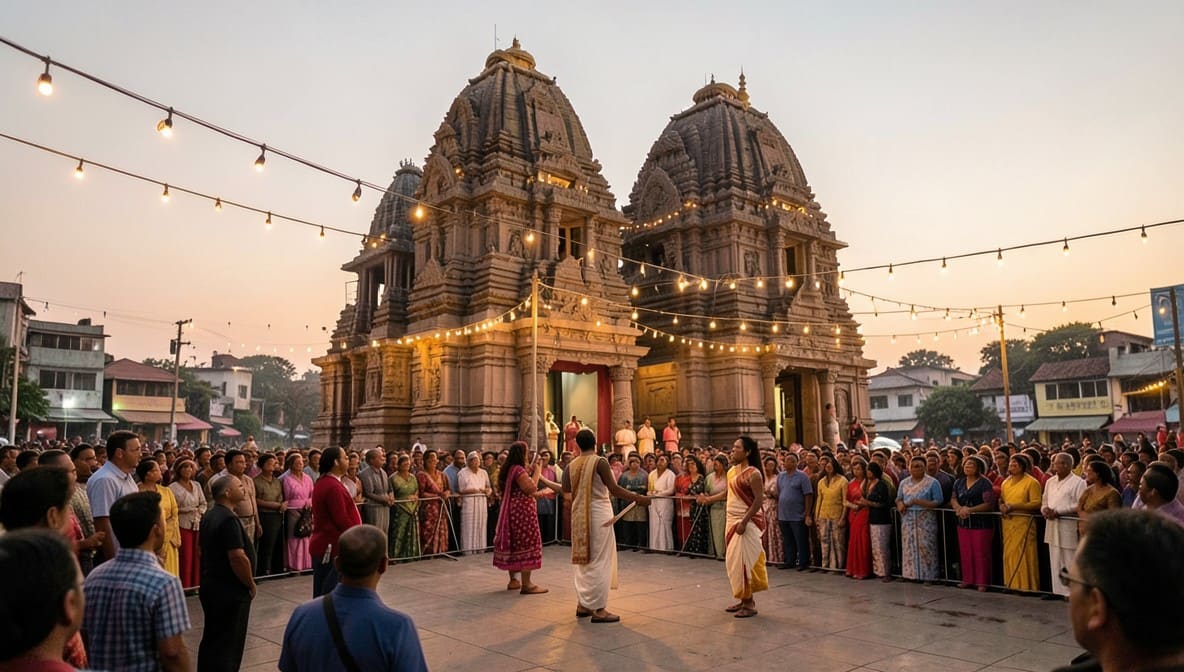
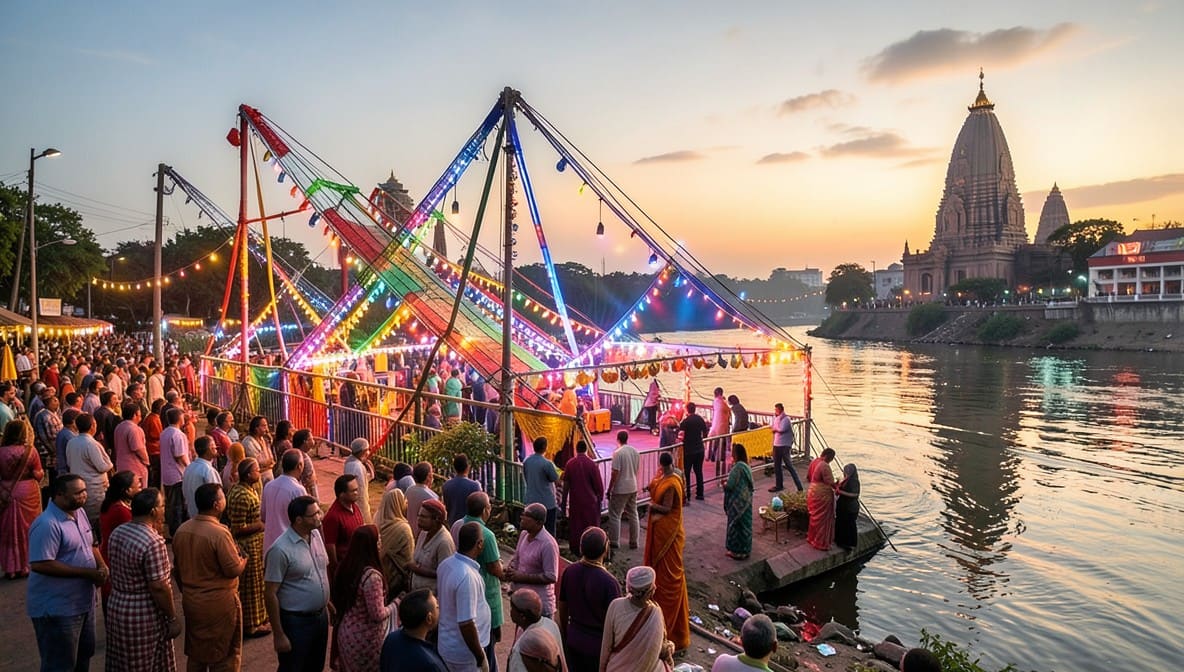
Multiple petitioners sought permission to install and operate amusement rides and entertainment events on the western and eastern banks of the Vaigai River in Paramakudi, Ramanathapuram District, during the annual Chithirai Festival. The festival, organized in association with the Arulmigu Sundaraja Perumal Temple, attracts large crowds and traditionally includes temporary commercial stalls and rides. Despite submitting representations between 10.03.2026 and 27.03.2026, the petitioners were denied permission by various respondents including the District Collector, Municipal Commissioner, Public Works Department, and Police authorities.
Key Facts
- The Chithirai Festival in Paramakudi is a major religious and cultural event, typically held in April-May
- The petitioners sought to operate amusement rides on the riverbed area between 28.04.2026 and 10.05.2026
- Representations were submitted by petitioners on: 10.03.2026, 18.03.2026, 20.03.2026, and 27.03.2026
- The respondents cited concerns over safety, environmental impact, and lack of prior sanction as grounds for denial
- The 6th respondent (Paramakudi Municipality) issued an order dated 30.12.2025 rejecting a prior application (Proceeding No. VaPi/EV AA(3)/Ko.NOC (Rattinam)/2025)
- The festival commencement date was 29.04.2026, leaving minimal time for legal redressal
Procedural History
- 10.03.2026: First representation submitted by petitioner in W.P(MD)No.8713 of 2026
- 18.03.2026: Representation submitted by petitioner in W.P(MD)No.8491 of 2026
- 20.03.2026: Representation submitted by petitioners in W.P(MD)No.9146 of 2026
- 27.03.2026: Representation submitted by petitioner in W.P(MD)No.9330 of 2026
- 30.12.2025: Order rejecting application issued by Executive Engineer, Public Works Department (impugned in W.P(MD)No.8491 of 2026)
- 01.04.2026 to 14.04.2026: Multiple writ petitions filed under Article 226 before Madurai High Court
- 16.04.2026: Hearing conducted before Division Bench of Madurai High Court
The Parties' Positions
Petitioners: Argued that the riverbed is a traditional public space for festival activities, and denial of permission violated their right to livelihood and cultural expression. They cited past permissions granted by authorities in previous years.
Respondents: Contended that riverbeds are public property under state control, and no prior policy or procedure existed for granting such permissions. They raised concerns about safety, environmental degradation, and potential obstruction of river flow.
Relief Sought
Petitioners sought a writ of mandamus directing respondents to permit installation and operation of amusement rides on the Vaigai riverbed during the Chithirai Festival 2026, specifically between 28.04.2026 and 10.05.2026, and quashing the order dated 30.12.2025.
The Legal Issue
The central question was whether public authorities may deny permission for temporary cultural use of a riverbed solely on the grounds of absence of a formal policy, or whether they are obligated to adopt a fair, transparent, and time-bound mechanism to allocate such public space.
Arguments Presented
For the Petitioner
Petitioners relied on the principle of public trust doctrine and past practice, arguing that the riverbed had historically been used for festival-related activities. They cited M.C. Mehta v. Kamal Nath to assert that public natural resources cannot be monopolized by the state without public interest justification. They emphasized the economic livelihood of vendors and the cultural significance of the festival.
For the Respondent
The State contended that riverbeds are state property under the Public Land Act and require explicit authorization. They argued that granting permissions without a transparent process could lead to arbitrary allocations, corruption, and environmental harm. The learned Government Advocate cited the impending elections as a reason for administrative caution.
The Court's Analysis
The Court acknowledged the cultural importance of the Chithirai Festival and the economic dependence of numerous small vendors on temporary festival operations. It noted that while no formal policy existed, the absence of a policy could not justify outright denial, particularly when the festival date was imminent and prior permissions had been granted in previous years.
"The right to conduct cultural activities in public spaces, especially during traditional festivals, cannot be extinguished merely due to bureaucratic inertia or absence of a written policy."
The Court rejected the argument that elections justified delay, observing that public interest in cultural expression outweighs administrative convenience. It emphasized that the riverbed, being a public resource, must be utilized in a manner that is equitable and non-arbitrary.
The Court held that the most appropriate mechanism to ensure fairness, transparency, and revenue generation was a public auction. It directed the fifth respondent - the Executive Engineer, Public Works Department - to conduct an auction within 24 hours, with proceedings videographed to ensure accountability.
The Verdict
The writ petitions were disposed of by directing the fifth respondent to conduct an auction on 17.04.2026 at 02:15 p.m. in its office. Two licenses shall be issued to the highest bidders. Each successful bidder shall pay Rs.1,50,000 to the Arulmigu Sundaraja Perumal Temple and Rs.1,00,000 to the Paramakudi Municipality. The fifth respondent may impose reasonable safety and operational conditions. No costs were awarded.
What This Means For Similar Cases
Transparent Auctions Are Mandatory for Public Space Allocation
- Practitioners must now argue that any denial of temporary public space use for cultural events without a transparent process is arbitrary and violative of Article 14
- Authorities must establish or adopt a clear, published procedure for such allocations, failing which courts may mandate auctions
- Videography of auction proceedings is now a de facto requirement for procedural fairness
Revenue Sharing with Cultural Institutions Is Legally Recognized
- The Court’s directive to channel funds to the temple and municipality establishes a precedent for revenue-sharing models in public-private cultural partnerships
- This creates a replicable model for other festivals across Tamil Nadu where religious institutions are integral to event organization
- Practitioners can now cite this judgment to negotiate revenue-sharing terms in similar cases
Cultural Rights Override Administrative Inertia
- The judgment reinforces that traditional cultural practices on public land are protected under Article 21 (right to life with dignity)
- Administrative delays due to elections or policy gaps cannot override time-sensitive cultural rights
- Future petitioners may invoke this case to challenge blanket bans on festival-related activities in public spaces