The Rajasthan High Court has reaffirmed that illegal encroachments on public lands such as johad, talab, pasture, and shamshan grounds must be removed without exception, and that regularization is permissible only in narrowly defined circumstances. This ruling reinforces the binding directive issued by a Division Bench in 2019 to establish Public Land Protection Cells across districts to handle such complaints at the administrative level, thereby reducing unnecessary litigation before the High Court.
Background & Facts
The Dispute
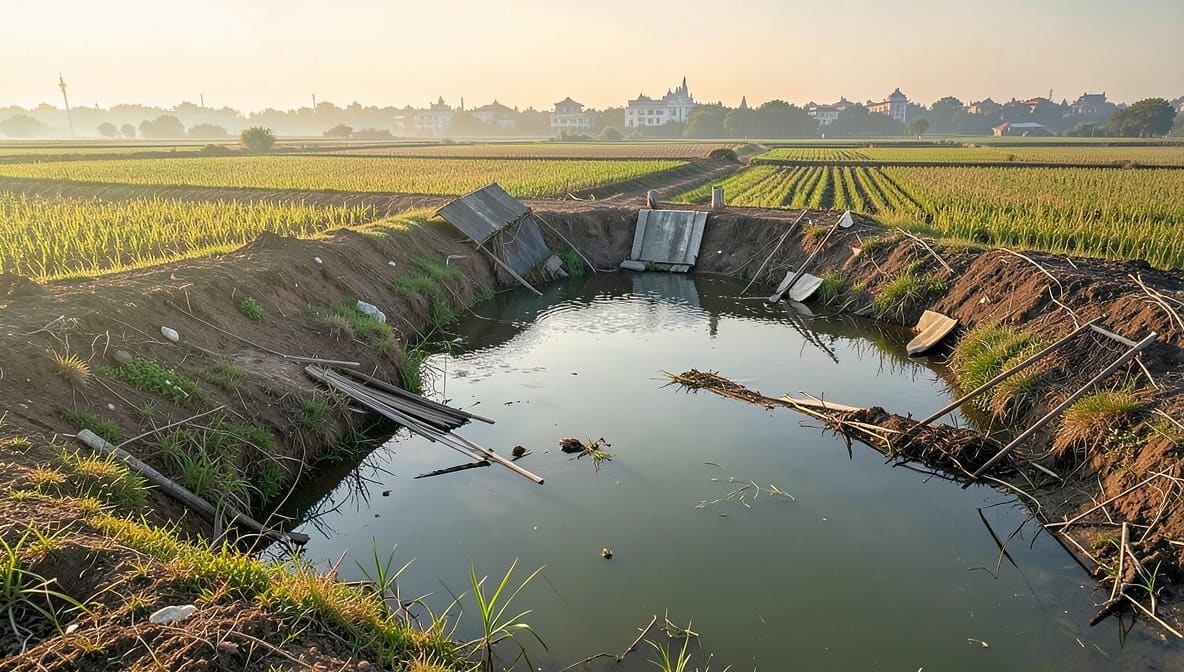
The petitioner, Prahlad Singh Tanwar, a 76-year-old resident of Village Sonthliya in District Sikar, Rajasthan, sought intervention against persistent encroachments on public land designated for community use, including pasture and johad (traditional rainwater harvesting structures). Despite multiple representations to revenue authorities, no action was taken to evict trespassers or restore the land to its original public purpose.
Key Facts
- The petitioner has repeatedly filed complaints with the Tehsildar, Sub Divisional Officer, and District Collector regarding unauthorized occupation of Gram Panchayat land
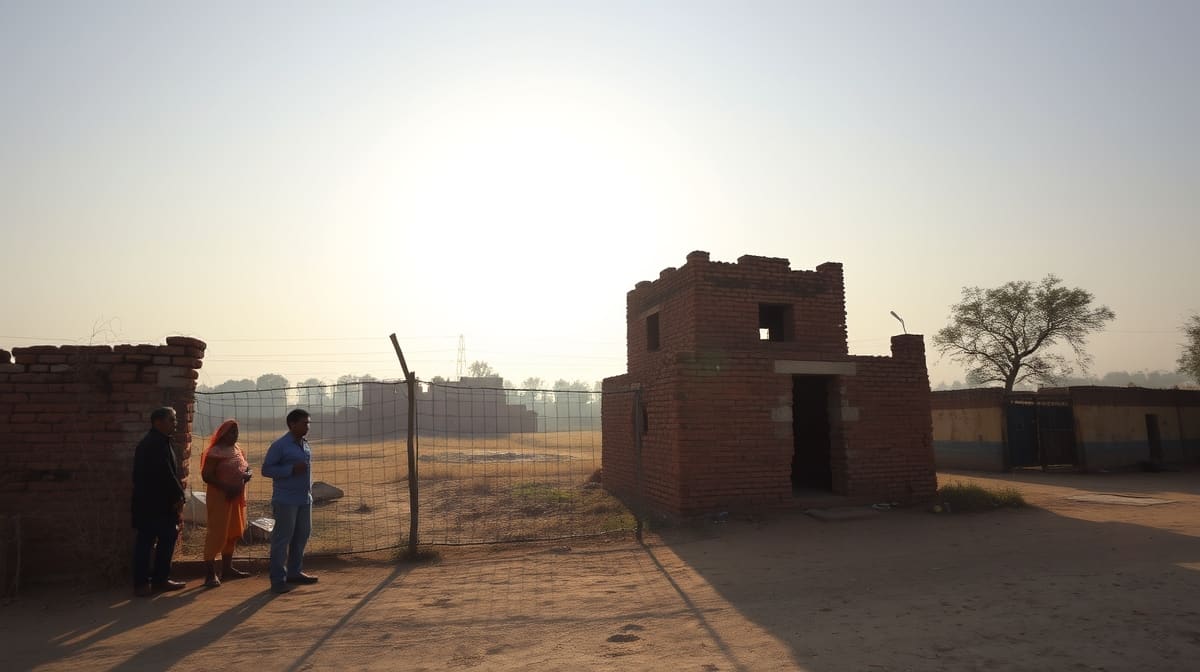
- Encroachments include construction of private structures, fencing, and conversion of communal pasture land for private agricultural use
- No formal response or action has been recorded by any revenue authority despite representations made over several years
- The petitioner’s grievances fall squarely within the category of disputes addressed by the Division Bench order in Jagdish Prashad Meena & Ors. v. State of Rajasthan & Ors. (D.B. Civil Writ Petition (PIL) No. 10819/2018)
Procedural History
- 2018 - 2019: Division Bench of Rajasthan High Court, in Jagdish Prashad Meena, issued directions for creation of Public Land Protection Cell (PLPC) in every district
- 30.01.2019: Division Bench order mandated establishment of PLPC headed by District Collector to receive, investigate, and dispose of encroachment complaints
- 2026: Petitioner filed Writ Petition No. 6978/2026 seeking enforcement of the 2019 order and direction to act on his pending complaints
- 08.05.2026: Present order passed by Division Bench of Justices Puspendra Singh Bhati and Vinit Kumar Mathur
Relief Sought
The petitioner sought:
- Direction to the respondents to constitute and operationalize the Public Land Protection Cell in District Sikar
- Permission to submit a formal representation before the PLPC
- Direction to dispose of his representation within a stipulated time
- Removal of encroachments and restoration of public land in accordance with law
The Legal Issue
The central question was whether the petitioner, having exhausted administrative remedies, may be directed to approach the Public Land Protection Cell established under the binding directive in Jagdish Prashad Meena, and whether the respondents are bound to act on such representations within a fixed timeframe.
Arguments Presented
For the Petitioner
Learned counsel submitted that the petitioner’s grievances are identical to those addressed in Jagdish Prashad Meena, where the Court explicitly held that repeated litigation before the High Court on encroachment matters must be curtailed by operationalizing the PLPC. The petitioner relied on the 2019 order as a binding precedent and argued that the respondents’ inaction violates the Court’s directive and the Supreme Court’s ruling in Jagpal Singh v. State of Punjab.
For the Respondent
The Additional Advocate General conceded that the PLPC has been constituted in principle but acknowledged delays in its effective functioning. No substantive opposition was raised to the petitioner’s request to file a representation, and the State accepted the Court’s authority to direct disposal within a fixed period.
The Court's Analysis
The Court examined the 2019 Division Bench order in Jagdish Prashad Meena and the Supreme Court’s judgment in Jagpal Singh & Others v. State of Punjab & Others (2011) 11 SCC 396. The Court emphasized that the Supreme Court had unequivocally held that illegal occupation of Gram Sabha or Gram Panchayat land cannot be regularized merely due to long duration, political influence, or investment in construction. Regularization is permissible only in exceptional cases, such as where land has been granted under specific government notifications to landless laborers or Scheduled Castes/Scheduled Tribes, or where public utilities like schools, hospitals, or shamshans already exist.
"Observations of the Supreme Court in Jagpal Singh (supra) thus leaves no manner of doubt that removal of encroachment on all such land is a rule and regularisation an exception and that too in extremely limited number of cases, which only the Government can do by appropriate notification of the government and no other authority."
The Court held that the PLPC mechanism is not discretionary but a mandatory administrative framework established to prevent the High Court from being flooded with repetitive PILs. The petitioner’s right to seek redressal through the PLPC is not merely procedural - it is a substantive remedy mandated by judicial order. The respondents’ failure to act on prior complaints constitutes non-compliance with a binding directive.
The Verdict
The writ petition is disposed of with the following directions:
- The petitioner is permitted to submit a representation before the Public Land Protection Cell (PLPC) in District Sikar
- The respondents shall dispose of the representation within two months from the date of receipt of the certified copy of this order
- Disposal must be done by passing a speaking order, clearly stating the findings and action taken
- Any action taken must strictly conform to the law and the principles laid down in Jagpal Singh and Jagdish Prashad Meena
- Failure to comply shall render the respondents liable for contempt proceedings
What This Means For Similar Cases
Encroachment Complaints Must Go Through PLPC First
- Practitioners must now advise clients to file formal representations with the PLPC before approaching the High Court
- Filing a writ petition without exhausting the PLPC route may result in dismissal on grounds of non-exhaustion of alternate remedy
- The PLPC is not a mere formality - it is a statutorily mandated administrative tribunal under judicial supervision
Regularization of Encroachments Is Now Legally Impossible Without Exception
- No revenue officer, including Tehsildar or Collector, has authority to regularize encroachments on public land
- Only the State Government, by formal notification, may permit regularization in exceptional cases
- Claims based on long possession, investment, or political influence are legally irrelevant
- Any order regularizing such land without State notification is void ab initio
Judicial Enforcement of Administrative Directives Is Absolute
- The Court will not tolerate delay or non-compliance with its binding orders
- Two-month deadline for disposal sets a clear standard for administrative accountability
- Speaking orders are mandatory - vague or non-reasoned responses will be treated as non-compliance
- Contempt proceedings are now a real risk for authorities failing to act