The Rajasthan High Court has reaffirmed that institutional mechanisms like the Public Land Protection Cell (PLPC) are not discretionary buffers but mandatory instruments of public accountability. In dismissing a PIL seeking direct intervention, the Court directed that all encroachment complaints must be processed under established procedural safeguards, ensuring that neither the complainant nor the alleged encroacher is denied due process.
Background & Facts
The Dispute
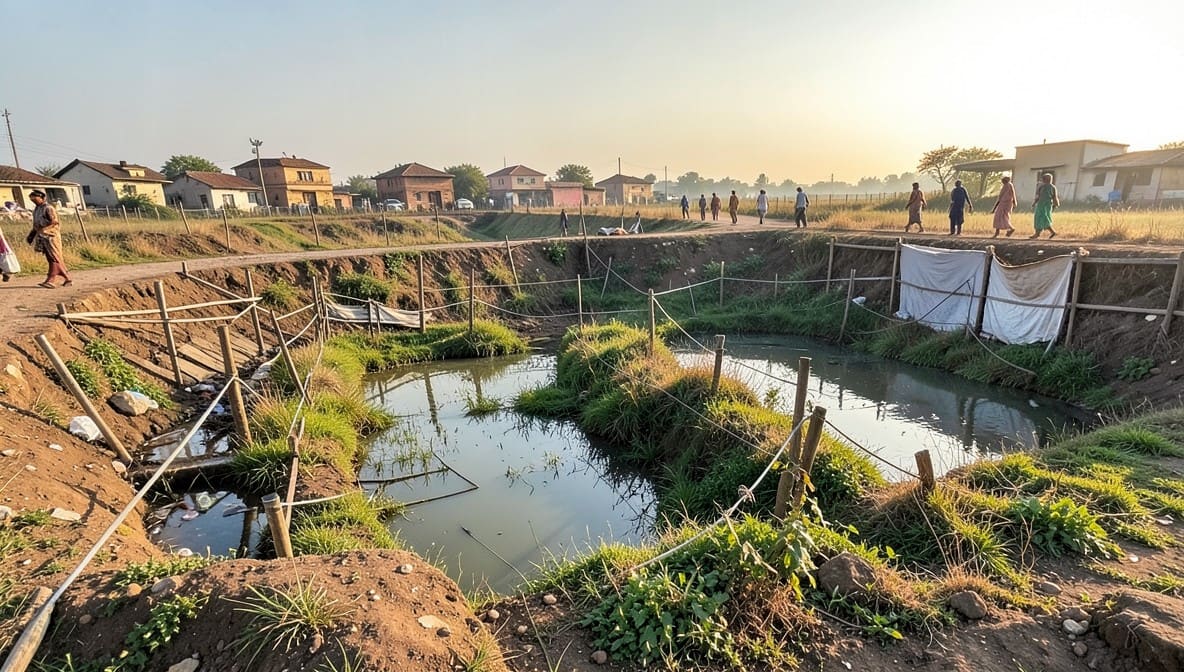
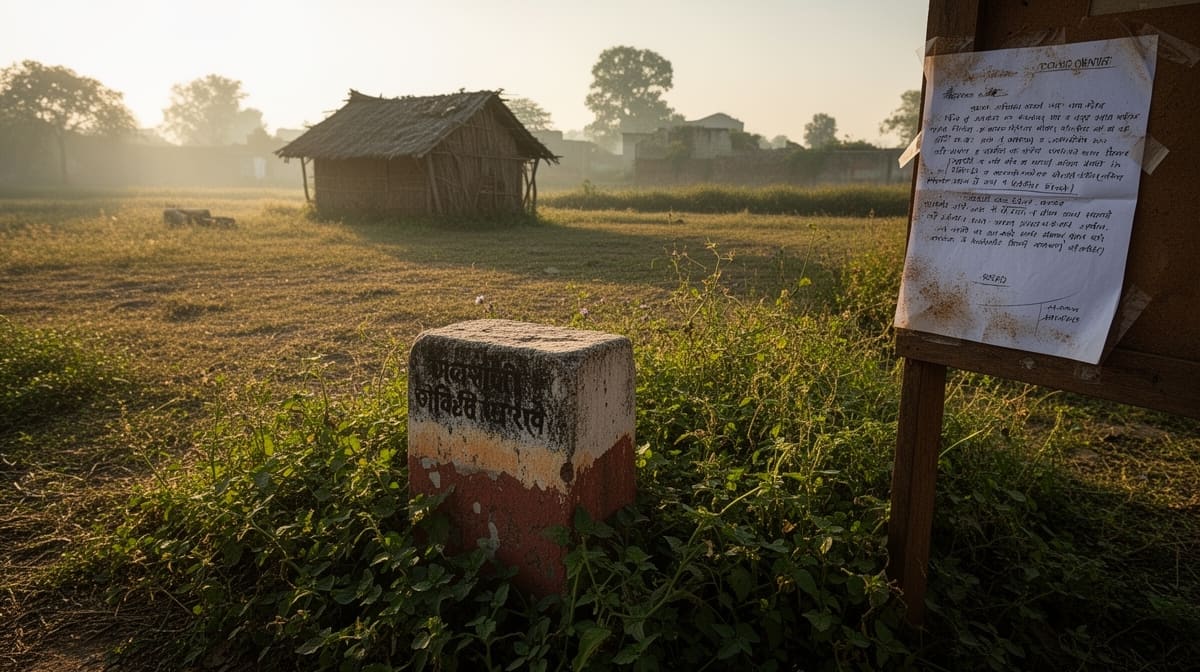
The petitioner, a resident of Gopalpura village in Alwar, alleged persistent encroachment on public land designated as Gair Mumkin Rada and Gair Mukin Johdi - lands traditionally held for communal use by villagers. Despite repeated representations to revenue authorities, no action was taken to remove illegal structures or penalize trespassers, prompting the petitioner to approach the High Court under Article 226.
Procedural History
- 2019: A Division Bench of the Rajasthan HC, in Jagdish Prashad Meena & Ors. v. State of Rajasthan, directed the creation of a permanent Public Land Protection Cell (PLPC) in every district to address systemic encroachment.
- The PLPC was mandated to receive, investigate, and dispose of complaints with speaking orders, avoiding repetitive litigation before the Court.
- The petitioner, having exhausted local remedies without result, filed this fresh writ seeking enforcement of the 2019 directive.
Relief Sought
The petitioner sought: (a) direction to the State to investigate encroachments on public land; (b) removal of illegal structures; and (c) imposition of penalties on encroachers.
The Legal Issue
The central question was whether the Public Land Protection Cell (PLPC), established by judicial directive, is bound by principles of natural justice when adjudicating encroachment complaints, and whether it must provide notice and hearing to alleged trespassers before taking action.
Arguments Presented
For the Petitioner
Counsel argued that the 2019 order created a statutory-like obligation on the State to act. The petitioner had no effective remedy other than approaching the Court, as the PLPC had remained inactive. Reliance was placed on Jagpal Singh v. State of Punjab to assert that long-standing encroachments cannot be regularized without explicit government notification, and that procedural inaction violates the right to public resources under Article 21.
For the Respondent
The State contended that the PLPC was still in nascent stages and that administrative delays were not tantamount to constitutional violation. It argued that the petitioner’s remedy lay in approaching the PLPC directly, and that the Court should not interfere in administrative processes absent mala fide or gross negligence.
The Court's Analysis
The Court examined the 2019 order as a binding judicial directive, not a mere suggestion. It emphasized that the PLPC’s mandate was not merely to receive complaints but to conduct inquiries, issue speaking orders, and ensure accountability. The Court held that any adjudicative function - whether administrative or quasi-judicial - must comply with natural justice, particularly the rule of audi alteram partem.
"The PLPC shall also give notice to the private respondents before arriving at a considered conclusion."
The Court rejected the notion that encroachment cases can be decided ex parte. Even where land is public, the rights of individuals - however tenuous their claim - must be tested through fair procedure. The judgment distinguished Jagpal Singh not as a license for summary eviction, but as a mandate for structured, notice-based removal. The Court further noted that the State’s failure to operationalize the PLPC effectively had forced citizens back into litigation, defeating the very purpose of the 2019 order.
The Verdict
The petitioner’s writ was disposed of with liberty to file a representation before the PLPC. The Court held that the PLPC must decide all complaints within two months and must provide notice and hearing to alleged encroachers. The order clarified that this direction does not prejudge the merits of any claim but enforces procedural compliance.
What This Means For Similar Cases
Notice Is Non-Negotiable in Land Disputes
- Practitioners must now insist on notice and hearing being granted to all parties in PLPC proceedings, even where encroachment appears blatant.
- Failure to issue notice renders any removal order voidable under Article 14 and Article 21.
- This applies equally to revenue officers acting under PLPC directives.
Two-Month Deadline Is Binding
- The two-month timeline is not directory but mandatory in the context of judicially created mechanisms.
- Delay beyond this period can be challenged via contempt or fresh writ, as the Court has now fixed a clear standard of administrative diligence.
PLPCs Are Quasi-Judicial Bodies in Function
- PLPCs are no longer administrative desks - they are adjudicative forums under judicial supervision.
- Their orders must be reasoned, signed, and communicated to complainants and respondents alike.
- Legal aid and documentation support for villagers should be institutionalized to ensure equitable access.