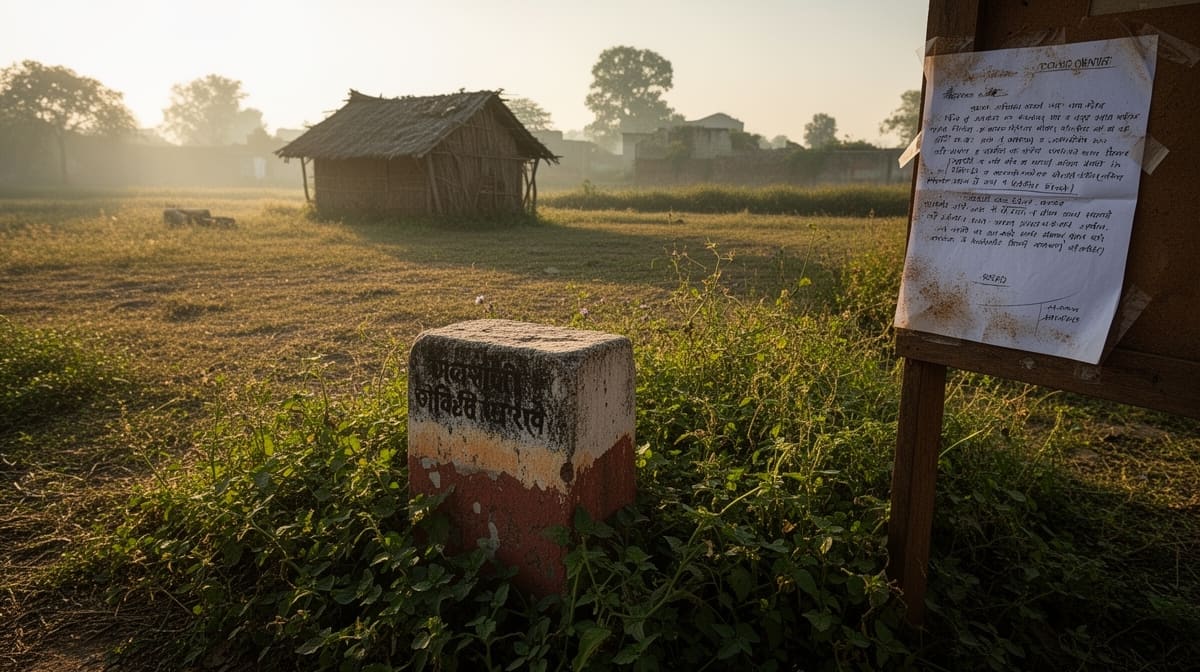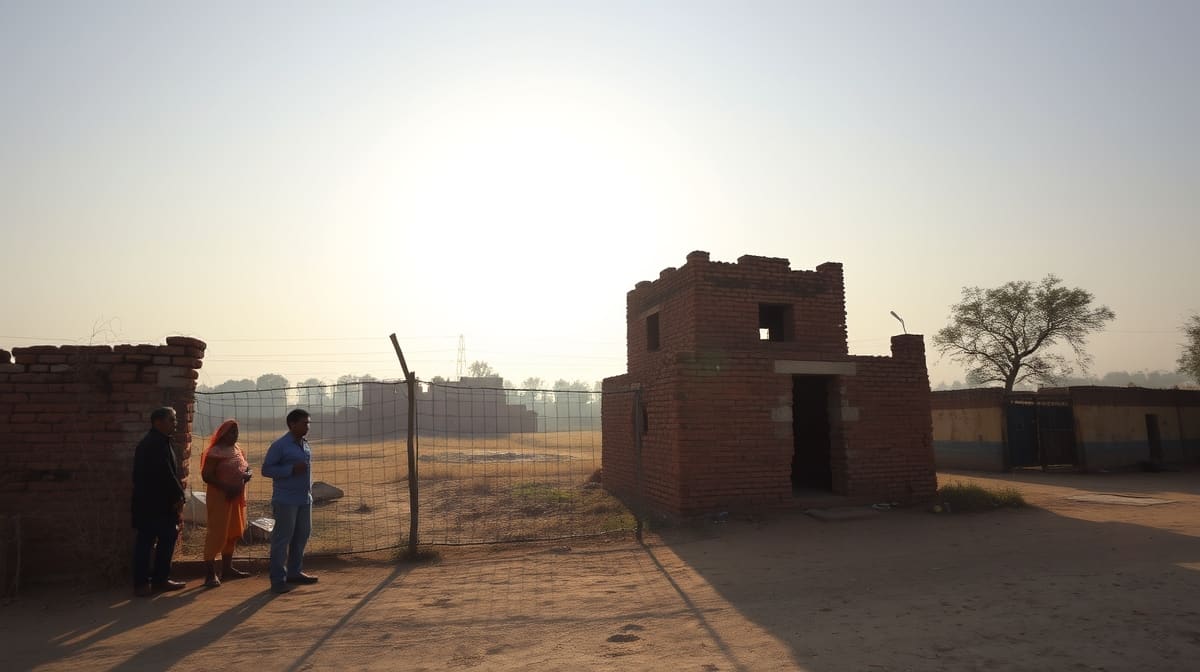
The Rajasthan High Court has reaffirmed that institutional mechanisms, not direct writ petitions, must be exhausted for resolving encroachments on public lands such as johads. In a significant procedural ruling, the Court directed the petitioner to avail the remedy provided under the Public Land Protection Cell (PLPC) established pursuant to a prior Division Bench order, emphasizing that courts will no longer entertain such matters unless the PLPC fails to act.
Background & Facts
The Dispute
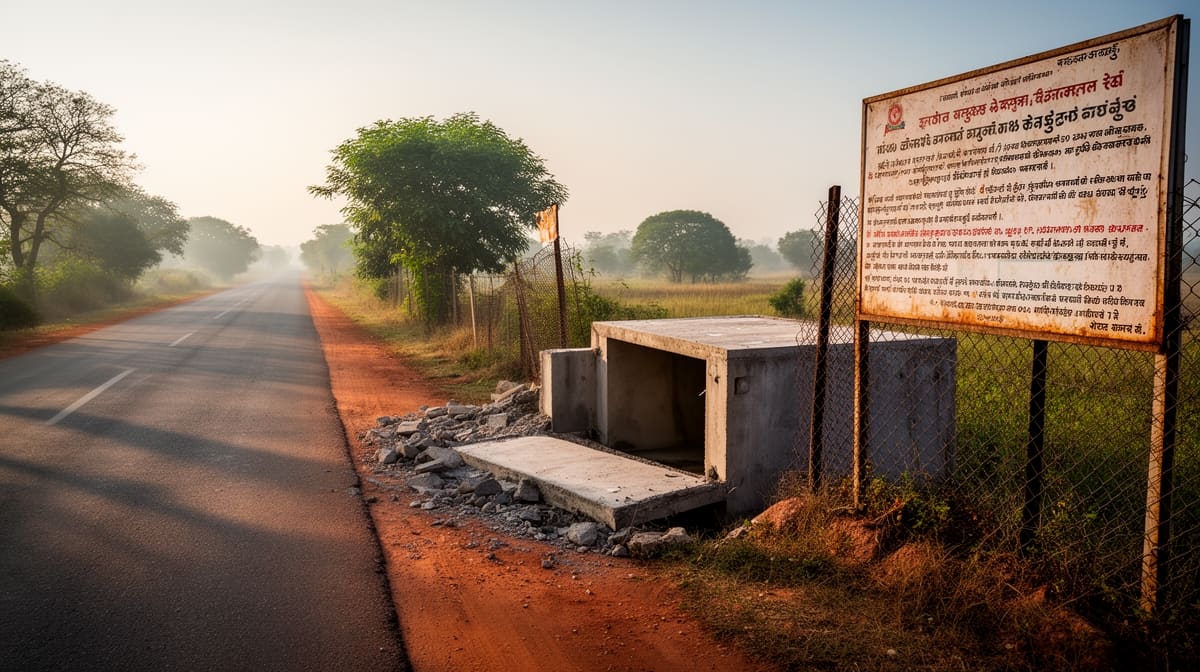
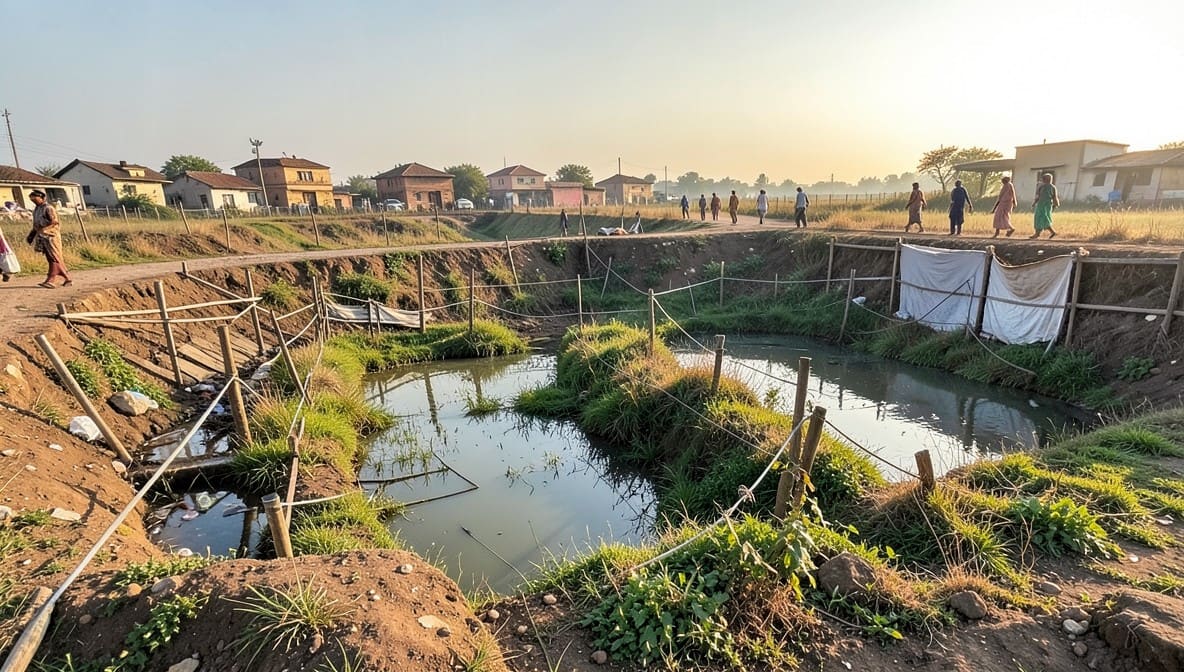
The petitioner, Omveer S/o Mahendra Singh Shekhawat, seeks removal of an encroachment on land bearing Khasra No. 194 (Gair Mumkin Johad), measuring 8.64 hectares, located in Village Jakhod, Tehsil Surajgarh, District Jhunjhunu. The land is classified as community pasture land traditionally used by villagers for common purposes. The petitioner alleges that unauthorized persons have illegally occupied and encroached upon this public land, and despite repeated complaints to revenue authorities, no action has been taken.
Key Facts
- The disputed land is designated as "Gair Mumkin Johad" - a type of village common land under the Rajasthan Land Revenue Act, 1956, meant for collective use by the Gram Panchayat.
- The petitioner has not filed any formal complaint before the designated Public Land Protection Cell (PLPC), despite its existence since 2019.
- The encroachment allegedly includes unauthorized construction, fencing, and cultivation on the johad land.
- No FIR, survey report, or official record of prior complaint to the Tehsildar, Patwari, or Gram Panchayat is cited in the petition.
Procedural History
- 01.04.2026: Present writ petition (D.B. Civil Writ Petition No. 5751/2026) filed before the Rajasthan High Court under Article 226.
- 30.01.2019: Division Bench of the Rajasthan High Court, in Jagdish Prashad Meena & Ors. v. State of Rajasthan & Ors., D.B. Civil Writ Petition (PIL) No. 10819/2018, directed the creation of a Public Land Protection Cell (PLPC) in every district to handle complaints of encroachment on johads, talabs, shamshan grounds, and other public lands.
- 30.01.2019: The Court directed the Chief Secretary to operationalize the PLPC under the supervision of the District Collector, with powers to investigate complaints and issue speaking orders.
- 30.01.2019: The Court explicitly stated that it would no longer entertain direct writ petitions on encroachment matters unless the PLPC failed to act.
- 01.04.2026: Petitioner appeared before the Division Bench and sought permission to file a representation before the PLPC.
The Parties' Positions
Petitioner’s Position: The petitioner seeks immediate removal of encroachment and punitive action against land grabbers. He argues that the failure of revenue authorities to act justifies direct judicial intervention.
Respondents’ Position: The State, through the Additional Advocate General, submitted that the PLPC mechanism is fully functional and that the petitioner has not exhausted this statutory remedy. The respondents emphasized that the Court’s 2019 direction in Jagdish Prashad Meena is binding and must be followed.
Relief Sought
The petitioner seeks:
- A writ directing respondents to remove encroachment from Khasra No. 194 (8.64 hectares);
- Action against encroachers under relevant land revenue laws;
- Restoration of the johad land to its original public use.
The Legal Issue
The central question was whether a petitioner may directly approach the High Court under Article 226 for removal of encroachment on public land, when a statutory mechanism - the Public Land Protection Cell - has been specifically established to address such grievances.
Arguments Presented
For the Petitioner
The petitioner’s counsel argued that the persistent inaction of revenue authorities over years justifies direct judicial intervention. He contended that the PLPC, though established, has not been effectively functional in his district, and that the petitioner’s right to access justice cannot be delayed by procedural formalities. He cited Jagpal Singh v. State of Punjab to underscore the non-negotiable duty of the State to protect public land.
For the Respondent
The Additional Advocate General submitted that the 2019 Division Bench order in Jagdish Prashad Meena is binding precedent and has been issued with the authority of the Court to streamline litigation. He emphasized that the PLPC is designed to act as a first-tier administrative remedy, and bypassing it defeats the purpose of institutional reform. He further noted that the Supreme Court in Jagpal Singh had held that long-standing encroachment or political influence cannot justify regularization - reinforcing the State’s duty to act.
The Court's Analysis
The Court examined the 2019 order in Jagdish Prashad Meena, which was issued after the Court was inundated with similar petitions across Rajasthan. The Bench noted that the creation of the PLPC was not an optional administrative measure but a mandatory institutional response to systemic failure. The Court observed:
"This Court has been passing orders in such matters requiring the respective District Collectors to examine the factual content of the allegations and take steps to remove the encroachments so as to secure such land. In order therefore to provide a pan-Rajasthan solution to this ever persisting problem, we deem it appropriate to direct the Chief Secretary of the State to devise a permanent mechanism..."
The Court held that the petitioner’s failure to approach the PLPC before filing a writ petition renders the present petition premature. The Court further relied on the Supreme Court’s directive in Jagpal Singh v. State of Punjab (2011) 11 SCC 396, which categorically ruled that encroachments on Gram Panchayat land cannot be regularized except in exceptional cases involving public utilities or notified beneficiaries. The Court emphasized that the PLPC’s mandate includes issuing speaking orders - ensuring transparency and accountability - and that its existence eliminates the need for direct judicial intervention in routine cases.
The Court rejected the petitioner’s argument that the PLPC is ineffective, noting that absence of proof of prior complaint to the PLPC cannot be equated with its non-existence or non-functionality. The burden lies on the petitioner to demonstrate exhaustion of remedies.
The Verdict
The writ petition is disposed of. The petitioner is directed to submit a representation before the Public Land Protection Cell (PLPC) of District Jhunjhunu within 15 days of receiving the certified copy of this order. The respondents shall dispose of the representation within two months from the date of receipt, with a speaking order. If the PLPC fails to act within this period, the petitioner may approach this Court afresh with proof of non-compliance.
What This Means For Similar Cases
Exhaustion of PLPC Remedy Is Mandatory
- Practitioners must now file a formal complaint with the PLPC before approaching the High Court in any case involving encroachment on johad, talab, shamshan, or Gram Panchayat land.
- Failure to do so will result in dismissal of the writ petition on grounds of non-exhaustion of statutory remedy.
Judicial Deference to Institutional Mechanisms
- Courts will no longer entertain direct petitions on land encroachment unless the PLPC has been given a fair opportunity to act.
- The burden of proving PLPC inaction lies squarely on the petitioner - mere allegations of delay are insufficient.
Enforcement of Jagpal Singh Principles
-
Any attempt to regularize encroachments on public land without a government notification will be struck down.
-
Encroachers cannot claim protection based on duration of occupation, investment, or political influence.
-
Always verify whether the PLPC is operational in the district before filing a writ.
-
Maintain documentary proof of PLPC complaint submission (acknowledgment receipt, postal records).
-
If PLPC fails to respond within two months, file a fresh writ petition with certified proof of non-compliance.