The High Court of Telangana has reaffirmed the state’s affirmative duty to act decisively against illegal encroachments on public land, emphasizing that administrative inaction cannot be permitted to undermine constitutional rights and statutory frameworks. This ruling provides critical clarity for practitioners handling land disputes, municipal violations, and public interest litigation under Article 226.
Background & Facts
The Dispute
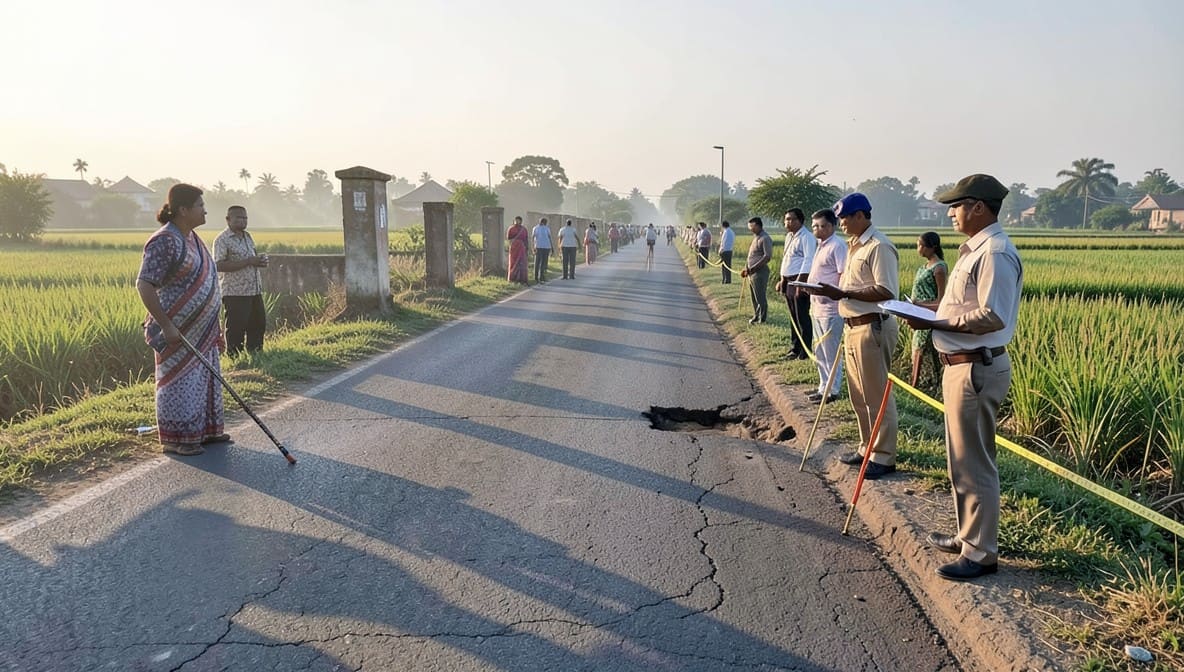
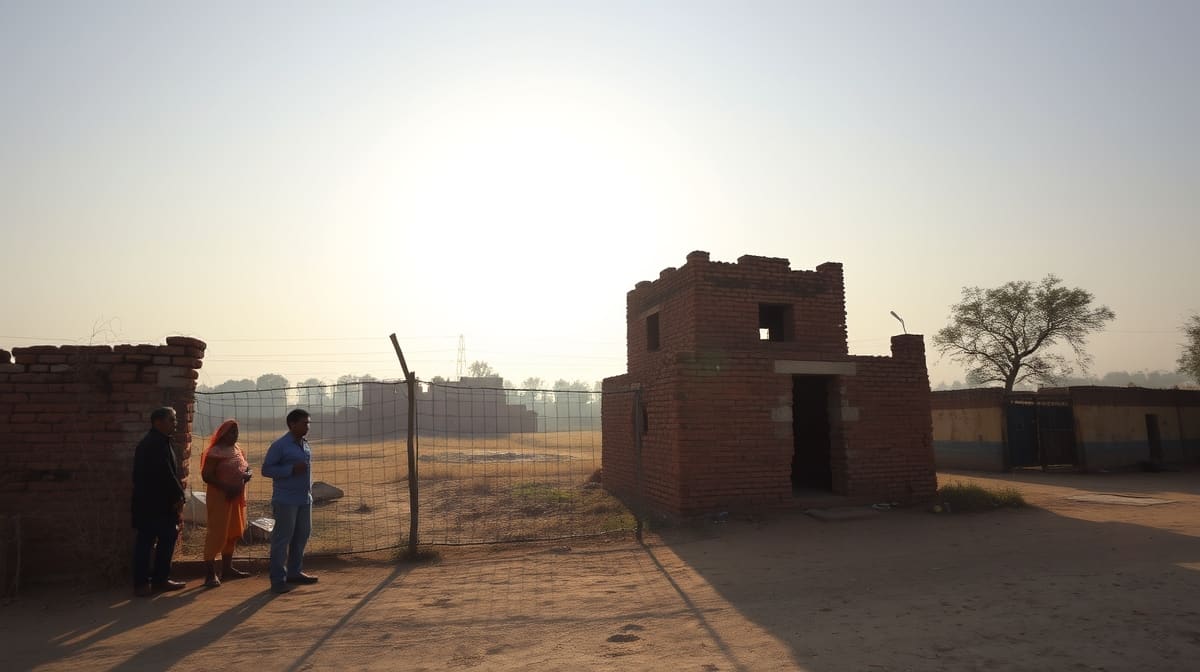
The petitioner, a resident of Sirpur Village in Nizamabad District, alleged that respondents 10 to 13 - private individuals - had illegally encroached upon a 40-foot public road and government land in Survey No. 449, 449/11, 149/11, 449/A/A13, covering approximately 13.17 guntas. The encroachment included unauthorized construction without any sanctioned plan, violating the Nizamabad Urban Development Authority Rules and the Panchayat Raj Act.
Procedural History
- November 2025: The Mugpal Gram Panchayat (Respondent No. 8) issued a notice directing respondents 10 - 13 to immediately stop construction.
- January 2026: The Tahsildar (Respondent No. 6) issued a second notice under Section 151 of the CPC, initiating an inquiry into the encroachment.
- Despite these notices, no physical action was taken to halt construction or remove structures.
- The petitioner filed a writ petition under Article 226 seeking a writ of mandamus to compel action and direct the constitution of a Special Investigation Team (SIT).
- A parallel application under Section 151 CPC was filed seeking interim stay on construction.
Relief Sought
The petitioner sought:
- A declaration that the encroachment and construction were illegal and arbitrary
- A writ of mandamus directing the state to constitute an SIT
- Immediate cessation of construction
- Preservation of government land and public road
The Parties' Positions
- Petitioner: Argued that repeated notices without enforcement constituted gross administrative neglect, violating the right to access public land under Article 21 and statutory obligations under the Panchayat Raj Act and UDA Rules.
- Respondents 1 - 9 (State Authorities): Contended that notices had been issued and inquiries initiated, and that action was pending due to procedural formalities.
- Respondents 10 - 13 (Private Encroachers): Did not appear or file any response.
The Legal Issue
The central question was whether the persistent failure of state authorities to act on documented illegal encroachments on public land, despite issuing notices, amounts to a violation of constitutional obligations under Article 21 and Article 226, thereby warranting judicial intervention.
Arguments Presented
For the Petitioner
The petitioner relied on M.C. Mehta v. Union of India to argue that the state has a non-delegable duty to protect public resources. He cited State of H.P. v. Krishan Lal to assert that administrative inaction in the face of clear statutory violations constitutes arbitrariness under Article 14. He further contended that the issuance of notices without enforcement is a legal nullity and that delay in execution defeats the purpose of remedial statutes.
For the Respondent State
The Assistant Government Pleader for Revenue argued that notices had been issued and inquiries initiated, satisfying procedural due diligence. He contended that the court should not interfere in administrative processes absent proof of mala fide or total apathy, citing State of U.P. v. Krishna Kumar to argue that judicial review should not substitute administrative discretion.
The Court's Analysis
The Court rejected the state’s argument that issuance of notices alone fulfills its duty. It held that administrative inaction in the face of ongoing illegal construction on public land cannot be shielded under the guise of procedural compliance. The Court emphasized that Article 21’s guarantee of life and personal liberty includes the right to access and enjoy public infrastructure, and that public land is held in trust by the state for the collective benefit of citizens.
"The issuance of notices without any follow-up action is a hollow formality that defeats the very object of statutory and constitutional mandates. When illegal construction continues unabated despite multiple notices, the state’s failure to act ceases to be mere delay - it becomes complicity."
The Court distinguished State of U.P. v. Krishna Kumar by noting that case involved discretionary administrative decisions, whereas here, the violation was clear, continuous, and involved public property. The Court also referenced S.P. Gupta v. Union of India to affirm that public interest litigation under Article 226 is not restricted to formal aggrieved parties but extends to any citizen acting in public interest.
The Court further held that the Panchayat Raj Act and UDA Rules impose mandatory duties on local authorities to prevent encroachments, and failure to do so renders their conduct liable to judicial review. The Court declined to direct the constitution of an SIT, noting that existing authorities were fully empowered to act, but emphasized that procedural compliance must translate into substantive enforcement.
The Verdict
The petitioner succeeded. The Court held that state authorities have a constitutional and statutory duty to act promptly against illegal encroachments on public land, and that mere issuance of notices without enforcement is insufficient. The Court directed Respondents 5, 6, and 8 to immediately halt all unauthorized construction on the subject land and submit a compliance report by 17.03.2026.
What This Means For Similar Cases
Enforcement of Notices Is Mandatory
- Practitioners must now argue that notice issuance alone does not discharge statutory duty - enforcement is the operative obligation
- In writ petitions, evidence of continued encroachment post-notice is sufficient to establish administrative failure
- Courts will not tolerate procedural theater; action, not paperwork, is the standard
Public Land Is a Constitutional Asset
- Any encroachment on public roads, drainage, or government land triggers Article 21 and Article 226 jurisdiction
- Petitioners need not prove personal injury - public harm suffices for locus standi
- Authorities cannot claim backlog or resource constraints as justification for inaction
Judicial Intervention Is Not a Last Resort
- Courts will intervene at the earliest stage when illegal construction is ongoing
- Interim relief under Section 151 CPC is readily available when there is a risk of irreversible damage to public property
- The burden shifts to the state to prove it has taken concrete, verifiable steps to stop violations