The Gauhati High Court has dismissed an appeal by Oriental Insurance Company Ltd, affirming the Motor Accident Claims Tribunal's direction to pay compensation to accident victims and recover the amount from the vehicle owner where the driver lacked a valid driving licence. The Court held that the principle of "pay and recover" established in Parminder Singh v. New India Assurance Co. Ltd. and K. Nagendra v. New India Insurance Co. Ltd. binds the Tribunal, notwithstanding an earlier Gauhati High Court view to the contrary.
Background & Facts
The Accident
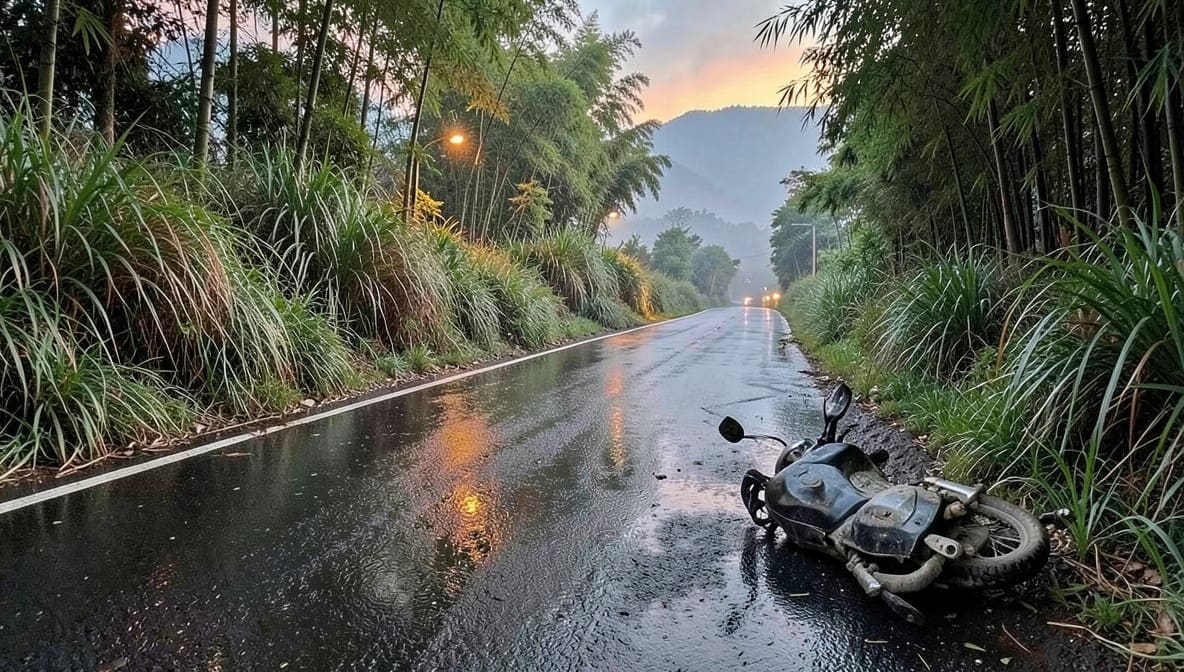
On 13.03.2019, a motor accident occurred involving a motorcycle bearing Registration No. AS-07-M-1301. Sri Poritosh Biswas was travelling as a pillion rider on the motorcycle, which was driven by Sri Srimanta Das. The accident resulted in injuries to Sri Poritosh Biswas, who subsequently succumbed to his injuries.
Key Facts
- The motorcycle was insured under a valid insurance policy issued by Oriental Insurance Company Ltd.
- The driver, Sri Srimanta Das, did not possess a valid driving licence at the time of the accident.
- The claim petition was filed by the dependants of the deceased: Manika Mandal Biswas (widow), Nikita Biswas (daughter), Ajoy Kumar Biswas (brother), and Simanta Das (relative).
- The claimants sought compensation for the death of Sri Poritosh Biswas.
Procedural History
- 13.03.2019: Date of motor accident.
- MAC Case No. 2549/2019: Claim petition filed before Motor Accident Claims Tribunal No. 2, Kamrup (M), Guwahati.
- 19.08.2024: Tribunal passed judgment and award holding that failure to have a valid driving licence is a violation of insurance policy, but directed the Insurance Company to pay compensation and recover the same from the owner of the motorcycle.
- 2025: Oriental Insurance Company Ltd filed MAC Appeal No. 526/2025 before the Gauhati High Court challenging the Tribunal's pay and recover direction.
- 27.08.2026: Judgment reserved.
- 03.09.2026: Judgment pronounced dismissing the appeal.
Relief Sought
The appellant Insurance Company sought setting aside of the Tribunal's direction to pay compensation and recover from the owner, contending that the Tribunal lacked jurisdiction to order pay and recover proceedings.
The Legal Issue
Whether the Motor Accident Claims Tribunal has the power to direct an insurance company to pay compensation to accident victims and subsequently recover the amount from the vehicle owner when the driver of the offending vehicle did not possess a valid driving licence, but a valid insurance policy was in force.
Arguments Presented
For the Appellant (Oriental Insurance Company Ltd)
Ms. R.D. Mozumdar submitted that the Gauhati High Court in MAC Appeal No. 55/2014 had held that the Motor Accident Claims Tribunal cannot direct the insurance company to pay compensation and subsequently recover the same from the owner of the vehicle. Counsel argued that the power to order pay and recovery rests exclusively with the Supreme Court under its extraordinary jurisdiction under Article 142 of the Constitution. The appellant contended that the Tribunal should have directed the owner of the motorcycle to pay the compensation directly instead of initiating pay and recovery proceedings against the insurer.
For the Respondents (Claimants)
Mr. H. Das relied on two Supreme Court judgments: K. Nagendra v. New India Insurance Co. Ltd. and Others (2025 SCC OnLine SC 2297) and Parminder Singh v. New India Assurance Co. Ltd. ((2019) 7 SCC 217). In K. Nagendra, the Supreme Court observed that balancing the need for payment of compensation to the victim vis-à-vis the interests of the insurer, the pay and recover principle is entirely justified. In Parminder Singh, the Supreme Court referred to Shamanna v. Oriental Insurance Co. Ltd. ((2018) 9 SCC 650) and held that when the driver lacks a valid driving licence, the principle of pay and recovery can be ordered to direct the insurance company to first pay compensation to the victim and then recover from the owner.
The Court's Analysis
The Court examined the conflicting precedents. The Gauhati High Court's earlier view in MAC Appeal No. 55/2014 was based on National Insurance Company Limited v. Baljit Kaur & Ors. ((2004) 2 SCC 1). However, the Court noted that Parminder Singh (2019) and K. Nagendra (2025) were decided long after Baljit Kaur and represented the current Supreme Court position.
"In Parminder Singh (supra), the Hon'ble Supreme Court has referred to its own judgment passed in Shamanna v. Oriental Insurance Co. Ltd. [Shamanna v. Oriental Insurance Co. Ltd., (2018) 9 SCC 650], and has held that when the driver of the offending vehicle does not have a valid driving licence, the principle of pay and recovery can be ordered to direct the Insurance Company to first pay compensation to the victim and then to recover the same from the owner of the offending vehicle."
The Court found that the later Supreme Court judgments in Parminder Singh and K. Nagendra expressly endorsed the pay and recover principle in cases where the driver lacks a valid licence. The K. Nagendra judgment specifically balanced the victim's right to compensation against the insurer's contractual bounds, holding that the pay and recover principle is justified. Consequently, the Court concluded it was bound to follow the ratios laid down in these later Supreme Court decisions.
The Verdict
The appeal was dismissed. The Gauhati High Court upheld the Tribunal's award dated 19.08.2024 directing Oriental Insurance Company Ltd to pay compensation to the claimants and recover the amount from the owner of the motorcycle. The Tribunal records were directed to be returned. No costs were awarded.
What This Means For Similar Cases
Pay and Recover Principle Is Binding on Tribunals
Motor Accident Claims Tribunals across India must apply the pay and recover principle when the driver of an offending vehicle lacks a valid driving licence but a valid insurance policy exists. The Supreme Court's decisions in Parminder Singh and K. Nagendra have settled this question, overriding earlier High Court views that restricted Tribunal jurisdiction.
- Practitioners representing claimants should routinely plead for pay and recover directions where the driver's licence is invalid or absent.
- Insurance companies cannot avoid immediate liability to victims by contesting Tribunal jurisdiction over recovery proceedings.
Later Supreme Court Precedents Prevail Over Earlier High Court Views
High Courts must follow the most recent Supreme Court pronouncements on a point of law, even if they conflict with the High Court's own earlier decisions. The Gauhati High Court expressly departed from its 2014 view in MAC Appeal No. 55/2014 because Parminder Singh (2019) and K. Nagendra (2025) post-dated the precedent on which that view relied.
- Counsel must ensure they cite the latest Supreme Court authorities, particularly where the law has evolved.
- Older High Court judgments based on superseded Supreme Court precedents carry diminished persuasive value.
Victim Compensation Takes Priority Over Insurer's Contractual Defences
The K. Nagendra judgment's reasoning emphasises that denying compensation to victims because the accident falls outside policy bounds (due to licence violation) would be "offensive to the sense of justice." The pay and recover mechanism balances victim protection with the insurer's right to recover from the owner who permitted an unlicensed driver.
- Owners who allow unlicensed persons to drive remain ultimately liable through the recovery mechanism.
- Insurers must factor this statutory liability into premium calculations and policy terms.