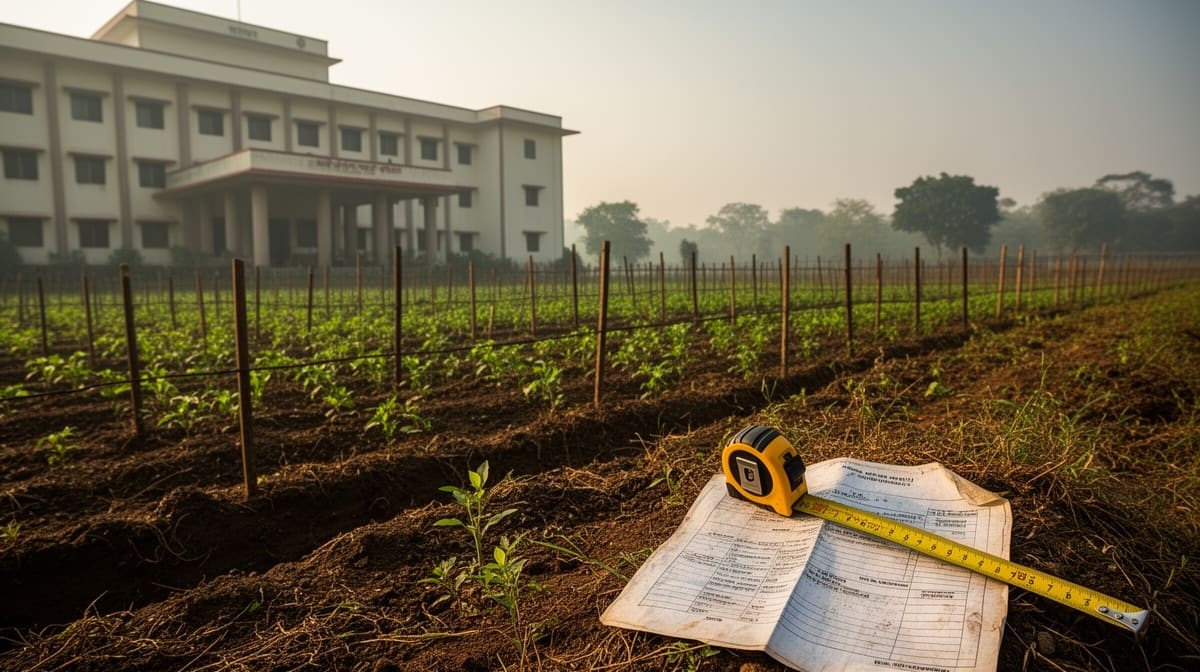
The Chhattisgarh High Court has reaffirmed that unauthorized state use of private land for public purposes triggers an absolute obligation to provide fair compensation under the Right to Fair Compensation and Transparency in Land Acquisition, Rehabilitation and Resettlement Act, 2013. The judgment underscores that procedural compliance is non-negotiable, even when the acquisition is not formally notified.
Background & Facts
The Dispute
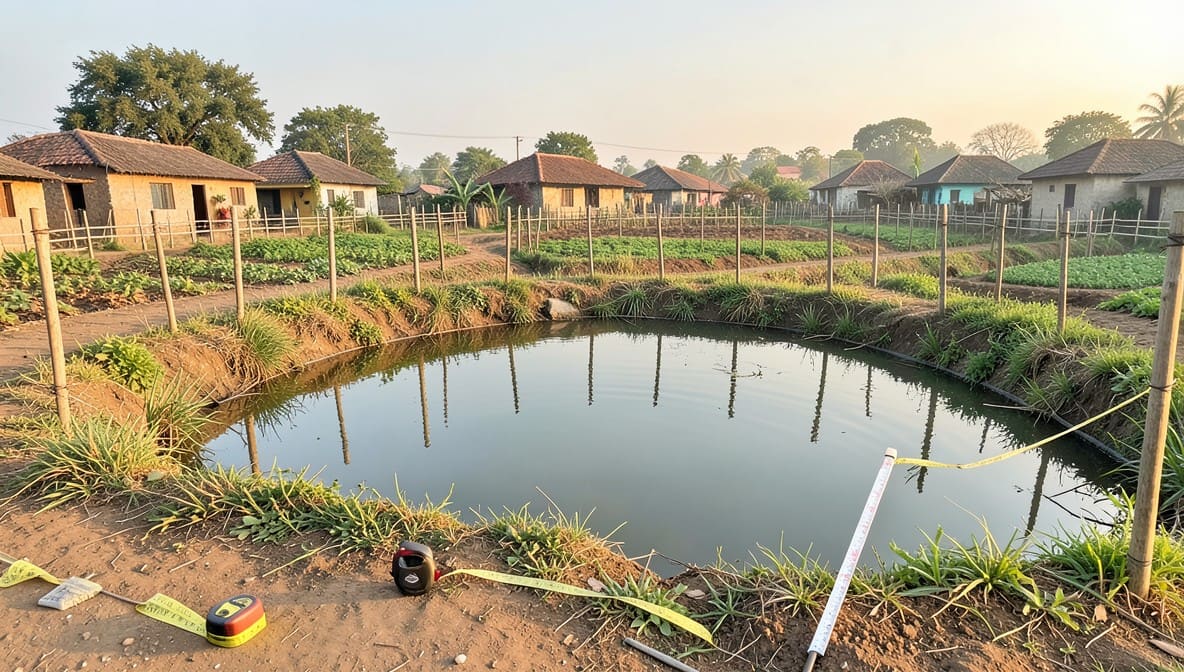
The petitioner, Narsingh Khunte, a 72-year-old Scheduled Caste landowner from Village Sardhamantha, Tahsil Sarsiwa, District Sarangarh-Bilaigarh, is the recorded owner of land bearing Khasra No. 408/4, measuring 0.0560 hectare. The respondents, including the State of Chhattisgarh and subordinate revenue authorities, constructed a pond on this land for a public purpose without initiating any formal acquisition proceedings under the LARR Act, 2013, and without paying any compensation.
Key Facts
- The petitioner’s land is duly recorded in revenue records as his ownership.
- The respondents constructed a pond on the land without serving any notice, conducting survey, or initiating acquisition proceedings.
- The petitioner became aware of the unauthorized use and filed a representation dated 17.03.2025 (Annexure-P/2) seeking compensation.
- The representation remains pending with no decision rendered as of the date of filing the writ petition.
- No compensation, interest, or rehabilitation benefits have been offered to the petitioner.
Procedural History
- 17.03.2025: Petitioner submitted written representation to the Tahsildar and Collector seeking compensation for unauthorized use of land.
- No response received from any respondent authority within a reasonable time.
- 2026: Writ Petition No. 1214 of 2026 filed before the High Court of Chhattisgarh under Article 226 of the Constitution.
- 20.03.2026: Hearing before Justice Naresh Kumar Chandravanshi.
Relief Sought
The petitioner sought:
- A direction to grant compensation for the land acquired for the pond.
- Payment of 9% per annum interest from the date of taking possession until expiry of one year, and 15% per annum thereafter until actual payment.
- Any other relief deemed fit, including costs.
The Legal Issue
The central question was whether the State’s unauthorized physical occupation of private land for public purpose, without following the statutory procedure under the Right to Fair Compensation and Transparency in Land Acquisition, Rehabilitation and Resettlement Act, 2013, creates a legal obligation to pay fair compensation, and whether the petitioner’s representation can be lawfully ignored.
Arguments Presented
For the Petitioner
The petitioner’s counsel argued that the State’s construction of a pond on the petitioner’s land without any acquisition notification, survey, or compensation violated Section 3(1) and Section 4 of the LARR Act, 2013, which mandate due process. He relied on State of Haryana v. Shiv Kumar and Union of India v. Rameshwar Prasad to assert that possession without legal authority does not extinguish the owner’s right to compensation. He emphasized that the petitioner’s representation dated 17.03.2025 remained unaddressed, constituting a violation of Article 14 and Article 300A of the Constitution.
For the Respondent/State
The State counsel conceded that the land had been used for public purpose but contended that no formal acquisition proceedings had been initiated, implying that compensation was not immediately due. He submitted that the representation would be decided in accordance with law, without committing to any timeline or outcome.
The Court's Analysis
The Court observed that the State cannot evade its constitutional and statutory obligations by merely refraining from initiating formal acquisition proceedings. The physical taking of land for public use, regardless of procedural formality, triggers the duty to compensate under Article 300A of the Constitution and the LARR Act, 2013.
"The State cannot appropriate private property for public purpose without following the due process of law and without providing fair compensation. The absence of a notification under Section 4 does not negate the right to compensation when possession has been taken."
The Court rejected the State’s argument that no compensation is due because no acquisition was "formally" initiated. It held that the doctrine of unjust enrichment and the principle of equitable restitution apply when the State benefits from the use of private land. The Court further noted that the petitioner’s representation dated 17.03.2025 was a legitimate attempt to seek redressal, and its non-decision amounted to administrative inaction.
The Court emphasized that the Collector, as the designated authority under the LARR Act, is under a statutory duty to determine compensation even in cases of de facto acquisition. The Court directed immediate demarcation of the land to establish the extent of encroachment and mandated a time-bound decision.
The Verdict
The petitioner succeeded. The Court directed the Collector, Sarangarh-Bilaigarh, to demarcate the petitioner’s land within 30 days of receipt of this order. If the land is confirmed to have been used for the pond, the Collector shall decide the petitioner’s representation and determine fair compensation under the LARR Act, 2013 within six months. Compensation shall include interest at 9% per annum from the date of taking possession until one year, and 15% per annum thereafter until actual payment. The State shall bear the costs of the petition.
What This Means For Similar Cases
Unauthorized Use Triggers Compensation Obligation
- Practitioners must now argue that any physical occupation of land by the State for public purpose, even without a Section 4 notification, constitutes de facto acquisition under Article 300A and the LARR Act.
- The burden shifts to the State to prove that the land was not used for public purpose or that compensation was already paid.
Representation Cannot Be Ignored Indefinitely
- Administrative representations under land acquisition disputes must be decided within a reasonable time.
- Failure to decide within a reasonable period (e.g., six months) may attract writ jurisdiction under Article 226.
Interest Rates Are Statutorily Prescribed
-
The Court’s adoption of 9% and 15% interest rates aligns with Section 34(2) of the LARR Act, 2013, which mandates higher interest for delayed payments.
-
Practitioners should always plead interest under this provision in cases of delayed compensation, even in informal takings.
-
Always demand demarcation of land as the first step in such writs.
-
File representations with clear timelines and retain proof of submission.
-
Cite State of Haryana v. Shiv Kumar and Union of India v. Rameshwar Prasad to establish that possession equals acquisition.