The Chhattisgarh High Court has reaffirmed that even though property rights are no longer fundamental, they remain constitutionally protected under Article 300A, requiring the state to provide just compensation whenever private land is utilized for public purposes. This judgment mandates procedural accountability in land acquisition claims, ensuring that delayed applications do not extinguish entitlements.
Background & Facts
The Dispute
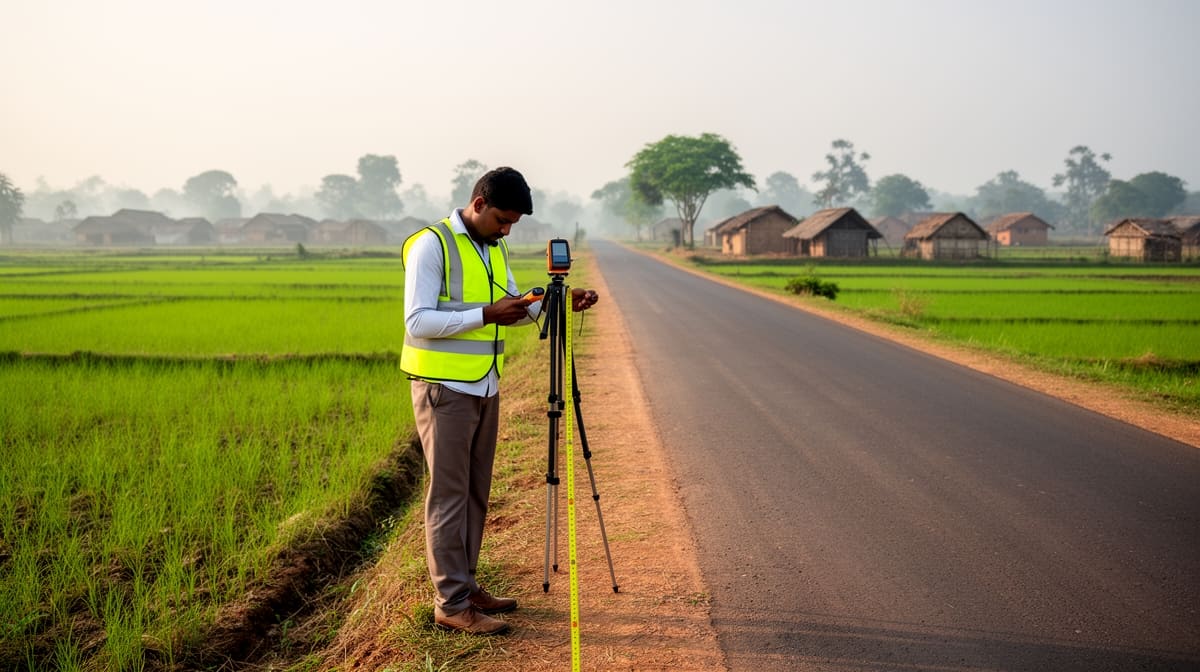
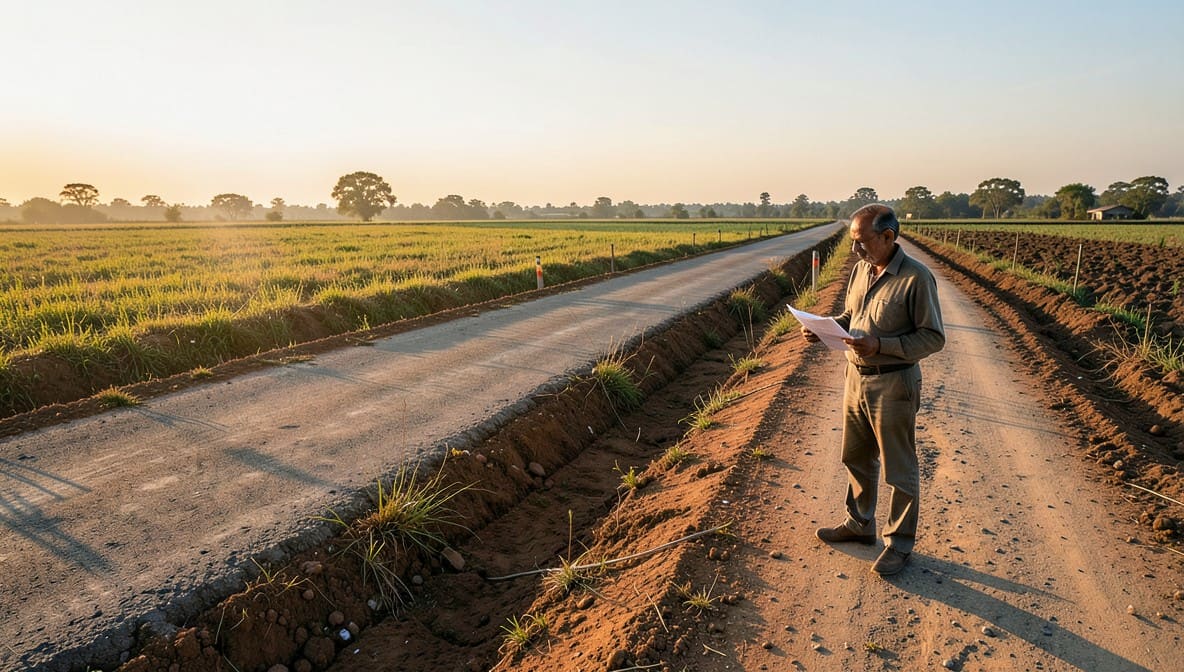
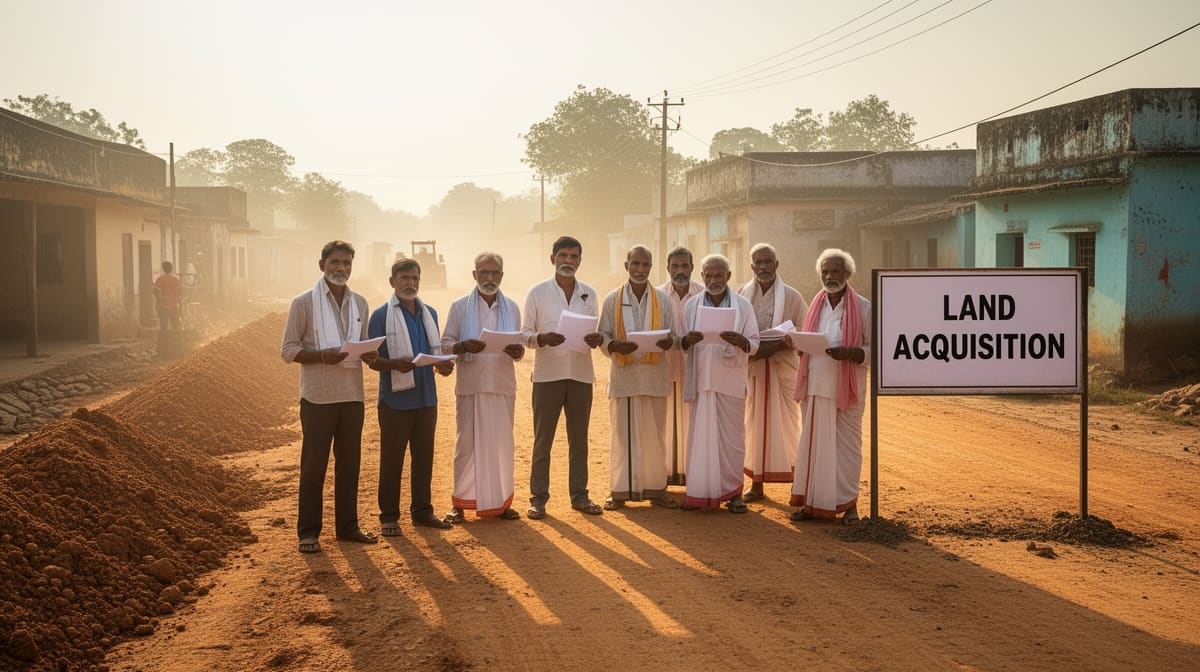
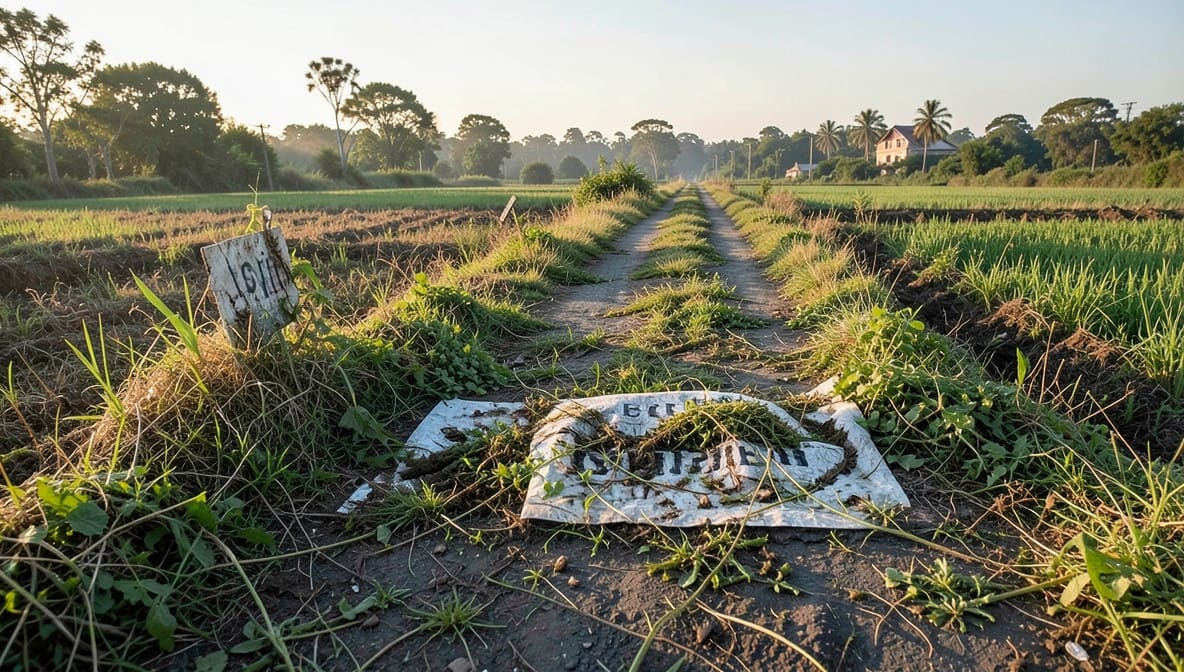
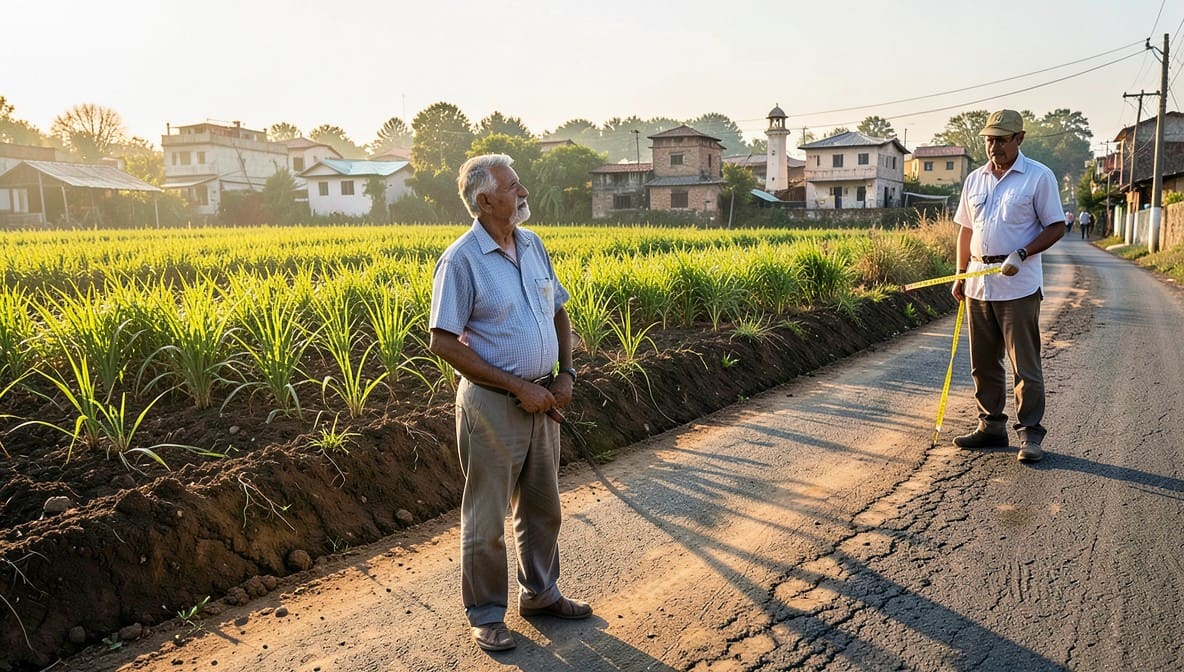
The petitioner, Amarnath Kenwat, is the recorded owner of land bearing Khasra No. 1142/1, measuring 0.20 acre, situated in Village Karhi, PHN 10, Tahsil Hasoud, District Sakti, Chhattisgarh. He alleges that his land was physically utilized for the construction of the Basantpur - Parsada - Ghoghari Road, a public infrastructure project for which land acquisition proceedings were initiated and completed in 2017. However, his land was not included in the official award dated 22.03.2017, despite being physically taken and used for the road alignment. The petitioner contends that other landowners in the same village received compensation under the same award, but he was excluded without explanation or notice.
Key Facts
- The petitioner’s land is duly recorded in revenue records as his ownership.
- The Basantpur - Parsada - Ghoghari Road project was executed under the Land Acquisition Act, 1894.
- Awards for other landowners in Village Karhi were issued on 22.03.2017.
- The petitioner became aware of his exclusion only after observing compensation payments to neighbors.
- He filed a representation dated 13.01.2026 (Annexure-P/3) before the Collector, Sakti, seeking inclusion of his land in the award and payment of compensation.
- As of the filing of the writ petition, no decision had been rendered on his representation.
Procedural History
- 22.03.2017: Land acquisition award issued for other landowners in Village Karhi; petitioner’s land omitted.
- Between 2017 and 2026: Petitioner made no formal representation, reportedly due to lack of awareness and administrative inaction.
- 13.01.2026: Petitioner filed written representation (Annexure-P/3) before the Collector, Sakti, seeking compensation.
- 13.01.2026 to 28.03.2026: No response or order issued by the Collector.
- 01.04.2026: Writ Petition (WPC No. 1422 of 2026) filed before the High Court of Chhattisgarh.
The Parties' Positions
For the Petitioner: The petitioner’s counsel, Ms. Nilu Singh, argued that the physical occupation and use of his land for a public purpose without compensation violates Article 300A. He is not challenging the acquisition itself, but the failure to recognize his entitlement and adjudicate his claim. Delay in filing the representation, she submitted, cannot be a ground to deny a constitutional right, especially when the state has not provided notice or opportunity to claim.
For the Respondents: The State’s counsel, Mr. Amit Nayak, conceded that the petitioner’s land was indeed used for the road but argued that the representation was filed six to seven years after the award, raising questions of laches and delay. However, he did not dispute the factual assertion of land use and agreed that the matter should be decided on merits.
Relief Sought
The petitioner sought a direction to the Collector (Respondent No. 3) to decide his representation dated 13.01.2026 within a stipulated time and to provide compensation and consequential benefits if his land is found to have been utilized.
The Legal Issue
The central question was whether Article 300A of the Constitution of India obligates the state to adjudicate and compensate a landowner whose property has been physically taken for public use, even if the land was omitted from the formal acquisition award and the claim is filed years later.
Arguments Presented
For the Petitioner
The petitioner relied on the constitutional guarantee under Article 300A, which prohibits deprivation of property except by authority of law. Counsel emphasized that physical possession and use of land for public purpose constitute deprivation, irrespective of whether it was formally included in the award. She cited State of Haryana v. Mukesh Kumar and Union of India v. Tulsiram Patel to argue that the state cannot evade liability by administrative omission. Delay, she contended, cannot be a bar when the state has not provided notice or opportunity to claim, and the deprivation is ongoing.
For the Respondent
The State did not dispute the factual claim of land use but raised the defense of delay in filing the representation. Counsel argued that the petitioner had ample opportunity to raise the issue immediately after the 2017 award and that his inaction for nearly a decade amounted to acquiescence. He submitted that allowing such belated claims could open floodgates to frivolous litigation and disrupt fiscal planning.
The Court's Analysis
The Court acknowledged that while property rights are no longer fundamental, Article 300A remains a constitutional safeguard. The Court observed that the state cannot claim immunity from compensation merely because a landowner’s property was inadvertently omitted from an acquisition award. Physical occupation and use for public purpose constitute deprivation under Article 300A, regardless of procedural oversight.
"If the petitioner’s land has been utilized for construction of the aforesaid road, then he is entitled to get compensation."
The Court rejected the argument that delay alone defeats the claim, noting that the state bears the burden of ensuring due process. The petitioner’s lack of awareness, coupled with the absence of any public notice or mechanism for claiming omitted lands, rendered the delay excusable. The Court emphasized that constitutional rights cannot be extinguished by bureaucratic negligence.
The Court further held that the Collector, as the designated authority under the Land Acquisition Act, is under a statutory and constitutional duty to investigate and decide such claims. The failure to act for over a year on the representation dated 13.01.2026 constituted a violation of the petitioner’s right to a timely remedy.
The Verdict
The writ petition was disposed of with directions. The Collector (Respondent No. 3) was directed to decide the petitioner’s representation dated 13.01.2026 within 30 days of receipt of a copy of this order, after duly demarcating the land in question. If demarcation confirms that the petitioner’s land was utilized for the Basantpur - Parsada - Ghoghari Road, he shall be entitled to compensation and other consequential benefits under law, to be paid within six months of demarcation. All pending interlocutory applications were dismissed.
What This Means For Similar Cases
Constitutional Compensation Cannot Be Denied on Grounds of Delay Alone
- Practitioners must argue that Article 300A creates a continuing obligation on the state to compensate for physical deprivation, irrespective of procedural lapses.
- Delay in filing a claim is not fatal if the state failed to notify landowners or provide accessible redressal mechanisms.
- Courts will not permit the state to benefit from its own administrative failure.
Demarcation Is a Mandatory Precondition for Compensation
- In all land acquisition cases where ownership is disputed or omitted, courts will now require physical demarcation as a prerequisite to determining entitlement.
- Legal teams must prepare survey maps, revenue records, and satellite imagery to support claims of physical use.
- The six-month timeline for payment after demarcation sets a binding deadline for state agencies.
Administrative Silence Is Not a Defense
- The judgment establishes that failure to decide a representation for over a year constitutes a violation of constitutional rights.
- Writ petitions under Article 226 are now a viable remedy for delayed decisions on land claims, even where no formal award exists.
- Practitioners should cite this case when opposing state agencies that delay decisions on compensation claims under the guise of procedural backlog.