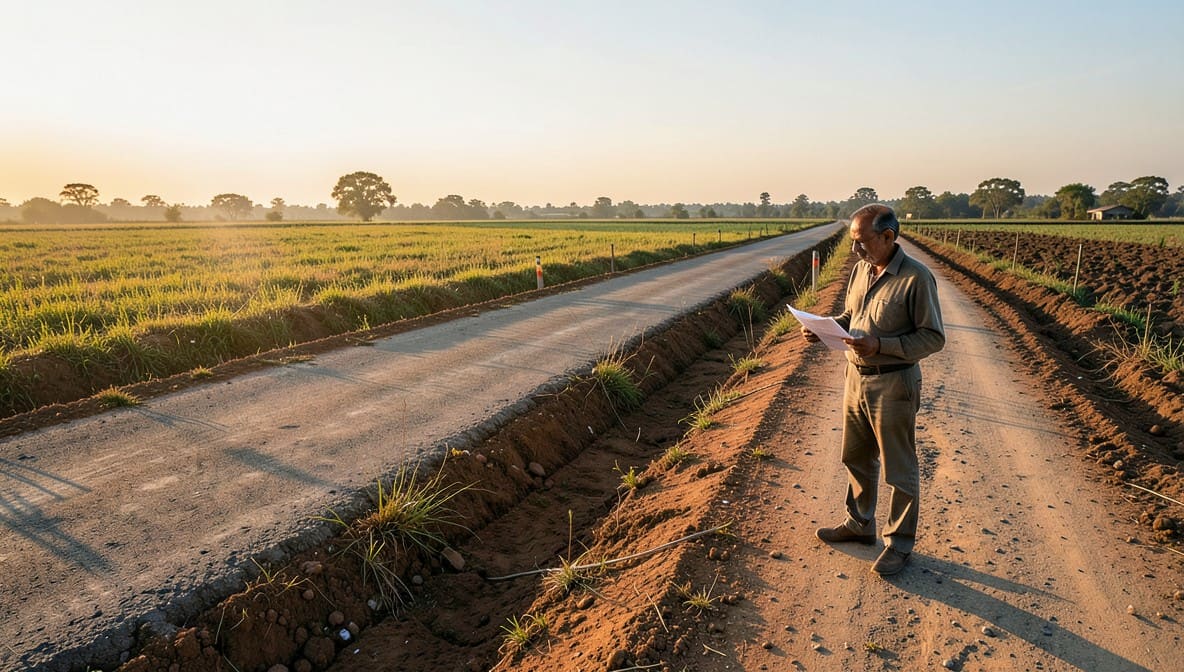
The Chhattisgarh High Court has reaffirmed that even though property rights are no longer fundamental, they remain constitutionally protected under Article 300A. The Court held that any deprivation of land for public purpose without compensation or due process is impermissible, directing immediate adjudication of a long-pending claim by a landowner whose property was allegedly used for a state road project.
Background & Facts
The Dispute
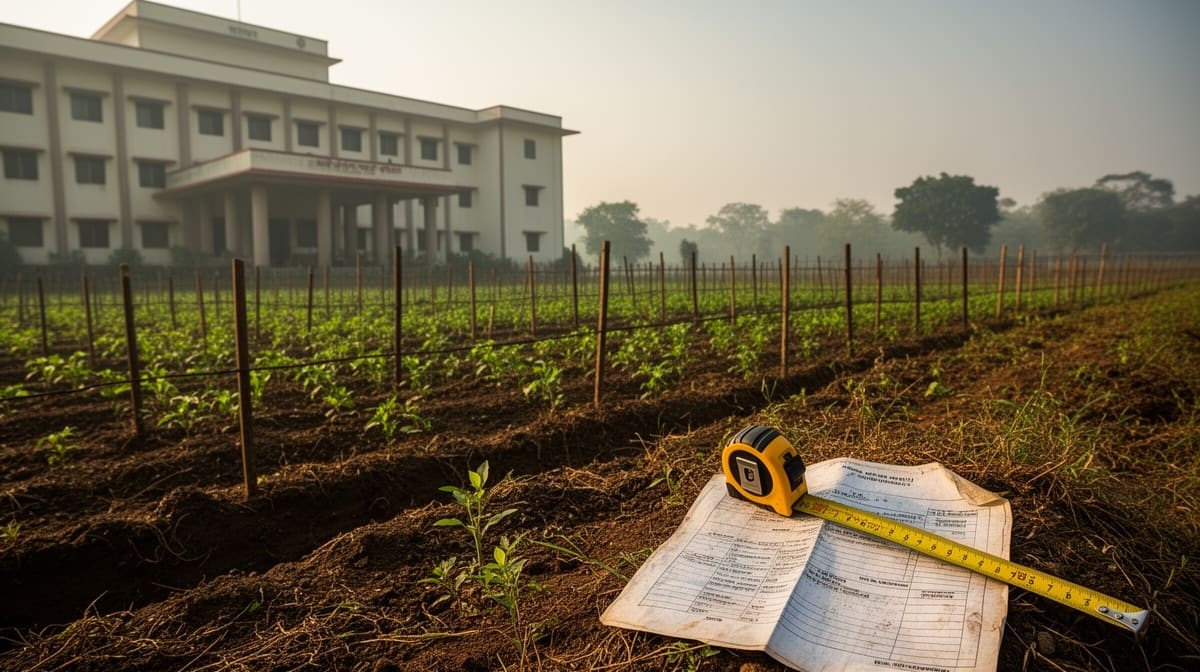
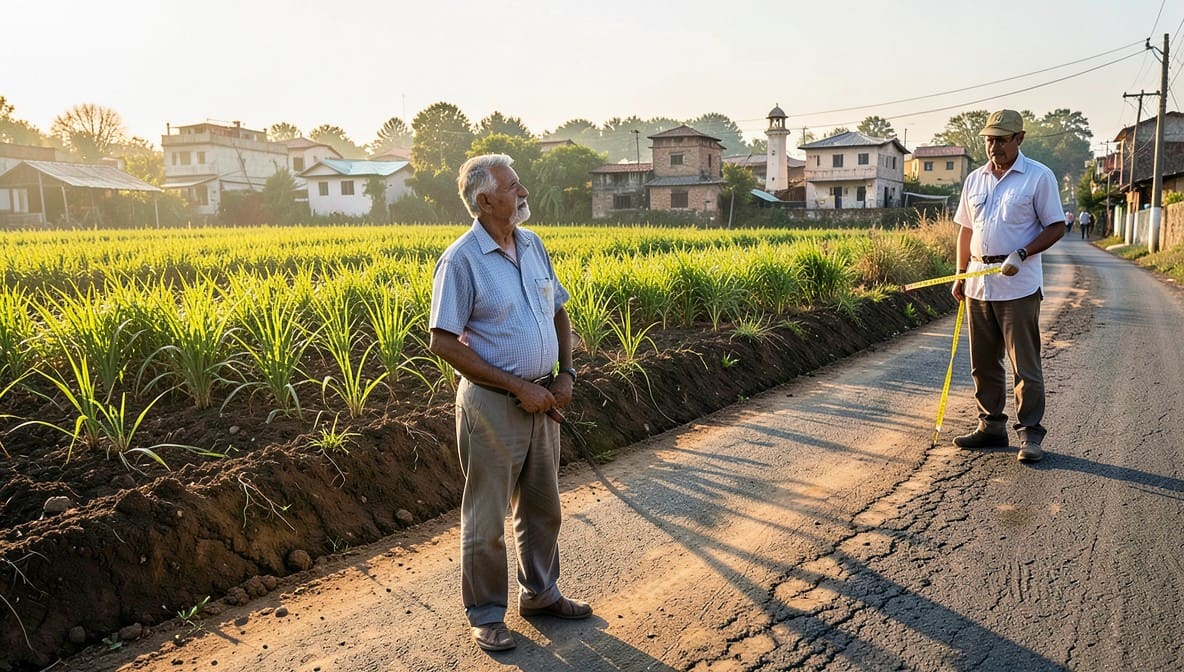
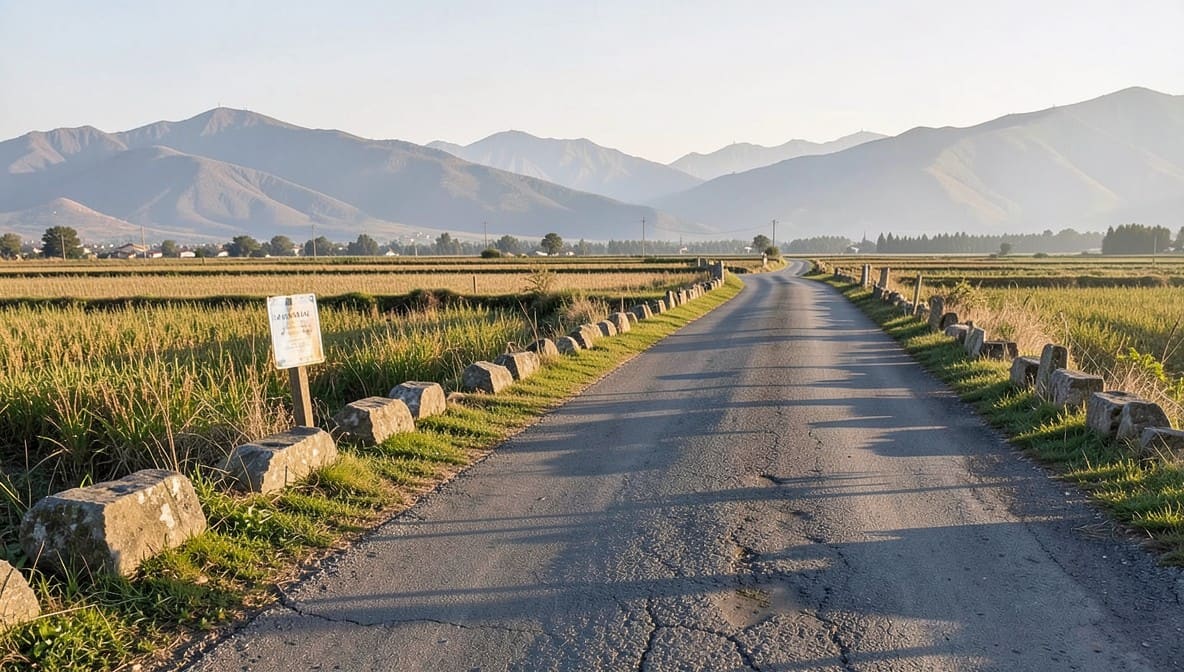
The petitioner, Mahabir Manjhi, is the recorded owner of land bearing Khasra No. 398/1, measuring 0.10 acre, situated in Village Basantpur, Tahsil Bamhanidih, District Janjgir-Champa, Chhattisgarh. In 2017, the State acquired land from multiple villagers in the same village for the construction of the Basantpur - Parsada - Ghoghari Road. Compensation was paid to those landowners whose holdings were formally included in the acquisition award dated 25.01.2017. However, the petitioner’s land, though physically utilized for the road alignment, was omitted from the award and no compensation was paid to him.
Key Facts
- The petitioner’s land is demarcated in revenue records as Khasra No. 398/1, area 0.10 acre
- The Basantpur - Parsada - Ghoghari Road was constructed using land from multiple owners in Village Basantpur
- The acquisition award dated 25.01.2017 listed compensated landowners but excluded the petitioner’s plot
- The petitioner became aware of the omission only after other villagers received compensation
- On 08.12.2025, the petitioner filed a representation before the Collector, Janjgir-Champa, seeking inclusion of his land in the award and payment of compensation
- As of the filing of the writ petition, no decision had been rendered on the representation, despite the lapse of over eight years since the award
Procedural History
- 25.01.2017: Acquisition award issued for Basantpur - Parsada - Ghoghari Road; petitioner’s land omitted
- 08.12.2025: Petitioner filed representation before Collector, Janjgir-Champa (Annexure-P/2)
- 15.01.2026: Deadline for reply expired without response
- 10.02.2026: Writ Petition No. 1380 of 2026 filed before the High Court of Chhattisgarh
- 30.03.2026: Hearing conducted before Justice Naresh Kumar Chandravanshi
The Parties' Positions
For the Petitioner: The petitioner’s counsel, Ms. Mamta Mahilange, argued that the physical occupation and use of his land for a public road constituted a de facto acquisition. The omission from the award was not a clerical error but a violation of Article 300A. The delay in filing the representation was due to lack of awareness and absence of official communication.
For the Respondents: The State, represented by Mr. Sabyasachi Choubey and Mr. Soumitra Kesharwani, conceded that the land was indeed used for the road but contended that the petitioner’s delay of nearly eight years in filing the representation rendered his claim time-barred and in bad faith.
Relief Sought
The petitioner sought a direction to the Collector to decide his representation dated 08.12.2025 and, upon verification, to award compensation and consequential benefits under the Land Acquisition Act, 1894, and applicable state policy.
The Legal Issue
The central question was whether Article 300A of the Constitution of India permits the State to utilize private land for public infrastructure without providing compensation, merely because the land was not formally included in the acquisition award.
Arguments Presented
For the Petitioner
The petitioner relied on the constitutional guarantee under Article 300A, which prohibits deprivation of property except by authority of law and with compensation. He cited State of Haryana v. Mukesh Kumar and K.T. Plantation Pvt. Ltd. v. State of Karnataka to argue that physical occupation and use of land for public purpose constitutes acquisition, regardless of formal inclusion in the award. The delay, he submitted, was excusable due to lack of notice and the State’s failure to inform landowners of the award’s contents.
For the Respondent
The State contended that the petitioner’s claim was barred by laches and delay. It argued that the 2017 award was public and accessible, and the petitioner had ample opportunity to challenge its omission. The State further submitted that the petitioner’s failure to act for nearly eight years undermined the integrity of the acquisition process and created administrative chaos.
The Court's Analysis
The Court rejected the State’s argument that delay alone defeats a constitutional right. It emphasized that Article 300A imposes a non-negotiable obligation on the State to compensate any person deprived of property, whether through formal acquisition or de facto occupation. The Court observed:
"Though property right is not a fundamental right, but it is still a constitutional right under Article 300A of the Constitution of India. Therefore, no person shall be deprived of his property without following due process of law and without providing compensation, rehabilitation etc."
The Court held that the physical utilization of the petitioner’s land for the construction of a public road amounted to a deprivation under Article 300A. The omission from the award was not a legal justification for non-payment. The State’s duty to compensate arises upon actual use, not merely upon formal notification. The Court further noted that the State’s own conduct - acquiring land and constructing a road without identifying all affected owners - created the very delay it now seeks to penalize.
The Court declined to adjudicate the quantum of compensation at this stage, as it required demarcation and verification by the revenue authorities. However, it mandated a clear timeline for adjudication to prevent further inaction.
The Verdict
The petitioner succeeded. The Court directed the Collector, Janjgir-Champa (Respondent No. 3), to decide the representation dated 08.12.2025 expeditiously, preferably within 30 days of receipt of a copy of this order, after duly demarcating the land in question. If the demarcation confirms that the petitioner’s land was utilized for the Basantpur - Parsada - Ghoghari Road, the State shall provide appropriate compensation and consequential benefits in accordance with law within six months of such demarcation. All pending interlocutory applications were disposed of.
What This Means For Similar Cases
De Facto Acquisition Triggers Compensation Obligation
- Practitioners must now argue that physical occupation of land for public works, even without formal notification or inclusion in an award, constitutes deprivation under Article 300A
- The State cannot evade liability by claiming administrative oversight or omission from the award
- Any landowner whose property is used for a public project, regardless of formal acquisition status, has a constitutional claim to compensation
Delay Is Not a Bar to Constitutional Remedies
- Laches cannot override a constitutional right to compensation under Article 300A
- Courts will examine the reason for delay - especially if the State failed to notify affected landowners or provided misleading information
- Representation filed after years of silence is still maintainable if the deprivation is ongoing and the claim is substantiated
Procedural Clarity Required in Land Acquisition
- Revenue and Public Works Departments must maintain accurate land-use records and cross-verify acquisition awards against physical usage
- Failure to demarcate and verify land use before construction exposes the State to litigation and delayed compensation liabilities
- Writ petitions under Article 226 remain a viable remedy for landowners denied compensation due to bureaucratic omission