The High Court of Jammu & Kashmir and Ladakh has delivered a significant ruling affirming that courts must exercise restraint when confronted with technical infrastructure decisions, even when expert recommendations conflict with official plans. The dismissal of this writ petition underscores the principle that judicial intervention in engineering judgments is permissible only where there is clear arbitrariness or procedural illegality - not mere disagreement with technical conclusions.
Background & Facts
The Dispute
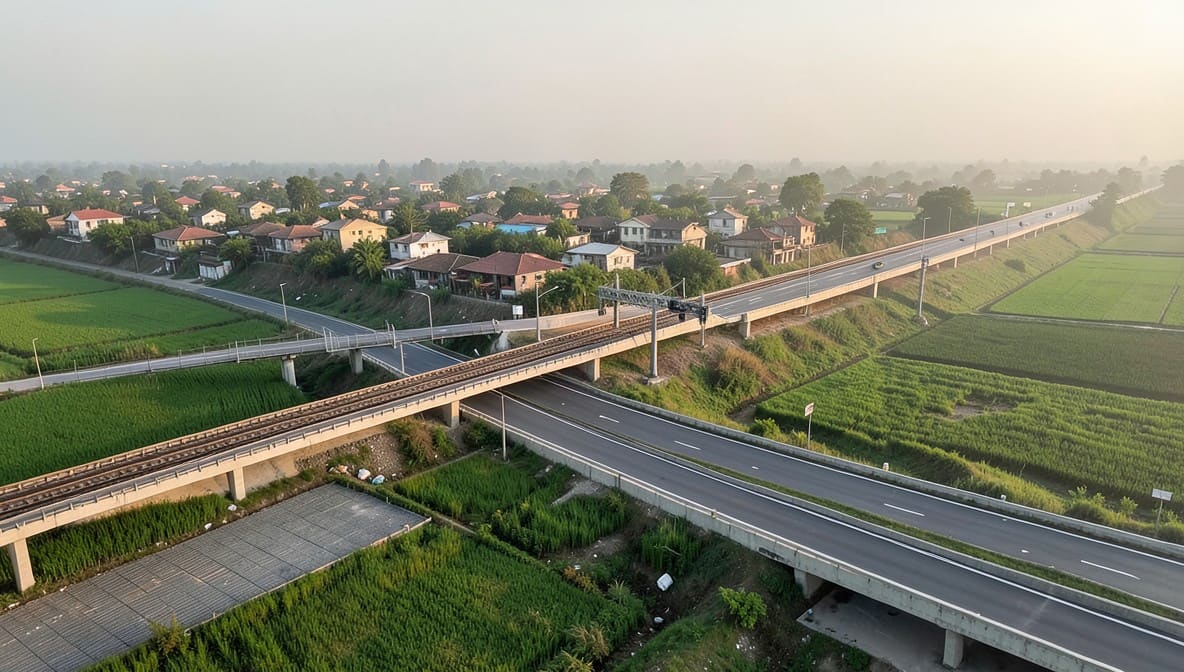
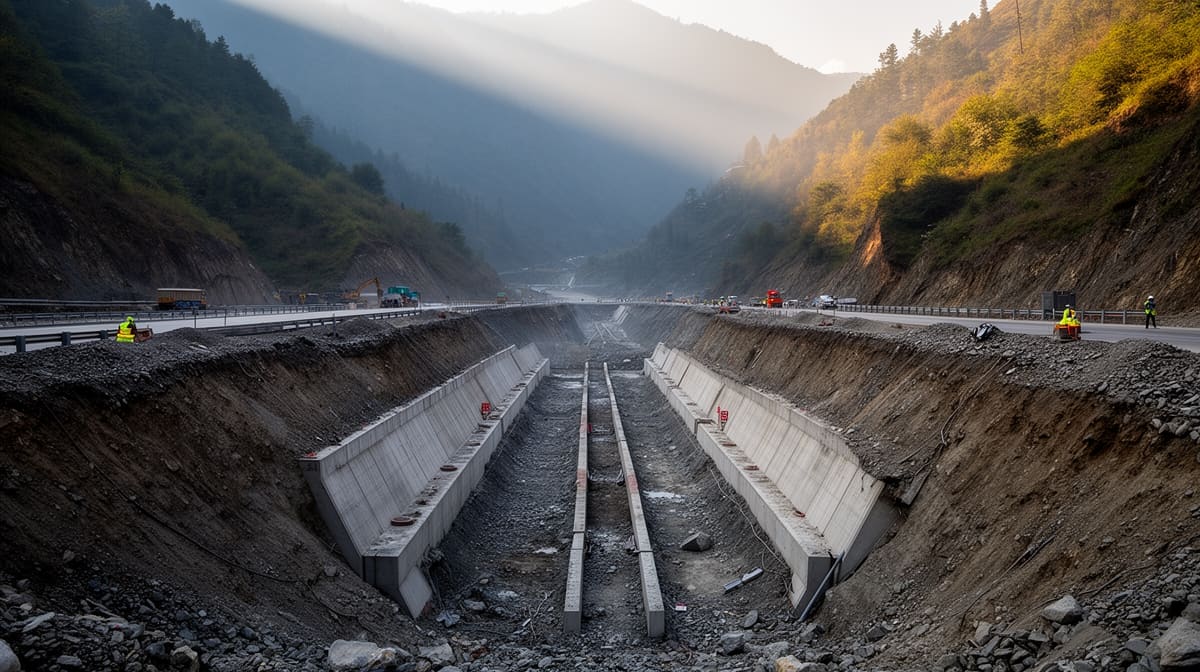
The petitioners, four residents of villages along the Chenani - Sudhmahadev stretch of NH-244, challenged the construction of deep open box cuts at three locations due to concerns over slope instability, landslide risks, and potential threats to public safety. They contended that the proposed alignment violated prior expert recommendations favoring realignment or tunneling.
Procedural History
- March 2018: Contract awarded to M/s ECI-SRM Projects for NH-244 widening.
- June 2020: Geologist Mr. K.S. Jamwal (ex-GSI) submitted a report recommending detouring or tunneling at four box cut sections to avoid slope failure.
- October 2020: Authority’s Engineer (Respondent No. 5) endorsed detouring as technically feasible and economically viable, citing a 520m increase in length offset by cost savings.
- July 2021: Managing Director of NHIDCL visited the site and directed continuation of original alignment with slope stabilization measures.
- September 2021: Special Project Monitor (SPM) recommended acquiring additional land for slope protection (Option I) or proceeding with existing alignment (Option II).
- January 2022: NHIDCL approved Option II - proceeding with box cuts and slope protection works - rejecting detouring due to delays and forest land acquisition complexities.
- May 2023: Petitioners filed writ petition under Article 226 seeking judicial direction to adopt detouring.
Relief Sought
The petitioners sought a writ directing NHIDCL to abandon box cuts at three locations and adopt the detouring option recommended by the Authority’s Engineer and the Geologist, citing public safety and environmental risks.
The Legal Issue
The central question was whether a writ court can substitute its own view for that of technical authorities in infrastructure projects when expert recommendations conflict with the project proponent’s final decision, absent evidence of mala fide or procedural illegality.
Arguments Presented
For the Petitioner
The petitioners relied on the geological report of Mr. K.S. Jamwal, a retired Deputy Director General of the Geological Survey of India, to argue that box cuts at heights of 43m posed imminent landslide risks. They contended that the recommendations of both the Authority’s Engineer and the SPM had been ignored, rendering NHIDCL’s decision arbitrary and violative of Article 14. They cited Dahanu Taluka Environment Protection Group v. Bombay Suburban Electricity Supply Co. to assert that courts may intervene in projects posing grave public danger.
For the Respondent
NHIDCL and its officials argued that the decision to proceed with box cuts was based on multi-layered technical review, including assessments by the Authority’s Engineer, SPM, and internal review meetings. They emphasized that detouring would require additional forest land acquisition, delay project completion under PMDP-2015, and incur procedural hurdles. They cited Narmada Bachao Andolan v. Union of India to affirm that courts must defer to technical bodies on matters of engineering judgment unless there is clear illegality.
The Court's Analysis
The Court undertook a rigorous examination of the procedural and technical record, concluding that the decision-making process was neither arbitrary nor mala fide. It noted that the Geologist’s report, while expert, was one among several technical inputs and was not binding on the project authority. The Court emphasized that the final decision to proceed with box cuts was preceded by multiple reviews, including by the Managing Director of NHIDCL and the SPM, who recommended slope protection measures as an alternative to detouring.
"This Court cannot assume the driver seat by substituting the respondent No. 2 - NHIDCL to direct as to how the construction of the road at three sections/stretches is to be carried out or ought to be carried out."
The Court distinguished Dahanu Taluka and Narmada Bachao, noting that those cases involved environmental catastrophes or violations of statutory mandates, whereas here, the project complied with IRC:SP:48-1998 guidelines on box cuts, and safety measures were being implemented. The Court held that judicial review in infrastructure matters must respect the domain expertise of technical agencies and cannot be invoked merely because an alternative, albeit safer, option exists.
The Court further found the petitioners’ standing suspect, noting their access to internal communications appeared inconsistent with public disclosure norms and suggested possible sponsorship by the contractor or consultant. It observed that no petitioner demonstrated direct, personal injury beyond generalized public concern.
The Verdict
The petitioners lost. The Court held that judicial review cannot substitute technical expertise in infrastructure projects absent arbitrariness or procedural illegality. The decision to proceed with box cuts, supported by slope stabilization measures and multi-tiered review, was upheld as valid and lawful.
What This Means For Similar Cases
Judicial Deference to Technical Authorities Is the Norm
- Practitioners must now demonstrate procedural illegality or mala fide intent, not just disagreement with technical choices, to challenge infrastructure decisions.
- Courts will not entertain petitions that seek to impose alternative engineering solutions based on expert opinions unless statutory violations or environmental emergencies are proven.
- Public interest litigants must show personal locus standi and cannot rely solely on generalized public safety concerns.
Expert Reports Are Advisory, Not Binding
- Technical reports from consultants or experts, even from reputed institutions, do not create legal obligations on project authorities.
- Authorities are entitled to weigh multiple inputs - including cost, timeline, land acquisition, and environmental impact - before arriving at a final decision.
- Courts will uphold decisions where a reasonable technical rationale exists, even if an alternative option appears preferable.
Procedural Compliance Is the Key to Defensibility
- Project authorities must document multi-stage review processes, including site visits, expert consultations, and inter-departmental approvals.
- Failure to record reasons for rejecting expert recommendations may invite judicial scrutiny.
- Slope protection measures, drainage plans, and compliance with IRC standards must be clearly articulated in official communications to shield against allegations of negligence.