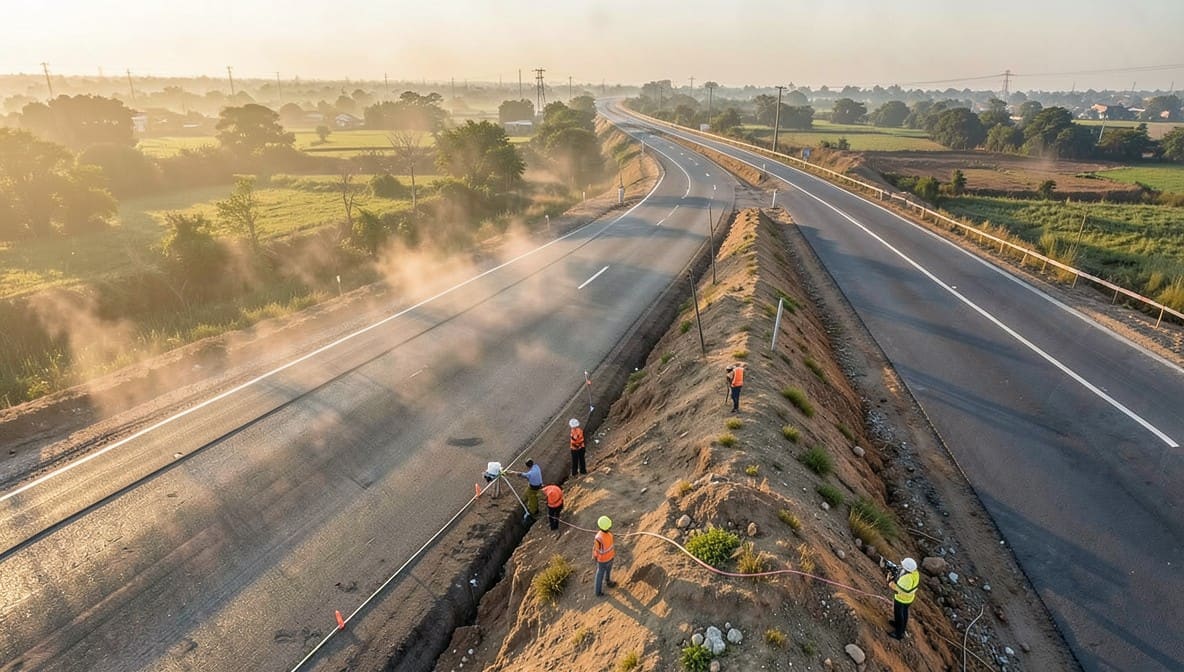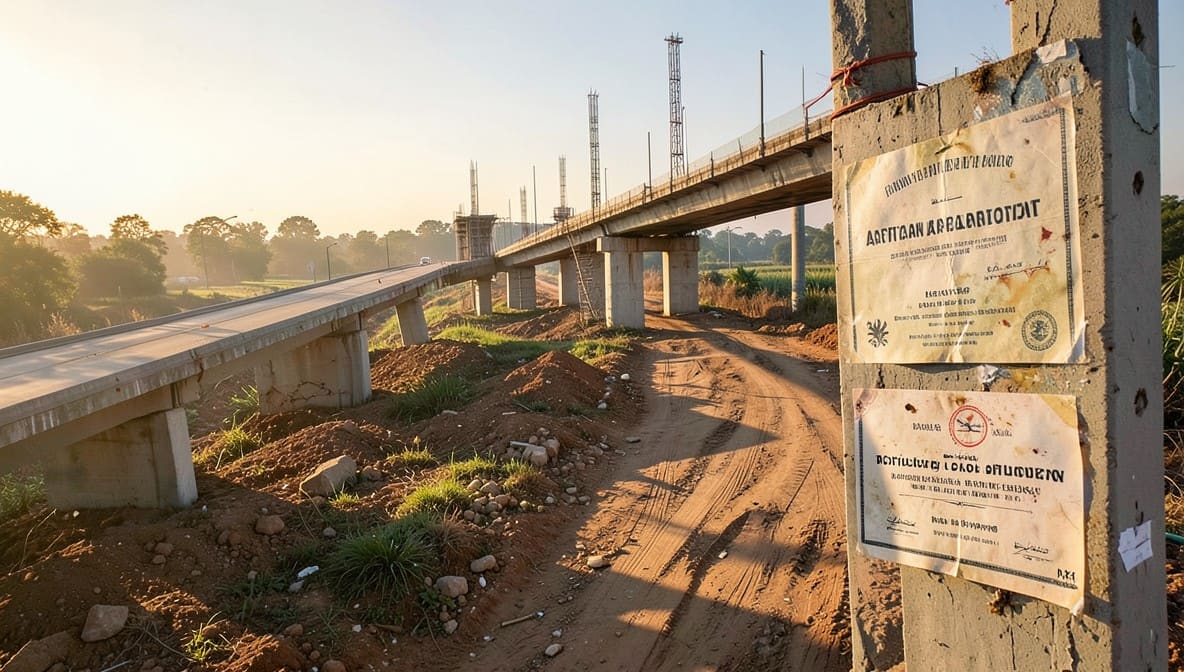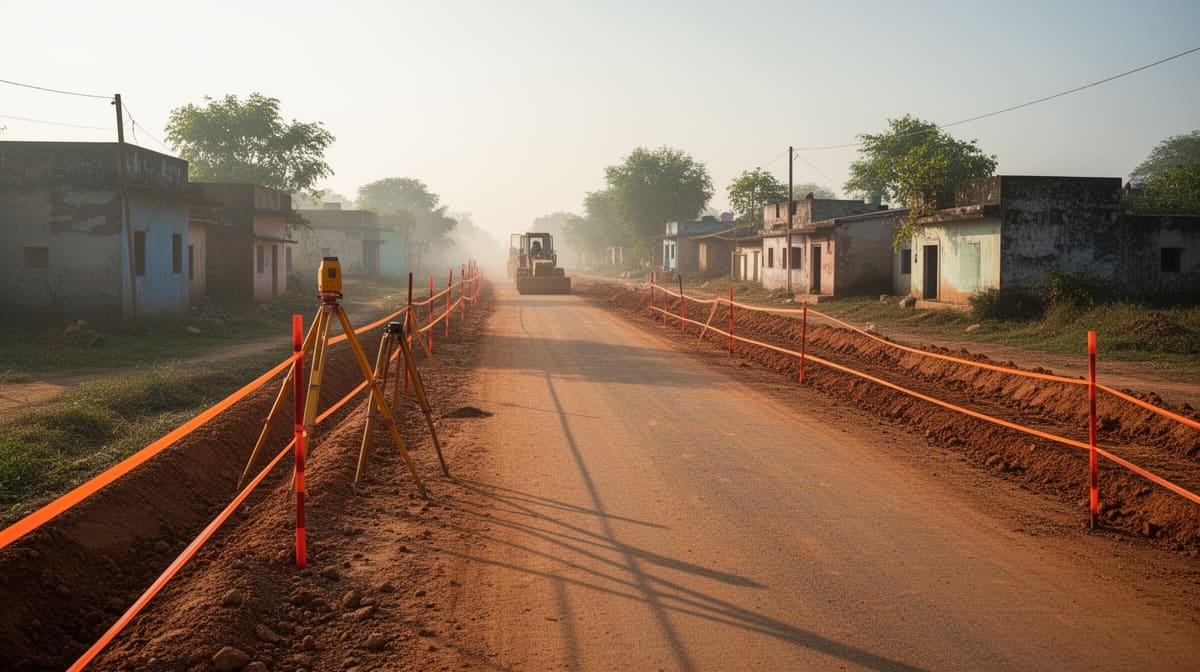
The Karnataka High Court has reaffirmed that judicial review of highway alignment decisions under the National Highways Act, 1956 is confined to legality, not policy wisdom. Where expert bodies like NHAI have conducted technical assessments and followed statutory procedures, courts must defer to their professional judgment unless mala fides or statutory violation is proven.
Background & Facts
The Dispute
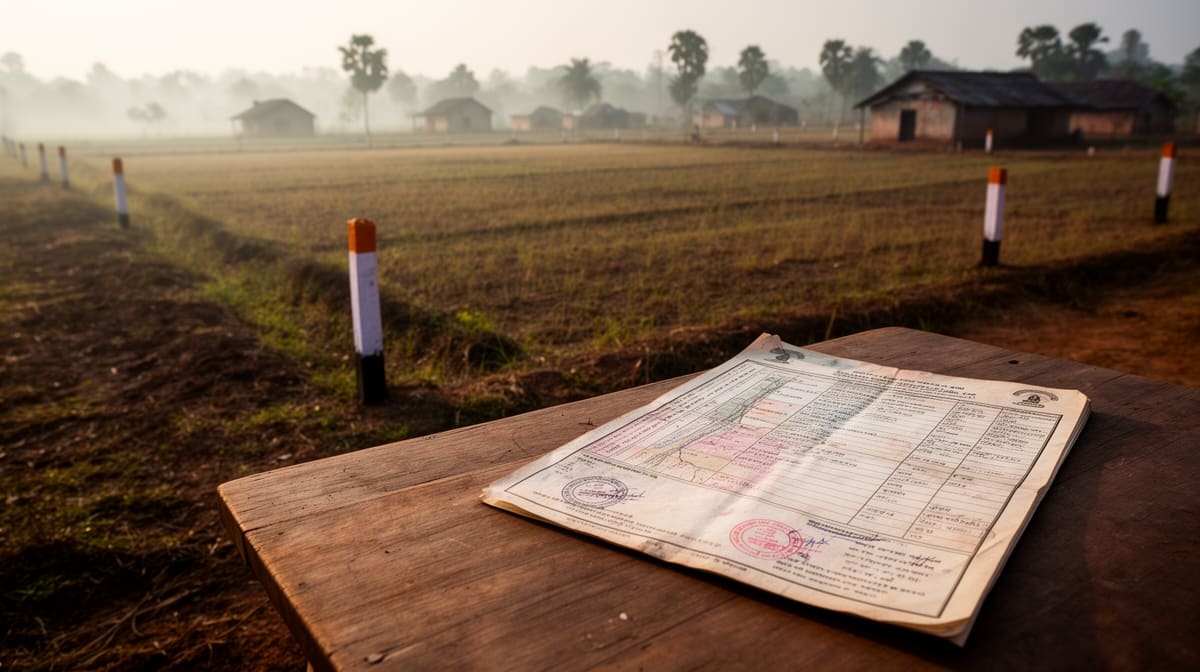
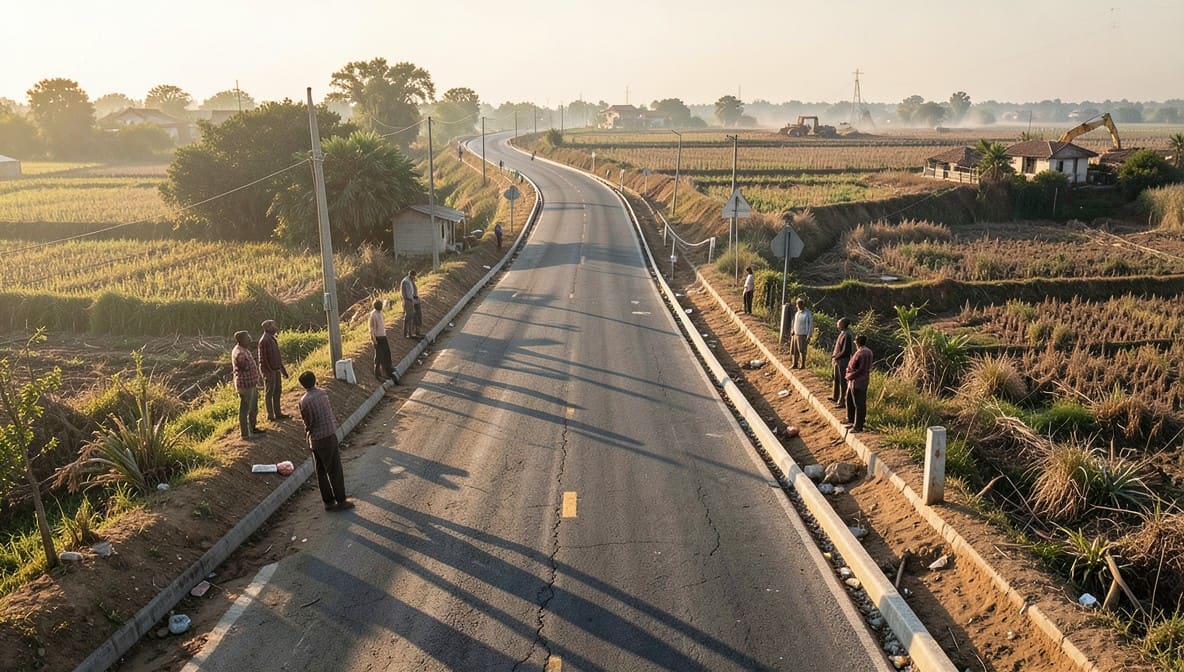
The petitioners, residents of Guddemane, Talaguppa, and Marathur villages in Shivamogga District, challenge the notifications issued by the National Highways Authority of India (NHAI) for the construction of a By-pass road to replace the existing National Highway-69 (old NH-206) stretch between Talaguppa and Marathur. They contend that the existing road, if cleared of encroachments, is sufficient for traffic needs and that acquiring fertile, irrigated agricultural land is unnecessary and unjustified.
Key Facts
- The existing Talaguppa-Marathur road has been in continuous use since at least 1915 and was upgraded to a State Highway in 1977 and to a National Highway in 1999.
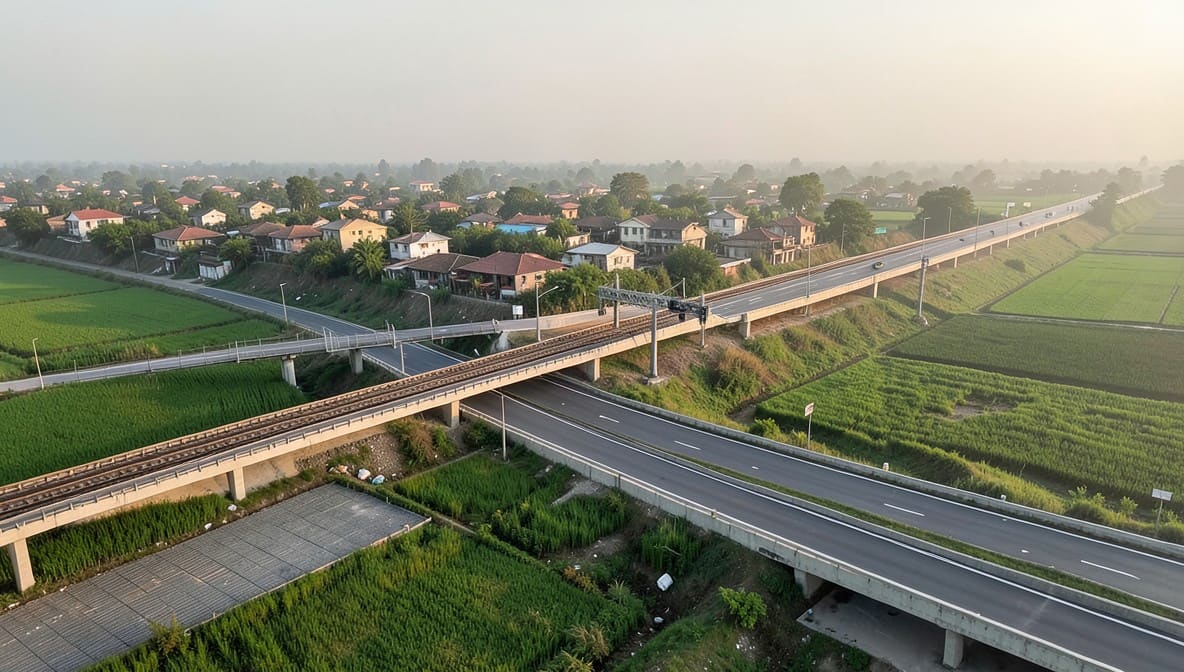
- The road passes through the municipal area of Talaguppa and intersects with Railway Level Crossing No. 152 at Kilometer 73.250.
- The NHAI proposed Option-I alignment for a By-pass to avoid this level crossing and eliminate sharp curves on the existing route.
- The existing road width varies between 5.50 meters and 20 meters, with 67 commercial buildings, 15 government structures, 4 religious sites, and 36 residential properties abutting the right of way.
- A cemetery and a narrow tank bund lie directly on the current alignment.
- The proposed By-pass would avoid these structures and eliminate the level crossing by constructing a Road Over Bridge (ROB).
- The petitioners claim their lands are irrigated by the Gowri Kere canal and are highly productive.
- No objections were filed during the public hearing conducted on 11.01.2024.
Procedural History
- 11.10.2023: Preliminary notification under Section 3A of the National Highways Act, 1956 issued (Notification No. CG-DL-E-13102023-249380).
- 24.06.2024: Declaration under Section 3B issued (Notification No. CG-DL-E-24062024-254900).
- 07.08.2024: Final notification under Section 3D issued declaring land vested in the Central Government (Notification No. CG-DL-E-09082024-256202).
- 05.11.2022: Representations made by petitioners to Union Ministers, Chief Minister, MLAs, and NHAI - not addressed to the Competent Authority.
- 30.08.2024: Additional representations submitted after Section 3D notification - deemed legally irrelevant.
- 24.01.2025: Karnataka High Court directed Deputy Commissioner and Assistant Commissioner to examine feasibility of widening existing highway and submit report by 10.02.2025.
- 14.07.2025: Executive Engineer, NHAI, Shivamogga, submitted technical feasibility report concluding widening is not viable due to sharp curves, narrow right of way, and presence of structures.
- 29.09.2025: Deputy Commissioner, Shivamogga, submitted detailed inspection report affirming NHAI’s alignment choice after site visit with multiple officials and public representatives.
- 11.03.2026: State filed supplementary report before court.
- 27.04.2026: Writ petitions heard and reserved.
- 02.06.2026: Judgment delivered.
The Parties' Positions
Petitioners: Argue that the existing road can be widened by removing illegal encroachments, making the By-pass unnecessary. They claim the acquisition of irrigated land violates their right to livelihood and property. They assert that representations made before 07.08.2024 were ignored and that the decision was arbitrary.
Respondents (NHAI, MoRTH, State): Contend that the alignment was selected after technical evaluation by NHAI and RDSO, considering safety, traffic intensity (7,034 PCUs), structural feasibility of ROB, and public opposition to demolition of government and religious structures. They assert strict compliance with Sections 3A, 3B, 3C, and 3D of the Act. They emphasize that objections were invited and none were received during the statutory period.
Relief Sought
The petitioners seek quashing of the Section 3A, 3B, and 3D notifications dated 11.10.2023, 24.06.2024, and 07.08.2024 respectively, and a direction to the authorities to widen the existing road instead of acquiring land for a By-pass.
The Legal Issue
The central question was whether the courts can interfere with the selection of a highway alignment under the National Highways Act, 1956, when the decision has been made by an expert statutory body after technical evaluation and statutory procedure, and whether objections filed after the Section 3D notification can invalidate the acquisition.
Arguments Presented
For the Petitioner
The petitioners relied on the principle of natural justice and the right to property under Article 300A, arguing that the decision to construct a By-pass was arbitrary and not based on necessity. They contended that the existing road could be widened by removing encroachments, as permitted under Section 3(2) of the Act. They cited representations made in 2022 and 2024 as sufficient to raise objections, even if not formally filed under Section 3C. They argued that the State’s own report acknowledged the existence of unauthorized constructions, which could be removed without acquiring fertile land.
For the Respondent
The respondents emphasized strict compliance with the National Highways Act, 1956. They argued that objections under Section 3C must be filed before the competent authority before the Section 3D notification. Representations made to non-statutory authorities or after 07.08.2024 are legally irrelevant. They cited the technical report by RDSO and the Executive Engineer, which concluded that widening was not feasible due to sharp curves, narrow right of way, and presence of structures. They relied on Union of India v. Kushala Shetty to assert that courts cannot substitute expert policy decisions on highway alignment.
The Court's Analysis
The Court examined the statutory framework under the National Highways Act, 1956, particularly Sections 3A, 3C, and 3D. It held that the purpose of Section 3C is to provide a statutory window for objections, and any representation made after the Section 3D notification is not legally cognizable. The Court observed:
"Once the lands are vested with the Central Government, representations made to the competent authority are of no relevance. Such objections filed without adherence to the time schedule under Section 3(C)(1) of the Act do not call for consideration. In law as well, the only objections that could be made is as regards its use for the purpose enumerated under Section 3A."
The Court further noted that the petitioners’ grievance - the necessity of the By-pass - is not a legal challenge to the notification but a policy dispute. The Court emphasized that the decision to choose Option-I alignment was taken by NHAI after technical evaluation, including RDSO guidelines on ROB skew angles, traffic intensity, and structural constraints.
The Court relied on the detailed report of the Deputy Commissioner, which documented a site inspection with multiple officials and public representatives, confirming that widening the existing road would require demolition of 67 commercial buildings, 15 government structures, 4 religious sites, and 36 residential properties - a move met with public opposition.
The Court cited Union of India v. Kushala Shetty to underscore the limited scope of judicial review in infrastructure projects:
"The courts are not at all equipped to decide upon the viability and feasibility of the particular project and whether the particular alignment would subserve the larger public interest. In such matters, the scope of judicial review is very limited."
The Court rejected the petitioners’ allegation of vested interests as a sweeping and unsubstantiated claim. It held that the choice between widening and By-pass is a policy decision entrusted to NHAI, a statutory expert body, and cannot be second-guessed by courts absent mala fides or illegality.
The Verdict
The writ petitions were dismissed. The Court upheld the validity of the Section 3A, 3B, and 3D notifications dated 11.10.2023, 24.06.2024, and 07.08.2024 respectively. The Court held that the NHAI’s decision to adopt Option-I alignment for the By-pass is lawful, procedurally compliant, and based on expert technical assessment. No monetary relief or direction for alternative alignment was granted.
What This Means For Similar Cases
Judicial Review Cannot Substitute Expert Policy Decisions
- Practitioners must distinguish between legal challenges to procedural compliance and policy challenges to project design.
- Courts will not entertain arguments questioning the wisdom of highway alignment choices if statutory procedures are followed.
- Any challenge must focus on procedural lapses under Sections 3A - 3D, not on whether an alternative alignment would be preferable.
Objections Must Be Timely and Statutorily Filed
- Representations to MLAs, Ministers, or NHAI headquarters do not satisfy the requirement of Section 3C.
- Objections must be filed with the Competent Authority before the Section 3D notification.
- Post-notification objections, even if made in good faith, are legally invalid and cannot be grounds for quashing.
Technical Reports Carry Weight in Land Acquisition Cases
- Reports from NHAI, RDSO, and state engineering departments are treated as authoritative evidence of feasibility.
- Courts will defer to technical assessments on road geometry, traffic capacity, and structural constraints.
- Petitioners must produce counter-expert evidence to rebut such reports - mere assertions of agricultural value are insufficient.