The Supreme Court has reaffirmed that the National Green Tribunal cannot outsource its core adjudicatory duties to expert committees, even when technical expertise is involved. This judgment resolves a six-year stalemate over the establishment of a petrol pump, clarifying that procedural compliance and judicial accountability cannot be sacrificed for administrative convenience.
Background & Facts
The Dispute
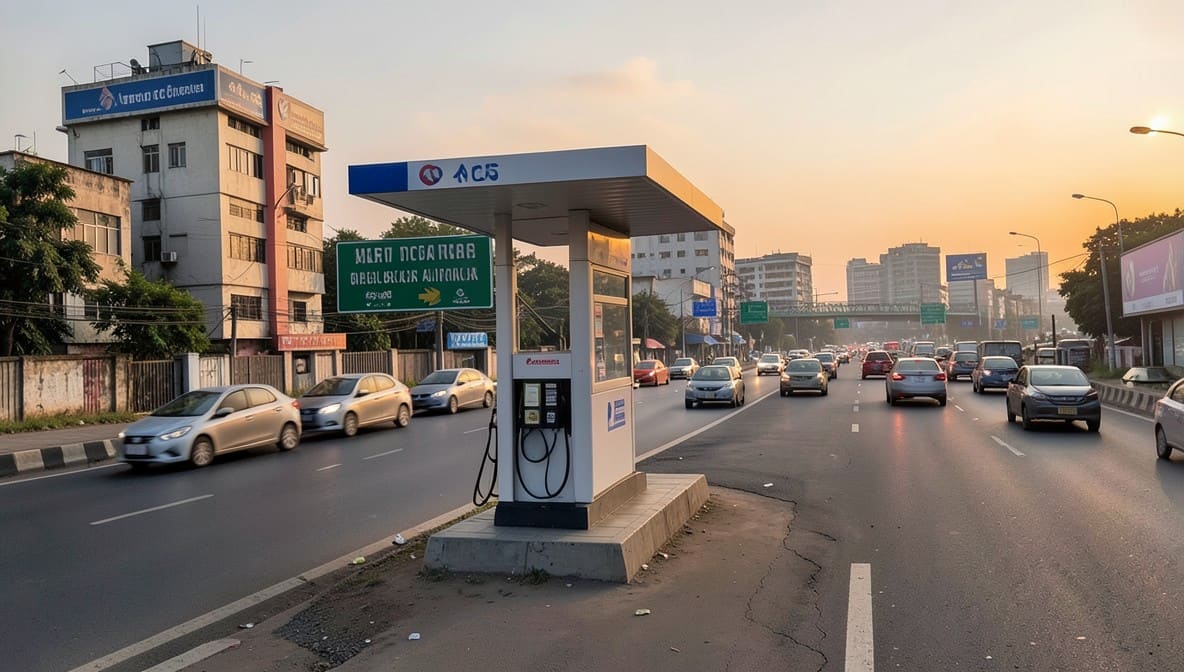
The dispute arose over the proposed establishment of a petrol pump by Indian Oil Corporation Limited (IOCL) at a site adjacent to a gas agency and a play school in Haridwar, Uttarakhand. The 1st respondent, Deepak Sharma, filed an application before the National Green Tribunal (NGT) alleging that the proposed site violated environmental siting guidelines issued by the Central Pollution Control Board (CPCB) on 07.01.2020. The guidelines mandated a minimum radial distance of 50 meters from schools, hospitals (with 10 or more beds), and designated residential areas. A relaxation to 30 meters was permitted only if additional safety measures, as prescribed by the Petroleum and Explosives Safety Organization (PESO), were implemented. No high-tension line was to pass over the retail outlet.
Key Facts
- IOCL was granted a Letter of Intent on 15.11.2018 for the petrol pump site
- Multiple No Objection Certificates (NOCs) were obtained from statutory authorities between 2019 and 2021, including from the District Supply Officer, Uttarakhand Power Corporation, National Highways Authority, and Haridwar Roorkee Development Authority
- The PESO NOC was issued on 08.06.2021
- The NGT passed its first order on 01.02.2021, relying on the CPCB guidelines and the precautionary principle, but did not make any factual findings
- The NGT directed a Joint Committee comprising CPCB, State Pollution Control Board, and SEIAA Uttarakhand to determine compliance and kept existing NOCs in abeyance
- The Committee submitted Annexure-6 on 15.01.2021, concluding the site was in a commercial area with no violation
- The Committee submitted Annexure-7 on 08.03.2021, concluding the site could not be used due to proximity to a residence and residential colony, without specifying the nature or legal status of the residential area
- Annexure-10, dated 19.07.2021, was prepared by two engineers from CPCB and Uttarakhand PCB, concluding full compliance with guidelines
- The 1st respondent filed an Execution Petition under Section 25 of the NGT Act on 08.11.2022
- On 11.11.2022, the NGT passed an order without notice to IOCL, directing the District Magistrate to ensure compliance with the 01.02.2021 order, without considering Annexure-10
- The Haridwar Master Plan, 2025, classified the proposed site as commercial
- The play school cited as a concern was found to be non-operational
- The residence within 30 meters was owned by the husband of the IOCL franchisee
- The high-tension line was approximately 5 meters away from the proposed site
Procedural History
- 15.11.2018: Letter of Intent granted to IOCL
- 07.01.2020: CPCB guidelines issued
- 01.02.2021: NGT order directing Committee to decide compliance; NOCs kept in abeyance
- 15.01.2021: Committee submits Annexure-6 (favorable)
- 08.03.2021: Committee submits Annexure-7 (unfavorable)
- 19.07.2021: Annexure-10 submitted by CPCB and PCB engineers (favorable)
- 08.11.2022: Execution Petition filed by 1st respondent
- 11.11.2022: NGT passes order without notice, directing District Magistrate to enforce 01.02.2021 order
- 2023: Appeals filed before Supreme Court (Civil Appeal No. 3042 of 2023 and Civil Appeal Nos. 4991-4992 of 2024)
- 23.03.2026: Supreme Court judgment delivered
The Parties' Positions
For the Appellants (IOCL)
- All statutory NOCs were obtained prior to or after the NGT order
- The site is in a commercial zone as per Haridwar Master Plan, 2025
- The alleged residential proximity is either to the franchisee’s own residence or an undefined colony
- The play school is non-functional
- No high-tension line passes over the site
- Annexure-10 confirms compliance with CPCB guidelines
- The 1st respondent lacks locus standi and filed the petition with mala fide intent
For the Respondents (Deepak Sharma)
- The site violates CPCB guidelines due to proximity to a residence and residential colony
- The NGT’s precautionary principle must prevail
- Annexure-10 is not a valid Committee report as it was not signed by the full panel
- IOCL suppressed the NGT order when obtaining NOCs
Relief Sought
IOCL sought quashing of the NGT orders dated 01.02.2021 and 11.11.2022, and permission to establish the petrol pump in compliance with extant laws. The respondents sought continuation of the stay on the petrol pump.
The Legal Issue
Can the National Green Tribunal abdicate its adjudicatory functions under the NGT Act, 2010 by delegating final decisions to expert committees, and does the absence of notice and consideration of evidence violate the principles of natural justice?
Arguments Presented
For the Appellant
The appellants relied on Sanghar Zuber Ismail v. Union of India, Kantha Vibhag Yuva Koli Samaj Parivartan Trust v. State of Gujarat, and Singrauli Super Thermal Power Station v. Ashwani Kumar Dubey to argue that the NGT, as a statutory adjudicatory body, cannot delegate its core judicial functions to committees. They emphasized that the Committee’s reports were advisory only and that the NGT’s duty under Sections 14 and 15 of the NGT Act was to adjudicate, not to outsource. They further argued that Annexure-10, though not signed by the full Committee, was prepared by statutory agencies (CPCB and PCB) and contained factual findings that the NGT ignored. The absence of locus standi by the respondent was highlighted, as no evidence showed he resided near the site.
For the Respondent
The respondents argued that the NGT’s reliance on the precautionary principle justified its intervention. They contended that Annexure-10 was invalid because it was not issued by the Committee constituted under the NGT’s order and lacked formal authority. They asserted that proximity to a residence - even if owned by the applicant - violated the spirit of the guidelines and that the NGT’s orders were necessary to prevent environmental harm from fuel fumes. They did not substantiate their claim of locus standi.
The Court's Analysis
The Supreme Court conducted a rigorous analysis of the NGT’s statutory mandate under the National Green Tribunal Act, 2010. It emphasized that the NGT is not an administrative body but a specialized adjudicatory tribunal constituted under Section 3 of the Act, with judicial and expert members in equal measure. The Court held that while expert committees may assist in fact-finding, they cannot replace the tribunal’s duty to adjudicate.
"The role of an expert committee appointed by an adjudicatory forum is only to assist and not to adjudicate. The adjudicatory functions conferred on the NGT... must be exercised by the NGT itself."
The Court found the order dated 01.02.2021 to be a gross abdication of duty. It contained no factual analysis, no application of law to facts, and merely deferred the decision to a committee. The subsequent order dated 11.11.2022 compounded the error by disposing of the execution petition without notice, without considering Annexure-10, and without affording the appellant an opportunity to be heard - clear violations of Section 19(1) of the NGT Act, which mandates adherence to principles of natural justice.
The Court further noted that the CPCB guidelines require a violation of distance from a "designated residential area as per local laws." The Haridwar Master Plan, 2025, classified the site as commercial. The single residence cited was owned by the franchisee’s spouse, and the residential colony lacked specific details. The Court concluded that no violation of the guidelines was established.
The Court also rejected the argument that Annexure-10 was inadmissible. While not issued by the NGT-appointed Committee, it was prepared by statutory agencies (CPCB and PCB) with technical expertise, and its findings were consistent with other NOCs and the Master Plan. The Court held that in the absence of arbitrariness or mala fide, such reports could be relied upon.
The Court observed that the 1st respondent failed to establish locus standi and provided no evidence of personal harm. The prolonged delay of six years, caused by procedural missteps, prejudiced public interest in a commercial utility and the rights of the entrepreneur.
The Verdict
The appeals were allowed. The orders of the National Green Tribunal dated 01.02.2021 and 11.11.2022 were set aside. The District Magistrate, Haridwar, was directed to reconsider the matter afresh, taking into account all statutory clearances, including Annexure-10 and the Haridwar Master Plan, 2025. The petrol pump shall be permitted if found compliant with extant laws. All pending applications were disposed of.
What This Means For Similar Cases
Adjudication Cannot Be Outsourced
- Practitioners must challenge any NGT order that defers final decision-making to expert committees
- The tribunal must record its own reasoning, even if relying on committee reports
- Merely adopting a committee’s conclusion without independent analysis constitutes legal error
Natural Justice Is Non-Negotiable
- No NGT order can be passed without notice to affected parties
- Execution petitions require full hearing and opportunity to rebut evidence
- Failure to consider relevant documents (e.g., Annexure-10) renders the order void
Locus Standi Must Be Proven
- Environmental petitions require concrete proof of personal harm or proximity
- Generic public interest claims without factual basis will not sustain standing
- Courts will scrutinize motives where delay and lack of personal grievance are evident