The High Court of Jammu & Kashmir and Ladakh has delivered a decisive ruling affirming that administrative authorities cannot override court-supervised expert technical reports, especially when livelihoods are at stake. The judgment underscores the binding nature of judicial directions and the illegality of reopening settled technical findings through collateral means.
Background & Facts
The Dispute
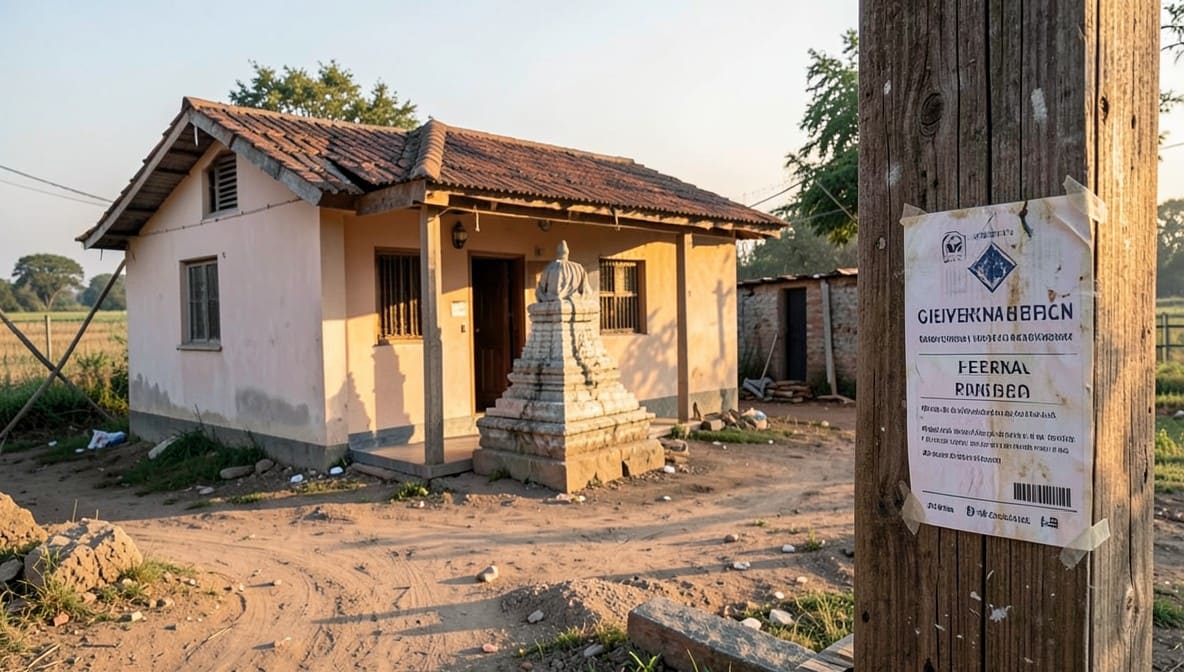
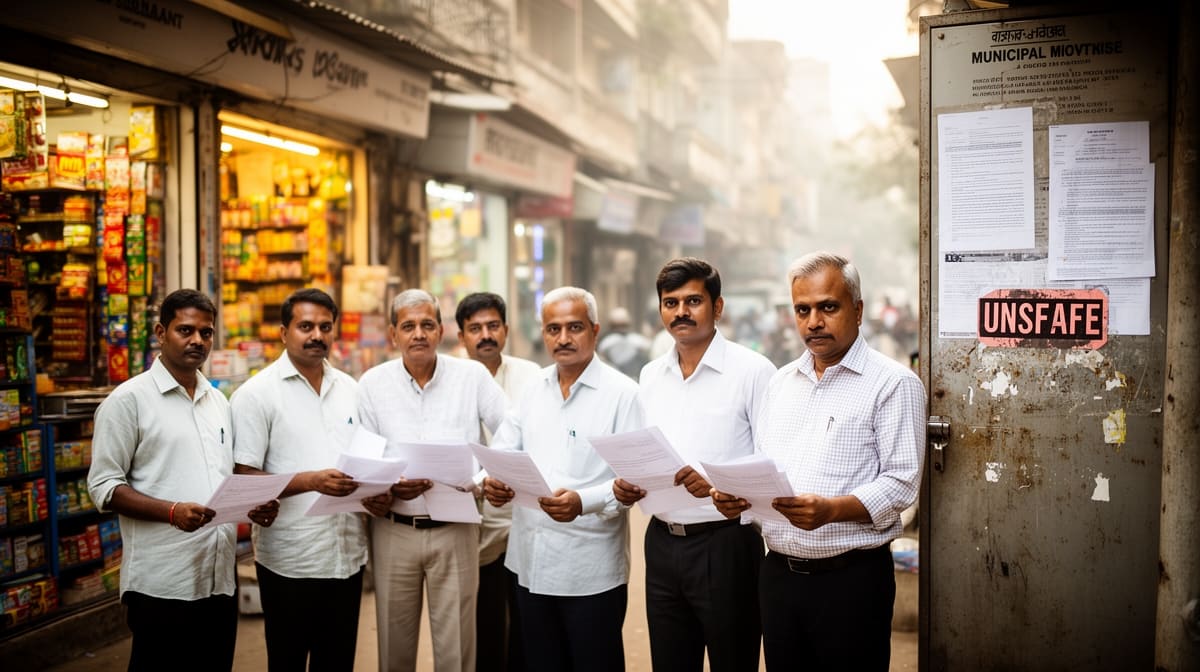
The petitioners, seven small shopkeepers operating for decades at 70, Exchange Road, Jammu, faced eviction after the Jammu Municipal Corporation declared their building structurally unsafe. The petitioners claim the declaration was orchestrated by the building’s owners - respondents Nos. 6 and 7 - to forcibly displace them without following lawful eviction procedures. The initial unsafe report, issued by the Public Works Department (PWD) on 13.11.2024, triggered a demolition notice under Section 258(2) of the Jammu Municipal Corporation Act, 2000, despite the petitioners having no legal interest in the property’s ownership.
Procedural History
- 29.08.2024: Owners applied to Jammu Municipal Corporation seeking declaration of building as unsafe.
- 13.11.2024: PWD issued report declaring building unsafe.
- 07.01.2025: Municipal Commissioner issued demolition notice to owners, directly affecting tenants.
- WP(C) No. 299/2025: Petitioners challenged the notice; Court on 02.04.2025 directed formation of a fresh expert committee.
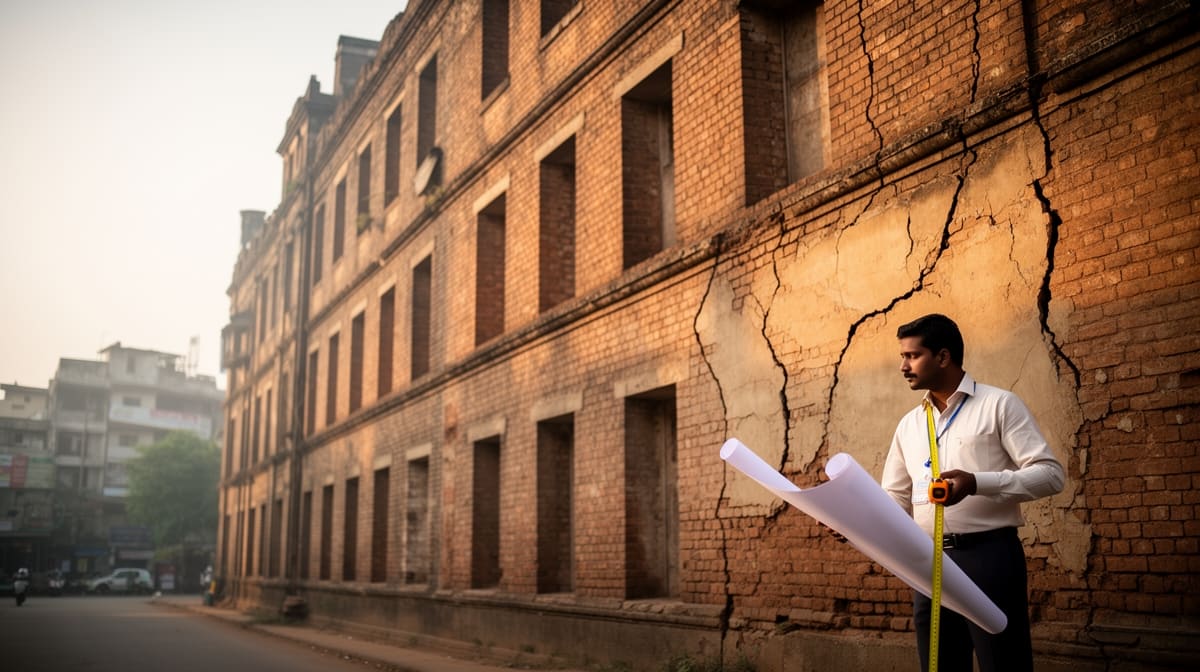
- 26.05.2025: PWD Engineering Wing, under supervision of Additional District Magistrate, submitted report declaring shops of petitioners 1 to 5 and 7 structurally safe; Shop No. 5 required minor repairs.
- 16.07.2025: Court quashed the demolition notice and directed Commissioner to reconsider matter strictly in light of the 26.05.2025 report.
- 26.07.2025: Commissioner issued impugned order directing a new safety audit by a private empanelled firm, ignoring the PWD report.
Relief Sought
The petitioners sought quashing of the impugned order dated 26.07.2025 and a writ of mandamus directing the Municipal Corporation to permit them to resume business in their shops, as certified safe by the court-supervised expert committee.
The Legal Issue
The central question was whether an administrative authority, after a court has directed reconsideration strictly in light of a court-supervised expert report, may reopen the same issue by ordering a fresh audit through a different agency, thereby undermining judicial authority and disregarding technical findings.
Arguments Presented
For the Petitioner
The petitioners, through Senior Counsel Nirmal K. Kotwal, argued that the Commissioner’s order violated the binding directions of the Court dated 16.07.2025, which mandated reconsideration strictly in light of the PWD’s 26.05.2025 report. They contended that the report was comprehensive, conducted in the presence of all stakeholders, and endorsed by the Additional District Magistrate. Reopening the issue through a private firm amounted to contempt of court, abuse of process, and denial of natural justice. They relied on Maninderjit Singh Bitta v. Union of India to assert that judicial orders must be obeyed in letter and spirit.
For the Respondent
The respondents, particularly the Municipal Commissioner and the building owners, raised preliminary objections that the petition was successive litigation on the same cause of action. They justified the fresh audit as necessary to resolve contradictions between the 13.11.2024 and 26.05.2025 reports. However, no reasoned reply was filed challenging the technical validity of the PWD report, and no formal challenge was made to it before any forum. The respondents failed to demonstrate any legal or technical flaw in the court-supervised report.
The Court's Analysis
The Court held that once a competent expert body, constituted under judicial supervision, submits a detailed technical report after affording due opportunity to all parties, the administrative authority is legally bound to act in accordance with it. The Commissioner’s order directing a fresh audit by a private firm was not merely an error - it was a flagrant violation of the Court’s binding direction.
"Reconsideration ‘in light of the report’ necessarily obligated the authority either to accept the findings of the expert body or, in the alternative, to record cogent, legally sustainable and reasoned grounds for differing from such findings. In absence of any such recorded reasons, the direction for a fresh safety audit through another agency amounts to abdication of the duty cast upon respondent No. 1 and cannot be sustained in law."
The Court emphasized that structural safety is a technical domain beyond judicial expertise. Courts must defer to expert opinion unless it is perverse, mala fide, or challenged in a proper forum. The PWD report was neither challenged nor set aside, and thus held the field. The Commissioner’s action was arbitrary, non-speaking, and an attempt to circumvent judicial authority.
The Court further invoked the doctrine of fraud on power, noting that the initial unsafe report was likely procured with mala fide intent to evict tenants without lawful process. Citing Vishnu Vardhan v. State of Uttar Pradesh and Express Newspapers v. Union of India, the Court held that using safety regulations as a tool to achieve an unlawful end - eviction - constitutes colorable exercise of power. The petitioners’ livelihoods, protected under Article 21, were directly jeopardized by this abuse.
The Court also applied the principle that what cannot be done directly cannot be done indirectly (NOIDA Entrepreneurs Association v. NOIDA), rejecting the attempt to bypass civil eviction procedures through administrative coercion.
The Verdict
The petitioners won. The Court quashed the impugned order dated 26.07.2025 and held that administrative authorities cannot override court-supervised expert reports. The petitioners were directed to be immediately restored to their shops, subject to minor repairs in Shop No. 5. The Court further mandated an independent inquiry into the origins of the fraudulent unsafe report.
What This Means For Similar Cases
Expert Reports Bind Administrative Action
- Practitioners must argue that any administrative order contradicting a court-supervised technical report is void unless accompanied by reasoned, legally valid grounds for dissent.
- Where expert reports are filed under judicial supervision, they attain quasi-judicial status and cannot be ignored or superseded by bureaucratic discretion.
Livelihood Rights Trump Procedural Delays
- Closure of commercial premises based on unchallenged expert safety certification violates Article 21 and is constitutionally impermissible.
- Courts will intervene where administrative action causes prolonged deprivation of livelihood, even if procedural irregularities are claimed.
Fraud on Power Invalidates Administrative Orders
-
If an official report is obtained with ulterior motive - such as evicting tenants - it is void ab initio under the doctrine of fraud on power.
-
Practitioners should seek independent inquiry and cost imposition against officials found complicit in mala fide reports, as permitted by this judgment.
-
Actionable Takeaway: In eviction disputes involving commercial tenancies, challenge the legitimacy of safety reports early. Demand production of the expert committee’s methodology and presence of all stakeholders. If a court has already directed reliance on a report, cite this judgment to block any attempt to reopen the issue.