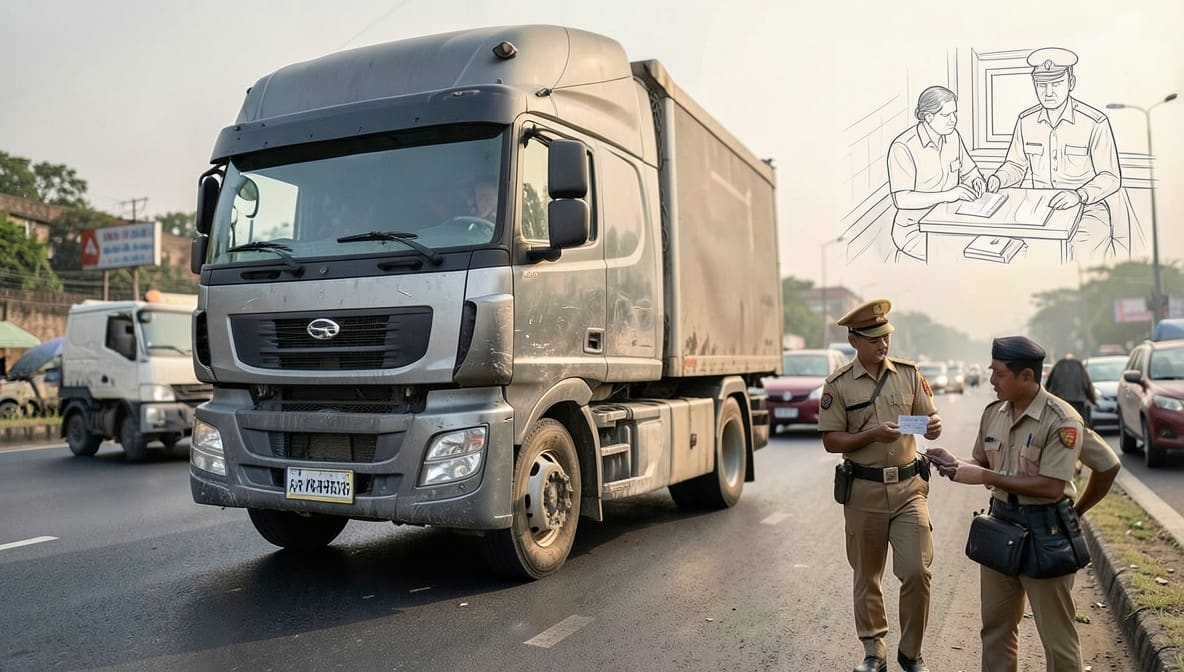
The Punjab & Haryana High Court clarified that an insurer cannot escape liability for a motor accident merely because the driver’s licence was forged, unless the insurer proves a willful breach by the insured. The Court also substantially increased the compensation awarded to the deceased’s parents, setting a detailed precedent for future motor accident claims.
Background & Facts
The Dispute
The appeal (FAO-209-2002) was filed by National Insurance Co. Ltd. against an award dated 06.10.2001 passed by the Motor Accident Claims Tribunal (MACT), Chandigarh, in MACT Case No. 11 of 22.01.1998. The Tribunal had awarded Rs 1,50,000 as compensation to the claimants - Jaspal Kaur (mother) and her husband - for the death of their son, Kulwinder Singh, in a motor vehicle accident caused by a truck driven by Naib Singh (respondent No. 1). The truck (No.HR-45-2521) was owned by respondent No. 2 and insured by National Insurance Co. Ltd. (appellant).
Key Facts
- 14.11.1997: Kulwinder Singh, a 17-year-old student, was riding his bicycle on the Panchkula-Barwala road when the truck driven by Naib Singh collided with him, causing his death on the spot.
- 14.11.1997: FIR registered at Chandi Mandir Police Station based on the statement of witness Gurpal Singh.
- 22.01.1998: Claim petition filed before MACT seeking compensation.
- 06.10.2001: MACT awarded Rs 1,50,000 compensation to the claimants, with interest at 9% per annum from the filing date till realization, payable jointly and severally by the driver and the owner. The insurer was directed to pay the amount to the claimants but retain a right of recovery from the owner.
- Date of Appeal: The insurer filed an appeal under Section 166 of the Motor Vehicles Act, 1988 (exact filing date not specified) challenging the award and the “pay-and-recover” direction.
- Cross-objection: Claimants filed cross-objection No.XOBJC-41-CII-2004 seeking enhancement of compensation.
- 24.08.2001: Assistant Director, Licence, Kolkata issued a report (Ex.R-6) confirming that the licence produced by Naib Singh (WB-01-038640) was fake and belonged to a different person, Nakul Sharma.
- 28.09.2001: Respondent No. 2 (owner) testified that he had relied on the licence presented by the driver and that the licence had been checked by police without objection.
- 03.08.2026: Judgment delivered by Hon’ble Justice Yashvir Singh Rathor.
Procedural History
- 06.10.2001: MACT award of Rs 1,50,000 + 9% interest.
- Appeal: National Insurance Co. Ltd. appealed the award under Section 166 of the Motor Vehicles Act.
- Cross-objection: Claimants filed No.XOBJC-41-CII-2004 for enhancement of compensation.
- 03.08.2026: High Court delivered its judgment, dismissing the insurer’s appeal and partially allowing the cross-objection.
Parties' Positions
- Appellant (National Insurance Co. Ltd.): Argued that the award was based on conjecture, that the insurer should be exonerated because the driver’s licence was fake, and that the compensation amount was excessive.
- Respondents (Jaspal Kaur and others): Contended that the award was inadequate, sought enhancement based on established compensation principles, and maintained that the insurer remained liable despite the fake licence.
Relief Sought
- Insurer: Set aside the award, exonerate itself from indemnity, and reduce the compensation.
- Claimants: Enhance the compensation beyond Rs 1,50,000 and obtain a proper quantum reflecting loss of dependency and conventional heads.
The Legal Issue
What is the extent of an insurer’s liability to indemnify an insured under Section 166 of the Motor Vehicles Act, 1988 when the driver’s licence is proved to be forged, and how should compensation be quantified in a motor accident death claim?
Arguments Presented
For the Appellant
- The insurer submitted that the Tribunal erred in directing it to pay compensation while simultaneously allowing recovery from the owner, because the driver’s licence was fake, constituting a breach of the policy conditions.
- Citing National Insurance Co. Ltd. v. Pranay Sethi and Magma General Insurance Co. Ltd. v. Nanu Ram, the appellant argued that a forged licence should automatically exonerate the insurer from liability.
- The appellant also claimed that the awarded sum of Rs 1,50,000 was excessive and not supported by the loss suffered.
For the Respondents
- The claimants relied on Sarla Verma v. Delhi Transport Corporation and National Insurance Co. Ltd. v. Pranay Sethi to argue that compensation must be based on “just compensation” principles, incorporating loss of dependency, future prospects, and conventional heads.
- They contended that the insurer remains liable unless it can prove a willful breach by the insured, i.e., that the owner knowingly employed a driver with a fake licence.
- The respondents highlighted that the owner’s testimony that he had relied on the licence and that police had not objected was insufficient to establish such willful breach.
The Court's Analysis
The Court began by examining the statutory framework of Section 166 of the Motor Vehicles Act, 1988, which empowers a tribunal to award compensation and direct the insurer to pay. It noted that the insurer’s liability is prima facie and can be displaced only if the insurer establishes a willful breach of the policy condition by the insured.
"The insurer must prove the willful breach of the policy condition i.e. entrusting the vehicle to a driver without a valid licence by the insured in case it wants right of recovery against the insured, even if the driver’s licence is fake."
The Court referred to the Supreme Court’s observations in Rishi Pal Singh v. New India Assurance Co. (2022 ACJ 1868) and Hind Samachar Ltd. (Delhi Unit) v. National Insurance Co. Ltd. (Law Finder Doc ID #2790918), which held that a vehicle owner is not expected to verify the authenticity of a licence from the licensing authority; reliance on the licence produced by the driver suffices unless there is evidence of deliberate negligence.
Applying these principles, the Court found that:
- The driver’s licence was indeed forged, as established by the Assistant Director’s report (Ex.R-6).
- The owner’s testimony that he had relied on the licence and that police had not raised objections was after-thought and not part of the original written statement; therefore, it could not establish a willful breach.
- Consequently, the insurer could not invoke the “pay-and-recover” provision; it remained liable to indemnify the insured.
On compensation, the Court reiterated the Supreme Court’s definition of “just compensation” (see Syed Basheer Ahamed v. Mohd. Jameel, 2009(1) RCR (Civil) 867). It emphasized that compensation must be based on a reasonable nexus between loss and monetary award, rejecting arbitrary or overly generous calculations.
The Court then applied the established methodology:
- Monthly income of the deceased: Rs 2,700 (minimum wage for a skilled worker in 1997).
- Future prospects: 40% uplift, adding Rs 1,080, resulting in total monthly income of Rs 3,780.
- Deduction for personal expenses (50%): Rs 1,890, yielding a monthly loss of dependency of Rs 1,890.
- Annual loss of dependency: Rs 22,680 (Rs 1,890 × 12).
- Multiplier: 18 (as per Sarla Verma), giving a loss of dependency of Rs 4,08,240.
- Conventional heads (loss of consortium, funeral expenses, loss of estate) calculated per Pranay Sethi and adjusted for the 1997 price index, totaling Rs 55,000.
- Adding both components resulted in a total compensation of Rs 4,63,500 (rounded).
The Court therefore dismissed the insurer’s appeal, upheld the Tribunal’s direction that the insurer must pay, and partially allowed the cross-objection, enhancing the compensation to Rs 4,63,500 with interest at 9% per annum from 22.01.1998 until realization, payable jointly and severally by the driver, owner, and insurer.
The Verdict
The High Court dismissed National Insurance Co. Ltd.’s appeal, holding the insurer liable to indemnify the insured despite the driver’s fake licence. The compensation was enhanced to Rs 4,63,500 (rounded), with 9% interest per annum from 22.01.1998 until realization. The amount is payable jointly and severally by the driver, the owner, and the insurer. The claimants’ cross-objection for enhancement was partially allowed. The Court directed the Registry to email the authenticated award to the insurer and noted that, as the father claimant died during pendency, the entire sum shall be paid to the mother.
What This Means For Similar Cases
Insurer’s Liability Is Not Automatically Discharged by a Fake Licence
- An insurer remains liable unless it can prove a willful breach by the insured, i.e., that the owner knowingly employed a driver with a forged licence.
- Reliance on the licence presented by the driver, even if later found fake, does not constitute such breach.
Compensation Must Follow the “Just Compensation” Formula
- Courts will apply the established multiplier method, considering monthly income, future prospects, personal expense deductions, and conventional heads.
- Arbitrary lump-sum awards without quantitative analysis are likely to be enhanced on appeal.
“Pay-and-Recover” Direction Is Unavailable Without Clear Evidence
- Insurers cannot recover from the owner unless they demonstrate that the owner deliberately failed to exercise due diligence.
- Evidence of after-thought statements or lack of contemporaneous written pleadings will not satisfy the burden.
Practical Takeaways for Practitioners
- When defending an insurer, gather contemporaneous evidence of the owner’s knowledge of licence authenticity.
- In motor accident claims, prepare a detailed compensation worksheet following the Sarla Verma multiplier approach.
- Advise clients (vehicle owners) to conduct independent verification of driver licences where feasible to mitigate future liability.