The Madhya Pradesh High Court has reaffirmed that an insurance company alleging policy forgery bears the full burden of proving its claim under the Indian Evidence Act. In a decisive ruling, the Court dismissed an insurer’s appeal against a compensation award, emphasizing that failure to produce original documents invites adverse inference and cannot justify denial of liability.
Background & Facts
The Dispute
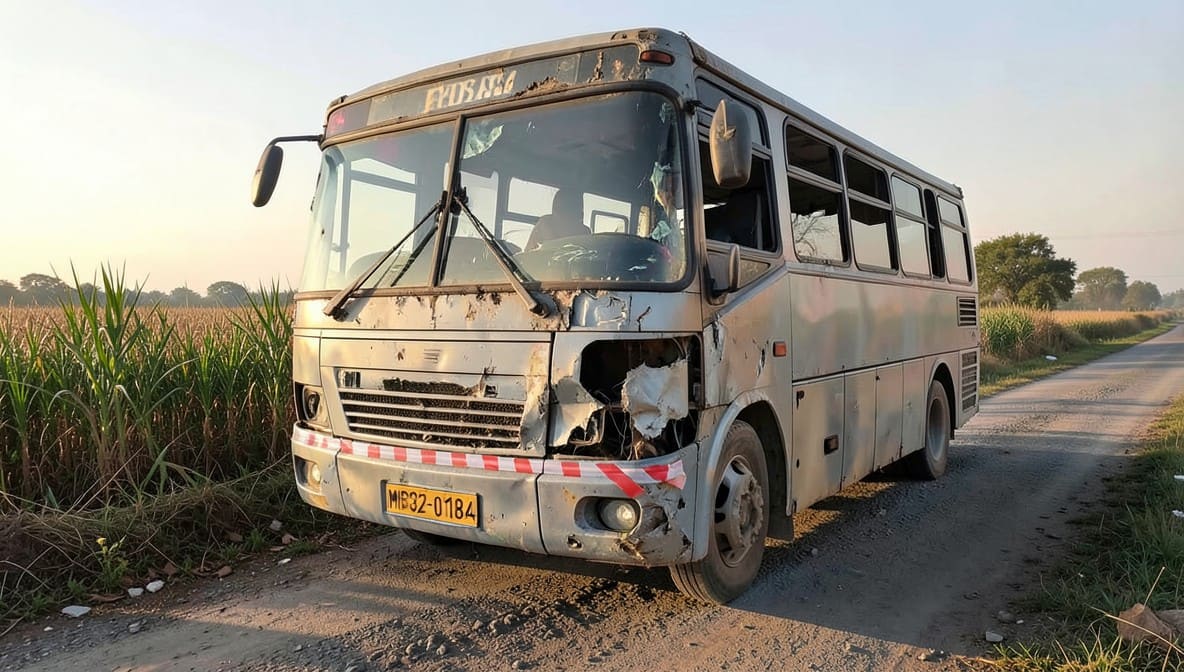
The dispute arose from a fatal motor accident on 12.04.2016 involving a tractor bearing registration No. MP 07 AA 9547, which resulted in the death of Malti. The claimants, being the legal heirs of the deceased, filed Claim Case No. MACC 32/2017 before the Additional Motor Accident Claims Tribunal, Dabra, seeking compensation. The Tribunal awarded Rs. 3,54,000/- to the claimants, holding the appellant-insurance company liable under the Motor Vehicles Act, 1988.
Key Facts
- The accident occurred on 12.04.2016
- The appellant, Magma HDI General Insurance Company Ltd., claimed the tractor was insured under Policy Ex.D-1, valid only from 22.02.2015 to 21.02.2016
- The claimants produced a policy document (Ex.D-8) dated 22.06.2015, allegedly issued by the appellant, covering the accident date
- The appellant contested the authenticity of Ex.D-8, asserting it was forged
- The appellant examined its officer, Edwin Gardia, who testified that no policy was active on 12.04.2016
- The appellant filed Ex.D-2, a computer-generated copy of a proposal form, but it bore no signature of the vehicle owner
- The appellant filed Ex.D-3, a complaint dated 10.12.2018 to the Superintendent of Police, Gwalior, alleging fraud
- The appellant failed to produce original premium receipt counterfoils, payment records, or signed proposal form for Ex.D-8
- The appellant claimed no premium of Rs. 18,000/- was received prior to 22.06.2015, but produced no records to substantiate this
Procedural History
- 12.04.2016: Motor accident resulting in death of Malti
- 2017: Claim petition filed before the Additional Motor Accident Claims Tribunal, Dabra (MACC 32/2017)
- 14.10.2019: Claims Tribunal awarded Rs. 3,54,000/- to claimants, holding appellant liable
- 05.05.2020: MISC. APPEAL No. 396 of 2020 filed by insurer before the High Court of Madhya Pradesh at Gwalior
- 05.05.2026: Judgment delivered by Hon’ble Justice Hirdesh
Relief Sought
The appellant sought setting aside of the Tribunal’s award dated 14.10.2019, on grounds that the insurance policy (Ex.D-8) was forged and no valid coverage existed on the accident date. The appellant requested dismissal of the claim against it.
The Legal Issue
The central question was whether the burden of proof under Sections 101 and 102 of the Indian Evidence Act, 1872 shifts to the insurer when it alleges that a policy produced by the claimant is forged, and whether failure to produce original documents such as the signed proposal form or premium receipts justifies an adverse inference.
Arguments Presented
For the Appellant
The appellant contended that the policy Ex.D-8 was a forgery, as the only valid policy was Ex.D-1, which expired on 21.02.2016. It argued that the accident occurred on 12.04.2016, beyond the policy period, and therefore no liability attached. It relied on the testimony of its officer, Edwin Gardia, and Ex.D-2 (a computer-generated proposal form without signature) to prove the policy was not genuine. It further claimed that no premium of Rs. 18,000/- was received for Ex.D-8 and that the complaint filed on 10.12.2018 corroborated its position.
For the Respondent
The respondent, through Advocate Kamlesh Kumar Kori, supported the Tribunal’s findings. He argued that the insurer failed to discharge its burden of proving forgery. The policy Ex.D-8 was duly issued, and the insurer’s failure to produce original premium receipts, signed proposal form, or records of premium collection rendered its allegations speculative. The Tribunal’s conclusion that the policy was genuine was based on proper appreciation of evidence.
The Court's Analysis
The Court examined the legal framework under Sections 101 and 102 of the Indian Evidence Act, 1872, which place the burden of proof on the party asserting a fact. The Court held that since the appellant specifically pleaded that Ex.D-8 was forged, the burden lay squarely on it to prove that assertion.
"It was incumbent upon the appellant to establish, by cogent and reliable evidence, that the said policy was not genuine."
The Court noted that the appellant produced only a computer-generated copy of the proposal form (Ex.D-2), which lacked the signature of the vehicle owner. The original proposal form, a material document, was not produced. The Court observed that non-production of such a document raises a strong adverse inference under Section 114, Illustration (g) of the Evidence Act.
Further, the appellant failed to produce any original premium receipt, counterfoil, or internal record demonstrating that the Rs. 18,000/- premium for Ex.D-8 was not received. The Court held that the absence of such records, which are routinely maintained by insurers, cannot be ignored. The complaint filed on 10.12.2018 was held to be a belated attempt to substantiate a claim that had already been adjudicated.
The Court emphasized that the Claims Tribunal had properly weighed the evidence and found the policy Ex.D-8 to be genuine. No perversity or illegality was found in the Tribunal’s reasoning. The insurer’s failure to discharge its burden rendered its contentions legally unsustainable.
The Verdict
The appeal was dismissed. The High Court upheld the award of Rs. 3,54,000/- passed by the Claims Tribunal on 14.10.2019, with interest from the date of filing of the claim petition until realization. The Court held that the insurer is liable for the compensation as the policy Ex.D-8 was proven to be genuine, and the burden of proving forgery was not discharged.
What This Means For Similar Cases
Burden of Proof Is Non-Negotiable for Insurers
- Insurers alleging policy forgery must produce original documents: signed proposal forms, premium receipts, and internal ledgers
- Computer-generated copies without signatures or authentication are insufficient to rebut claimant’s evidence
- Failure to produce original records invites adverse inference under Section 114(g) of the Evidence Act
Delayed Complaints Do Not Substitute Evidence
- Post-litigation complaints to police cannot substitute for evidence presented during tribunal proceedings
- Allegations of fraud must be substantiated contemporaneously with the claim, not years later
- Tribunals and courts will not entertain belated attempts to undermine established liability
Documentary Evidence Trumps Oral Testimony
- Oral testimony of an insurer’s officer, without supporting documents, carries limited weight
- The absence of premium records creates a presumption that payment was made
- Claimants need only produce a policy document; the insurer must prove its invalidity