The Central Excise and Service Tax Appellate Tribunal, Hyderabad, has clarified a long-standing ambiguity in the classification of welded wire mesh used in poultry farming, holding that such goods do not qualify as parts of poultry keeping machinery under CETH 8436. This decision reinforces the principle that classification under tariff headings must be determined by the nature of the goods as manufactured and cleared, not by their ultimate use.
Background & Facts
The Dispute
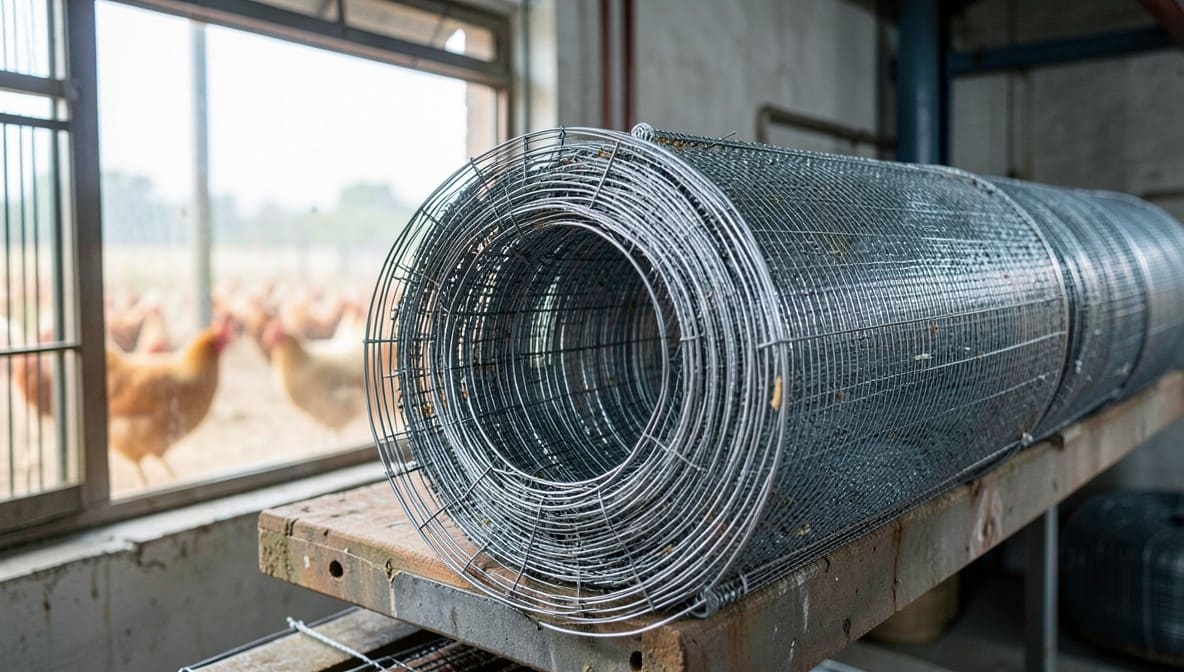
The appellant, M/s Lakshmi Wire Mesh Industries, manufactured and sold GI welded wire mesh, commonly referred to in the trade as "poultry weld mesh" or "battery cages." The goods were supplied exclusively to poultry farms in varying sizes and configurations as per customer specifications. The department assessed the appellant for Central Excise duty under CETH 7314 20 90 (articles of iron and steel wire) and service tax under "Erection, Commissioning and Installation Service" (ECIS), arguing that the wire mesh was not machinery but a raw material. The appellant contended that the product was a component of poultry keeping machinery and should be classified under CETH 8436 (poultry keeping machinery and parts thereof).
Key Facts
- The appellant manufactured and cleared GI welded wire mesh from its factory in Tanuku, Andhra Pradesh, from 2007 to July 2012.
- The mesh was sold in rolls or cut lengths, without any moving parts, hinges, or automated components.
- The product was not sold as a complete cage, battery, or machinery unit, but as a component to be assembled by poultry farmers on-site.
- The department issued Show Cause Notices (SCNs) dated 2011-2012, demanding duty for the period 2007-08 to September 2011 and October 2011 to July 2012.
- The appellant claimed the product was classifiable under CETH 8436 91 00, citing trade usage and technical literature on poultry farming.
- The department relied on the judgment in M/s Azra Poultry Equipments v. UOI (2015) to classify the goods under CETH 7314.
- The appellant submitted that similar goods were classified under CETH 8436 in other jurisdictions, including by the Commissioner (Appeals) in a parallel case.
- The appellant also engaged in on-site installation services, for which service tax was levied under ECIS.
- Shri Mullapudi Seshagiri Rao, partner of the firm, was personally penalized under Rule 26 of the Central Excise Rules, 1944, for non-registration and non-payment of duty.
Procedural History
- 2007 - 2011: Manufacturing and clearance of wire mesh without payment of Central Excise duty.
- 18.09.2009: Department issued letter clarifying that wire mesh does not qualify as machinery under CETH 8436.
- 29.08.2012: Order-in-Original No. 72/2012-C.Ex. passed by Commissioner of Central Excise, Guntur, confirming demand of duty under CETH 7314 and service tax under ECIS, and imposing penalty under Rule 26.
- 31.01.2013: Order-in-Original No. 10/2013-C.Ex. passed for the subsequent period (October 2011 - July 2012), confirming similar demands.
- 2012 - 2013: Appeals filed before the Tribunal: Excise Appeal Nos. E/3373/2012, E/3374/2012, E/26493/2013, and E/26495/2013.
- 20.01.2026: Hearing before the Division Bench of CESTAT Hyderabad.
- 30.06.2026: Final Order passed by the Tribunal.
The Parties' Positions
For the Appellant
- Argued that the wire mesh was specifically designed for poultry farming and was known in trade as "poultry weld mesh" or "battery cage components."
- Relied on HSN Explanatory Notes to CETH 8436, which include "rearing and laying units or batteries" equipped with automatic devices.
- Cited multiple Tribunal judgments (Weld Fuse Pvt Ltd, Autotex Pvt Ltd, Shiva Poultry Equipments, Alchemist Ltd) supporting classification under CETH 8436.
- Contended that the Azra Poultry Equipments judgment was not binding as the Supreme Court had allowed withdrawal of the SLP to pursue departmental appeal, directing that the matter be decided on its merits.
- Asserted that the extended period of limitation could not be invoked due to bonafide doubt on classification.
- Argued that personal penalty under Rule 26 on the partner was unsustainable since the firm was already liable.
For the Respondent
- Maintained that the wire mesh, as cleared from the factory, was a simple welded structure without moving parts and thus fell under CETH 7314.
- Relied on Azra Poultry Equipments and Ambica Wood Works to argue that "machinery" requires interdependent moving parts.
- Cited CC (Import) v. Welkin Foods to emphasize that classification must be based on the form in which goods are cleared, not intended use.
- Argued that the Commissioner (Appeals) order favoring the appellant was not binding precedent.
- Relied on a recent Tribunal decision (Sri Balaji Weld Mesh Industries) upholding classification under CETH 7314.
- Contended that service tax under ECIS was rightly levied for on-site installation.
Relief Sought
The appellants sought:
- Reversal of the classification under CETH 7314 and reclassification under CETH 8436.
- Cancellation of Central Excise duty demand for the extended period.
- Cancellation of penalty under Section 11AC and Rule 25.
- Cancellation of confiscation of plant, machinery, and land.
- Cancellation of personal penalty under Rule 26 on Shri Mullapudi Seshagiri Rao.
- Confirmation of service tax demand under ECIS.
The Legal Issue
The central question was whether GI welded wire mesh, manufactured and cleared as a component for poultry cages, qualifies as a part of poultry keeping machinery under CETH 8436, or whether it is correctly classified as an article of iron and steel under CETH 7314 20 90.
Arguments Presented
For the Appellant
The appellant relied on trade usage, HSN Explanatory Notes, and multiple Tribunal judgments to argue that poultry weld mesh is an integral component of poultry rearing systems. It contended that the product was not merely fencing material but a specialized article designed exclusively for poultry farming, and that its classification should reflect its functional role in the industry. The appellant emphasized that the Supreme Court in Welkin Foods and Connaught Plaza had affirmed that classification must consider the product’s commercial purpose and the understanding of those in the trade, particularly where statutory definitions are absent. It further argued that the Azra Poultry Equipments judgment was not authoritative since the Supreme Court had directed that the matter be decided on its own merits, and that the Commissioner (Appeals) had already ruled in favor of the appellant on identical facts.
For the Respondent
The respondent argued that CETH 8436 covers only complete machinery or systems with moving parts, such as automated feeding or egg-collection units. The wire mesh, as cleared from the factory, was a static, non-moving structure with no mechanical function. It relied on Azra Poultry Equipments and Ambica Wood Works to establish that "machinery" requires interdependent moving parts and that mere assembly of components does not create machinery. The respondent also cited Akbar Badrudin to argue that where statutory context demands a technical interpretation, trade usage cannot override it. It maintained that the product’s intended use could not alter its classification under GRI 1 of the HSN, and that the Tribunal’s prior decision in Sri Balaji Weld Mesh Industries was directly on point.
The Court's Analysis
The Tribunal undertook a detailed analysis of the tariff structure, judicial precedents, and the principles of classification under the Central Excise Tariff Act. It began by examining the definitions of "machine" and "machinery" from Black’s Law Dictionary and Concise Oxford Dictionary, noting that both require moving parts working in interdependent fashion to perform a specific task. The Tribunal observed that the wire mesh, as cleared, had no moving components and was not a self-contained unit but a raw material for further assembly.
"A mere equipment or structure for 'poultry keeping' would not qualify classification under Heading 84.36. To fall under Heading 84.36 the test, of being a machinery has to be satisfied."
The Court then examined the HSN Explanatory Notes to CETH 8436, which explicitly refer to "rearing and laying units or batteries, large installations equipped with automatic devices for filling the feeding troughs, cleaning the floors and collecting the eggs." The Tribunal held that the appellant’s product did not meet this description, as it lacked automation, control systems, or integrated mechanical functions.
The Court also considered the Supreme Court’s judgment in CC (Import) v. Welkin Foods, which emphasized that classification must be based on the form in which goods are cleared, not their ultimate use. The Tribunal noted that the appellant had not demonstrated that the wire mesh was cleared as a "part" of a larger machinery system, nor had it shown that the product was integrated into a complete unit at the factory.
The Court further analyzed the applicability of the "common parlance test" as articulated in Connaught Plaza Restaurant and Commissioner of Customs v. D.L. Steels. It held that while trade usage is relevant, it cannot override the statutory context. Where the tariff heading is precise and the product does not meet the technical definition of machinery, trade nomenclature cannot alter classification. The Court distinguished Autotex Pvt Ltd, where the disputed items were complete cages with automated features, from the present case, where only the mesh component was sold.
Regarding the Azra Poultry Equipments judgment, the Tribunal held that the Supreme Court’s dismissal of the SLP as "not pressed" did not invalidate the Delhi High Court’s reasoning. The Court clarified that the Supreme Court’s direction to decide the matter on its merits did not imply that the High Court’s legal analysis was incorrect, but merely that the departmental appeal should be heard without prejudice.
On the issue of extended period and penalty, the Tribunal found that the classification dispute involved complex statutory interpretation and conflicting judicial views. There was no evidence of deliberate evasion, and the appellant had acted on a bonafide belief supported by prior Tribunal decisions. Therefore, the extended period under Section 11A could not be invoked, rendering penalties under Section 11AC and Rule 25 unsustainable.
Similarly, the personal penalty under Rule 26 on Shri Seshagiri Rao was set aside, as the liability for non-payment rested with the firm, and there was no proof of personal dishonest intent.
The Verdict
The appellants succeeded in part. The Tribunal upheld the demand for Central Excise duty under CETH 7314 20 90 for the normal period (2007 - 2012) but set aside the demand for the extended period. The penalty under Section 11AC and Rule 25 was cancelled. Confiscation of plant, machinery, land, and materials under Rule 25 was set aside. The service tax demand under ECIS was upheld, along with the penalty under Section 78. The personal penalty under Rule 26 on Shri Mullapudi Seshagiri Rao was quashed. The appeals were allowed partly, and the impugned orders were modified accordingly.
What This Means For Similar Cases
Classification Must Reflect Form, Not Function
- Practitioners must now argue that goods are classified based on their physical and functional characteristics at the time of clearance, not their intended end-use.
- Products sold as components for assembly by end-users cannot claim classification as "parts of machinery" unless they are integrated into a complete system at the factory.
- Trade names like "poultry weld mesh" or "battery cage components" are irrelevant if the product lacks mechanical functionality.
Bonafide Classification Disputes Shield Against Penalties
- Where classification involves complex statutory interpretation and conflicting judicial precedents, extended period and penalties under Section 11AC and Rule 25 are not sustainable.
- The burden shifts to the department to prove deliberate intent to evade duty; mere error in interpretation is insufficient.
- Practitioners should document reliance on prior Tribunal or High Court rulings to establish bonafide belief.
Personal Liability of Partners Is Not Automatic
- A partner cannot be penalized under Rule 26 merely because the firm defaulted, unless there is direct evidence of personal involvement in evasion.
- Absence of evidence of dishonest intent or knowledge of illegality precludes personal penalty, even if the partner was the decision-maker.
- Firms should ensure that all tax positions are supported by documented legal opinions to mitigate personal exposure.