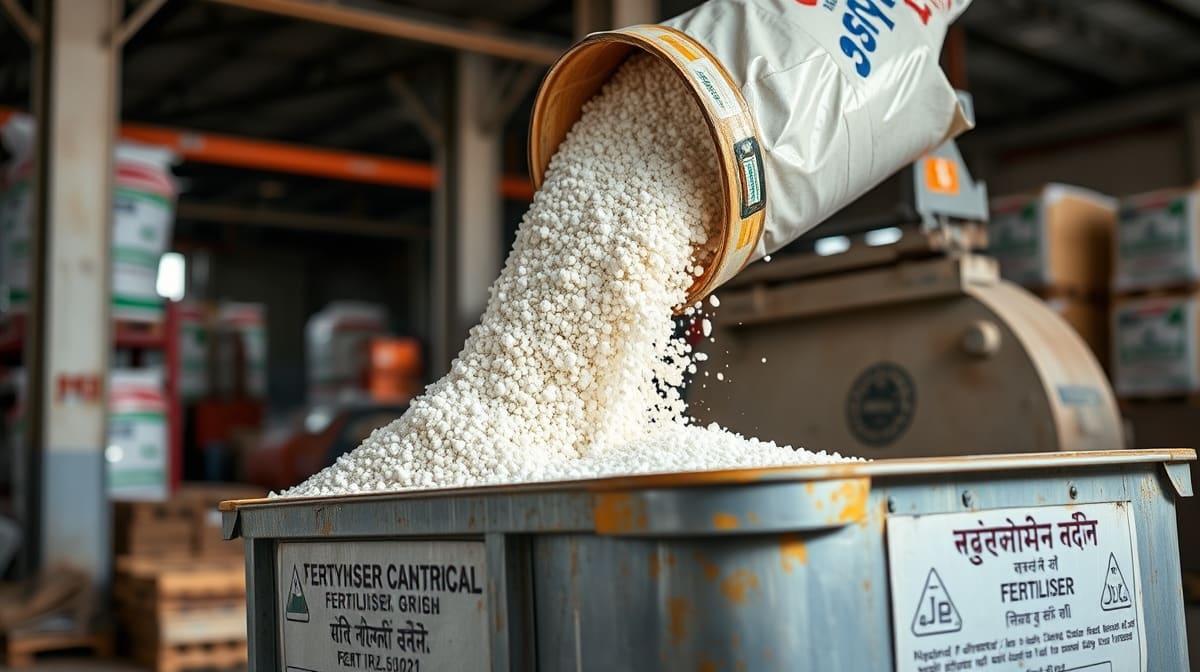
The Customs, Excise and Service Tax Appellate Tribunal (CESTAT), Hyderabad, has delivered a pivotal ruling clarifying that the classification of imported goods under the Customs Tariff cannot rest solely on the presence of chemical constituents. The judgment underscores that commercial intent, product labeling, and market identity are decisive factors, not isolated laboratory findings. This decision reinforces the principle that technical ambiguity must be resolved in favor of the importer unless the Department proves deliberate mis-declaration with conclusive evidence.
Background & Facts
The Dispute
The appellants, M/s Jasmine Biotechnologies and its proprietor Shri K. Ravinder, imported products from M/s Beijing Kingbo Biotech Co., Ltd., China, declaring them as "Bio-Fertiliser" under Customs Tariff Heading (CTH) 3101 0099. The Department of Customs contended that the goods were in fact insecticides containing the compound Oxymatrin and should have been classified under CTH 3808 9199, which requires registration under the Insecticides Act, 1968. The goods were seized, confiscated, and penalties were imposed under Sections 111(d), 111(m), 112(a), and 114AA of the Customs Act, 1962.
Key Facts
- The imported goods were labeled and marketed as "Kingbo K Bio-Fertilizers/exodus" and described in accompanying literature as plant protectors derived from herbal extracts
- The goods were imported openly through proper bills of entry with full product description and supporting documents
- Samples were drawn and sent to RCOF, Bangalore and IICT, Hyderabad for chemical analysis
- The analysis report dated 15.07.2010 explicitly stated: "analysis result did not show any peaks related to pesticides"
- A second report dated 19.07.2010 detected trace amounts of Matrin, Oxymatrin, Dehydromatrin, and Dehydrooxymatrin, but did not quantify the amounts
- The Department did not produce any evidence of international registration, sale, or recognition of the product as an insecticide
- No expert from either testing laboratory was made available for cross-examination despite repeated requests by the appellants
- The appellants had no prior history of customs violations and the imports were not clandestine
Procedural History
- 15.07.2010: First laboratory report issued by RCOF, Bangalore, indicating absence of pesticide peaks
- 19.07.2010: Second laboratory report issued by IICT, Hyderabad, detecting alkaloids without quantification
- 31.03.2012: Adjudicating Authority issued Order-in-Appeal No. 21/2012 and 22/2012, confiscating goods and imposing penalties
- 31.03.2012: Commissioner of Customs (Appeals-II) upheld the order
- 24.10.2017: Commissioner (Appeals-II) issued a fresh order (HYD-CUS-000-APP-093-095-17-18) reaffirming confiscation and penalties
- 2012: Customs Appeal Nos. C/2352 and C/2353 filed before CESTAT against the 2012 order
- 2018: Customs Appeal Nos. C/30093 and C/30094 filed before CESTAT against the 2017 order
- 13.04.2026: Final hearing before CESTAT Hyderabad
- 15.05.2026: Judgment pronounced
The Parties' Positions
For the Appellants
- The product is a plant-based agricultural supplement, not a synthetic pesticide
- The presence of naturally occurring alkaloids does not equate to classification as an insecticide
- The 15.07.2010 report conclusively negated the presence of pesticides
- The Department failed to prove deliberate mis-declaration or mens rea
- The denial of cross-examination of lab experts violated principles of natural justice
- No statutory prohibition or import ban existed on the goods
For the Respondent
- The presence of Oxymatrin, recognized under the Insecticides Act, 1968, justifies classification under CTH 3808 9199
- The product was marketed as a "plant protector," which falls within the ambit of insecticides
- The second report confirmed the presence of controlled substances
- The appellants had sufficient opportunity to rebut the findings
Relief Sought
The appellants sought: (1) quashing of confiscation orders under Sections 111(d) and 111(m); (2) cancellation of customs duty demand; (3) setting aside of penalties under Sections 112(a) and 114AA; and (4) return of seized goods.
The Legal Issue
The central question was whether the mere detection of naturally occurring alkaloids like Oxymatrin in an imported product is sufficient to classify it as an insecticide under CTH 3808 9199 and justify confiscation under the Customs Act, 1962, absent proof of commercial intent, market identity, or statutory prohibition.
Arguments Presented
For the Appellant
The appellants relied on Andaman Timber Industries v. Commissioner of Central Excise [2015 (324) ELT 64 (SC)] to argue that reliance on technical reports without cross-examination violates natural justice. They emphasized that classification must consider product function, labeling, and commercial use, not chemical composition alone. They cited the 15.07.2010 report, which explicitly stated no pesticide peaks were found, to demonstrate the inconsistency and unreliability of the Department’s evidence. They further argued that the absence of any evidence showing the product was registered, sold, or recognized as an insecticide in India or internationally rendered the classification baseless.
For the Respondent
The Department contended that Oxymatrin is a recognized active ingredient under the Insecticides Act, 1968, and its presence alone justifies classification under CTH 3808 9199. It argued that the term "plant protector" is a euphemism for insecticide in commercial parlance and that the appellants’ declaration as "Bio-Fertiliser" was an attempt to evade regulatory compliance. The Department relied on Kanungo & Co. v. CC, Calcutta and Tele Star Travels Pvt. Ltd. v. Special Director of Enforcement to support its position, though these cases involved different factual matrices.
The Court's Analysis
The Tribunal conducted a rigorous analysis of the evidence and legal principles governing tariff classification. It held that classification under the Customs Tariff is not a matter of chemical detection alone but requires a holistic assessment of the product’s nature, use, and market identity.
"The analysis report dated 15.07.2010 specifically records that the 'analysis result did not show any peak related to pesticides'. This finding goes to the root of the matter. Once the laboratory itself records absence of pesticides peaks, the Department cannot selectively rely upon some presence of naturally occurring alkaloids to conclude that the product is necessarily an insecticide."
The Tribunal noted the absence of any quantification in the second report and the lack of technical opinion linking the detected alkaloids to pesticidal functionality. It emphasized that agricultural products often possess dual characteristics - nutritional and pest-resistant - and that such products cannot be automatically classified as prohibited insecticides without statutory clarity.
The Tribunal further held that the denial of cross-examination of the laboratory experts was fatal to the Department’s case. Citing Andaman Timber Industries, it observed:
"Denial of effective cross-examination strikes at the very root of fair adjudication... where technical reports constitute the sole basis for reclassification and confiscation, reliance upon such reports becomes legally unsustainable."
The Court also rejected the Department’s assertion of deliberate mis-declaration, noting that the imports were made openly with full documentation and that the investigation was initiated only after clearance. The Tribunal held:
"Where classification dispute arises on interpretational issues, allegation of suppression or wilful mis-statement cannot automatically be sustained."
The absence of any statutory prohibition order or evidence of hazard caused by the product further undermined the basis for confiscation under Sections 111(d) and 111(m). The penalties under Sections 112(a) and 114AA were held unsustainable due to the lack of proof of mens rea or fraudulent intent.
The Verdict
The appeals were allowed. The Tribunal set aside the impugned orders dated 31.03.2012 and 24.10.2017. Confiscation of goods under Sections 111(d) and 111(m) of the Customs Act, 1962, was quashed. The demand for customs duty, interest, and redemption fine was cancelled. Penalties imposed under Sections 112(a) and 114AA were set aside. The seized goods were directed to be released to the appellants without further conditions.
What This Means For Similar Cases
Classification Requires Functional and Commercial Context
- Practitioners must now argue that tariff classification must be based on the product’s primary use, labeling, and market identity - not merely chemical composition
- Importers declaring agricultural supplements should retain product literature, marketing materials, and international classification records to substantiate their declarations
- Customs authorities cannot rely on isolated chemical detections to reclassify goods without technical or commercial evidence
Cross-Examination of Expert Witnesses Is Non-Negotiable
- Where adjudication hinges on laboratory or technical reports, the right to cross-examine the authors is mandatory under principles of natural justice
- Failure to provide this opportunity renders the order legally void, regardless of the weight of the report
- Practitioners must formally request cross-examination in writing and preserve such requests in the record
Interpretational Disputes Do Not Equate to Fraud
- Ambiguities in classification cannot be treated as deliberate suppression or wilful mis-declaration
- Importers acting in good faith with full disclosure are protected under settled Supreme Court jurisprudence
- Customs authorities must initiate classification disputes through advance rulings or pre-clearance mechanisms, not punitive proceedings