The Customs, Excise & Service Tax Appellate Tribunal has clarified a critical principle in tariff classification: when a metallic product undergoes structural transformation to serve a specialized functional purpose, it ceases to be classified as a raw form and must be categorized as a finished article. This decision resolves longstanding ambiguity in the classification of molybdenum-based automotive components and reinforces the primacy of functional identity over material origin in customs law.
Background & Facts
The Dispute
The dispute centers on the correct Harmonized System (HS) classification of imported "Molybdenum Mirrors and Shields" used in automobile headlamps to concentrate light beams. The respondent, Siria Impex Private Limited, declared these goods under CTH 81029590, attracting a Basic Customs Duty (BCD) of 5%. The Department of Customs, however, reclassified them under CTH 81029900, attracting a 10% BCD, alleging mis-declaration and underpayment of duty.
Key Facts
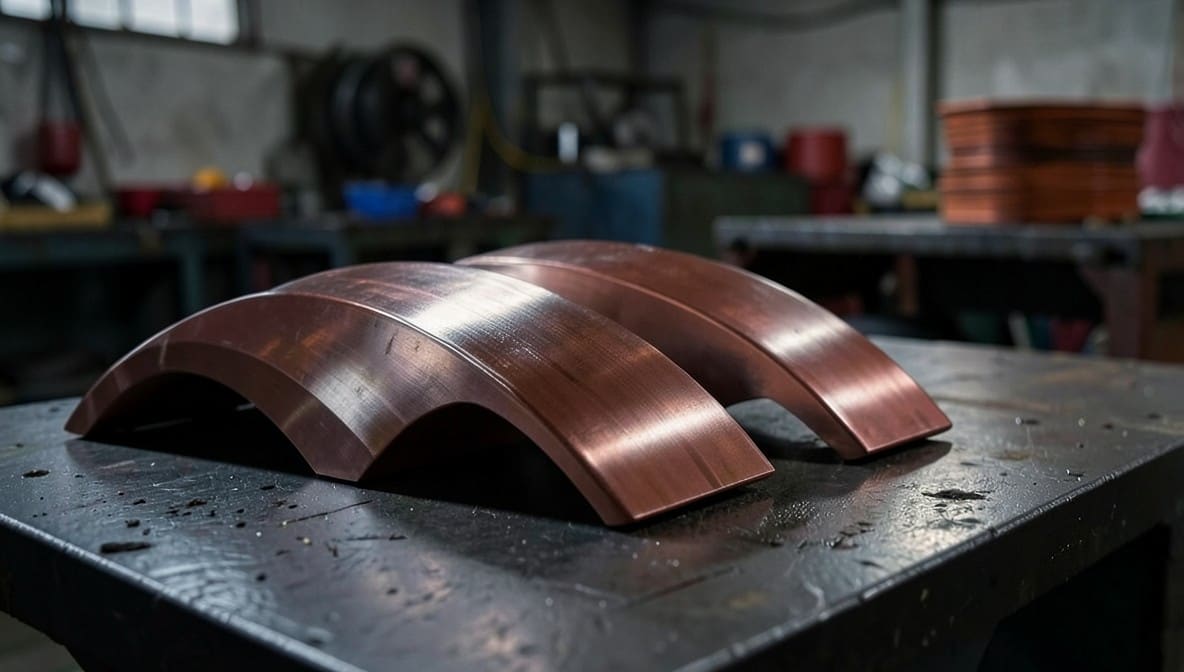
- The imported goods are made from molybdenum sheets, cut and curved into mirror-like or shield-like shapes for use in halogen lamp assemblies.
- The respondent admitted in writing that the sheets were intentionally curved to function as light distributors in automotive lighting systems.
- The goods were not flat plates or sheets at the time of import; they were pre-formed into curved, three-dimensional shapes designed for mechanical integration into headlamp units.
- Between 06.04.2017 and 24.10.2019, the Department had cleared 23 prior Bills of Entry for identical goods under CTH 81029590 (5% duty), creating inconsistent past practice.
- The audit report dated 22.02.2021 identified a duty short-levy of Rs. 16,78,288/- due to misclassification.
- Show Cause Notices (SCNs) were issued on 28.07.2021 proposing recovery of differential duty and penalty under Section 28(1) and Section 112(a) of the Customs Act, 1962.
- The original adjudicating authority issued Order-in-Original No. 27/2022 (dated 14.01.2022) and Order-in-Original No. 28/2022 (dated 18.01.2022) confirming the 10% classification and imposing penalties of Rs. 50,000/- each.
Procedural History
- 28.07.2021: Show Cause Notices issued by Customs, Patparganj.
- 14.01.2022: Order-in-Original No. 27/2022 passed (Appeal No. C/50006/2023).
- 18.01.2022: Order-in-Original No. 28/2022 passed (Appeal No. C/50007/2023).
- 02.11.2022: Review Order No. 17/2022 issued, upholding the OIOs.
- 25.07.2022: Commissioner (Appeals) allowed the importer’s appeal, setting aside both OIOs and reinstating 5% classification under CTH 81029590.
- 07.04.2026: Hearing before the Customs Appellate Tribunal.
- 29.04.2026: Final Order passed by the Tribunal.
The Parties' Positions
Appellant (Department): Argued that the goods, though made from molybdenum sheets, were no longer flat products but finished articles with a distinct functional identity as light reflectors. Relied on Chapter Note 1(g) to Chapter 74 (applicable mutatis mutandis to Chapter 81), which excludes products that assume the character of articles under other headings. Cited Atul Glass Industries v. Collector of Central Excise to support the principle that transformation alters classification.
Respondent (Importer): Contended that the goods were cut from molybdenum sheets and retained the essential character of flat products. Argued that the term "shield" did not confer article status and that the Department’s own past practice of classifying identical goods under 81029590 estopped it from reclassifying. Asserted that Rule 3(c) of the General Rules of Interpretation (GRI) was misapplied, as Rules 3(a) and 3(b) were not exhausted.
Relief Sought
The Department sought to set aside the Commissioner (Appeals)’s order dated 25.07.2022 and reinstate the original orders imposing differential duty of Rs. 5,74,280/- and penalty of Rs. 50,000/- per appeal. The importer sought confirmation of the 5% classification and dismissal of the appeals.
The Legal Issue
The central question was whether imported molybdenum mirrors and shields, though manufactured from flat sheets, acquire a distinct functional identity that requires classification under the residual heading CTH 81029900 (10% BCD) as "other articles of molybdenum," or whether they remain classifiable under CTH 81029590 (5% BCD) as "other" plates, sheets, strips, or foils.
Arguments Presented
For the Appellant
The Department argued that the goods, once curved and shaped for use as light distributors in automotive lamps, ceased to be mere sheets and became finished articles. It emphasized that Chapter Note 1(g) to Chapter 74, applicable to Chapter 81, defines plates and sheets as flat-surfaced products of uniform thickness that do not assume the character of articles under other headings. The curved shape, the Tribunal noted, was not a mere modification of edges but a fundamental transformation of the product’s form and function. The Department relied on Atul Glass Industries, where the Supreme Court held that a glass mirror, though made from glass sheets, becomes a distinct article and must be classified as such. It further contended that Rule 3(c) of GRI was correctly applied because neither Rule 3(a) nor 3(b) were applicable - the goods were not specifically described under either heading, nor were they composite. The later numerical heading (81029900) therefore governed.
For the Respondent
The importer argued that the product was merely a cut and curved sheet of molybdenum, retaining its essential character as a flat product. It contended that the Department’s own past practice of classifying identical goods under 81029590 for over two years created a legitimate expectation and estopped reclassification. It further argued that Rule 3(c) could only be invoked after exhausting Rules 3(a) and 3(b), which had not been properly considered. The importer maintained that the term "shield" did not confer article status under the tariff and that the product’s function did not alter its physical classification as a sheet.
The Court's Analysis
The Tribunal conducted a detailed analysis of the tariff headings, Chapter Notes, and the General Rules of Interpretation. It observed that CTH 81029590 covers "other" bars and rods other than those obtained by sintering, profiles, plates, sheets, strips, and foils. The key phrase in the heading is "other" - indicating that the goods must not fall under any of the explicitly listed forms. The Tribunal held that the imported goods were not merely "other" bars or rods but were shaped articles.
"Once the sheet is cut, curved and shaped to act as shield/distributor of light beam in lamps, it ceases to be a 'sheet' and becomes an article of molybdenum."
The Tribunal rejected the importer’s argument that the term "shield" was merely a nomenclature. It emphasized that classification is determined by the product’s physical characteristics and function at the time of import, not by its commercial name. The admission by the importer that the sheets were curved to serve a specific optical function was decisive.
The Tribunal further held that Rule 3(a) of GRI was inapplicable because neither heading provided a more specific description than the other. Rule 3(b) was inapplicable as the goods were not composite. Therefore, Rule 3(c) applied: when goods are equally meritorious under two or more headings, they are classified under the heading that occurs last in numerical order. CTH 81029900 ("other") comes after CTH 81029590, making it the correct classification.
The Tribunal explicitly declined to be bound by the Department’s inconsistent past assessments, stating: "We are not bound by the declarations either of the department or of the importer, however, follow the aforesaid adjudication." It affirmed that tariff classification must be based on objective criteria under the Harmonized System, not on administrative convenience or past practice.
The application of Atul Glass Industries was pivotal. The Tribunal drew a direct analogy: just as a glass mirror is not classified as glass sheet, a molybdenum mirror is not classified as a molybdenum sheet. The functional transformation confers a new identity.
The Verdict
The Department succeeded. The Tribunal set aside the Commissioner (Appeals)’s order dated 25.07.2022 and reinstated both Order-in-Originals dated 14.01.2022 and 18.01.2022. The imported goods are classified under CTH 81029900, attracting a Basic Customs Duty of 10%. The differential duty of Rs. 5,74,280/- and penalty of Rs. 50,000/- per appeal are upheld. Interest under Section 28(4) of the Customs Act, 1962, shall be levied at the prescribed rate from the date of clearance of the respective Bills of Entry until payment. Compliance is directed within 60 days of the order.
What This Means For Similar Cases
Functional Transformation Overrides Material Origin
- Practitioners must assess whether imported goods have undergone structural or functional transformation that alters their essential character.
- Even if a product is made from a raw material listed under a lower-duty heading, if it is shaped, formed, or assembled into a finished article with a distinct purpose, it must be classified under the residual "other" heading.
Past Assessment Practice Is Not Binding
- Customs authorities may reclassify goods even after consistent past practice, provided the reclassification is based on correct interpretation of tariff headings and Chapter Notes.
- Importers cannot rely on prior clearance as a defense against reclassification unless estoppel is clearly established under law - which this judgment confirms is not automatic.
Rule 3(c) of GRI Is a Valid Last Resort
- When no heading provides a more specific description (Rule 3(a)) and the product is not composite (Rule 3(b)), Rule 3(c) governs.
- The heading appearing last in numerical order must be applied, even if it appears less specific on its face.
- This reinforces the hierarchical and sequential application of GRI and prevents arbitrary classification.
Classification Must Be Based on Physical State at Import
-
The product’s condition at the time of import, not its intended use or commercial name, determines classification.
-
Admissions by importers regarding transformation are admissible and decisive evidence.
-
Practitioners must document and preserve physical samples and technical specifications of imported goods to support classification arguments.
-
Customs authorities must provide clear technical reasoning in SCNs when reclassifying goods based on functional transformation.
-
This judgment sets a precedent for classifying other metal-based automotive components (e.g., tungsten reflectors, titanium heat shields) under residual headings.
-
Importers of similar products must now conduct pre-shipment classification reviews with greater scrutiny of functional design, not just material composition.
-
Legal teams should advise clients to avoid using functional names (e.g., "shield," "mirror") in commercial invoices if the product is intended to be classified as a raw form.
-
The decision strengthens the authority of Chapter Notes and the GRI as primary tools for classification, reducing reliance on administrative precedent.
-
This ruling will likely lead to increased scrutiny of imports under CTH 8102 and similar headings across other metals (e.g., tungsten, tantalum).