The Customs, Excise & Service Tax Appellate Tribunal has clarified a critical boundary in customs tariff classification, holding that stainless steel kitchen baskets, racks, and holders are not parts of furniture but household articles falling under Chapter 73. This decision resolves long-standing ambiguity for importers of modular kitchen accessories and reinforces the primacy of product function and trade usage over structural integration.
Background & Facts
The Dispute
M/s Inox Decor Pvt. Ltd., an importer of kitchen and household storage accessories, classified 32 consignments of goods under Customs Tariff Headings (CTH) 7323 and 8302, which attract a 15% duty rate. The Principal Commissioner of Customs, ICD Tughlakabad, reclassified these goods under CTH 9403 90 00, which attracts a 20% duty rate, leading to a demand of customs duties and interest under Section 28AA of the Customs Act, 1962.
Key Facts
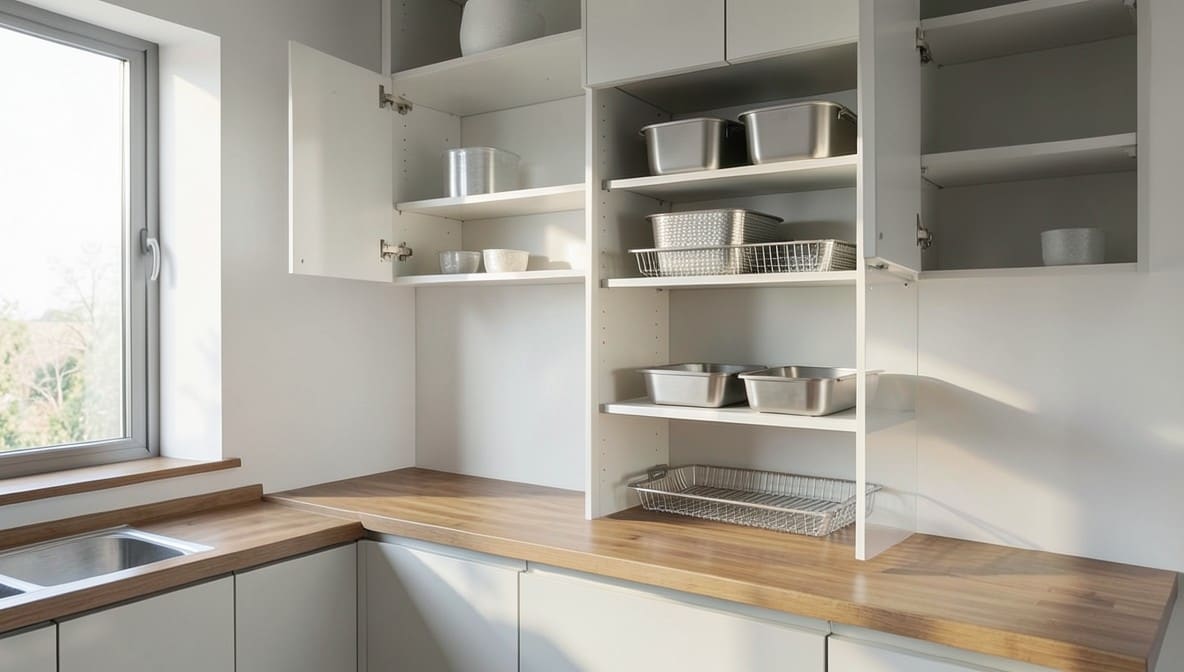
- The imported goods include: Soho Unit Basket, Tandem Box (Slimo Elite Drawer System), Bottle Rack, Plate Rack with Drip Tray, Corena White S-Carousel Unit, Dress Holder, Magic Corner Baskets, Cutlery Basket, Tie Rack, Swivel Shoe Rack, Satin Bowl/Plate Holder, Undersink Basket, and similar items.
- All items are made of stainless steel, aluminum, or base metal.
- The goods are designed to be hung, fixed, or slid into cabinets, drawers, or walls to organize kitchenware, cutlery, shoes, and linens.
- The appellant had been importing these goods under CTH 7323/8302 since before 2018 without any prior objection from the department.
- In February 2018, the duty rate under CTH 9403 was increased from 10% to 20%, after which the department initiated post-clearance audit objections.
- The appellant submitted product catalogues, photographs, and evidence that leading Indian brands continue to import identical goods under CTH 7323 as of July 2023.
- The department relied on the structural integration of the goods into modular furniture to justify classification under CTH 9403.
Procedural History
- 23.12.2020: Principal Commissioner of Customs issued Order-in-Original No. 23/2020, confirming duty demand under CTH 9403 90 00.
- 13.05.2026: Hearing before the Principal Bench of CESTAT, New Delhi.
- 29.05.2026: Final Order No. 50999/2026 issued by CESTAT.
The Parties' Positions
For the Appellant
- The goods are standalone household articles, not structural components of furniture.
- They are used to hold or organize items, not to form the furniture itself.
- Classification must follow the terms of the headings and the General Rules of Interpretation (GRI), particularly Rule 1 and Rule 3(a).
- The decision in Commissioner of Central Excise, Surat-I v. Crystal Interior Products (2008) is directly applicable.
- Trade usage and common parlance classify these as kitchen fittings, not furniture parts.
For the Respondent
- The goods are integral parts of modular kitchen units and thus fall under CTH 9403 as furniture parts.
- Section Note 1(k) to Section XV excludes articles of Chapter 94 from Chapter 73.
- Chapter Note 2 to Chapter 94 includes shelved furniture and unit furniture, even if hung or fixed to walls.
- The goods are not mere accessories but functional components of larger furniture assemblies.
Relief Sought
The appellant sought quashing of the order dated 23.12.2020, reversal of the duty demand, and restoration of classification under CTH 7323/8302.
The Legal Issue
The central question was whether stainless steel kitchen baskets, racks, and holders designed to be fixed in cabinets or drawers constitute household articles under CTH 7323 or parts of furniture under CTH 9403.
Arguments Presented
For the Appellant
The appellant relied on Crystal Interior Products to argue that goods designed for holding kitchenware in shelves below kitchen platforms are household articles under CTH 7323. It emphasized that the goods have distinct identities and functions separate from the furniture they are installed in. The appellant cited Rule 3(a) of the General Rules of Interpretation, asserting that CTH 7323 provides a more specific description than the general term "other furniture and parts thereof" under CTH 9403. It further submitted that the department’s own past practice of allowing classification under CTH 7323, coupled with market-wide usage by reputed brands, established a consistent trade understanding.
For the Respondent
The department contended that because the goods are fixed into modular units and function as integral components of shelved furniture, they fall squarely under CTH 9403. It relied on Chapter Note 2 to Chapter 94, which explicitly includes shelved furniture and unit furniture designed to be fixed to walls. The department argued that Section Note 1(k) to Section XV excludes such items from Chapter 73 and that the Crystal Interior Products case was distinguishable because the goods there were placed on shelves, whereas the current goods are built into the furniture structure.
The Court's Analysis
The Tribunal undertook a detailed analysis of the tariff headings, explanatory notes, and prior jurisprudence. It emphasized that classification must be determined by the terms of the headings and the relative chapter notes, as per Rule 1 of the General Rules of Interpretation.
"The goods are not furniture themselves but are articles designed to hold kitchenware, cutlery, or shoes. They retain their identity as baskets, racks, and holders even when fixed to a cabinet."
The Tribunal distinguished the goods from structural components like hinges or drawer slides, which are excluded from CTH 8302 under explanatory notes. It noted that the imported items are not designed to enable movement of furniture but to organize its contents.
The Tribunal reaffirmed the Crystal Interior Products decision, observing that the goods in both cases were functionally identical: wired baskets and holders meant for placement in kitchen shelves. It rejected the department’s reliance on structural integration, stating:
"By no stretch of imagination, the kitchen and household articles can be considered as furniture items."
The Tribunal further held that CTH 9403 is a residual, general heading, while CTH 7323 and CTH 8302 provide specific descriptions. Under Rule 3(a), the more specific heading must prevail. The department’s argument that the goods are "parts of furniture" was deemed speculative and unsupported by evidence.
The Tribunal also noted the department’s inconsistency: identical goods were being cleared under CTH 7323 by other importers as recently as July 2023, undermining any claim of misclassification.
The Verdict
The appeal was allowed. The order dated 23.12.2020 was set aside. The goods are to be classified under CTH 7323 and CTH 8302 as household articles and base metal fittings. The demand for customs duties and interest under Section 28AA is cancelled. The appellant is entitled to refund of duties paid under protest, with interest at the rate of 6% per annum from the date of payment until realization.
What This Means For Similar Cases
Household Articles Trump Structural Integration
- Practitioners must argue that if a product retains its independent function as a container, holder, or organizer, it cannot be reclassified as a furniture part merely because it is mounted.
- Evidence of trade usage, product catalogues, and past customs clearance practices are critical to establish common parlance.
GRI Rule 3(a) Is a Powerful Tool
- Always compare the specificity of the claimed heading against the alternative. CTH 7323 (kitchen articles) is more specific than CTH 9403 (other furniture and parts).
- Avoid relying on residual headings when a specific one exists.
Duty Rate Changes Cannot Justify Retrospective Reassessment
-
A change in duty rate cannot be the basis for reopening classifications that were consistently accepted for years.
-
Post-clearance audits must demonstrate actual misclassification, not merely a change in revenue interest.
-
Importers of modular kitchen accessories should maintain detailed records of product specifications, catalogues, and past clearance documents.
-
Legal challenges to reclassification should be filed promptly, citing Crystal Interior Products and GRI Rule 3(a).