In a significant ruling on cenvat credit eligibility, the Customs, Excise and Service Tax Appellate Tribunal (CESTAT), Bangalore Bench, held that the classification of goods under the Customs Tariff at the time of importation - not their functional use - determines eligibility for cenvat credit. The Tribunal set aside the Commissioner’s order allowing credit on aluminium panels, emphasizing that the Cenvat Credit Rules, 2004 exclude goods classified under Chapter Heading 7610 from the definition of capital goods. The judgment reinforces the ‘as imported’ principle and underscores the primacy of statutory classification over functional interpretation.
Background & Facts
The Dispute
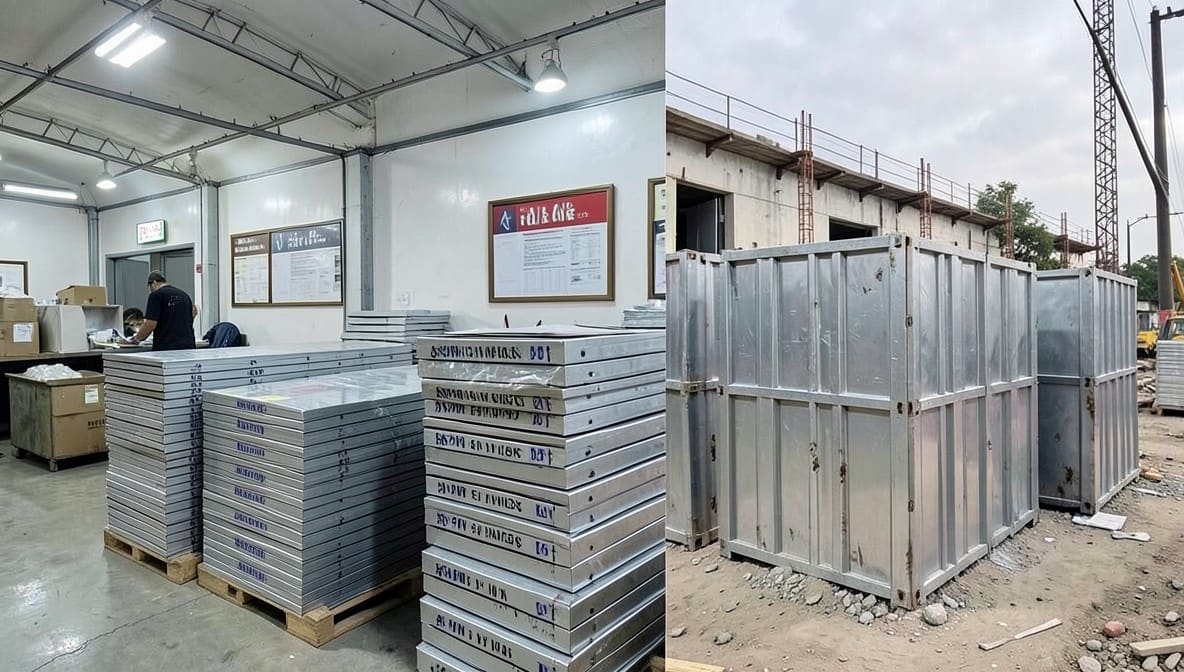
The respondent, M/s. Puravankara Projects Ltd., imported aluminium panels classified under Customs Tariff Heading (CTH) 7610 9090. During an audit, the Revenue noticed that the respondent had availed cenvat credit on these panels, which were subsequently assembled at their factory to form ‘Mivan System Formwork’ - a mould-like structure used in construction. The Revenue contended that since the panels were classified under CTH 7610 (aluminium structures) and not CTH 8480 (moulds), they did not qualify as capital goods under the Cenvat Credit Rules, 2004, rendering the credit ineligible.
Key Facts
- The respondent imported aluminium panels under CTH 7610 9090 between October 2007 and March 2008.
- The panels were assembled at the respondent’s factory to form Mivan System Formwork, used as moulds for concrete pouring.
- The respondent claimed cenvat credit on these panels, arguing they functioned as moulds.
- The Revenue issued a show-cause notice on 08.10.2009, alleging ineligible credit.
- The Commissioner of Service Tax, Bengaluru, allowed the credit in Order-in-Original No. 02/2017 dated 25.01.2017, holding the panels were moulds based on their functional use.
Procedural History
- 08.10.2009: Show-cause notice issued by the Revenue.
- 25.01.2017: Commissioner allows cenvat credit in Order-in-Original No. 02/2017.
- ST/20871/2017: Revenue appeals before CESTAT, Bangalore.
- ST/CROSS/20539/2017: Respondent files cross-objection.
- 08.06.2026: Hearing held before CESTAT.
- 07.07.2026: Final Order No. 20814/2026 pronounced.
The Parties' Positions
For the Revenue
- The aluminium panels were classified under CTH 7610 9090 at import, which is excluded from the definition of capital goods under the Cenvat Credit Rules, 2004.
- The functional use of the panels (as moulds) cannot override their statutory classification.
- Relied on the Supreme Court’s decision in Commissioner of Customs (Import) vs. M/s. Welkin Foods (2026 (1) TMI 348) to argue that classification must be based on the state of goods at import, not their subsequent use.
For the Respondent
- The imported panels were specialized ‘Mivan System Formwork’, used as moulds for concrete, and thus qualified as capital goods.
- Argued that the functionality test should determine classification, citing Commissioner of Central Excise, Jaipur vs. Rajasthan Spinning and Weaving Mills Ltd. (2010 (255) ELT 481 (S.C.)) and Gestamp Sungwoo Automotive (Chennai) P. Ltd. vs. C.C.E. Chennai-IV (2018 (363) E.L.T. 1191 (Tri.-Mad.)).
- Contended that the show-cause notice was barred by limitation, as there was no suppression of facts, relying on Uniworth Textiles vs. Commissioner of Central Excise (2013 (288) ELT 161 (S.C.)).
Relief Sought
- Revenue: Sought to set aside the Commissioner’s order and deny cenvat credit on the aluminium panels.
- Respondent: Sought to uphold the Commissioner’s order, allowing cenvat credit on the grounds that the panels functioned as moulds.
The Legal Issue
The central question was whether aluminium panels classified under CTH 7610 9090 at the time of import could qualify as capital goods under the Cenvat Credit Rules, 2004, based on their functional use as moulds after assembly, or whether their statutory classification at import determined eligibility for cenvat credit.
Arguments Presented
For the Revenue
- The Cenvat Credit Rules, 2004 explicitly exclude goods classified under CTH 7610 from the definition of capital goods.
- The functional use of the panels (as moulds) cannot override their statutory classification under CTH 7610 9090.
- Cited Commissioner of Customs (Import) vs. M/s. Welkin Foods to argue that classification must be based on the state of goods at import, not their subsequent use.
For the Respondent
- The imported panels were specialized formwork used as moulds, qualifying as capital goods under the functionality test.
- Relied on Commissioner of Central Excise, Jaipur vs. Rajasthan Spinning and Weaving Mills Ltd. and Gestamp Sungwoo Automotive (Chennai) P. Ltd. vs. C.C.E. Chennai-IV to argue that the functional use should determine classification.
- Contended that the show-cause notice was barred by limitation, as there was no suppression of facts.
The Court's Analysis
The Tribunal examined the definition of capital goods under the Cenvat Credit Rules, 2004, which explicitly excludes goods classified under CTH 7610. The Tribunal noted that the respondent had imported aluminium panels under CTH 7610 9090, and their classification as aluminium structures was never disputed. The mould-like form was achieved only after assembling the panels at the respondent’s factory, which occurred post-importation.
The Tribunal relied on the Supreme Court’s decision in Pioneer Embroideries Ltd. vs. Commissioner of Customs, Mumbai (2015 (322) E.L.T. 602 (S.C.)), which emphasized the ‘as imported’ principle - classification must be based on the state of goods at import, not their subsequent use. The Tribunal also referred to the detailed observations in Commissioner of Customs (Import) vs. M/s. Welkin Foods, which laid down the legal position on classification disputes:
"When interpreting a tariff heading involved in a classification dispute, the tribunal or court may need to invoke and rely on the common or trade parlance test to understand the meaning and scope of the terms used in that tariff heading. After a thorough consideration of this Court's various rulings on this issue, we have succinctly summarised the broad factors that need to be considered in invoking common or trade parlance when dealing with classification disputes in paragraph 66 of this judgment. At the core of all the factors mentioned therein is that the common or trade parlance test can be invoked to determine the meaning and scope of words, only in the absence of statutory guidance."
The Tribunal further observed:
"A classification dispute in the context of imported goods arises when the revenue and the importer disagree on the tariff heading or sub-heading under which the imported goods ought to be classified. In such scenarios, the tribunals and courts are tasked with determining the most appropriate heading/sub-heading for the purposes of customs law classification. When undertaking this exercise of determining the most appropriate heading, the tribunals and courts are bound by the General Rules for Interpretation (GRIs), which are provided for in the First Schedule to the Act, 1975 and ought to be applied sequentially. The GRI 1 forms the basis for classifying goods under the First Schedule of the Act, 1975, and establishes the primacy of the notes and terms of headings in determining classification."
The Tribunal held that CTH 7610 is an eo nomine provision, meaning it describes goods by their name (aluminium structures) without reference to their use. The Explanatory Notes to the Customs Tariff clarify that CTH 7610 covers aluminium structures and parts thereof, while CTH 8480 specifically covers moulds. Since the respondent had classified the goods under CTH 7610 9090 at import and never claimed classification under CTH 8480, the Tribunal concluded that the functional use of the panels as moulds could not override their statutory classification.
The Tribunal also rejected the respondent’s argument that the functional test should apply, noting that the Supreme Court in Welkin Foods had held that use or adaptation can only be considered if the tariff heading explicitly or inherently refers to it. Since CTH 7610 makes no reference to use, the functional test was inapplicable.
The Verdict
The Tribunal allowed the Revenue’s appeal and set aside the Commissioner’s Order-in-Original No. 02/2017 dated 25.01.2017. The Tribunal held that the aluminium panels, classified under CTH 7610 9090 at import, were ineligible for cenvat credit under the Cenvat Credit Rules, 2004. The matter was remanded to the original authority to decide the issue of limitation alone, as the demand had been set aside on merits.
What This Means For Similar Cases
Classification Determines Cenvat Credit Eligibility
- The judgment reinforces that cenvat credit eligibility is determined by the classification of goods under the Customs Tariff at the time of import, not their functional use post-importation.
- Practitioners must ensure that goods are classified under the correct tariff heading at import to avoid disputes over cenvat credit eligibility.
The ‘As Imported’ Principle Is Non-Negotiable
- The ‘as imported’ principle, as laid down by the Supreme Court in Pioneer Embroideries and Welkin Foods, mandates that classification must be based on the state of goods at import, not their subsequent use or adaptation.
- Importers cannot claim classification based on intended use unless the tariff heading explicitly or inherently refers to use.
Functional Use Cannot Override Statutory Classification
- The functional test can only be applied if the tariff heading explicitly or inherently refers to use. In this case, CTH 7610 was an eo nomine provision, making the functional use of the panels irrelevant for classification.
- Importers must carefully review Explanatory Notes and chapter headings to ensure compliance with statutory classification requirements.