Topic

Central Excise Duty

Central Excise Duty in India is a tax levied on goods manufactured or produced within the country, governed by the Central Excise Act, 1944, and administered by the Central Board of Indirect Taxes and Customs.

9 articlesLatest July 2026
HSN 7314 vs. 8436 | GI Welded Wire Mesh for Poultry Cages Classifiable as Iron/Steel Article, Not Poultry Machinery: CESTAT Hyderabad
Case Law Analysis
|Custom, Excise & Service Tax Tribunal

HSN 7314 vs. 8436 | GI Welded Wire Mesh for Poultry Cages Classifiable as Iron/Steel Article, Not Poultry Machinery: CESTAT Hyderabad

CESTAT Hyderabad rules that galvanized iron welded wire mesh used in poultry cages falls under HSN 7314 (iron/steel articles) rather than HSN 8436 (poultry machinery), directly impacting customs duty liability. The decision clarifies classification disputes for manufacturers and importers of similar industrial materials.

Finance Act 2015 Retrospective Exemption | Value of Free-Supplied Rails Excluded from Assessable Value of Glued Joints : CESTAT Hyderabad
Case Law Analysis
|Custom, Excise & Service Tax Tribunal

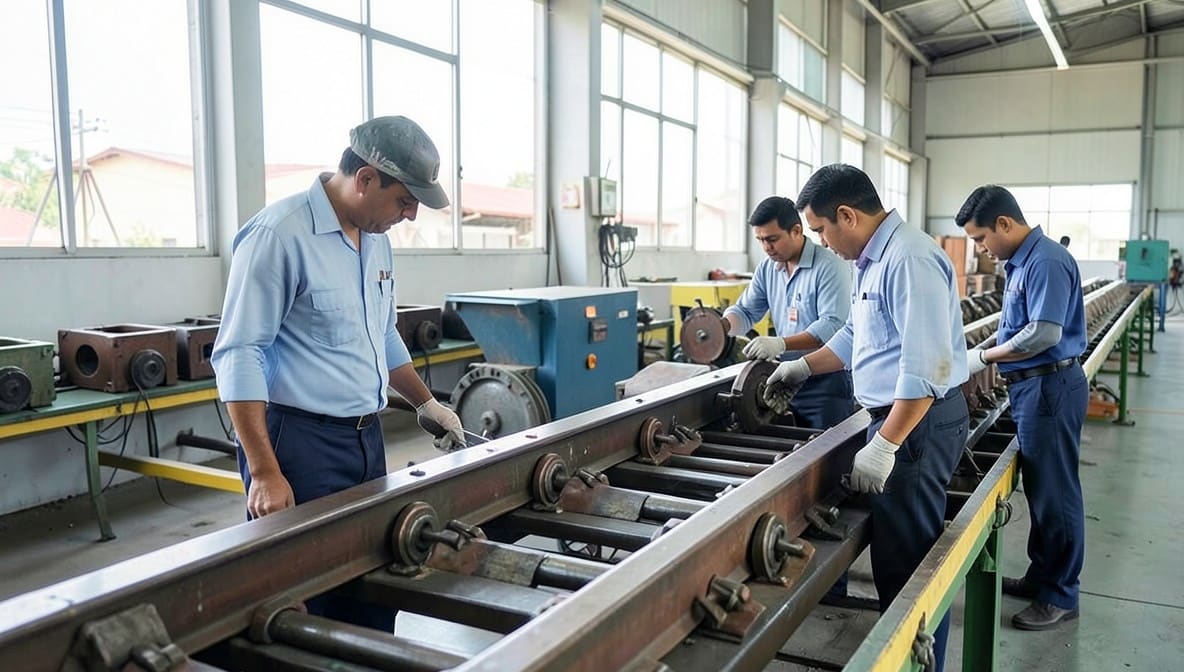
Finance Act 2015 Retrospective Exemption | Value of Free-Supplied Rails Excluded from Assessable Value of Glued Joints : CESTAT Hyderabad

CESTAT Hyderabad ruled that the value of rails supplied free of cost by Indian Railways cannot be included in the assessable value of glued joints, following the retrospective amendment under Finance Act 2015. This sets a critical precedent for manufacturers supplying goods to public infrastructure entities under contract, clarifying that free inputs provided by the buyer are not taxable components of assessable value.

Section 3A Central Excise Act | Actual Production Records Prevail Over Delayed Statutory Documents: CESTAT Kolkata Quashes 18-Year-Old Demand
Case Law Analysis
|Custom, Excise & Service Tax Tribunal

Section 3A Central Excise Act | Actual Production Records Prevail Over Delayed Statutory Documents: CESTAT Kolkata Quashes 18-Year-Old Demand

CESTAT Kolkata ruled that when statutory documents are unavailable due to passage of time, actual production records submitted by the assessee hold legal precedence. The Tribunal set aside an excise duty demand of ₹73.1 lakh, reinforcing that tax authorities cannot rely on procedural lapses caused by delay to deny consequential relief to manufacturers.

Section 108 Customs Act | Voluntary Confessional Statement Alone Suffices for Duty Demand Without Corroboration: CESTAT Ahmedabad
Case Law Analysis
|Custom, Excise & Service Tax Tribunal

Section 108 Customs Act | Voluntary Confessional Statement Alone Suffices for Duty Demand Without Corroboration: CESTAT Ahmedabad

CESTAT Ahmedabad rules that a voluntary, unretracted confessional statement under Section 108 of the Customs Act is sufficient to uphold a duty demand, eliminating the need for additional corroborative evidence. The decision reinforces the evidentiary weight of admissions in customs disputes, impacting importers and partners in similar proceedings.

Section 11A(4) CEA | Bona Fide Belief in Interpretational Disputes Bars Extended Limitation Demand : CESTAT Chennai
Case Law Analysis
|Custom, Excise & Service Tax Tribunal

Section 11A(4) CEA | Bona Fide Belief in Interpretational Disputes Bars Extended Limitation Demand : CESTAT Chennai

CESTAT Chennai rules that the extended period of limitation under Section 11A(4) of the Central Excise Act cannot be invoked if the taxpayer acted under a bona fide belief in an interpretational dispute over mineral concentrate classification. This holding shields taxpayers from retrospective demands where classification ambiguity exists, reinforcing the need for clear legal interpretations in tax disputes.

Central Excise Duty | Captive Sugar Syrup Not Excisable Without 50% Fructose Content & Marketability Proof : CESTAT Hyderabad
Case Law Analysis
|Custom, Excise & Service Tax Tribunal

Central Excise Duty | Captive Sugar Syrup Not Excisable Without 50% Fructose Content & Marketability Proof : CESTAT Hyderabad

CESTAT Hyderabad rules that sugar syrup used captively in biscuit manufacturing is not liable for central excise duty unless it contains at least 50% fructose in dry state and is proven marketable. The ruling sets aside duty demands, reinforcing that captive consumption alone does not trigger excise liability without meeting tariff classification criteria.

Central Excise Duty | Job Worker, Not Principal, Liable for Duty on Contract Manufactured Goods Under Section 3 : CESTAT
Case Law Analysis
|Custom, Excise & Service Tax Tribunal

Central Excise Duty | Job Worker, Not Principal, Liable for Duty on Contract Manufactured Goods Under Section 3 : CESTAT

CESTAT clarifies that excise duty liability under Section 3 of the Central Excise Act rests with the job worker undertaking actual manufacturing, not the principal supplying raw materials. The ruling shields principals from duty demands where job workers avail area-based exemptions, impacting contract manufacturing agreements across industries.

FOR Contracts | Freight & Insurance Charges Must Be Included in Assessable Value for Central Excise Duty : CESTAT Hyderabad Overturns Prior Rulings
Case Law Analysis
|Custom, Excise & Service Tax Tribunal

FOR Contracts | Freight & Insurance Charges Must Be Included in Assessable Value for Central Excise Duty : CESTAT Hyderabad Overturns Prior Rulings

CESTAT Hyderabad rules that under Free-On-Rail (FOR) contracts, freight and insurance charges form part of the assessable value for Central Excise Duty when the sale concludes at the buyer’s premises. This decision sets a precedent for excise valuation, impacting manufacturers and suppliers under similar contractual terms.