The Customs, Excise & Service Tax Appellate Tribunal has clarified a critical distinction in tariff classification: electrical generators designed for use with gas turbine engines in aircraft do not fall under the specialized heading for internal combustion engines, but under the general heading for electric generators. This ruling resolves long-standing ambiguity in aviation component classification and has direct implications for importers, customs brokers, and aviation maintenance operators.
Background & Facts
The Dispute
The dispute concerns the correct classification under the Customs Tariff Act, 1975, of two critical aircraft components imported by Interglobe Aviation Ltd. (IndiGo) and cleared through Customs House Agent C.G. Logistics Limited: the Integrated Drive Generator (IDG) and the Starter Generator (SG). These components are essential for the operation of turboprop and turbofan engines on commercial aircraft. The Principal Commissioner of Customs classified both under CTH 8511, attracting a higher IGST rate of 28%, while the appellants claimed classification under CTH 8501, which attracted 18% IGST and was eligible for full basic customs duty exemption under Notification No. 50/2017-Cus.
Key Facts
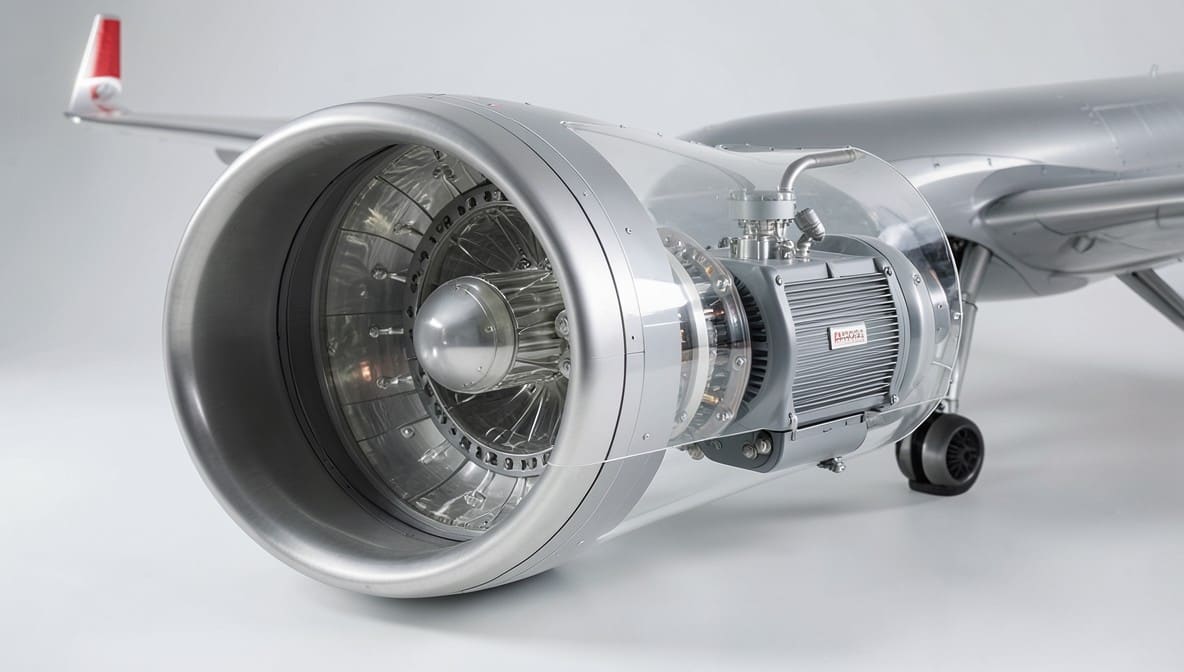
- The Integrated Drive Generator (IDG) is a brushless, three-phase AC generator with a Constant Speed Drive (CSD), producing 90 KVA output. It provides primary electrical power to aircraft systems including the Generator Control Unit (GCU), Electrical Generation Interface Unit (EGIU), lighting, and air conditioning.
- The Starter Generator (SG) is a dual-function unit: it operates as a DC motor to start the engine by rotating the high-pressure compressor, and once the engine reaches self-sustaining speed, it switches to a DC generator mode producing 30V and 12kW of power.
- Both components are mounted on the engine gearbox and do not include any prime mover; they are auxiliary electrical systems dependent on the engine’s mechanical input.
- The appellants imported these goods under CTH 8501 from 2017 to 2019, with IGST at 18%, and the department did not object until an audit on 17.09.2019.
- The audit letter alleged misclassification under CTH 8502 (generating sets) and proposed reclassification under CTH 8511 (generators for IC engines), triggering a demand for differential IGST.
- The appellant corrected its classification from CTH 8502 to CTH 8501 in its response dated 25.10.2019, asserting that CTH 8511 was inapplicable.
Procedural History
- 17.09.2019: Department issued audit letter questioning classification.
- 25.10.2019: Appellant responded, asserting classification under CTH 8501.
- 01.07.2020: Show Cause Notice (SCN 1) issued under Section 28(4) demanding Rs. 26,48,27,283/- and proposing penalty under Section 114A (appellant) and Section 117 (C.G. Logistics).
- 30.07.2021: Show Cause Notice (SCN 2) issued for starter generator, demanding Rs. 2,91,37,075/-.
- 23.09.2022: Order-in-Original passed under SCN 2 confirming demand of Rs. 2,91,37,075/- but waiving penalties.
- 30.01.2023: Order-in-Original passed under SCN 1 confirming demand of Rs. 14,99,21,553/- and imposing penalties under Sections 114A and 117.
- 05.02.2023: Customs Appeal No. 55094/2023 filed by Interglobe Aviation against the 30.01.2023 order.
- 05.02.2023: Customs Appeal No. 54697/2023 filed by C.G. Logistics against penalty under Section 117.
- 15.02.2023: Customs Appeal No. 50050/2023 filed by Interglobe Aviation against the 23.09.2022 order.
- 12.11.2025: Hearing held before CESTAT.
- 11.05.2026: Final Order passed.
The Parties' Positions
For the Appellant (Interglobe Aviation & C.G. Logistics)
- The IDG and SG are electrical generators without prime movers and are not used with spark-ignition or compression-ignition internal combustion engines.
- Turboprop/turbofan engines are gas turbine engines, classified under CTH 8411, and are fundamentally different from reciprocating IC engines covered under CTH 8407/8408.
- CTH 8511 explicitly covers generators for spark/compression ignition IC engines only; the term "any kind" in HSN Explanatory Notes refers to internal design (piston or other), not engine type.
- Classification under CTH 8501 is correct: IDG as CTI 8501 62 00 (AC generator >75kW) and SG as CTI 8501 32 20 (DC generator >750W).
- Change in classification from CTH 8502 to CTH 8501 was revenue-neutral (both attracted 18% IGST) and made in good faith.
- Extended period of limitation under Section 28(4) cannot be invoked for mere misclassification without intent to evade duty.
- C.G. Logistics, as a customs house agent, acted on instructions and cannot be penalized under Section 117.
For the Respondent (Principal Commissioner of Customs)
- Turboprop/turbofan engines are internal combustion engines as per HSN Explanatory Notes to CTH 8411.
- CTH 8511 covers generators for IC engines of "any kind," including gas turbines.
- CTH 8501 excludes generators used with IC engines under Note 2 to Chapter 85.
- The appellant’s initial classification under CTH 8502 was incorrect, and the subsequent change to CTH 8501 was an attempt to evade higher duty.
- Extended period of limitation was rightly invoked due to willful misstatement.
- C.G. Logistics failed to maintain uniformity in classification across Bills of Entry, warranting penalty under Section 117.
Relief Sought
The appellants sought:
- Setting aside of the impugned orders dated 30.01.2023 and 23.09.2022.
- Reclassification of IDG under CTI 8501 62 00 and SG under CTI 8501 32 20.
- Cancellation of the demand for differential IGST.
- Cancellation of penalties under Sections 114A and 117.
- Refund of any duty paid under protest.
The Legal Issue
The central question was whether generators used in conjunction with turboprop/turbofan engines (gas turbine engines) fall within the scope of CTH 8511, which covers generators for "internal combustion engines," or whether they are correctly classifiable under CTH 8501, which covers all electric generators excluding those used with IC engines.
Arguments Presented
For the Appellant
The appellant relied on the technical distinction between gas turbine engines and reciprocating internal combustion engines. It cited the HSN Explanatory Notes to CTH 8411, which classify gas turbines as a separate category from spark-ignition (CTH 8407) and compression-ignition (CTH 8408) engines. It argued that CTH 8511’s reference to "internal combustion engines of any kind" refers to variations in internal design (e.g., piston vs. rotary), not engine thermodynamic classification. The appellant further cited U.S. Cross Ruling NY 842759, which classified an IDG under CTH 8501 for use with jet engines. It emphasized that the term "any kind" in the HSN Notes does not expand CTH 8511 to include gas turbines, and that Chapter Note 2 to Chapter 85 explicitly excludes goods covered under CTH 8511 from CTH 8501 - 8504.
For the Respondent
The department contended that since turboprop/turbofan engines burn fuel internally and convert chemical energy to mechanical work, they qualify as internal combustion engines under a broad interpretation. It relied on the HSN Explanatory Notes to CTH 8511, which state the heading covers generators for IC engines "of any kind," including those for aircraft. It argued that CTH 8511 is a specific heading and, under Rule 1 of the General Rules of Interpretation, must prevail over the general heading CTH 8501. The department further asserted that the appellant’s initial classification under CTH 8502 and subsequent change to CTH 8501 demonstrated an intent to evade higher duty, justifying invocation of the extended period of limitation and imposition of penalties.
The Court's Analysis
The Tribunal undertook a detailed analysis of the technical, legal, and interpretive dimensions of the classification issue. It began by affirming that both the IDG and SG are electrical generators, as conceded by the department. The critical issue was whether they were used with an engine falling within the scope of CTH 8511.
"The working of turboprop/turbofan engines is entirely different from that of the reciprocating, spark-ignition IC engines and compression ignition IC engines."
The Tribunal noted that while all gas turbines are internal combustion engines in a thermodynamic sense, the Customs Tariff distinguishes between them for classification purposes. CTH 8411 is a dedicated heading for gas turbines, while CTH 8407 and 8408 are reserved for reciprocating engines. This structural separation in the tariff schedule reflects an intentional legislative distinction.
The Tribunal rejected the department’s expansive reading of "any kind" in the HSN Notes to CTH 8511. It held that the phrase refers to the internal mechanism of the engine (e.g., piston, rotary, or Wankel), not the broader category of combustion engines. The HSN Notes to CTH 8511 explicitly list examples such as sparking plugs, ignition coils, and starter motors - all components of reciprocating engines - and do not mention gas turbines.
The Tribunal further emphasized the application of Rule 1 of the General Rules of Interpretation: classification must be determined by the terms of the headings and any relevant Chapter Notes. Chapter Note 2 to Chapter 85 states that headings 8501 to 8504 do not apply to goods described in heading 8511. But since the goods are not described in heading 8511 - because they are not used with spark/compression ignition IC engines - they fall squarely within CTH 8501.
Regarding the extended period of limitation under Section 28(4), the Tribunal held that mere misclassification, even if erroneous, does not constitute "willful misstatement or suppression of facts" unless there is intent to evade duty. The appellant had corrected its classification upon audit, and the IGST rate remained unchanged. The Tribunal cited multiple precedents holding that classification disputes are not grounds for invoking extended limitation.
On penalty under Section 117, the Tribunal held that a Customs House Agent’s role is limited to filing documents based on the importer’s instructions. The agent cannot be held liable for classification errors made by the principal, absent evidence of collusion or independent negligence.
The Verdict
The Tribunal allowed all three appeals. The impugned orders dated 30.01.2023 and 23.09.2022 are set aside. The Integrated Drive Generator is reclassified under CTI 8501 62 00 and the Starter Generator under CTI 8501 32 20. The demand for differential IGST of Rs. 14,99,21,553/- and Rs. 2,91,37,075/- is cancelled. Penalties under Section 114A against Interglobe Aviation and Section 117 against C.G. Logistics are quashed. No interest or penalty shall be levied on the appellant. The department is directed to process refund of any duty paid under protest within 8 weeks.
What This Means For Similar Cases
Classification of Aircraft Components Must Reflect Technical Distinctions
- Practitioners must now distinguish between gas turbine engines (CTH 8411) and reciprocating IC engines (CTH 8407/8408) when classifying auxiliary components.
- Generators, starters, and power units for jet engines should be classified under CTH 8501 unless they are explicitly designed for piston engines.
- HSN Explanatory Notes must be interpreted in context of the tariff structure - "any kind" does not override explicit structural separations.
Extended Limitation Cannot Be Invoked for Classification Disputes
- Importers may change classification during re-assessment without triggering extended limitation if there is no evidence of intent to evade duty.
- Revenue neutrality of IGST rates (e.g., 18% vs. 28%) strengthens the argument against invoking Section 28(4).
- Customs authorities must prove willful misstatement, not mere error, to invoke extended period.
Customs House Agents Are Not Liable for Principal’s Classification Errors
- CHAs acting on importer instructions cannot be penalized under Section 117 for classification mistakes.
- Penalties under Section 117 require independent contravention; mere procedural compliance does not equate to substantive liability.
- CHAs should maintain clear documentation of instructions received to defend against arbitrary penalties.
Practical Takeaways for Practitioners
- Review all aircraft component imports for correct classification under CTH 8501 vs. CTH 8511.
- Update internal classification manuals to reflect this precedent.
- Advise clients to document technical specifications and correspondence with customs authorities during audits.
- Challenge penalty notices under Section 117 where the agent acted solely on client instructions.