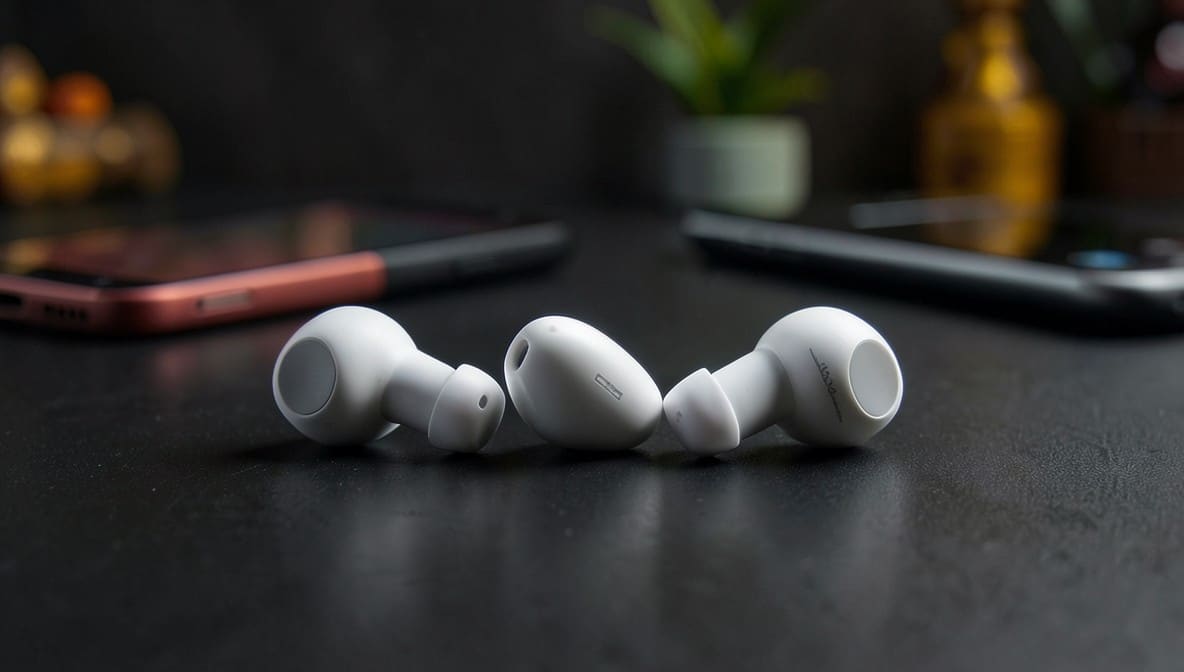
The Customs, Excise & Service Tax Appellate Tribunal has clarified a critical boundary in customs classification: the mere presence of Bluetooth connectivity does not transform a passive audio playback device into a data transmission machine. This decision resolves long-standing ambiguity in the classification of wireless earphones and reinforces the primacy of objective product characteristics over end-use assumptions.
Background & Facts
The Dispute
M/s G-Mobile Devices Pvt. Ltd. imported Bluetooth wireless earphones, headphones, earbuds, and neckbands, classifying them under Customs Tariff Item (CTI) 8517 62 90 to avail concessional customs duty of 10% under Notification No. 57/2017 dated 30.06.2017. The Principal Commissioner of Customs, New Delhi, disputed this classification, asserting that the goods should be classified under CTI 8518 30 00, attracting a 15% basic customs duty. The dispute centered on whether these devices were primarily apparatus for transmission or reception of voice/data (CTI 8517) or simply headphones with integrated microphones (CTI 8518).
Key Facts
- The appellant imported two categories of products: Bluetooth wireless earphones and wired earphones.
- Wired earphones were correctly classified under CTI 8518 30 00 and duty paid at 15%.
- Bluetooth wireless earphones were classified under CTI 8517 62 90 and duty paid at 10%.
- The imported products included models: Tecno Buds 1, Tecno H2, and Oraimo OEB.
- Product brochures and marketing materials described the goods as "Bluetooth Wireless Earphones/Headphones" without specifying mobile telephony as the principal function.
- The devices were compatible with multiple Bluetooth-enabled devices: mobile phones, laptops, tablets, Smart TVs, and car audio systems.
- No documentation demonstrated that the goods were designed, marketed, or promoted primarily for mobile telephony.
- The Bluetooth functionality served only as a wireless audio transmission channel, not for data processing, voice command reception, or cloud interaction.
- The devices lacked autonomous data processing, Wi-Fi connectivity, app support, or smart home hub capabilities.
Procedural History
- 01.02.2020 to 31.01.2022: Period of import under scrutiny.
- 10.01.2024: Show Cause Notice issued under Section 28(4) of the Customs Act, 1962.
- 08.01.2025: Order-in-Original passed by Principal Commissioner of Customs, New Delhi, confirming differential duty, interest, penalty, and confiscation.
- 31.10.2025: Hearing before the Customs Appellate Tribunal.
- 29.04.2026: Final Order issued by the Tribunal.
The Parties' Positions
Appellant (M/s G-Mobile Devices Pvt. Ltd.):
- Argued that Bluetooth connectivity qualifies the goods for classification under CTI 8517 62 90.
- Relied on CBIC Circular No. 36/2013 dated 05.09.2013, which permits classification under CTI 8517 62 90 for Bluetooth headsets designed for mobile telephony.
- Cited judgments of Delhi High Court in Amazon Wholesale India Pvt. Ltd. v. Customs Authority of Advance Ruling (2024), and Tribunal decisions in Minda D-Ten Pvt. Ltd. and L.G. Electronics India Pvt. Ltd. to support classification under CTI 8517.
Respondent (Principal Commissioner of Customs):
- Contended that the primary function of the goods is audio playback, not data transmission.
- Argued that CTI 8518 30 00 is a specific, eo nomine provision covering headphones with or without microphones.
- Distinguished the cited judgments on factual grounds: Amazon devices required cloud connectivity; L.G. Electronics involved a smartwatch with autonomous computing.
- Emphasized that Bluetooth is merely a transmission medium, not a functional purpose.
Relief Sought
The appellant sought:
- Quashing of the order dated 08.01.2025.
- Confirmation of classification under CTI 8517 62 90.
- Cancellation of differential duty, interest under Section 28AA, penalty under Section 114A, and confiscation under Section 111(m).
- Declaration that the extended period of limitation under Section 28(4) was improperly invoked.
The Legal Issue
The central question was whether Bluetooth wireless earphones, designed primarily for audio playback and compatible with multiple devices, are classifiable under CTI 8517 62 90 as apparatus for transmission or reception of voice/data, or under CTI 8518 30 00 as headphones combined with a microphone, based on their primary function and objective characteristics at the time of import.
Arguments Presented
For the Appellant
The appellant relied on CBIC Circular No. 36/2013, arguing that any Bluetooth headset capable of mobile telephony qualifies for CTI 8517 62 90. It cited Amazon Wholesale India to assert that devices with voice transmission capability fall under CTI 8517. It further relied on Minda D-Ten and L.G. Electronics to argue that the presence of Bluetooth and call-handling features transforms the device into a data communication apparatus. The appellant contended that the functional capability to connect to mobile phones for calls was sufficient to trigger classification under CTI 8517, irrespective of whether the device was marketed or designed primarily for that purpose.
For the Respondent
The department argued that CTI 8518 30 00 is a clear, specific, eo nomine provision covering headphones with microphones, regardless of wireless connectivity. It distinguished the cited judgments: Amazon devices required internet/cloud interaction for core functions; L.G. Electronics involved a smartwatch with autonomous data processing. The department emphasized that the imported earphones had no processing capability, no Wi-Fi, no app support, and no cloud interaction. Their sole function was acoustic transduction of audio bitstreams into sound. The Bluetooth chip was merely a wireless delivery mechanism, analogous to a wire. Classification must be based on objective characteristics at the time of import, not end-use.
The Court's Analysis
The Tribunal conducted a rigorous analysis under the General Rules of Interpretation (GRI), beginning with GRI 1, which mandates classification based on the terms of the headings and any relevant section or chapter notes. The Tribunal held that CTI 8518 30 00 - "Headphones and earphones, whether or not combined with a microphone" - is an eo nomine provision, meaning it describes the article by its name alone, without reference to use or function. The Supreme Court in Commissioner of Customs (Import) v. Welkin Foods was cited to affirm that once GRI 1 resolves classification, further rules need not be applied.
"CTI 8518 (Headphones and earphones) is a classic eo nomine provision. It names the article. Bluetooth Wireless Earphones are, objectively and physically, earphones. They produce sound in or near the ears of the user. The Bluetooth/Wireless connectivity is a technology by which audio signal reaches the device. It does not transform an earphone into a 'data transmission machine' for classification purposes."
The Tribunal rejected the appellant’s reliance on Amazon Wholesale India, noting that the Echo devices required mandatory internet connectivity, cloud processing, and voice command interpretation - functions absent in the imported earphones. Similarly, L.G. Electronics involved a smartwatch with independent data transmission, app execution, and GPS - features not present in the earphones. The Tribunal emphasized that Bluetooth is a means of transmission, not a function. A wired earphone is classifiable under CTI 8518; replacing the wire with Bluetooth does not alter its essential character.
The Tribunal further held that the primary function of the goods is audio reproduction, not voice/data transmission. The microphone serves only to capture voice when paired with a mobile phone, but the device cannot initiate calls, process data, or transmit signals independently. The Supreme Court’s ruling that classification is determined at the time of import, based on objective characteristics, not actual use, was pivotal. The fact that the earphones could be used with laptops or TVs - devices with no telephony function - confirmed that mobile telephony was not their principal purpose.
The Tribunal also held that Circular No. 36/2013 applies only to headsets designed solely or principally for mobile telephony, which the imported goods were not. The circular’s conditions were not met, and its applicability was limited to mono-aural headsets with mobile telephony as the core function.
The Verdict
The appeal was allowed in part. The Tribunal held that the imported Bluetooth wireless earphones are correctly classifiable under CTI 8518 30 00. The differential customs duty, interest under Section 28AA, and confiscation under Section 111(m) were upheld only for the period falling within the normal limitation period under Section 28(1) of the Customs Act. The demand for the extended period under Section 28(4) was set aside, as there was no evidence of intent to evade duty. The penalty under Section 114A was also set aside. The adjudicating authority was directed to determine the precise quantum of interest payable for the normal period.
What This Means For Similar Cases
Classification Must Be Based on Objective Design, Not End-Use
- Practitioners must assess goods based on their physical characteristics, technical specifications, and marketing materials at the time of import - not how they are later used.
- Claims based on "compatibility" with mobile phones or Bluetooth connectivity alone will not suffice for classification under data transmission headings.
- End-use arguments are legally irrelevant unless the tariff heading explicitly references use.
Eo Nomine Headings Trump Functional Ambiguity
- When a tariff heading specifically names the product (e.g., "headphones"), it prevails over broader, function-based headings (e.g., "machines for transmission of voice").
- Adding wireless capability to a known article does not change its classification if the core function remains unchanged.
- The presence of a microphone does not elevate a headphone to a communication apparatus under CTI 8517.
Circulars and Precedents Are Not Blanket Rules
-
CBIC circulars apply only to the specific goods they describe; they cannot be stretched to cover unrelated products.
-
Tribunal and court decisions must be analyzed for factual alignment - a ruling on smartwatches or smart speakers does not govern wireless earphones.
-
Practitioners must distinguish between transmission medium (Bluetooth) and transmission function (data processing).
-
Always verify whether a product has autonomous data processing, cloud interaction, or voice command interpretation before claiming CTI 8517 classification.
-
For consumer audio devices, CTI 8518 remains the default unless the product is demonstrably a communication device with primary data functions.