The Customs, Excise & Service Tax Appellate Tribunal (CESTAT), Mumbai, has delivered a pivotal ruling clarifying that activating or configuring mobile phones prior to export does not constitute "taken into use" under the Drawback Rules, thereby invalidating confiscation and penalty orders against merchant exporters. This decision reinforces the boundary between product preparation and actual use, offering critical relief to exporters engaged in global supply chains.
Background & Facts
The Dispute
The appellants, SOL Mobiles Private Limited and its Vice-President (Finance & Accounts), Shri Manjit Jha, are merchant exporters engaged in the procurement and export of branded mobile phones including Samsung, Redmi, Oppo, Honor, and Motorola. They sourced mobile phones from authorized Indian channel partners and exported them via the Air Cargo Complex, Mumbai. During the financial year 2018-2019, they filed 112 Shipping Bills for export and claimed duty drawback benefits on 46 of them. The Commissioner of Customs (Export) initiated an investigation after receiving a clarificatory circular from the Central Board of Indirect Taxes and Customs (CBIC) dated 25.09.2020, questioning the eligibility of such exports for drawback.
Key Facts
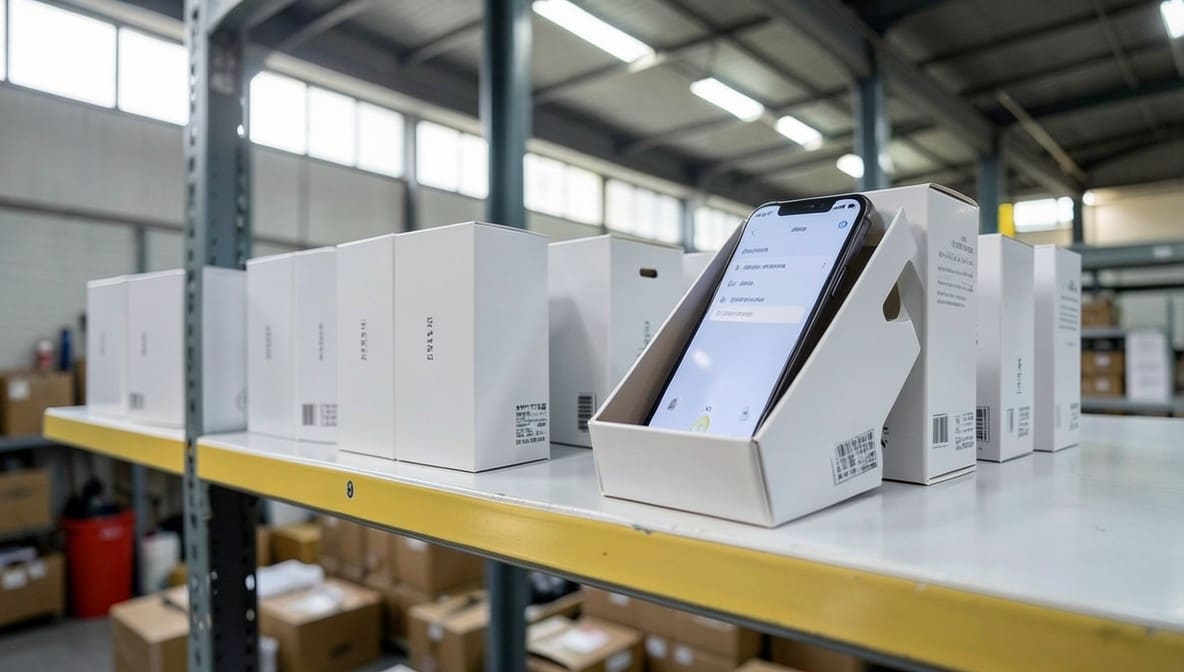
- The appellants unsealed original packaging of mobile phones post-manufacture and prior to export
- Devices were activated by placing test calls, updating language settings, flashing firmware, and removing local SIM cards
- These actions were performed to ensure functionality in foreign markets, as recommended in Samsung’s Regional Lock Guide
- The phones were then repackaged and exported without any physical damage or consumer usage
- Total FOB value of the disputed exports: Rs. 27,99,38,728/-
- The CBIC circular of 25.09.2020 interpreted such activation as "taken into use," disqualifying exports from drawback
- The appellants did not conceal or misrepresent the nature of goods; they merely performed standard pre-export configuration
Procedural History
- 25.09.2020: CBIC issues Circular No. 609/4/2020-DBK/1063, interpreting activation of mobile phones as "taken into use"
- 26.04.2024: Commissioner issues Show Cause Notice (SCN) under Sections 113(i), 113(ia), 114(iii), and 114AA of the Customs Act, 1962
- 30.09.2024: Commissioner passes Order-in-Original (CAO No. CC/HB/04/2024-25 Adj(X) ACC), confiscating goods and imposing:
- Redemption fine of Rs. 2,70,00,000/-
- Penalty of Rs. 2,70,00,000/- on SOL Mobiles Private Limited under Section 114(iii)
- Penalty of Rs. 1,75,00,000/- on Shri Manjit Jha under Section 114(iii)
- Penalty of Rs. 3,00,00,000/- on SOL Mobiles Private Limited under Section 114AA
- Penalty of Rs. 2,00,00,000/- on Shri Manjit Jha under Section 114AA
- 12.06.2024: Appeals filed before CESTAT Mumbai (CA No. 87854 and 87855 of 2024)
- 27.04.2021: Writ Petition No. 2848 of 2021 filed by SOL Mobiles and Kisha Telelinks before Bombay High Court challenging the CBIC circular
- 01.10.2025: Bombay High Court disposes of W.P. No. 2848 of 2021, directing authorities to decide drawback claims without relying on the circular
- 24.12.2025: CESTAT issues Miscellaneous Order directing appellants to confirm no parallel proceedings pending
- 18.07.2025: Supreme Court dismisses SLP (Civil) Diary No. 30758/2025 filed by CBIC against Delhi High Court’s judgment in AIMS Retail Services Pvt. Ltd. v. Union of India
- 29.01.2026: Supreme Court dismisses review petition filed by CBIC, upholding its July 2025 order
- 26.02.2026: Hearing before CESTAT Mumbai
- 12.05.2026: Final order passed
Relief Sought
The appellants sought:
- Setting aside of the impugned order dated 30.09.2024
- Cancellation of confiscation and redemption fine
- Quashing of all penalties imposed under Sections 114(iii) and 114AA
- Restoration of drawback benefits for the 46 Shipping Bills
The Legal Issue
The central question was whether the act of activating, configuring, or testing mobile phones prior to export - by placing calls, updating language settings, or removing SIM cards - constitutes "taken into use" under the Proviso to Rule 3 of the Customs and Central Excise Duties Drawback Rules, 2017, thereby disqualifying the goods from duty drawback eligibility.
Arguments Presented
For the Appellant
The appellants’ counsel relied on the Delhi High Court’s judgment in AIMS Retail Services Pvt. Ltd. v. Union of India (2025) 28 Centax 243, which held that such activation is mere "configuration" to make the device functional in foreign markets and does not amount to "taken into use." They emphasized that the Supreme Court had dismissed the department’s SLP on 18.07.2025 and later rejected its review petition on 29.01.2026, rendering the Delhi High Court’s decision final and binding. They further argued that the CBIC circular was ultra vires Section 75 of the Customs Act and Rule 3 of the Drawback Rules, as it imposed a restriction not found in the statute. The appellants contended that no wilful suppression or misrepresentation occurred, as the nature of the goods was accurately declared and the activation was standard industry practice.
For the Respondent
The authorized representative for the Commissioner conceded that the Supreme Court’s judgment had attained finality but argued that the proceedings were initiated in good faith based on the then-valid CBIC circular. He contended that neither Rule 17 of the Drawback Rules nor Section 75 of the Customs Act prescribes any limitation period for initiating proceedings, and therefore, the delay of four years did not invalidate the order. He maintained that the actions of the appellants amounted to mis-declaration and suppression of facts, warranting confiscation and penalty.
The Court's Analysis
The Tribunal carefully examined the legal framework under Section 75 of the Customs Act, 1962, and Rule 3 of the Drawback Rules, 2017. It noted that the term "taken into use" is not defined in the statute, and its interpretation must be consistent with the object of the Drawback Scheme - to incentivize exports by refunding duties paid on inputs.
"In the opinion of this Court, the unlocking/activating of the mobile phones as per the procedures adopted by the Petitioners herein is mere 'Configuration' of the product to make it usable and does not constitute 'taken into use' under proviso to Rule 3 of the Duty Drawback Rules. The Clarifications go beyond Section 75 of the Act and the Duty Drawback Rules since the interpretation sought to be given by CBIC is that unlocking/activation of mobile phones constitutes 'taken into use'. The said interpretation which is contained in the Clarifications is not sustainable. Accordingly, the Clarifications issued by the CBIC are quashed."
The Tribunal observed that the Delhi High Court’s reasoning was not only legally sound but had been affirmed by the Supreme Court, which dismissed both the appeal and the review petition. The Supreme Court’s finality on the matter rendered the CBIC circular legally non-existent for all purposes. The Tribunal further noted that the Bombay High Court had already disposed of the parallel writ petition filed by the appellants, confirming no jurisdictional conflict.
The Tribunal rejected the respondent’s argument regarding limitation, holding that while no statutory limitation applies, the principle of laches and the finality of judicial pronouncements preclude enforcement of orders based on an invalid circular. It emphasized that penalties under Sections 114(iii) and 114AA require proof of fraudulent intent or wilful misstatement, which was absent here. The activation process was routine, non-destructive, and aligned with manufacturer guidelines.
The Tribunal concluded that the Commissioner’s order was based entirely on an invalid interpretation of the law and could not stand.
The Verdict
The appeals are allowed. The impugned Order-in-Original dated 30.09.2024 is set aside. The confiscation of goods is cancelled. The redemption fine of Rs. 2,70,00,000/- is quashed. All penalties imposed under Sections 114(iii) and 114AA - totaling Rs. 9,45,00,000/- on the company and Rs. 3,75,00,000/- on Shri Manjit Jha - are cancelled. The appellants are entitled to claim drawback benefits on the 46 Shipping Bills in question, subject to verification of export documentation and compliance with procedural requirements under the Drawback Rules. The Commissioner is directed to process the drawback claims within 60 days from the date of this order.
What This Means For Similar Cases
Configuration Is Not Use
- Exporters may activate, configure, or test electronic goods prior to export without losing drawback eligibility, provided no consumer usage occurs
- This applies to smartphones, tablets, laptops, and other devices requiring regional settings or firmware updates
- Industry-standard pre-export procedures are now legally protected under the Drawback Rules
Circulars Cannot Override Statutory Text
- Administrative circulars that expand the scope of statutory provisions beyond their plain meaning are ultra vires
- Practitioners may challenge any customs order based on CBIC circulars that conflict with judicial interpretations
- The ratio decidendi of AIMS Retail Services now binds all adjudicating authorities under the Customs Act
Penalties Require Proven Fraud
- Mere deviation from a circular, without intent to defraud, does not attract penalties under Sections 114(iii) or 114AA
- Authorities must establish mens rea; routine operational practices cannot be treated as suppression
- Practitioners should advise clients to document all pre-export configurations with manufacturer guidelines and internal SOPs