The Customs, Excise and Service Tax Appellate Tribunal (CESTAT), New Delhi, has ruled that a Glow Plug Control Unit (GCU) used in diesel engines is classifiable under CTH 8511 as a part of electrical ignition or starting equipment, not as an automatic regulating instrument under CTH 9032 or a control board under CTH 8537. The Tribunal upheld the duty demand for the normal period but set aside the penalty imposed under Section 114A of the Customs Act, 1962, finding no suppression or wilful mis-declaration where the department had previously cleared identical goods under the appellant's claimed classification.
Background & Facts
The Dispute
The appellant, M/s. Maruti Suzuki India Ltd. (MSIL), a manufacturer of motor vehicles including diesel-engine cars, imports Glow Plug Controllers / Glow Control Units (GCU) for use in diesel vehicles. MSIL classified the GCU under CTI 9032 8990 as "Automatic regulating or controlling instruments and apparatus," paying Basic Customs Duty at 7.5% under Sr. No. 494 of Notification 50/2017-Cus dated 30.06.2017, along with IGST at 18% and Social Welfare Surcharge at 10%. On audit, the CRA team reclassified the goods under CTI 8511 9000 as parts of glow plugs falling under CTH 8511, leading to a Show Cause Notice and the impugned Order-in-Original No. 06/Commr./VC/Maruti Suzuki/ICD PPG/2022-23 dated 31.01.2023 confirming a service tax demand of Rs. 3,77,69,484/- and an equal penalty under Section 114A of the Customs Act, 1962.
Key Facts
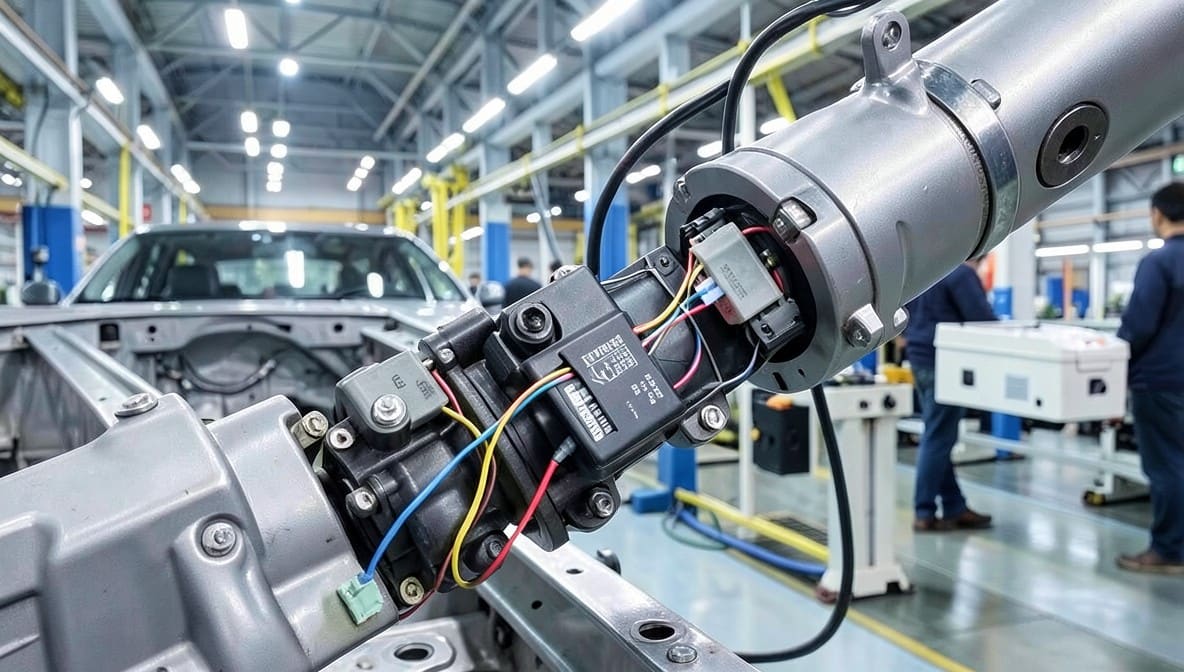
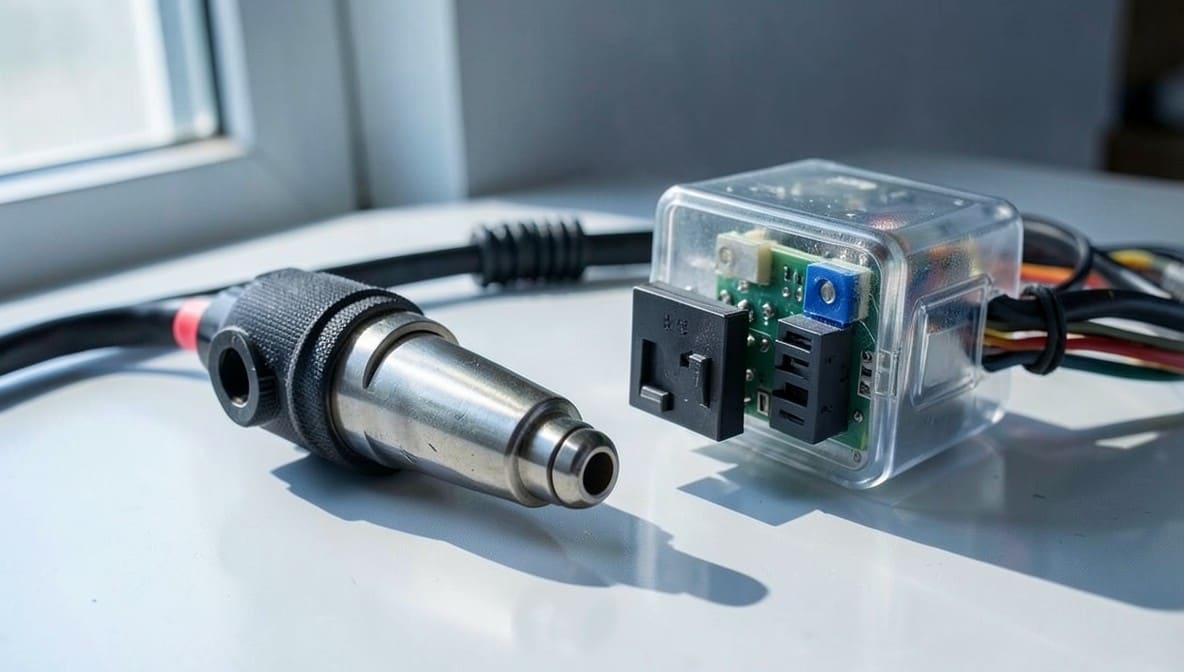
- The GCU is an electronic module (PCB with microprocessor, relay, and switching circuitry) that regulates current, voltage, and duration of heating supplied to glow plugs in compression-ignition diesel engines using Pulse Width Modulation.
- The appellant imported the GCU and classified it under CTH 9032 8990; the department proposed classification under CTH 8511 9000 as parts of glow plugs.
- The appellant also pleaded alternative classification under CTH 8537 (boards/panels equipped with apparatus of heading 8535/8536).
- The impugned order confirmed the demand for the extended period and imposed penalty under Section 114A.
- Bills of Entry (e.g., B/E No. 2967434 dated 19.10.2015) showed the department had previously cleared "Controller Assembly, Glow Plug Part" under CTH 9032 8990 without objection.
Procedural History
- Audit & SCN: CRA audit led to Show Cause Notice alleging misclassification under CTH 8511 9000.
- 12.10.2022: Appellant filed reply to Show Cause Notice.
- 31.01.2023: Commissioner of Customs, ICD Patparganj passed Order-in-Original confirming demand of Rs. 3,77,69,484/- and equal penalty under Section 114A.
- 2023: Customs Appeal No. 54695 of 2023 filed before CESTAT, New Delhi.
- 07.07.2026: Hearing concluded.
- 06.08.2026: Judgment pronounced (Final Order No. 51279/2026).
Relief Sought
The appellant sought setting aside of the impugned order, confirmation of classification under CTH 9032 8990 (or alternatively CTH 8537), and quashing of the extended period demand and penalty under Section 114A.
The Legal Issue
The central questions were: (1) Whether the Glow Plug Control Unit is classifiable under CTH 9032 (automatic regulating instruments), CTH 8537 (control boards), or CTH 8511 (electrical ignition/starting equipment and parts thereof); (2) Whether the department discharged the burden of proof for reclassification; (3) Whether the extended period of limitation and penalty under Section 114A can be invoked absent allegations of fraud, suppression, or wilful mis-declaration.
Arguments Presented
For the Appellant
Learned counsel contended the burden to prove reclassification rested on the department, which failed to adduce any technical evidence or legal reasoning in the Show Cause Notice or order. The GCU is not a "part" of the glow plug because it does not participate in the heating function; it merely controls the glow plug based on ECM signals and diagnostics. The GCU satisfies all three requirements of CTH 8537: it controls electric current, is in board/cabinet form, and incorporates relays/switches/connectors of CTH 8536. Alternatively, it falls under CTH 9032 per Chapter Note 7 as an automatic regulator controlling electrical quantities. Section Note 2(a) of Section XVI mandates classification under specific headings (like 8537) over general "parts" entries (like 8511 9000). The Show Cause Notice contained no allegation of fraud, suppression, or wilful mis-statement, so the extended period and penalty under Section 114A were impermissible. Reliance was placed on Hamdard (Wakf) Laboratories v. Commissioner, Commercial Tax (2026), Hindustan Ferodo Ltd. v. Collector of Central Excise (1997), Polaris India Pvt. Ltd. v. Principal Commr. of Cus. (2023), Jtekt Sona Automotive India Ltd. v. Commissioner of Customs (2020), and Hanon Climate Systems India Pvt. Ltd. v. Commissioner of Customs (2026).
For the Respondent
The Authorised Representative argued the GCU is an "inherent part" of the glow plug system: modern glow plugs cannot function automatically without the GCU's evaluative logic. Under Section Notes 3 and 4 of Section XVI, components contributing together to a single defined function (engine starting) must be classified under the heading appropriate to that function (CTH 8511). The "suitability for use" test from Westinghouse Saxby Farmer Ltd. v. Commissioner of Central Excise (2021) and G.S. Auto International Ltd. v. Collector of Central Excise (2003) dictates classification by principal use. Since the GCU is designed solely for glow plugs (specifically named in 8511), the specific functional system heading prevails over generic controller entries. The Bosch Ltd. (2024) and Continental Automotive Brake Systems India Pvt. Ltd. (2024) decisions support classification under 8511 for dedicated automotive control units.
The Court's Analysis
The Tribunal examined the GCU's technical function: an electronic module using Pulse Width Modulation to regulate current, voltage, and heating duration for glow plugs, essential for cold-start performance and emissions compliance. While not a component inside the glow plug, it is integral to the overall glow plug system.
On classification, the Tribunal applied General Rules of Interpretation (GIR) sequentially. Under GIR 1, the heading text and HSN Explanatory Notes are primary. The HSN Explanatory Notes to 85.11 expressly extend the heading to "electronic control units that regulate ignition/glow-plug operation based on sensor inputs," precisely the GCU's function. Section Notes 3 and 4 of Section XVI reinforce this: where individual components (GCU and glow plugs) contribute together to a clearly defined function (electrical ignition/starting for engines), the whole falls under the heading appropriate to that function (8511).
The Tribunal rejected CTH 9032 because Chapter 90 carves out exceptions for apparatus more specifically covered in Chapters 84 or 85, and the appellant relied on the residual entry 9032 8990. CTH 8537 was rejected because the GCU is a single-PCB module combining shunt, relay, and microcontroller, not a board/panel equipped with two or more discrete apparatus of heading 8535/8536 as the heading requires.
The Tribunal gave decisive weight to the Bosch Technical Note submitted by the appellant, which described the GCU and glow plug as two halves of a single functional system ("Intelligent Glow Systems"), the GCU as a device "specifically designed to regulate the heating" with "no function outside the glow plug ecosystem," and the microcontroller as preventing "cascading of failures." This confirmed the GCU as an "inherent part" of the glow plug.
Following Westinghouse Saxby Farmer, the "user test" in Section Notes takes precedence over the argument that Note 2(a) mandates classification under 8537 for controllers. Since the GCU is used solely for glow plugs named in 8511, the broader ignition/starting equipment heading is the correct legal home.
On the extended period and penalty, the Tribunal noted the department had cleared identical goods under CTH 9032 8990 via Bills of Entry (e.g., 19.10.2015) without dispute. Absent any allegation of fraud, suppression, or wilful mis-declaration in the Show Cause Notice, the extended period under Section 28(4) and penalty under Section 114A could not be sustained, consistent with Air India Ltd. v. Commissioner of Service Tax (2024) and Collector of Central Excise v. H.M.M. Ltd. (1995).
"The GCU is an electronic module i.e., a PCB with microprocessor/relay/switching circuitry that regulates current, voltage and duration of heating supplied to glow plugs in a compression-ignition diesel engine. The GCU uses Pulse Width Modulation to precisely control voltage and current to each glow plug, stabilizing temperature and improving cold-start performance and emissions. Functionally, the GCU is essential to the correct and safe operation of modern fast-heating glow plugs, especially in meeting emissions and cold-start requirements. So, while the GCU is not a component inside the glow plug, it is an integral part of the overall glow plug system in contemporary diesel engines."
The Verdict
The appeal was allowed in part. The Tribunal held: (i) The appropriate classification of the GCU is CTH 8511 (specifically 8511 90 00 as parts of electrical ignition/starting equipment); (ii) The duty demand for the normal period is upheld; (iii) The penalty of Rs. 3,77,69,484/- under Section 114A is set aside. The impugned order was amended accordingly. The demand for the extended period was also not sustained.
What This Means For Similar Cases
HSN Explanatory Notes and Section Notes Govern Classification
- Classification disputes must be resolved by GIR 1: plain reading of heading text, Chapter Notes, Section Notes, and HSN Explanatory Notes. The HSN is the "bedrock of custom controls" (D.L. Steels, Thermax Ltd.).
- Section Notes 3 and 4 of Section XVI mandate functional-unit classification: when components contribute together to a defined function covered by a heading (e.g., 8511 for ignition/starting), the whole system classifies under that heading.
- The "user test" / "suitability for use" principle (Westinghouse, G.S. Auto) prevails over generic heading arguments: a dedicated controller for a specifically named article (glow plugs in 8511) falls under that article's heading.
Technical Literature of the Manufacturer Is Admissible and Persuasive
- The Tribunal relied on the appellant's own Bosch Technical Note to confirm the GCU's functional integration with the glow plug system. Practitioners should anticipate that product manuals, technical notes, and marketing materials may be used to determine classification.
- A component described as having "no function outside the [principal article] ecosystem" and as an "inherent part" will be treated as a part of that article, even if physically separate.
Extended Period and Penalty Require Positive Allegations of Fraud or Suppression
- Where the department has historically cleared goods under a particular classification (evidenced by Bills of Entry), it cannot later invoke the extended period under Section 28(4) or penalty under Section 114A without specific allegations and proof of fraud, wilful mis-statement, or suppression of facts.
- Mere difference in classification interpretation, especially when the department previously accepted the importer's classification, does not constitute suppression. The Show Cause Notice must expressly allege the ingredients of Section 28(4).