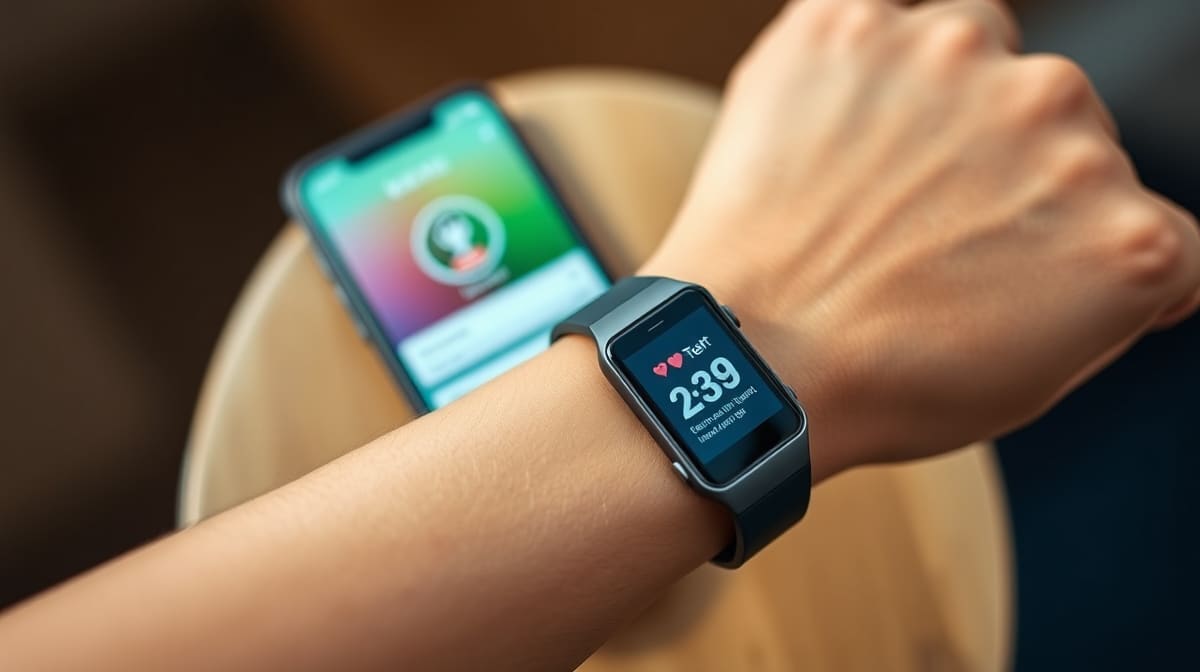
The Customs, Excise & Service Tax Appellate Tribunal (CESTAT), Mumbai, has clarified a critical issue in customs tariff classification by holding that fitness trackers with Bluetooth connectivity are not merely pedometers but communication apparatus under CTI 8517 6290. This decision redefines the legal boundaries between fitness devices and wireless data transmission equipment under the Harmonized System Nomenclature.
Background & Facts
The Dispute
The dispute centers on the correct classification of "Activity Trackers" (fitness bands) imported by GOQii Technologies Private Limited from China between 20.11.2017 and 15.11.2019. The respondent classified these goods under Customs Tariff Item (CTI) 9029 1090, attracting a Basic Customs Duty (BCD) of 7.5% ad valorem. The Department of Customs contended that the goods should be classified under CTI 8517 6290, attracting a BCD of 20% or 10% ad valorem, depending on the period.
Key Facts
- The imported goods are wearable fitness trackers marketed under the GOQii brand, including models such as Smart Vital 2.0, Vital 4.0, GOQii Stream, and Run GPS.
- Each device contains multiple sensor modules: 3-axis accelerometer, optical PPG sensor for SpO2 and heart rate monitoring, temperature sensor, and ECG module (in select models).
- All models include Bluetooth Low Energy (BLE) connectivity for wireless data transmission to paired smartphones.
- The devices can store activity data for up to 24 hours locally but require Bluetooth pairing with the GOQii app to transmit data to servers for analysis, coaching feedback, and long-term tracking.
- The GOQii app enables users to view charts, receive coaching advice, track sleep, stress, menstrual cycles, and receive notifications from the paired phone.
- Only the GOQii Stream model has a built-in microphone and speaker for call functionality; the other 14 models lack these components.
- The Indian Institute of Technology Mumbai (IIT Mumbai) conducted an independent technical evaluation of 15 models on 13.08.2023 and concluded that the primary function is fitness monitoring, with Bluetooth being ancillary.
- The Department relied on a Modus Operandi Circular issued by DRI Lucknow and a CBIC Circular No. 08/2023 dated 13.03.2023 to argue for reclassification.
- The respondent had previously accepted classification under CTI 8517 6290 for 21 Bills of Entry and paid differential duty, but contested classification for 11 subsequent entries.
- The respondent holds ISO/IEC 27001:2013 certification and is recognized as a partner in the Government of India’s FIT India movement.
Procedural History
- 20.11.2017 to 15.11.2019: Period of import of 32 Bills of Entry under dispute.
- 25.10.2019: Two Bills of Entry (Nos. 5440172 and 5434487) flagged for misclassification; subjected to 100% physical examination.
- 14.11.2019: Respondent submitted product catalogues and sought provisional release on bond.
- 05.10.2020: Show Cause Notice (SCN No. 10/2020-21) issued proposing reclassification under CTI 8517 6290, differential duty, confiscation, and penalty.
- 20.07.2021: Commissioner of Customs (Import) passed Order-in-Original confirming SCN proposals.
- 03.05.2024: CESTAT, in Customs Appeal No. 86831 of 2021, remanded the matter for fresh adjudication, directing the Commissioner to disregard DRI circulars and decide independently.
- 31.07.2024: Commissioner passed impugned order dropping proceedings, classifying goods under CTI 9029 1090, relying on IIT Mumbai’s report.
- 14.11.2024: Committee of Chief Commissioners passed Review Order upholding Revenue’s appeal against the impugned order.
- 15.12.2025: Hearing before CESTAT Mumbai.
- 13.04.2026: Final Order issued.
The Parties' Positions
For the Appellant (Commissioner of Customs)
- Argued that the essential character of the activity trackers is imparted by the Bluetooth transceiver, which enables transmission of health data to servers for processing and feedback.
- Relied on GRI 3(b) to assert that the wireless communication component gives the goods their essential character.
- Cited HSN Explanatory Notes to Heading 8517, which include apparatus for transmission or reception of data in a wireless network.
- Emphasized that the device cannot deliver its full functionality without Bluetooth connectivity, as data is erased after 24 hours if not synced.
- Contended that IIT Mumbai’s report was not commissioned by the Department and lacked procedural validity.
- Highlighted that the goods are marketed as part of a digital health coaching ecosystem, not merely as standalone pedometers.
For the Respondent (GOQii Technologies)
- Maintained that the primary function is fitness and vital parameter monitoring via embedded sensors.
- Argued that Bluetooth is merely an ancillary feature for data backup and app integration, not the core function.
- Relied on IIT Mumbai’s report concluding that the device functions independently without Bluetooth.
- Cited judicial precedents: Skol Breweries Ltd., Venugopal Engineering Pvt. Ltd., and Pond’s (India) Ltd. to argue against reliance on foreign rulings or trade usage.
- Stated that the goods lack cellular, Wi-Fi, or LAN/WAN connectivity and cannot receive or transmit voice, images, or data independently.
- Emphasized that the device does not have a microphone, speaker, or dialing interface, distinguishing it from smartwatches.
Relief Sought
The Appellant sought:
- Reversal of the impugned order dated 31.07.2024.
- Classification of goods under CTI 8517 6290.
- Recovery of differential customs duty for the normal period (two years prior to SCN date).
- Cancellation of the order dropping confiscation and redemption fine proceedings.
The Respondent sought:
- Upholding of the impugned order.
- Classification under CTI 9029 1090.
- Dismissal of the appeal.
The Legal Issue
The central question was whether activity trackers with Bluetooth connectivity should be classified under CTI 9029 1090 as pedometers or under CTI 8517 6290 as machines for the reception, conversion, and transmission of data, under the General Rules of Interpretation of the Customs Tariff Act, 1975.
Arguments Presented
For the Appellant
The Commissioner argued that the essential character of the activity trackers is determined by the Bluetooth transceiver, which enables the transmission of health data to remote servers for processing and feedback. The device cannot fulfill its intended purpose of delivering personalized coaching without this wireless link. The HSN Explanatory Notes to Heading 8517 include apparatus for wireless data transmission, even if not for voice or video. The Tribunal must apply GRI 3(b), which mandates classification by essential character when goods are prima facie classifiable under multiple headings. The IIT Mumbai report was challenged as non-official, lacking procedural integrity, and contradicting the commercial reality of the product as a digital health platform.
For the Respondent
GOQii contended that the core function is physiological monitoring via sensors, with Bluetooth serving only to transfer data to a smartphone app for historical analysis. The device operates independently for up to 24 hours without pairing, and the majority of metrics (steps, heart rate, sleep) are processed internally. The absence of a microphone, speaker, or cellular module distinguishes it from communication devices. The respondent relied on judicial precedents affirming that classification must be based on statutory terms and not trade usage or foreign rulings. The IIT Mumbai report, though not commissioned by the Department, was deemed scientifically valid and aligned with the product’s design.
The Court's Analysis
The Tribunal undertook a detailed analysis of the General Rules of Interpretation (GRI), particularly Rules 1, 3(b), and 6, and the HSN Explanatory Notes. It examined whether the goods were primarily measuring instruments under Chapter 90 or communication apparatus under Chapter 85.
"The core functionality across all devices is activity or vital parameter monitoring, complemented by alerting mechanisms. Bluetooth feature is an ancillary function to the primary function of activity or fitness or vital parameters tracking."
This quote from the IIT Mumbai report formed the basis of the Commissioner’s impugned order. However, the Tribunal rejected this conclusion as factually incomplete. It noted that while the device can store data locally, its intended functionality - as marketed, designed, and used - is inseparable from the GOQii coaching ecosystem. The data collected is meaningless without transmission to the server, interpretation by coaches, and feedback delivered via the app. The Tribunal held that the Bluetooth module is not merely a convenience but a necessary component for the product’s commercial purpose.
The Tribunal distinguished the goods from smartwatches, which have full communication capabilities, but emphasized that Heading 8517 6290 covers "other apparatus for the transmission or reception of... data," not limited to voice or video. The HSN Explanatory Notes explicitly include devices that transmit data within a wireless network, even if only point-to-point. The Tribunal found that the activity trackers meet this definition: they transmit biometric data to a server via a paired device, constituting data transmission within a wireless network.
The Tribunal also rejected the respondent’s reliance on IIT Mumbai’s report, noting that the testing was conducted without the Department’s involvement, and the sample selection was not verified. More critically, the report focused on technical operation but ignored the commercial and functional context of the product as a digital health service.
Applying GRI 3(b), the Tribunal concluded that the essential character of the goods is imparted by the Bluetooth transceiver, as it enables the core service - personalized coaching based on real-time data transmission. The pedometer function, while present, is merely one of several sensors and does not define the product’s primary purpose.
The Tribunal further held that the goods do not fall under any specific sub-heading under 8517 6210 - 6270 and therefore qualify under the residual entry 8517 6290.
The Verdict
The appeal was partly allowed. The impugned order dated 31.07.2024 is set aside. The imported activity trackers are classified under CTI 8517 6290. The differential customs duty for the normal period (two years prior to the SCN date of 05.10.2020) is sustained, along with applicable interest. The demand for confiscation and redemption fine for the extended period is dropped. The provisional bond and bank guarantee of Rs. 1,00,00,000 submitted by the respondent may be adjusted as per extant rules. No penalty is imposed due to the absence of fraud or suppression.
What This Means For Similar Cases
Classification Turns on Functional Purpose, Not Technical Components
- Practitioners must assess the commercial purpose and intended use of a product, not merely its hardware components.
- A Bluetooth module, even if ancillary in isolation, may confer essential character if it enables the product’s core service.
- Technical reports must be commissioned by the Department or independently verified to be admissible in adjudication.
Digital Health Devices Are Not Automatically Pedometers
- Fitness trackers integrated with cloud-based coaching, data analytics, or remote feedback systems are likely to be classified under 8517 6290.
- Merely having sensors does not qualify a device for Chapter 90 if its value lies in data transmission and interpretation.
- Products marketed as part of a digital health ecosystem (e.g., with apps, coaching, AI analysis) will face heightened scrutiny under Chapter 85.
Precedent for Future Tech Goods
- This ruling sets a precedent for classifying wearable tech with wireless connectivity: smart rings, health patches, and AI-enabled wearables.
- Importers must align tariff classification with product functionality, not just component lists.
- The Tribunal’s rejection of IIT Mumbai’s report underscores the need for official, transparent, and Department-involved technical evaluations.
Key Takeaways for Practitioners
- Always analyze the product’s entire ecosystem - hardware, software, service, and user experience.
- Do not rely solely on sensor presence; focus on data flow and user benefit.
- Challenge unofficial expert reports unless they are part of the official record.
- Consider the HSN Explanatory Notes as binding interpretive tools, not mere guidance.
Classification Strategy
- For products with wireless data transmission to cloud platforms: prepare to argue for 8517 6290.
- For standalone devices with no data transmission: 9029 1090 remains viable.
- Always document the product’s marketing, user manual, and service terms to support classification.
Legal Precedent
This decision aligns with global trends in classifying smart wearables and reinforces that tariff classification must evolve with technology. Importers of digital health devices must now treat Bluetooth connectivity not as a feature, but as a functional pillar.
Practical Compliance
- Review all existing classifications of wearable tech imported since 2017.
- Reassess duty liability for goods classified under 9029 1090 if they transmit data to apps or servers.
- Update internal classification manuals to reflect this functional approach.
Risk Mitigation
- Avoid inconsistent classification across shipments.
- Maintain records of product design, marketing, and user interaction to defend classification.
- Engage customs consultants early when introducing new wearable tech to the Indian market.
Conclusion
This judgment transforms how customs authorities and importers view wearable fitness technology. The line between a pedometer and a communication device is no longer drawn by hardware alone, but by the product’s functional ecosystem. Practitioners must now adopt a holistic, service-oriented approach to tariff classification.