Meghalaya High Court judgments

44 Meghalaya High Court judgments explained in plain English: what was decided, the law applied and why it matters.

POCSO FIR Quashed Post Adolescent Marriage: Wahlang Framework Mandates Informed Consent, Matrilineal Customs Recognized : Meghalaya HC
Case Law Analysis
|Meghalaya High Court

POCSO FIR Quashed Post Adolescent Marriage: Wahlang Framework Mandates Informed Consent, Matrilineal Customs Recognized : Meghalaya HC

The Meghalaya High Court quashed a POCSO FIR against a husband after the adolescent couple married and had a child, applying the Wahlang framework to verify the survivor's informed consent and recognize matrilineal customs. The court mandated scheme benefits for the victim and child within eight weeks and ordered judicial monitoring to ensure compliance.

Section 115 CPC | Revision Petition Maintainable Against Review Order Without Challenging Decree : Meghalaya HC
|Meghalaya High Court

Section 115 CPC | Revision Petition Maintainable Against Review Order Without Challenging Decree : Meghalaya HC

Meghalaya High Court holds that a revision petition under Section 115 CPC can challenge an order rejecting a review application, even if the underlying decree remains unchallenged. This ruling clarifies the limited but crucial scope of revisional jurisdiction, offering tenants and litigants an additional remedy in eviction and property disputes without reopening the final decree.

Natural Justice in Contracts | Undisputed Payment Must Be Released Pending Dispute Resolution: Meghalaya HC
Case Law Analysis
|Meghalaya High Court

Natural Justice in Contracts | Undisputed Payment Must Be Released Pending Dispute Resolution: Meghalaya HC

Meghalaya High Court rules that withholding undisputed contractual payments violates natural justice, directing release of Rs. 17.79 lakhs while disputed Rs. 7.89 lakhs undergoes independent assessment. The ruling sets a precedent for equitable relief in public works contracts, ensuring contractors receive undisputed dues without procedural delays.

POCSO Act | Bail Granted in Consensual Minor Relationship Despite Statutory Presumption When No Sexual Assault Alleged : Meghalaya HC
Case Law Analysis
|Meghalaya High Court

POCSO Act | Bail Granted in Consensual Minor Relationship Despite Statutory Presumption When No Sexual Assault Alleged : Meghalaya HC

Meghalaya High Court grants bail under POCSO Act where the minor admitted a consensual relationship and no sexual assault was alleged, holding custodial detention unjustified post-investigation. The ruling carves an exception to the statutory presumption of non-bailable offences when evidence disproves coercion, impacting bail jurisprudence in adolescent relationships.

Section 302 IPC | Acquittal Mandated Where Eye-Witness Testimony Contradicts Medical Evidence & FIR Delayed: Meghalaya HC
Case Law Analysis
|Meghalaya High Court

Section 302 IPC | Acquittal Mandated Where Eye-Witness Testimony Contradicts Medical Evidence & FIR Delayed: Meghalaya HC

Meghalaya High Court sets aside a 35-year-old murder conviction, ruling that inconsistencies between eye-witness accounts and medical evidence, coupled with unexplained FIR delays, create reasonable doubt. The judgment reinforces that conviction under Section 302 IPC cannot stand without an unbroken chain of reliable evidence, directly impacting criminal trials relying on circumstantial proof.

BNSS Section 35(3) | Mandatory Notice Before Arrest Extends to Spouses Under Parity Principle : Meghalaya HC Grants Anticipatory Bail
Case Law Analysis
|Meghalaya High Court

BNSS Section 35(3) | Mandatory Notice Before Arrest Extends to Spouses Under Parity Principle : Meghalaya HC Grants Anticipatory Bail

The Meghalaya High Court ruled that Section 35(3) of the BNSS, which mandates prior notice before arrest for offences punishable up to seven years, applies equally to spouses implicated alongside the primary accused. The court emphasized the parity principle, ensuring similar relief for co-accused already granted bail, reinforcing procedural safeguards in non-bailable offences.

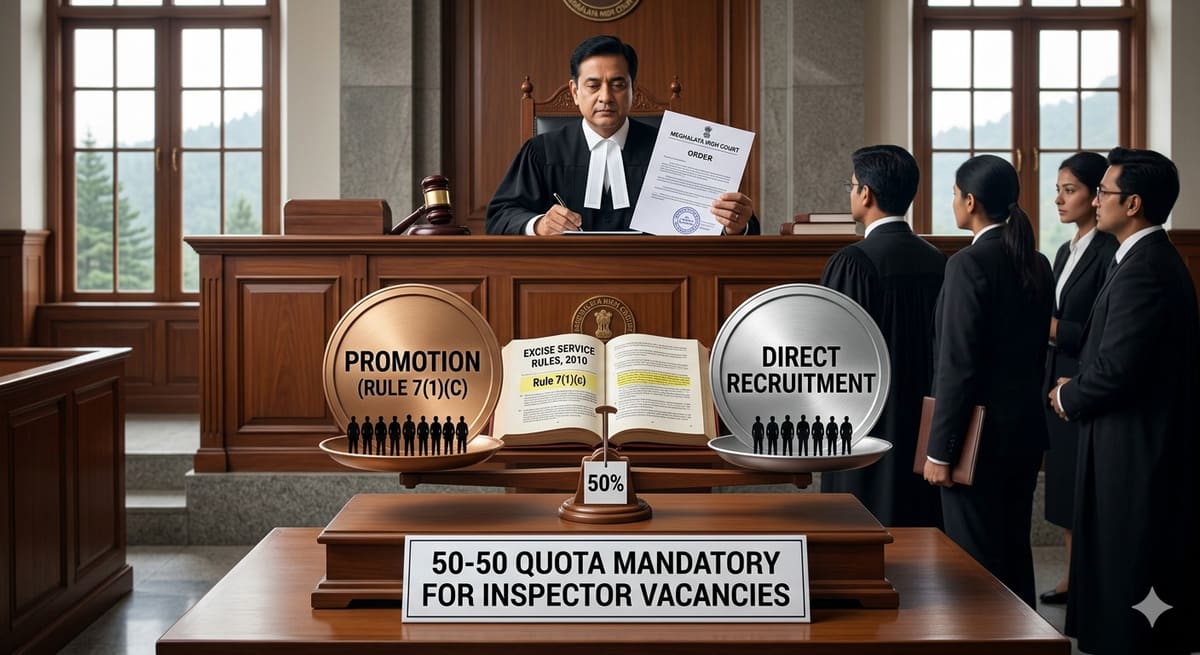
Rule 7(1)(c) Excise Service Rules, 2010 | 50-50 Promotion-Direct Recruitment Quota Mandatory for Inspector Vacancies : Meghalaya HC
Case Law Analysis
|Meghalaya High Court

Rule 7(1)(c) Excise Service Rules, 2010 | 50-50 Promotion-Direct Recruitment Quota Mandatory for Inspector Vacancies : Meghalaya HC

The Meghalaya High Court has ruled that exclusive direct recruitment for Excise Inspector posts violates the mandatory 50-50 split between promotion and direct entry mandated by Rule 7(1)(c). This sets a precedent ensuring fair career progression for Assistant Inspectors and curbs arbitrary hiring practices in state excise services.

BNS Section 351 | Threatening Conduct Beyond Legal Notice Constitutes Criminal Intimidation : Meghalaya HC Reinforces Bhajan Lal Quashing Parameters
Case Law Analysis
|Meghalaya High Court

BNS Section 351 | Threatening Conduct Beyond Legal Notice Constitutes Criminal Intimidation : Meghalaya HC Reinforces Bhajan Lal Quashing Parameters

Meghalaya High Court rules that threats extending beyond a legal notice prima facie disclose an offence under Section 351(2) of the Bharatiya Nyaya Sanhita, distinguishing Manik Taneja. The judgment clarifies that mere legal notices may not suffice, but overt intimidation-including video evidence-justifies FIR continuation, reinforcing the Bhajan Lal quashing thresholds for criminal intimidation cases.

Legitimate Expectation in Land Donation | State Must Finalize Employment Concession Process Even Without Automatic Right : Meghalaya HC
Case Law Analysis
|Meghalaya High Court

Legitimate Expectation in Land Donation | State Must Finalize Employment Concession Process Even Without Automatic Right : Meghalaya HC

The Meghalaya High Court has ruled that while donors of land for public infrastructure have no automatic entitlement to employment, the state is legally bound to conclude any initiated process for employment concession fairly and without undue delay. This sets a critical precedent for administrative accountability when public contributions are made in good faith, reinforcing that procedural fairness trumps policy gaps.

Section 5 Limitation Act | Illiteracy and Economic Hardship Constitute Sufficient Cause for Condoning Delay in Criminal Appeal: Meghalaya HC
Case Law Analysis
|Meghalaya High Court

Section 5 Limitation Act | Illiteracy and Economic Hardship Constitute Sufficient Cause for Condoning Delay in Criminal Appeal: Meghalaya HC

The Meghalaya High Court has ruled that an illiterate accused, serving as the sole breadwinner and unaware of legal rights, can rely on socio-economic vulnerability as sufficient cause to condone a 244-day delay in filing a criminal appeal. This sets a critical precedent for access to justice, ensuring that poverty and lack of legal education do not bar marginalized individuals from appealing convictions.

Dorbar Shnong Not a Statutorily Recognized Village Court Under 1953 Rules | Meghalaya HC Overturns Res Judicata on Customary Body Jurisdiction : Meghalaya HC
Case Law Analysis
|Meghalaya High Court

Dorbar Shnong Not a Statutorily Recognized Village Court Under 1953 Rules | Meghalaya HC Overturns Res Judicata on Customary Body Jurisdiction : Meghalaya HC

Meghalaya High Court rules that Dorbar Shnong lacks judicial authority as it is not a legally constituted Village Court under the Meghalaya Village Courts Rules, 1953. The judgment restores a title suit dismissed on res judicata grounds, emphasizing that customary bodies require statutory notification to exercise judicial powers, impacting property disputes in Khasi Hills Autonomous District.

Rule 31(2) Khasi Hills Rules | Revisional Jurisdiction Excluded from Civil Injunctions; CPC Order 43 Rule 1(r) Governs Appeals : Meghalaya HC
Case Law Analysis
|Meghalaya High Court

Rule 31(2) Khasi Hills Rules | Revisional Jurisdiction Excluded from Civil Injunctions; CPC Order 43 Rule 1(r) Governs Appeals : Meghalaya HC

The Meghalaya High Court has clarified that Rule 31(2) of the Khasi Hills Autonomous District Rules does not empower revisional review in civil matters involving interim injunctions. Parties must instead seek redress through appellate remedies under CPC Order 43 Rule 1(r), reinforcing the separation between customary administrative revision and statutory civil procedure. This ruling binds district council courts and civil litigants across Meghalaya’s autonomous regions.

Section 5 Limitation Act | Indigence and Reliance on Legal Aid Constitute Sufficient Cause for Condoning 753-Day Delay in POCSO Appeal : Meghalaya HC
Case Law Analysis
|Meghalaya High Court

Section 5 Limitation Act | Indigence and Reliance on Legal Aid Constitute Sufficient Cause for Condoning 753-Day Delay in POCSO Appeal : Meghalaya HC

The Meghalaya High Court has ruled that extreme poverty and dependence on legal aid constitute sufficient cause under Section 5 of the Limitation Act to condone a 753-day delay in filing a POCSO appeal. This sets a critical precedent for marginalized accused persons who cannot afford private counsel, affirming that economic disadvantage cannot bar access to appellate justice under India’s child protection laws.

Article 22(1) Compliance | NDPS Arrest Grounds Must Specify Actual Offence, Not Checklist Boilerplate : Meghalaya HC Invalidates Arrest
Case Law Analysis
|Meghalaya High Court

Article 22(1) Compliance | NDPS Arrest Grounds Must Specify Actual Offence, Not Checklist Boilerplate : Meghalaya HC Invalidates Arrest

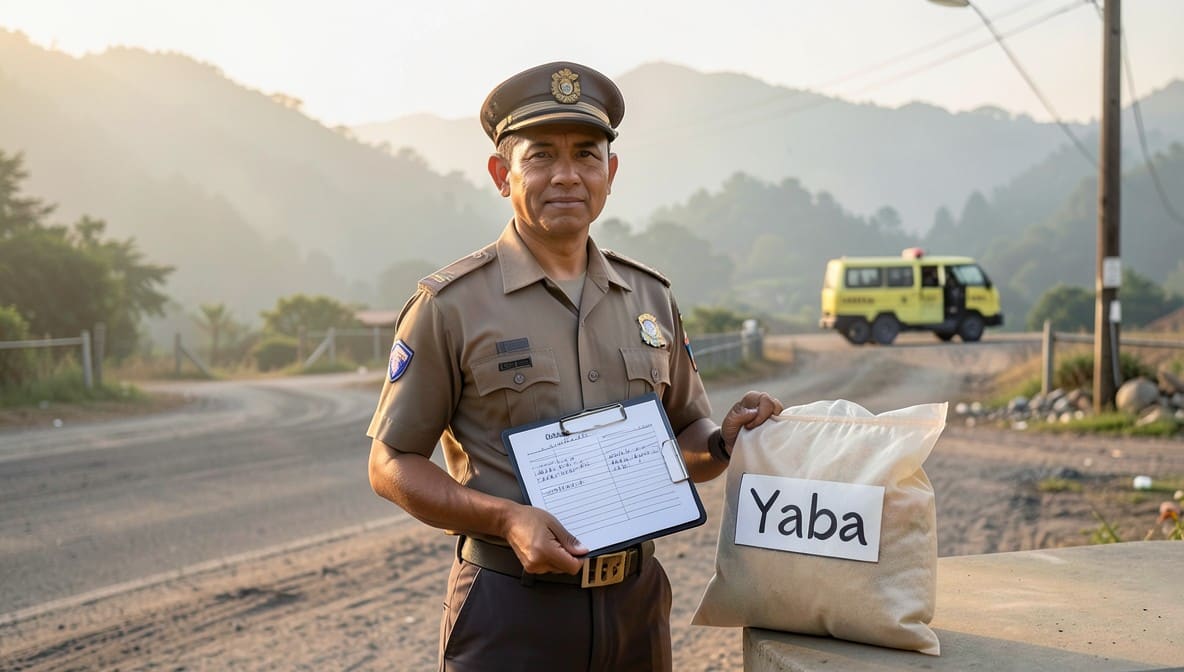
Meghalaya HC rules that NDPS arrests must specify the exact offence in arrest grounds, not generic checklist formats. The court invalidated the arrest where the memo falsely stated a 7-year punishment instead of the actual 10-year minimum, violating constitutional safeguards under Article 22(1). This sets a precedent for strict compliance in drug-related arrests, impacting law enforcement procedures nationwide.

Section 482 CrPC | Settlement in Personal Disputes Permits FIR Quashing Under IPC 323/354 : Meghalaya HC
Case Law Analysis
|Meghalaya High Court

Section 482 CrPC | Settlement in Personal Disputes Permits FIR Quashing Under IPC 323/354 : Meghalaya HC

Meghalaya High Court quashes FIR for offences under IPC 323 and 354 after parties settle, affirming that personal disputes rooted in civil disagreements may be resolved without prolonged prosecution. The court directed ₹10,000 restitution, reinforcing that Section 482 CrPC allows judicial discretion to prevent abuse of process where compromise restores harmony.

Procedural Fairness in Disengagement | Absence of Formal Order Entitles Home Guards to Compensatory Relief : Meghalaya HC
Case Law Analysis
|Meghalaya High Court

Procedural Fairness in Disengagement | Absence of Formal Order Entitles Home Guards to Compensatory Relief : Meghalaya HC

Meghalaya High Court rules that failure to issue formal disengagement orders to retired Home Guards after 36 years of service violates principles of equity and fairness, entitling them to ₹1 lakh compensation each. The judgment underscores that procedural lapses cannot deprive employees of rightful dues, even in the absence of a formal employment contract.

Khasi Hills Autonomous District (Constitution & Functions) Act, 2024 | Only Syiem or Executive Dorbar Can Suspend Sordar : Meghalaya HC
Case Law Analysis
|Meghalaya High Court

Khasi Hills Autonomous District (Constitution & Functions) Act, 2024 | Only Syiem or Executive Dorbar Can Suspend Sordar : Meghalaya HC

Meghalaya High Court rules that under the Khasi Hills Autonomous District (Constitution & Functions) Act, 2024, the power to suspend a Sordar rests exclusively with the Syiem or Executive Dorbar. Any suspension by subordinate authorities is ultra vires and void, even if aligned with customary practices. The ruling reinforces jurisdictional limits on traditional authority structures in Meghalaya.