The Meghalaya High Court has reaffirmed that anticipatory bail must be granted where an individual is falsely implicated in a violent inter-village dispute, particularly when the evidence against them is inconclusive and their alibi remains unrefuted. This ruling underscores the constitutional imperative to protect personal liberty against speculative accusations in emotionally charged communal conflicts.
Background & Facts
The Dispute
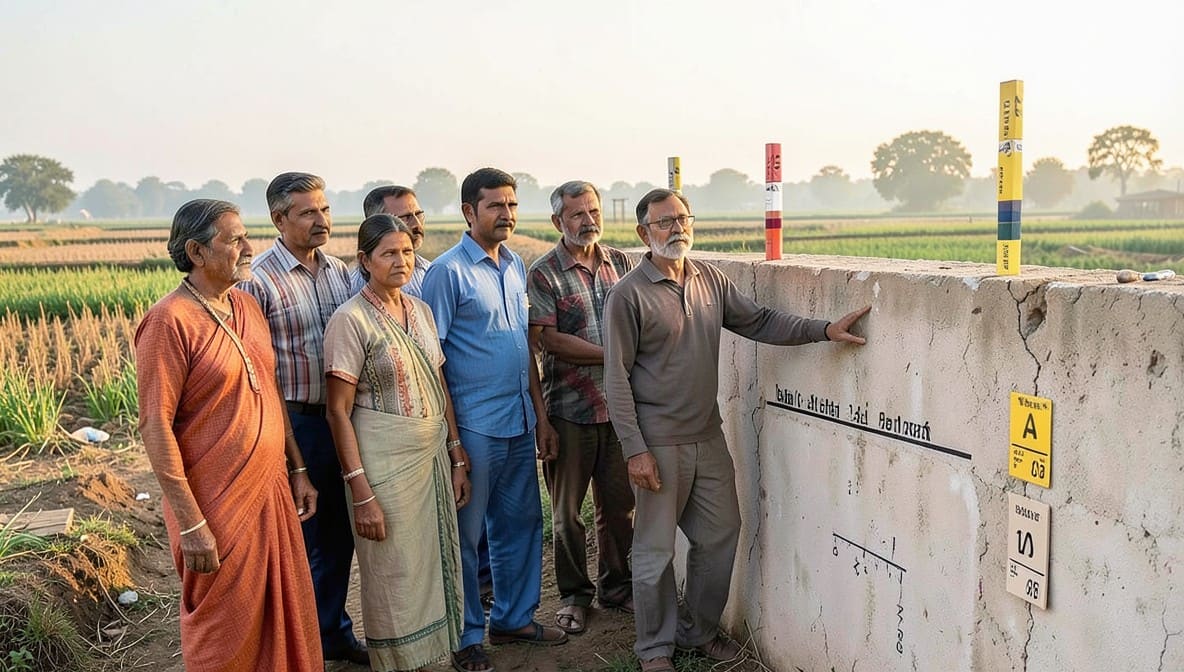
The dispute arose from a land acquisition process for a Four Lane Expressway in East Jaintia Hills District, Meghalaya. On 03.03.2026, a spot inspection was scheduled by the Deputy Commissioner’s office at the contested land between Lama Village and Lakadong Ummat Village. Tensions escalated between villagers of both communities, resulting in a violent altercation.
Key Facts
- The incident occurred on 03.03.2026 between 10:30 AM and 11:00 AM at the inspection site.
- An FIR (Khliehriat P.S. Case No. 104(3)/2026) was registered under Section 109/118(2)/191(3)/61(2)/132/3(5) BNS, read with Section 27 of the Arms Act, alleging that individuals from Lakadong Ummat Village, including the petitioner, arrived armed with firearms and machetes and opened indiscriminate fire.
- Three residents of Lama Village sustained injuries and were hospitalized.
- The petitioner, Shri Banriki Hynthong, is a resident of Lakadong Ummat Village but is not an office bearer of the Dorbar Shong nor has any interest in the disputed land.
- The petitioner claims he was engaged in harvesting betel nut leaves and broomsticks at Ladrymbai, approximately 38 kilometers away from the scene, on the day of the incident.
- A separate FIR dated 06.03.2026 was lodged by residents of Lakadong Ummat Village, accusing others from Lama Village of trespassing, rioting, and using deadly weapons.
- The Investigating Officer recorded witness statements identifying the petitioner as being armed with a machete, but no witness claimed to have seen him use a firearm.
- The petitioner’s alibi - being at Ladrymbai - has not been corroborated or disproved by the investigation.
Procedural History
- 03.03.2026: Violent altercation occurs during land inspection; FIR registered.
- 06.03.2026: Counter-FIR filed by Lakadong Ummat villagers against members of Lama Village.
- 12.05.2026: Petitioner files anticipatory bail application before the High Court of Meghalaya.
The Parties' Positions
Petitioner’s Position: The petitioner asserts he was not present at the scene of the incident. He is being falsely implicated to stigmatize him and damage his social standing. His occupation and location on the day of the incident support his alibi. No direct evidence links him to the use of firearms or causing injuries.
Respondent’s Position: The State contends that eyewitnesses have identified the petitioner as being present and armed with a machete. The inclusion of his name in the FIR, coupled with the case diary entries, establishes a prima facie case. The existence of a counter-FIR does not negate the prosecution’s case.
Relief Sought
The petitioner seeks anticipatory bail in the event of arrest, praying that he be protected from custodial interrogation and undue stigma pending investigation.
The Legal Issue
The central question was whether anticipatory bail can be granted to a person accused in a serious criminal case where the evidence is circumstantial, an alibi is unchallenged, and there are credible cross-allegations suggesting possible false implication.
Arguments Presented
For the Petitioner
Ms. A.D. Syiem, Adv., argued that the petitioner’s name was included in the FIR without any concrete evidence of his presence or participation. The prosecution relies solely on eyewitness accounts that have been shown to be unreliable in similar cases involving the same incident, where alibis were later proven true. The petitioner’s occupation and location on the day of the incident make his presence at the scene improbable. The filing of a counter-FIR further indicates a pattern of mutual false accusations. The petitioner’s liberty must be protected under Article 21 of the Constitution, and arrest should not be automatic merely because a name appears in an FIR.
For the Respondent
Mr. N.D. Chullai, AAG, contended that the Investigating Officer has recorded witness statements identifying the petitioner as armed with a machete at the scene. The seriousness of the charges - use of firearms and causing grievous injury - justifies continued investigation and potential arrest. The existence of a counter-FIR does not absolve the petitioner of liability, and the court must not interfere prematurely in an ongoing investigation.
The Court's Analysis
The Court acknowledged the gravity of the allegations, including the use of firearms and resulting injuries. However, it emphasized that the presence of a name in an FIR does not equate to proof of guilt. The Court noted that while the Investigating Officer recorded witness statements identifying the petitioner as armed with a machete, no witness claimed to have seen him discharge a firearm or inflict injuries.
Crucially, the petitioner’s alibi - that he was 38 kilometers away at Ladrymbai - was neither confirmed nor disproved by the investigation. The Court drew a parallel to another case arising from the same incident, where individuals named in the FIR successfully proved their alibi of being in Shillong hospital attending to a sick relative. This precedent cast serious doubt on the reliability of the eyewitness accounts in the present case.
"A great ignominy, humiliation and disgrace is attached to the arrest. Arrest leads to many serious consequences not only for the accused but for the entire family and at times for the entire community…"
The Court cited Siddharam Satlingappa Mhetre v. State of Maharashtra to underscore the constitutional value of personal liberty. It held that in cases where the evidence is equivocal, cross-allegations exist, and the accused’s presence is unverified, the benefit of doubt must be extended to the individual. The Court rejected the notion that arrest is a necessary step merely because a serious offence is alleged.
The Court further observed that the Investigating Officer has a duty to impartially investigate both FIRs and determine the true perpetrators, rather than allowing one side’s accusations to lead to the arbitrary detention of an individual whose presence at the scene remains unproven.
The Verdict
The petitioner’s application for anticipatory bail was allowed. In the event of arrest, he shall be released on bail subject to the following conditions: (i) he shall not abscond or tamper with evidence or witnesses; (ii) he shall appear before the court whenever required; (iii) he shall not leave the jurisdiction of Meghalaya without prior permission; and (iv) he shall execute a personal bond of ₹30,000 with two sureties of like amount. The interim bail granted earlier was made absolute. No costs were awarded.
What This Means For Similar Cases
False Implication in Communal Disputes Requires Judicial Caution
- Practitioners must argue that inclusion in an FIR during inter-village or communal clashes does not establish guilt, especially when the accused has no stake in the dispute.
- Courts must scrutinize eyewitness reliability where multiple FIRs exist and cross-allegations are common.
- Alibis, even if uncorroborated, must be treated as credible unless actively disproven by the prosecution.
Arrest Is Not Automatic in Complex Violence Cases
- The judgment reinforces that anticipatory bail is a constitutional safeguard, not a discretionary privilege.
- Prosecution cannot rely solely on naming in an FIR to justify arrest; independent corroboration is required.
- In cases involving mass altercations, courts must distinguish between active participants and those falsely implicated due to group association.
Investigative Neutrality Is Mandatory
- Investigating Officers must treat both sides of a communal dispute with equal rigor.
- Failure to investigate counter-FIRs or to reconcile conflicting accounts may render arrests legally unsustainable.
- Courts may intervene early to prevent abuse of process where evidence is thin and allegations are mutually contradictory.