The Meghalaya High Court has reaffirmed that an arrest under the NDPS Act is constitutionally invalid if the grounds of arrest are communicated through a generic checklist that misrepresents the severity of the alleged offence. The judgment underscores that Article 22(1) demands precise, intelligible disclosure of the actual offence and its statutory punishment - not boilerplate checkboxes.
Background & Facts
The Dispute
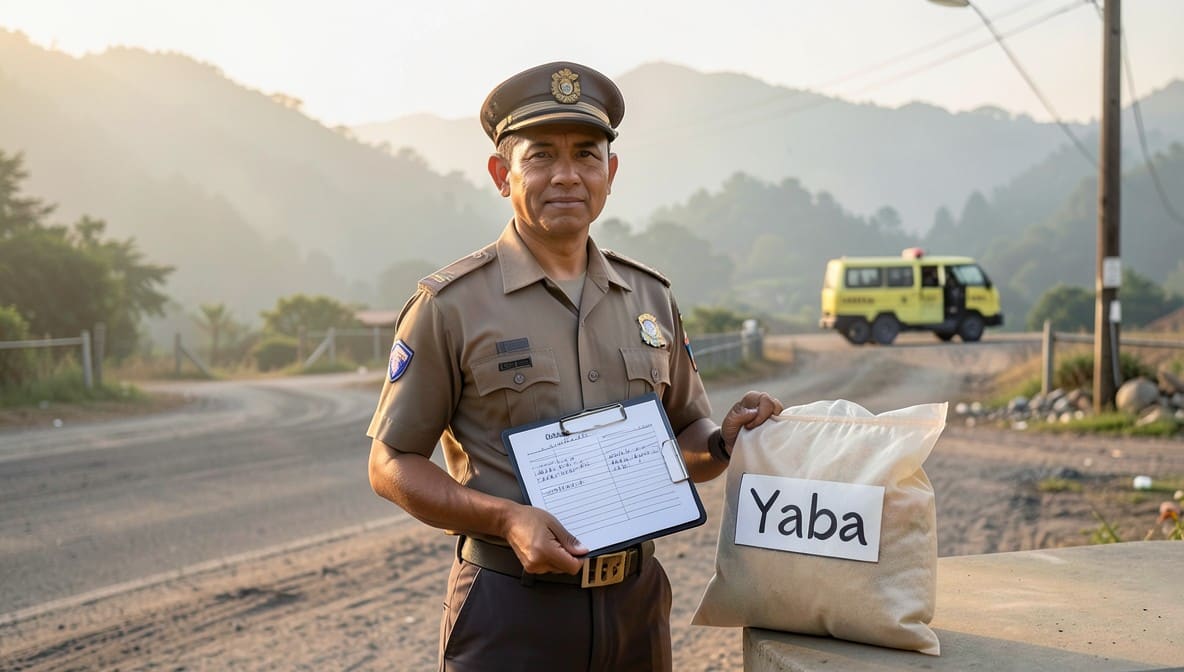
On 03.09.2025, police intercepted a vehicle bearing registration No. ML-05-R-6828 at Sawlad Madanriting, Shillong. A search revealed 30 small black packets containing 200 orange-colored tablets each, totaling 595.07 grams of a substance suspected to be Yaba (amphetamine), classified as a contraband under the NDPS Act. The driver and another occupant were detained. The vehicle belonged to Smti. Griti Arengh, owner of Hotel City Palace Inn in Lapalang, Shillong. The petitioner, Labius Arengh, a relative of the owner, visited the site to inquire about the vehicle’s detention. Upon arrival, he was immediately arrested without any prior explanation.
Key Facts
- The seized substance weighed 595.07 grams, constituting a commercial quantity under Section 22(c) of the NDPS Act, 1985.
- The punishment for possession of commercial quantity under Section 22(c) is a minimum of 10 years’ imprisonment, extendable to 20 years, with fine.
- The petitioner was arrested on 03.09.2025, but the Arrest Memo falsely recorded the time of arrest as 10:30 AM on 04.09.2025.
- The petitioner was presented with a pre-printed "Intimation of Grounds of Arrest" form.
- Two checkboxes were ticked on the form: (1) "committed a cognizable offence in the presence of the police officer" and (2) "suspected of being involved in a cognizable offence punishable with imprisonment for a term that may be less than seven years or which may extend to seven years."
- The form did not mention the NDPS Act, the nature of the substance, the quantity seized, or the actual punishment of 10 - 20 years.
- The petitioner signed the form under duress and without comprehension of its legal implications.
- The charge sheet was filed on 15.11.2025 under ANTF PS Case No. 10(9)2025, naming the petitioner as an accused.
- The petitioner remains in custody at District Prison & Correctional Home, Shillong.
Procedural History
- 03.09.2025: Arrest of petitioner without disclosure of grounds.
- 04.09.2025: Arrest Memo erroneously dated and timed.
- 15.11.2025: Charge sheet filed by Investigating Officer.
- 23.03.2026: Petitioner filed Bail Application (BA No. 9 of 2026) before the Meghalaya High Court.
The Parties' Positions
For the Petitioner: Argued that the arrest violated Article 22(1) of the Constitution and Section 52(1) of the NDPS Act. The checklist format failed to convey the actual offence or its mandatory minimum punishment of 10 years. Relied on Prabir Purkayastha v. State (NCT of Delhi), Vihaan Kumar v. State of Haryana, and Mihir Rajesh Shah v. State of Maharashtra to assert that non-compliance vitiates arrest and entitles the accused to bail regardless of statutory restrictions.
For the Respondent: Contended that the petitioner signed the arrest form, thereby acknowledging the grounds. Cited Ronaldo Khongwir v. State of Meghalaya and State of Karnataka v. Sri Darshan to argue that signature on the form constitutes compliance. Emphasized the seriousness of the offence (commercial quantity) and the filing of the charge sheet as indicators of legitimacy.
Relief Sought
The petitioner sought immediate release on bail, arguing that his arrest was unconstitutional and that the filing of the charge sheet could not cure the initial violation of Article 22(1).
The Legal Issue
Whether an arrest under the NDPS Act is constitutionally valid under Article 22(1) when the grounds of arrest are communicated via a generic checklist that misstates the punishment as seven years or less, while the actual offence attracts a mandatory minimum of ten years’ imprisonment?
Arguments Presented
For the Petitioner
The petitioner’s counsel argued that Article 22(1) mandates effective communication of the grounds of arrest in a language the accused understands, with sufficient factual clarity. The checklist format used here was deliberately vague, omitting the NDPS Act, the nature of the substance, the quantity seized, and the actual punishment of 10 - 20 years. Reliance was placed on Vihaan Kumar v. State of Haryana (2025) 5 SCC 799, where the Supreme Court held that non-compliance with Article 22(1) vitiates the arrest and entitles the accused to bail even if a charge sheet has been filed. The counsel emphasized that the petitioner was misled into believing he was suspected of a minor offence, which prejudiced his ability to prepare a defence.
For the Respondent
The Additional Advocate General contended that the petitioner’s signature on the arrest form constituted acknowledgment of the grounds. The form, though standardized, was legally sufficient under Ronaldo Khongwir v. State of Meghalaya. The seriousness of the offence - commercial quantity of Yaba - justified the arrest. The filing of the charge sheet, which clearly stated the charges under Section 22(c), rendered any prior procedural lapse irrelevant. The respondent argued that bail should be denied due to the gravity of the offence and risk of tampering.
The Court's Analysis
The Court undertook a rigorous analysis of Article 22(1) and its interpretation by the Supreme Court in Vihaan Kumar v. State of Haryana. It held that the constitutional mandate is not satisfied by merely obtaining a signature on a pre-printed form containing generic, boilerplate language. The Court observed:
"The requirement of informing a person arrested of grounds of arrest is a mandatory requirement of Article 22(1); the information of the grounds of arrest must be provided to the arrested person in such a manner that sufficient knowledge of the basic facts constituting the grounds is imparted and communicated to the arrested person effectively in the language which he understands."
The Court noted that the arrest form presented to the petitioner indicated a maximum punishment of seven years, whereas the actual offence under Section 22(c) of the NDPS Act carries a mandatory minimum of ten years. This discrepancy was not incidental - it was materially misleading. The petitioner, a layperson with no legal training, was led to believe he was suspected of a relatively minor offence. This misrepresentation directly prejudiced his ability to understand the gravity of the charges, consult counsel meaningfully, or apply for anticipatory bail.
The Court rejected the respondent’s reliance on Ronaldo Khongwir, distinguishing it on the basis that in that case, the accused was informed of the actual statutory provision and punishment. Here, the form was deliberately non-specific. The Court further held that the filing of the charge sheet does not validate an unconstitutional arrest, as per Prabir Purkayastha. The Court emphasized:
"Non-compliance with Article 22(1) will be a violation of the fundamental rights of the accused guaranteed by the said Article. Moreover, it will amount to a violation of the right to personal liberty guaranteed by Article 21 of the Constitution."
The Court also condemned the use of the generic arrest form as contrary to law, directing authorities to replace it with a format that requires specific, case-specific details to be handwritten or typed.
The Verdict
The petitioner succeeded. The Meghalaya High Court granted bail, setting aside the unlawful arrest. The petitioner is directed to be released on bail subject to the following conditions: (i) he shall not abscond or tamper with evidence or witnesses; (ii) he shall attend court as and when called; (iii) he shall not leave the jurisdiction of Meghalaya without permission; and (iv) he shall execute a personal bond of ₹50,000 with one surety of like amount. The Court explicitly held that statutory restrictions on bail under the NDPS Act do not override the constitutional right to liberty when Article 22(1) is violated.
What This Means For Similar Cases
Grounds of Arrest Must Be Specific, Not Generic
- Practitioners must challenge arrests where the grounds form uses checkboxes without specifying the statute, substance, quantity, or exact punishment.
- A signature on a pre-printed form does not equate to informed consent if the content is misleading.
NDPS Bail Jurisprudence Has Shifted
- Even in commercial quantity cases, violation of Article 22(1) mandates bail, irrespective of Section 37 NDPS Act restrictions.
- Courts must now treat procedural violations under Article 22(1) as independent grounds for release, not mere technicalities.
Police Forms Must Be Reformed
- All police stations must replace standardized arrest checklists with individualized, handwritten or typed grounds of arrest.
- Failure to comply may result in quashing of arrest, suppression of evidence, or contempt proceedings against officers.
Burden of Proof Lies with the State
- The state must prove compliance with Article 22(1) by producing contemporaneous records - not post-facto justifications.
- Courts must scrutinize arrest forms at the earliest opportunity, even before framing of charges.