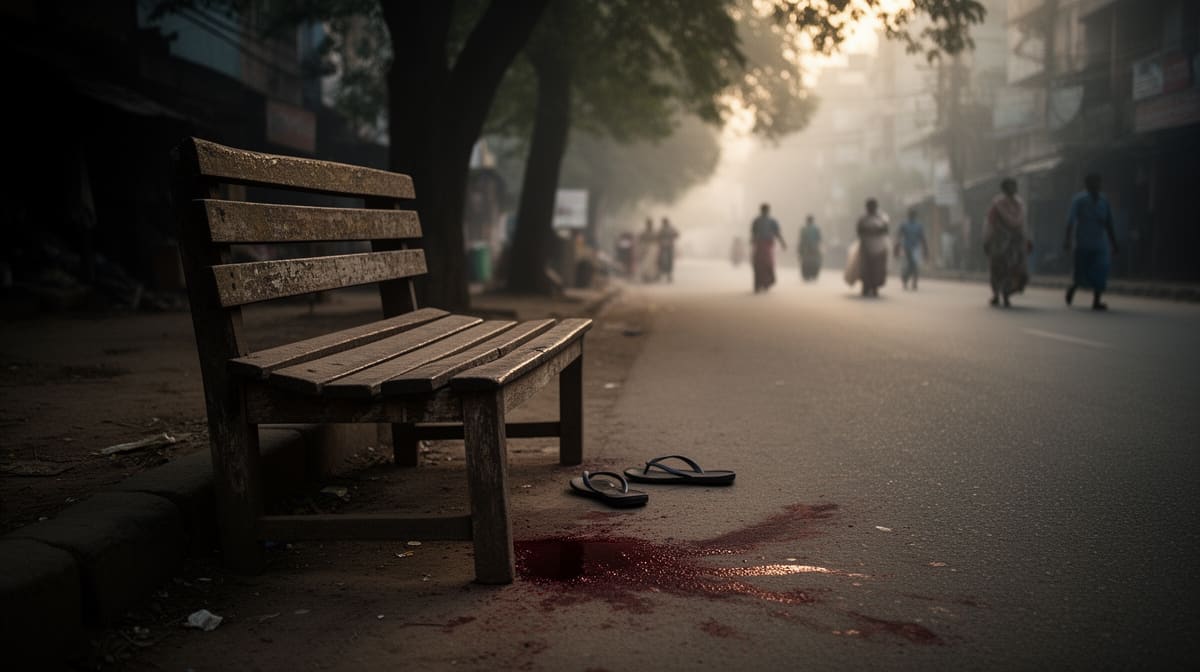
The Meghalaya High Court's recent judgment in Tngen Muruh v. State of Meghalaya underscores the critical importance of corroboration between eye-witness testimony and medical evidence in murder trials. The Court set aside a conviction under Section 302 IPC after finding irreconcilable contradictions, unexplained delays, and absence of material evidence, reinforcing that benefit of doubt must prevail when prosecution fails to establish guilt beyond reasonable doubt.
Background & Facts
The Dispute
The case arises from an FIR dated 16.11.1991 lodged by PW-3, alleging that five individuals - including the three appellants (Tngen Muruh, Tne Muruh, and She Muruh) - murdered Sada Muruh at Lumkhudung village, West Jaintia Hills District, Meghalaya. The FIR stated that the victim was assaulted at around 4:00 PM, and his father and another witness (Dal Ryngkhlem) were also assaulted. The FIR was initially lodged at Ummulong Beat House and later forwarded to Jowai Police Station, where it was registered as Jowai P.S. Case No. 166(9)/1991 under Sections 302/34 IPC.
Key Facts
- Date of Incident: 16.11.1991 (alleged time: 4:00 PM or 6:30-7:00 PM, as per conflicting witness statements)
- Victim: Sada Muruh, aged 23 years, allegedly murdered by five accused persons
- FIR Registration: 18.11.1991 (two days after the incident)
- Investigating Officer: SI Q.E. Pala
- Charge-Sheet: Filed on 14.05.1994 under Sections 302/34 IPC before the Additional Deputy Commissioner, Jowai
- Charge Framing: 22.05.1995
- Trial Commencement: PW-1 examined on 06.08.2001 (over six years after charge framing); PW-2 examined on 03.02.2022 (over twenty years after PW-1’s examination)
- Prosecution Witnesses: Only 4 out of 10 listed witnesses examined; statements of three deceased witnesses recorded to note their demise
- Accused Deaths: Two accused (Kamai Muruh and Lowit Muruh) passed away in 2018, leaving only the three appellants to face trial
- Conviction: Trial Court convicted all three appellants under Section 302 IPC by Judgment dated 04.08.2023 and sentenced them to life imprisonment by Order dated 07.08.2023
Procedural History
- 16.11.1991: Alleged murder of Sada Muruh
- 18.11.1991: FIR registered at Jowai Police Station
- 14.05.1994: Charge-sheet filed before Additional Deputy Commissioner, Jowai
- 22.05.1995: Charge framed against all five accused
- 06.08.2001: Examination of PW-1
- 03.02.2022: Examination of PW-2 (after a gap of over twenty years)
- 22.06.2023: Statements of appellants recorded under Section 313 CrPC
- 04.08.2023: Trial Court convicts appellants under Section 302 IPC
- 07.08.2023: Trial Court sentences appellants to life imprisonment
- 2023: Appellants file Criminal Appeal No. 33 of 2023 before Meghalaya High Court
- 29.04.2026: High Court allows the appeal and acquits the appellants
The Parties' Positions
For the Appellants
- Absence of Eye-Witness Names in FIR: The FIR did not mention PW-1 and PW-3 as eye-witnesses, casting doubt on their credibility.
- Contradictory Witness Statements: PW-1 and PW-3 gave conflicting accounts of whether the victim was dragged or chased to the place of occurrence.
- No Weapon Recovery: The prosecution failed to recover any weapon or sharp instrument from the appellants or the crime scene, despite the post-mortem report indicating injuries caused by a sharp object.
- Unclear Time of Death: The post-mortem report did not specify the time of death, making it impossible to link the appellants to the crime.
- Delay in FIR Registration: The FIR was registered two days after the incident, and the delay was unexplained.
- Absence of Motive: The prosecution failed to establish any motive for the appellants to commit the crime.
- Medical Evidence Contradictions: The injuries described in the post-mortem report (broken head, lacerated chin, incised wound) could not have been caused by bare hands, yet the eye-witnesses did not mention any weapon.
For the Respondent (State)
- Reliable Eye-Witness Testimony: PW-1 and PW-3, though related to the deceased, gave consistent and corroborated accounts of the assault.
- No Requirement for All Witnesses to Be Named in FIR: Non-mention of eye-witnesses in the FIR does not render the prosecution case fragile.
- Medical Evidence Supports Prosecution: PW-4 (the doctor) confirmed fatal injuries consistent with assault, and his testimony remained unshaken.
- No Motive Required for Conviction: The absence of motive does not weaken the prosecution case when direct evidence is available.
- Section 313 CrPC Statements: The appellants failed to offer any explanation for the incriminating circumstances put to them, strengthening the prosecution’s case.
The Legal Issue
The central question was whether conviction under Section 302 IPC can be sustained when:
- Eye-witness accounts are contradictory and uncorroborated by medical evidence;
- The prosecution fails to establish the time of death or the manner of injuries;
- There is an unexplained delay in FIR registration and investigation;
- No weapon or material evidence is recovered to link the appellants to the crime.
Arguments Presented
For the Appellants
- Contradictory Evidence: PW-1 and PW-3 gave conflicting versions of the incident, and their testimony was not supported by medical evidence.
- No Weapon Recovery: The post-mortem report indicated injuries caused by a sharp instrument, but no weapon was recovered from the appellants or the crime scene.
- Unclear Time of Death: The post-mortem report did not specify the time of death, making it impossible to link the appellants to the crime.
- Delay in FIR Registration: The FIR was registered two days after the incident, and the delay was unexplained.
- Absence of Motive: The prosecution failed to establish any motive for the crime.
- Medical Evidence Contradictions: The injuries described (incised wound, broken head) could not have been caused by bare hands, yet the eye-witnesses did not mention any weapon.
- Reliance on Precedents: Cited Ram Narain v. State of Punjab (AIR 1975 SC 1727), Kartarey v. State of U.P. (AIR 1976 SC 76), and Ishwar Singh v. State of U.P. (AIR 1976 SC 2423) to argue that direct evidence must be supported by expert evidence.
For the Respondent
- Reliable Eye-Witness Testimony: PW-1 and PW-3, though related to the deceased, gave consistent and corroborated accounts of the assault.
- No Requirement for All Witnesses to Be Named in FIR: Non-mention of eye-witnesses in the FIR does not weaken the prosecution case.
- Medical Evidence Supports Prosecution: PW-4 confirmed fatal injuries, and his testimony remained unshaken.
- No Motive Required: The absence of motive does not weaken the prosecution case when direct evidence is available.
- Section 313 CrPC Statements: The appellants failed to explain the incriminating circumstances put to them, strengthening the prosecution’s case.
- Reliance on Precedents: Cited Harbans Kaur v. State of Haryana (2005) 9 SCC 195, Yogesh Singh v. Mahabeer Singh (2017) 11 SCC 195, State of M.P. v. Mansingh (2003) 10 SCC 414, Rizwan Khan v. State of Chhattisgarh (2020) 9 SCC 627, and Ramnaresh v. State of Chhattisgarh (2012) 4 SCC 257 to argue that related witnesses can be relied upon and non-examination of witnesses does not fatalize the prosecution case.
The Court's Analysis
The High Court conducted a detailed scrutiny of the prosecution evidence, focusing on the inconsistencies between eye-witness accounts and medical evidence, the unexplained delay in investigation, and the absence of material evidence. Key observations included:
"Perusal of the evidence of PW-1 and PW-3 makes it clear that no weapon was used in the commission of the crime as none of them made any statement that the accused persons assaulted the victim with any instrument or weapon. PW-3 stated that the accused persons continued assaulting till the victim died on the spot, but he did not explicitly tell as to what kind of injury was caused to the victim which resulted in death."
The Court noted that:
- No Weapon Mentioned: Neither PW-1 nor PW-3 stated that the appellants used any weapon or sharp instrument.
- Unclear Cause of Death: The eye-witnesses did not explain how they concluded the victim died on the spot (no pulse/breathe check mentioned).
- No Bleeding Evidence: The witnesses did not mention seeing the victim bleed, despite the post-mortem report describing severe injuries.
- Delay in FIR Registration: The FIR was registered two days after the incident, and the police arrived at the crime scene only on 18.11.1991.
- Religious Practice Delay: The victim’s family followed ‘Niamtre’, a religious practice prohibiting the removal of the dead body in cases of unnatural death, leading to the body lying at the crime scene for two days.
- Medical Evidence Contradictions: The post-mortem report described injuries (incised wound, broken head) that could not have been caused by bare hands, yet no weapon was recovered or mentioned by witnesses.
- No Bloodstains at Crime Scene: The prosecution failed to establish the presence of bloodstains at the crime scene or on the victim’s clothes.
- No Time of Death: The post-mortem report did not specify the time of death, making it impossible to link the appellants to the crime.
The Court relied on Supreme Court precedents to emphasize that:
- Direct evidence must be supported by expert evidence (Ram Narain v. State of Punjab).
- Medical evidence must corroborate eye-witness accounts (Kartarey v. State of U.P., Ishwar Singh v. State of U.P.).
- Related witnesses can be relied upon if their testimony is consistent and unshaken (Harbans Kaur v. State of Haryana, Yogesh Singh v. Mahabeer Singh).
- Non-examination of witnesses does not fatalize the prosecution case if other evidence is sufficient (State of M.P. v. Mansingh, Rizwan Khan v. State of Chhattisgarh).
However, the Court found that the prosecution failed to discharge its burden of proving the case beyond reasonable doubt. The irreconcilable contradictions between the eye-witness accounts and the medical evidence, the unexplained delay in investigation, and the absence of material evidence (weapon, bloodstains, time of death) created serious doubts about the prosecution’s version.
The Verdict
The Meghalaya High Court allowed the appeal, setting aside the Judgment and Order dated 04.08.2023 and the Order of Sentence dated 07.08.2023 passed by the Sessions Judge, West Jaintia Hills, Jowai in Sessions Case No. 99 of 2015. The appellants were acquitted of all charges and directed to be set at liberty forthwith if not required in any other case.
What This Means For Similar Cases
Medical Evidence Must Corroborate Eye-Witness Accounts
- Expert Opinion is Crucial: In cases involving fatal injuries, the prosecution must ensure that medical evidence (post-mortem report, doctor’s testimony) corroborates the eye-witness accounts. Failure to do so can lead to acquittal, as seen in this case.
- Weapon Recovery and Injury Analysis: If the post-mortem report indicates injuries caused by a sharp instrument, the prosecution must recover the weapon or prove its use through forensic evidence. Mere eye-witness testimony without material evidence is insufficient.
Unexplained Delays Fatalize Prosecution Case
- FIR Registration Delay: Any delay in registering the FIR must be adequately explained. In this case, the two-day delay without explanation raised serious doubts.
- Investigation Lapses: Delays in visiting the crime scene, collecting evidence, or recording witness statements can weaken the prosecution’s case. Courts may view such lapses as destructive of the prosecution’s credibility.
Benefit of Doubt Must Prevail in Absence of Conclusive Evidence
- Burden of Proof: The prosecution must prove guilt beyond reasonable doubt. If material evidence is missing (weapon, bloodstains, time of death), contradictions exist, or delays are unexplained, the benefit of doubt must go to the accused.
- Related Witnesses: While related witnesses can be relied upon, their testimony must be scrutinized carefully for consistency and corroboration with other evidence. Mere relationship does not discredit their testimony, but contradictions or omissions can.
Key Takeaways for Practitioners
- Always Demand Medical Corroboration: In murder trials, ensure the post-mortem report aligns with eye-witness accounts. If injuries suggest a weapon, demand its recovery or forensic proof of its use.
- Challenge Unexplained Delays: If the FIR or investigation is delayed, argue that the delay raises doubts about the prosecution’s version.
- Highlight Contradictions: If eye-witness accounts contradict medical evidence, emphasize the inconsistency to seek acquittal.
- Scrutinize Section 313 CrPC Statements: If the accused fails to explain incriminating circumstances, argue that this strengthens the prosecution’s case. Conversely, if the accused offers no explanation, use this to challenge the prosecution’s burden of proof.