The Meghalaya High Court has clarified that traditional village councils like the Dorbar Shnong, even if historically recognized, do not automatically qualify as legally constituted Village Courts under statutory frameworks. This ruling restores a title suit dismissed on the erroneous premise that such bodies had adjudicatory jurisdiction, reinforcing the primacy of statutory definitions over customary practice in civil litigation.
Background & Facts
The Dispute
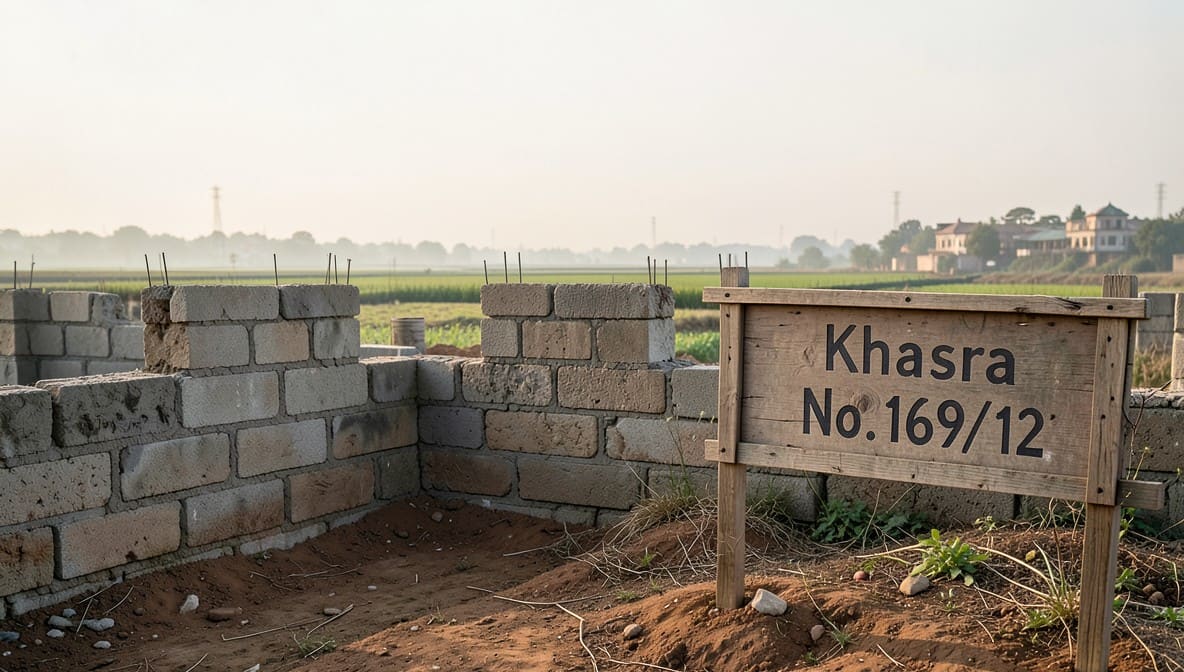
The appellant, Ka Antinora Rynghang, filed Title Suit No. 13 of 2024 before the District Council Court at Nongpoh seeking declaration of her right, title, and interest over a specific parcel of land in Mawbri Village, Raid Iapngar, Khyrim Syiemship, Ri-Bhoi District. She also filed Misc. Case No. 22 of 2024 for an interim injunction. The Trial Court granted an ad interim injunction in her favor on 15.03.2024.
The respondents, comprising the Dorbar Shnong Mawbri and its officials, challenged this injunction by filing Misc. Civil Appeal No. 3 of 2024 before the Lower Appellate Court. That court, by order dated 02.05.2024, stayed the injunction. The order contained an incorrect date, which was allegedly corrected without any formal application, prompting the appellant to file Civil Revision Petition No. 10 of 2024 before the High Court.
The High Court, by order dated 09.07.2024, set aside the stay and directed the Lower Appellate Court to hear the appeal afresh and maintain status quo over the land.
Key Facts
- The land in dispute is located in Mawbri Village, Raid Iapngar, Khyrim Syiemship, Ri-Bhoi District
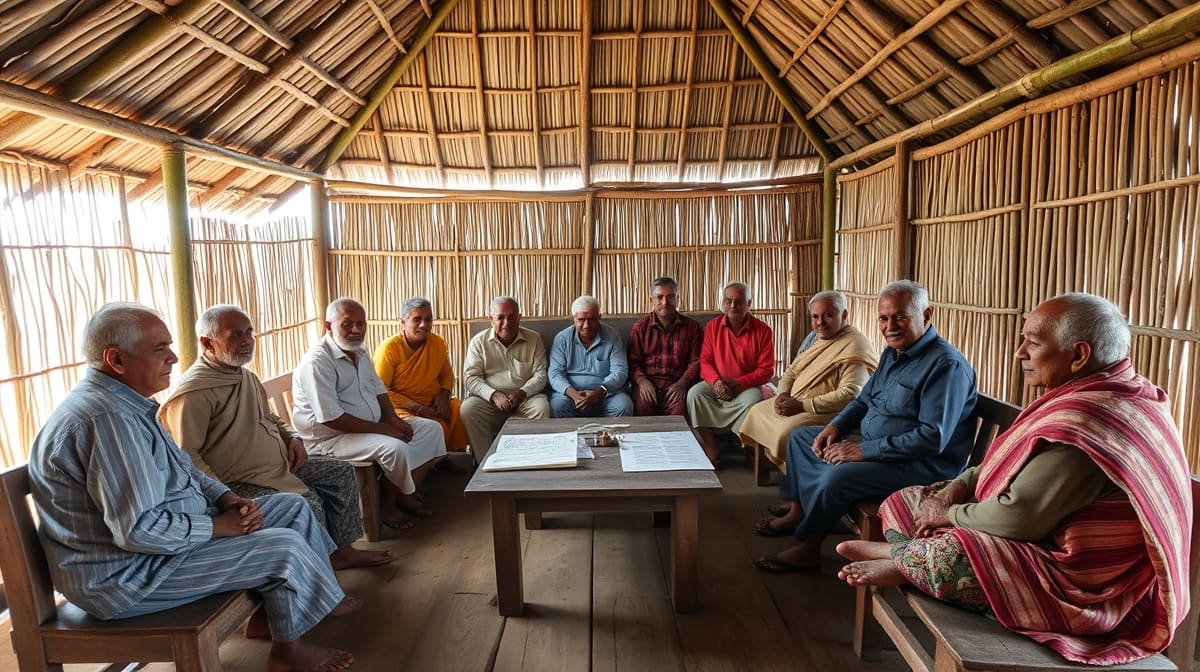
- The respondents claimed ownership based on a prior order passed by the Dorbar Shnong Mawbri in Mukotduma No. 3 of 2023, dated 09.10.2023
- The Dorbar Shnong Mawbri’s order dated 09.10.2023 declared the respondents as owners and directed the appellant to file an appeal under Rule 18 of the United Khasi Jaintia Hills Autonomous District (Administration of Justice) Rules, 1953
- The appellant did not appeal that order but instead filed a fresh title suit
- On 02.09.2025, the appellant wrote to the Executive Committee, Khasi Hills Autonomous District Council (KHADC), seeking clarification on whether the Dorbar Shnong Mawbri was a duly constituted Village Court
- The KHADC replied on 08.09.2025, explicitly stating that the Dorbar Shnong Mawbri was not constituted as a Village Court under the 1953 Rules
Procedural History
- 15.03.2024: Trial Court granted ad interim injunction in favor of the appellant
- 02.05.2024: Lower Appellate Court stayed the injunction (with erroneous date)
- 09.07.2024: High Court disposed of CRP No. 10 of 2024, directing Lower Appellate Court to rehear the appeal and maintain status quo
- 06.08.2025: Lower Appellate Court allowed Misc. Civil Appeal No. 3 of 2024, dismissing the title suit on the ground that the Dorbar Shnong Mawbri had already adjudicated the matter
- 26.03.2026: Present appeal heard and decided by the High Court
The Parties' Positions
The appellant contended that the Dorbar Shnong Mawbri was not a legally recognized Village Court under the 1953 Rules and therefore its order could not bar a civil suit. She relied on the KHADC’s 08.09.2025 letter confirming this.
The respondents argued that the Dorbar Shnong Mawbri functioned as a traditional adjudicatory body and its order under Mukotduma No. 3 of 2023 was binding, making the title suit maintainable only if an appeal was first filed under Rule 18.
Relief Sought
The appellant sought setting aside of the Lower Appellate Court’s order dated 06.08.2025, restoration of Title Suit No. 13 of 2024, and continuation of the interim injunction pending final adjudication.
The Legal Issue
The central question was whether a Dorbar Shnong, even if functioning as a traditional dispute resolution body, qualifies as a duly constituted Village Court under the United Khasi Jaintia Hills Autonomous District (Administration of Justice) Rules, 1953, such that its prior adjudication bars a subsequent civil suit.
Arguments Presented
For the Appellant
The appellant’s counsel relied on the KHADC’s 08.09.2025 letter, which explicitly stated that the Dorbar Shnong Mawbri was not constituted as a Village Court under the 1953 Rules. She argued that the Lower Appellate Court erred in treating a non-statutory body’s order as res judicata. She further contended that the 1953 Rules require formal notification and constitution under Rule 3, which had not been fulfilled.
For the Respondent
The respondents’ counsel argued that the Dorbar Shnong Mawbri had historically functioned as a Village Court and its order dated 09.10.2023 was binding under customary law. They contended that the appellant’s failure to appeal under Rule 18 rendered the title suit barred, regardless of statutory formalities.
The Court's Analysis
The High Court acknowledged that while Dorbar Shnongs play a vital role in customary dispute resolution, their legal status must be determined by statutory provisions, not tradition alone. The Court emphasized that the United Khasi Jaintia Hills Autonomous District (Administration of Justice) Rules, 1953, define a Village Court under Rule 3, requiring formal constitution by notification.
"This Court cannot ignore this factual aspect, which has been brought on record before this Court by the appellant."
The Court noted that the Lower Appellate Court’s order dated 06.08.2025 was premised on the erroneous assumption that the Dorbar Shnong Mawbri was a duly constituted Village Court. The KHADC’s 08.09.2025 letter, though not available at the time of the impugned order, was placed before the High Court and was not disputed by either party.
The Court held that a prior order by a body not legally constituted as a Village Court cannot operate as res judicata or bar a civil suit under Section 11 of the Code of Civil Procedure. The doctrine of res judicata applies only where the prior adjudication is by a court of competent jurisdiction, which the Dorbar Shnong Mawbri was not under the 1953 Rules.
The Verdict
The appeal was allowed. The High Court set aside the order dated 06.08.2025 passed by the Lower Appellate Court in Misc. Civil Appeal No. 3 of 2024. The Title Suit No. 13 of 2024 pending before the Subordinate District Council Court at Nongpoh was restored to file and directed to proceed. The Court further directed that the status quo over the suit land be maintained until the injunction matter is finally decided. The records were directed to be transmitted back immediately.
What This Means For Similar Cases
Customary Bodies Do Not Automatically Have Judicial Authority
- Practitioners must verify whether any traditional body (Dorbar Shnong, Syiem Court, etc.) has been formally notified as a Village Court under the 1953 Rules before accepting its order as res judicata
- A mere history of dispute resolution does not confer statutory jurisdiction
- Any dismissal of a civil suit on the ground of prior adjudication by such a body must be challenged on jurisdictional grounds
Statutory Notification Is Essential for Jurisdiction
- The burden lies on the party claiming jurisdiction of a customary body to produce proof of formal constitution under Rule 3 of the 1953 Rules
- Letters from KHADC or other administrative authorities confirming non-constitution are admissible and decisive
- Courts must not presume jurisdiction based on tradition; statutory compliance is mandatory
Title Suits Remain Maintainable Against Customary Orders
- A title suit is not barred merely because a Dorbar Shnong has passed an order on land ownership
- The remedy under Rule 18 of the 1953 Rules is only available if the body is a duly constituted Village Court
- If the body lacks statutory status, the aggrieved party may directly approach the District Council Court without exhausting appellate remedies