The Meghalaya High Court set a significant precedent by allowing the quashing of a POCSO FIR where the parties were in a consensual relationship, married and had a child. The judgment clarifies the discretionary power under Section 528 of the Code of Criminal Procedure to dismiss proceedings in special statutes when informed consent is established, balancing statutory deterrence with social realities.
Background & Facts
The Dispute
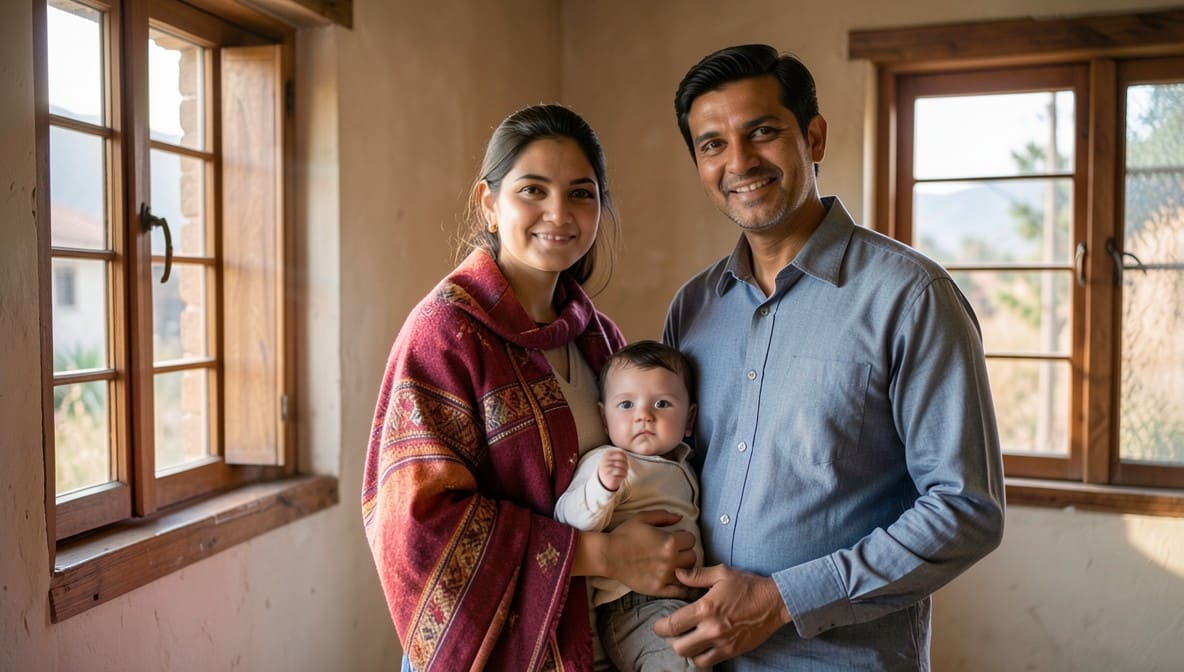
The petitioners, Tusharllang Sohshang (accused) and Miss XXX (survivor), sought the quashing of FIR No. 77(11) 2023 lodged at Nongstoin Police Station, West Khasi Hills, Meghalaya. The FIR alleged an offence punishable under Section 5(j)(ii) read with Section 6 of the POCSO Act. The petitioners contended that their relationship was consensual, they were married on 14.08.2026, and they have a two-year-old child.
Key Facts
- 22.08.2023: FIR No. 77(11) 2023 registered against petitioner No. 1.
- 14.08.2026: Petitioners married in a church ceremony.
- 04.08.2026: Court directed petitioners to appear before the Secretary, High Court Legal Services Committee for a report on informed consent.
- 13.08.2026: Report of the Secretary, High Court Legal Services Committee recorded.
- Petitioners are aged 22 (petitioner No. 1) and 19 (petitioner No. 2); child is two years old.
- Petitioners live in a house owned by petitioner No. 2’s mother; petitioner No. 1 earns about ₹300 per day; petitioner No. 2 has no income.
- Both petitioner No. 2 and respondent No. 2 (the complainant, a relative of petitioner No. 2) submitted affidavits stating no objection to quashing.
Procedural History
- 18.08.2026: Crl.Petn. No. 113 of 2026 filed; oral hearing (Serial No. 06, Daily List 2026:MLHC:901).
- 04.08.2026: Direction to appear before Secretary, High Court Legal Services Committee.
- 13.08.2026: Report from the Secretary taken on record.
- Reference: Shri Shalenbor Wahlang & Anr. v. State of Meghalaya & Anr., Crl.Petn. No. 92 of 2023, dated 10 April 2026, paragraphs 31-35, cited for the principle of quashing by consent.
Parties' Positions
- Petitioners: Assert that the relationship was consensual, marriage occurred, child exists, and both the survivor and the complainant have no objection to quashing.
- Respondent No. 2 (Complainant): Affidavit confirms no objection to quashing; explains that as an ASHA worker she lodged the FIR per protocol.
- State: No substantive opposition recorded; the matter proceeded on the basis of the parties’ consent and the report.
Relief Sought
The petitioners prayed for:
- Quashing of FIR No. 77(11) 2023.
- Quashing of Special POCSO Case No. 8 of 2026 pending before the Special Judge, Nongstoin.
- Directions to ensure that petitioner No. 2 and her child receive all applicable government scheme benefits.
- Any other relief the Court deems appropriate.
The Legal Issue
What is the correct legal standard for quashing a POCSO proceeding under Section 5(j)(ii) and Section 6 of the POCSO Act when the alleged victim consents, the parties are married, and a child has been born, and does Section 528 of the CrPC empower the Court to dismiss such a case despite the special nature of the statute?
Arguments Presented
For the Petitioners
- The petitioners relied on the principle that Section 528 CrPC permits quashing of criminal proceedings by consent of the parties, even where a special statute is involved, provided the consent is informed and not coerced.
- Cited Shri Shalenbor Wahlang & Anr. v. State of Meghalaya (2026) paragraphs 31-35, emphasizing that adolescent consensual relationships, marriage, and the welfare of the child justify discretion.
- Submitted the Secretary’s report confirming informed consent and the absence of any benefit claim under government schemes.
For the Respondents
- The complainant’s affidavit reiterated no objection to the quashing, effectively aligning with the petitioners.
- No substantive legal objection was raised against the application of Section 528 CrPC to a POCSO matter.
The Court's Analysis
The Court began by noting that the POCSO Act is a special statute aimed at protecting children, yet it is not immune from the discretionary jurisdiction of Section 528 CrPC. Referring to Shri Shalenbor Wahlang the Court observed that the ground realities of Meghalaya - high incidence of adolescent consensual relationships, early marriage, and the matrilineal system - necessitate a nuanced approach.
"Thus, from the aforesaid discussion, quashing of a POCSO case under Section 528 BNSS by consent, is permissible even if it is a special statute and there is no specific exclusion of any present law/custom."
The Court emphasized three conditions for exercising this discretion:
- Informed Consent - The victim must voluntarily affirm no objection, preferably through an affidavit, after being given an opportunity to reflect, as done by directing the petitioner before the Secretary, High Court Legal Services Committee.
- Social Context - Marriage or cohabitation recognized by the community, and the existence of a child, mitigate the punitive purpose of the statute.
- Welfare Considerations - The Court must ensure that the victim and child receive benefits under applicable schemes, thereby safeguarding their socio-economic rights.
Applying these criteria, the Court found that the petitioners satisfied the requirements: the survivor’s affidavit expressed no objection, the marriage on 14.08.2026 was documented, and a two-year-old child existed. Moreover, the Secretary’s report confirmed that the consent was informed and that the parties were not receiving any scheme benefits, prompting the Court to order immediate provision of such benefits.
Consequently, the Court exercised its power under Section 528 CrPC to quash both the FIR and the pending Special POCSO case, while directing the relevant authorities to implement welfare schemes and to keep any compensation in a fixed deposit until the child reaches 25 years, with quarterly interest.
The Verdict
The petition was allowed. The FIR bearing Case No. 77(11) 2023 and the Special POCSO Case No. 8 of 2026 were quashed and set aside. The DCPO and the Secretary, DLSA, West Khasi Hills District were directed to extend all applicable central and state welfare schemes to petitioner No. 2 and her child. Any compensation awarded under the Meghalaya Victim Compensation Scheme must be kept in a Fixed Deposit until the child attains 25 years, with quarterly interest payable. Compliance is to be recorded on 15 October 2026.
What This Means For Similar Cases
Consent as a Ground for Quashing
- Practitioners must obtain a written affidavit from the alleged victim confirming no objection before seeking quash.
- The affidavit should be preceded by an opportunity for the victim to reflect, preferably after a report from a neutral authority.
Social Customs and Welfare Schemes Matter
- Courts will consider matrilineal customs, early marriage, and the existence of a child as mitigating factors.
- Lawyers should proactively identify and request the application of relevant welfare schemes to strengthen the consent argument.
Procedural Safeguards Are Essential
-
A report from the High Court Legal Services Committee or an equivalent body is now effectively mandatory to establish informed consent.
-
Ensure that all statutory benefits are listed and that any compensation is earmarked for the child’s future, with clear interest and deposit instructions.
-
Obtain affidavit and committee report before filing the petition.
-
Cite Shri Shalenbor Wahlang for the discretionary power under Section 528.
-
Highlight the child’s welfare and applicable schemes in the prayer.