Madhya Pradesh High Court judgments

1273 Madhya Pradesh High Court judgments explained in plain English: what was decided, the law applied and why it matters. Page 11 of 54.

EPF Act Section 11 | Lien on Auction Proceeds Renders Bank Account Attachment Otiose: MP HC Gwalior
Case Law Analysis
|Madhya Pradesh High Court

EPF Act Section 11 | Lien on Auction Proceeds Renders Bank Account Attachment Otiose: MP HC Gwalior

The Madhya Pradesh High Court has ruled that once the EPFO secures a lien on the auction proceeds of a defaulting company’s assets, attaching the personal bank account of a director is disproportionate and legally unsustainable. This clarifies that recovery under the EPF Act must respect the principle of proportionality, protecting individuals from dual enforcement when the debt is already secured.

FR 53, 54, 54A & 54B | Suspension Ends in Warning Entitles Full Pay & Increment: MP HC Gwalior
Case Law Analysis
|Madhya Pradesh High Court

FR 53, 54, 54A & 54B | Suspension Ends in Warning Entitles Full Pay & Increment: MP HC Gwalior

When disciplinary proceedings against a government employee conclude with only a warning - not a punishment - the suspension period must be treated as duty time, entitling the employee to full pay, allowances, and incremental benefits. This ruling reinforces that warnings under the M.P. Civil Services Rules are administrative censure, not penal sanctions, and unjustified suspension cannot deprive employees of earned entitlements.

Census 2027 Duties Override Routine Transfers | GAD Circular Mandates Non-Disturbance Until Feb 2027: MP HC Gwalior
|Madhya Pradesh High Court

Census 2027 Duties Override Routine Transfers | GAD Circular Mandates Non-Disturbance Until Feb 2027: MP HC Gwalior

The Madhya Pradesh High Court has ruled that employees engaged in Census 2027 duties cannot be transferred mid-task, as per GAD’s binding circular prioritizing national data collection. This sets a precedent for public servants involved in time-bound constitutional exercises, ensuring continuity of critical state functions over routine administrative convenience.

Section 498A IPC | Prima Facie Case Established Against Father-in-Law Only Upon Specific Allegations of Dowry Cruelty: MP HC
Case Law Analysis
|Madhya Pradesh High Court

Section 498A IPC | Prima Facie Case Established Against Father-in-Law Only Upon Specific Allegations of Dowry Cruelty: MP HC

The Madhya Pradesh High Court clarified that a father-in-law cannot be charged under Section 498A IPC merely by virtue of his relationship; specific, direct allegations of dowry demand or cruelty must be pleaded against him personally. This ruling reinforces the Arnesh Kumar principle that blanket imputation of guilt to in-laws without individualized conduct is legally unsustainable, protecting innocent relatives from frivolous prosecution.

Hindu Succession Act Section 15(1)(b) | Plaintiff’s Death During Pendency Transfers Title to Brother’s Sons, Not Defendants’ Claim: MP HC Gwalior
Case Law Analysis
|Madhya Pradesh High Court

Hindu Succession Act Section 15(1)(b) | Plaintiff’s Death During Pendency Transfers Title to Brother’s Sons, Not Defendants’ Claim: MP HC Gwalior

When a plaintiff in a title dispute dies during appeal, their legal heirs under Section 15(1)(b) of the Hindu Succession Act inherit the property - even if defendants previously claimed ownership through revenue mutations. This ruling closes a loophole where heirs of a deceased brother could inherit property not directly bequeathed, affirming statutory succession over informal transfers.

Section 26 MP Public Trust Act | Registrar May Directly Approach Court When No Trustee Exists to Prevent Trust Collapse : MP HC
Case Law Analysis
|Madhya Pradesh High Court

Section 26 MP Public Trust Act | Registrar May Directly Approach Court When No Trustee Exists to Prevent Trust Collapse : MP HC

The Madhya Pradesh High Court has ruled that when a public trust is left without any functioning trustee, the Registrar of Public Trusts may directly file a reference before the court under Section 26 - bypassing redundant administrative reviews. This empowers the Registrar to act swiftly to protect trust assets and uphold public interest, setting a vital precedent for trust governance in cases of managerial vacuum.

Digital Evaluation of Answer Sheets | No Right to Revaluation When Dual-Check & Anonymization Ensure Fairness: MP HC
Case Law Analysis
|Madhya Pradesh High Court

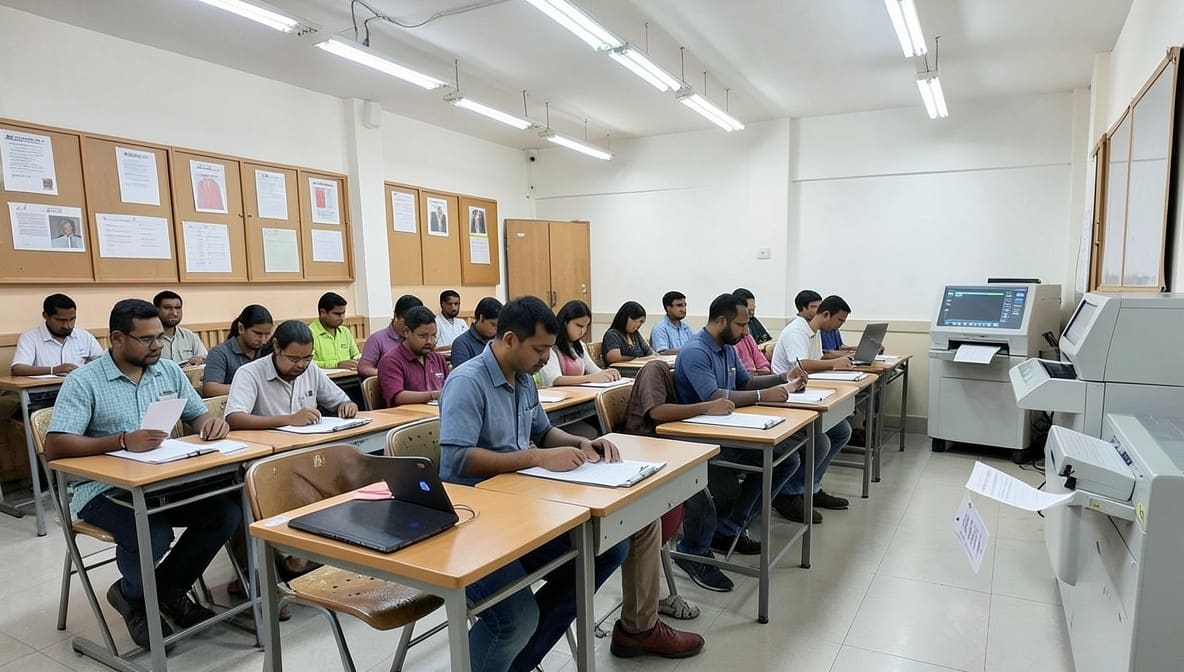
Digital Evaluation of Answer Sheets | No Right to Revaluation When Dual-Check & Anonymization Ensure Fairness: MP HC

The Madhya Pradesh High Court ruled that when answer sheets are digitally evaluated through dual valuation and anonymized scanning, students have no legal right to revaluation - even if they dispute their marks. This affirms that procedural fairness under natural justice is satisfied by systemic safeguards, not individual rechecking requests, setting a precedent for state universities nationwide.

Section 430(1) BNSS | Bail and Sentence Suspension Granted in Corruption Conviction Despite Gravity of Offence, Citing Clean Record and Delay in Appeal : MP HC Jabalpur
Case Law Analysis
|Madhya Pradesh High Court

Section 430(1) BNSS | Bail and Sentence Suspension Granted in Corruption Conviction Despite Gravity of Offence, Citing Clean Record and Delay in Appeal : MP HC Jabalpur

The Madhya Pradesh High Court suspended the remaining jail term and granted bail to a convicted official under Section 430(1) BNSS, holding that a clean criminal record, no misuse of prior liberty, and undue delay in hearing the appeal outweigh the seriousness of the corruption charge. This reinforces that procedural fairness and delay can justify bail even in heinous statutory offences, setting a precedent for convicted public servants awaiting appellate review.

MTP Act Section 3(2)(b) | Rape Survivor’s Consent Alone Sufficient for Termination Beyond 20 Weeks Under Article 21: MP HC
Case Law Analysis
|Madhya Pradesh High Court

MTP Act Section 3(2)(b) | Rape Survivor’s Consent Alone Sufficient for Termination Beyond 20 Weeks Under Article 21: MP HC

The Madhya Pradesh High Court ruled that a rape survivor’s voluntary consent is decisive for medical termination of pregnancy, even beyond the 20-week limit, affirming bodily autonomy as a fundamental right under Article 21. The judgment removes procedural barriers for survivors seeking timely abortion, reinforcing that POCSO and MTP Act must be read harmoniously to protect dignity and health.

Police Regulations Regulation 214 | Enquiry Officer's Clarificatory Questions Do Not Vitiate Proceeding; Six-Month Limit Applies Only to Inquiry Initiation, Not Revision : MP HC Gwalior
Case Law Analysis
|Madhya Pradesh High Court

Police Regulations Regulation 214 | Enquiry Officer's Clarificatory Questions Do Not Vitiate Proceeding; Six-Month Limit Applies Only to Inquiry Initiation, Not Revision : MP HC Gwalior

The Madhya Pradesh High Court holds that an Enquiry Officer’s limited questions to clarify evidence do not amount to acting as prosecutor, preserving natural justice. Crucially, the six-month timeline under Police Regulations applies only to initiating the inquiry, not to filing or deciding a revision, giving authorities flexibility in imposing major punishment without procedural invalidity. This protects disciplinary proceedings from being derailed by technicalities while upholding fairness.

Article 21 | Temporary Bail Granted for Compound Fracture When Jail Medical Care Inadequate: MP HC Jabalpur
Case Law Analysis
|Madhya Pradesh High Court

Article 21 | Temporary Bail Granted for Compound Fracture When Jail Medical Care Inadequate: MP HC Jabalpur

The Madhya Pradesh High Court has ruled that a convict suffering from a compound fracture is entitled to temporary bail if jail medical facilities cannot provide adequate care, affirming the right to health under Article 21. This sets a clear precedent for non-commercial NDPS offenders with severe, verifiable medical emergencies, balancing custodial obligations with constitutional rights to life and dignity.

Land Acquisition | Revenue Records Mandate Irrigated Land Classification; Bifurcation Without Evidence Violates Fair Compensation : MP HC
|Madhya Pradesh High Court

Land Acquisition | Revenue Records Mandate Irrigated Land Classification; Bifurcation Without Evidence Violates Fair Compensation : MP HC

The Madhya Pradesh High Court ruled that when revenue records conclusively prove land is irrigated, authorities cannot arbitrarily split it into irrigated and unirrigated parcels for compensation purposes. This ensures fair market value under the Land Acquisition Act, protecting landowners from arbitrary valuation and reinforcing the primacy of official land records over administrative discretion.

Section 482 CrPC | High Court May Quash FIR in Non-Compoundable Offences Under BNSS Upon Voluntary Compromise: MP HC Gwalior
Case Law Analysis
|Madhya Pradesh High Court

Section 482 CrPC | High Court May Quash FIR in Non-Compoundable Offences Under BNSS Upon Voluntary Compromise: MP HC Gwalior

The Madhya Pradesh High Court has affirmed that even in non-compoundable offences under the Bharatiya Nagarik Suraksha Sanhita, a genuine, voluntary compromise between parties justifies quashing the FIR under Section 482 CrPC to prevent abuse of process. This reinforces judicial discretion to prioritize settlement over mechanical prosecution, impacting victims, accused, and prosecutors in serious criminal matters where reconciliation is feasible.

Order XXI Rule 97 CPC | Pendente Lite Transferee May Assert Title via Proved Will to Claim Inherited Share in Execution: MP HC Gwalior
Case Law Analysis
|Madhya Pradesh High Court

Order XXI Rule 97 CPC | Pendente Lite Transferee May Assert Title via Proved Will to Claim Inherited Share in Execution: MP HC Gwalior

A pendente lite transferee in execution proceedings can claim a share of property by invoking a proved will that bequeaths an interest to him, even if he was not a party to the original suit. This ruling clarifies that testamentary succession can override mere possession claims in execution, empowering heirs of deceased parties to assert rights through wills without initiating fresh title suits.

Regulation 70-A MP Police Regulations | Out-of-Turn Promotion Mandated for Life-Threatening Rescue Beyond Duty Call: MP HC Jabalpur
Case Law Analysis
|Madhya Pradesh High Court

Regulation 70-A MP Police Regulations | Out-of-Turn Promotion Mandated for Life-Threatening Rescue Beyond Duty Call: MP HC Jabalpur

The Madhya Pradesh High Court ruled that extraordinary gallantry in rescuing lives from a 200-foot gorge, even when outside official duty parameters, triggers mandatory out-of-turn promotion under Regulation 70-A. This sets a precedent for recognizing non-combat bravery as equivalent to wartime valor in police service promotions, affecting thousands of state police personnel eligible for similar recognition.

Article 21 | Excessive Bail Bond Imposed During Prolonged Trial Stay Violates Right to Liberty: MP HC
Case Law Analysis
|Madhya Pradesh High Court

Article 21 | Excessive Bail Bond Imposed During Prolonged Trial Stay Violates Right to Liberty: MP HC

The Madhya Pradesh High Court held that imposing an unaffordable bail bond while the trial remains stalled for over two years amounts to unconstitutional detention, violating the right to life and personal liberty under Article 21. This ruling sets a critical precedent for courts to reassess bail conditions when procedural delays render them effectively punitive, especially for economically vulnerable accused persons.

Section 389 CrPC | Temporary Bail for Pregnant Convict Due to Inadequate Jail Medical Facilities : MP HC
Case Law Analysis
|Madhya Pradesh High Court

Section 389 CrPC | Temporary Bail for Pregnant Convict Due to Inadequate Jail Medical Facilities : MP HC

The Madhya Pradesh High Court suspended a seven-year sentence for a pregnant woman convicted under Section 304(1) IPC, granting four months of temporary bail because jail hospitals lack surgical infrastructure for childbirth and continuous care. This ruling reinforces that humanitarian grounds rooted in constitutional rights under Article 21 can override punitive timelines when state facilities fail to meet basic medical needs during pregnancy.

Section 4(2) RDB Act | Temporary Charge of DRT Officer Validates Alternative Remedy, Bars Writ Petition : MP HC
Case Law Analysis
|Madhya Pradesh High Court

Section 4(2) RDB Act | Temporary Charge of DRT Officer Validates Alternative Remedy, Bars Writ Petition : MP HC

The Madhya Pradesh High Court has ruled that a temporary administrative assignment of the Presiding Officer of DRT Ahmedabad to oversee DRT Jabalpur constitutes an efficacious alternative remedy, rendering writ jurisdiction under Article 226 inapplicable. This sets a critical precedent for borrowers and banks facing delays due to judicial vacancies, affirming that functional tribunals-even under temporary arrangements-must be exhausted before approaching high courts.

Sanction for Prosecution & FIR Registration | Courts Cannot Compel Competent Authority Under CrPC/BNSS: MP HC
|Madhya Pradesh High Court

Sanction for Prosecution & FIR Registration | Courts Cannot Compel Competent Authority Under CrPC/BNSS: MP HC

The Madhya Pradesh High Court has held that neither the grant of sanction for prosecution nor the registration of an FIR can be mandated by courts, as these are discretionary functions entrusted to statutory authorities under CrPC and BNSS. This reinforces that alternative remedies like Section 175 BNSS petitions are sufficient, preserving the separation of powers and insulating prosecutorial discretion from judicial overreach.

Article 21 | Right to Live Together Outside Marriage Affirmed for Majors Despite Below-Marriageable Age: MP HC
Case Law Analysis
|Madhya Pradesh High Court

Article 21 | Right to Live Together Outside Marriage Affirmed for Majors Despite Below-Marriageable Age: MP HC

The Madhya Pradesh High Court has ruled that two adults, even if below the legal marriageable age, have a fundamental right under Article 21 to cohabit consensually without state or familial interference. This reinforces that personal liberty and autonomy in intimate relationships supersede age-based marital restrictions, extending protection to couples facing familial threats.

Section 295(3) Municipal Corporation Act | Silence Beyond 30 Days Constitutes Deemed Sanction for Construction : MP HC
Case Law Analysis
|Madhya Pradesh High Court

Section 295(3) Municipal Corporation Act | Silence Beyond 30 Days Constitutes Deemed Sanction for Construction : MP HC

The Madhya Pradesh High Court has ruled that if a municipal corporation fails to reject a building plan application within 30 days, the approval is deemed granted under Section 295(3). This protects property owners from arbitrary demolition orders and imposes a clear duty on civic bodies to act promptly, reinforcing administrative accountability in urban development.

Medical Exemption & Natural Justice in Bank Transfers | Single Mother with Mental Health Condition Entitled to Reconsideration Under Rotation Policy: MP HC
Case Law Analysis
|Madhya Pradesh High Court

Medical Exemption & Natural Justice in Bank Transfers | Single Mother with Mental Health Condition Entitled to Reconsideration Under Rotation Policy: MP HC

The Madhya Pradesh High Court has directed Bank of India to reconsider the transfer of a single mother suffering from documented mental health issues, holding that administrative policies must accommodate medical hardship under the doctrine of natural justice. This ruling sets a precedent for financial sector employees seeking exemption from mandatory rotations based on health and caregiving responsibilities, reinforcing that procedural fairness overrides rigid policy enforcement.

Right to Hearing in Administrative Transfers | Govt. Employee with Cancer Entitled to Reasoned Decision Before Relocation: MP HC
Case Law Analysis
|Madhya Pradesh High Court

Right to Hearing in Administrative Transfers | Govt. Employee with Cancer Entitled to Reasoned Decision Before Relocation: MP HC

The Madhya Pradesh High Court has ruled that government employees facing adverse transfers must be given a meaningful opportunity to present their medical and personal circumstances before any order is passed. This reinforces that natural justice isn't procedural formality-it's a substantive safeguard for vulnerable public servants, especially when health conditions are involved.