The Madhya Pradesh High Court dismissed a writ petition seeking interim protection against coercive action, holding that the temporary charge arrangement for the Debt Recovery Tribunal (DRT), Jabalpur, by the Presiding Officer of DRT Ahmedabad, provides an efficacious alternative remedy under the Recovery of Debts and Bankruptcy Act, 1993 and SARFAESI Act. The judgment reaffirms that writ courts cannot grant interim relief when parties are relegated to another forum.
Background & Facts
The Dispute
The petitioners, borrowers aggrieved by actions under the Securitisation and Reconstruction of Financial Assets and Enforcement of Security Interest Act, 2002 (SARFAESI Act), filed a writ petition under Article 226 of the Constitution of India seeking interim protection against coercive measures, including possession of secured assets. The dispute arose from proceedings initiated by Jana Small Finance Bank Ltd (respondent No.1) before the Debt Recovery Tribunal (DRT), Jabalpur, where the petitioners had filed a securitization application challenging the bank’s actions.
Key Facts
- The petitioners alleged that the DRT, Jabalpur, was non-functional due to the vacancy of the Presiding Officer, leaving them without an efficacious remedy.
- The petitioners sought status quo on the properties in question and quashing of orders dated 26.03.2026 (passed by the ADM, Indore) and 07.04.2026 (issued by the Tahsildar, Sanwer, Indore).
- The Department of Financial Services, Union of India, issued an order on 04.06.2026, assigning the additional charge of Presiding Officer, DRT Jabalpur, to the Presiding Officer of DRT No.2, Ahmedabad, effective immediately for a period of six months or until a regular appointment.
Procedural History
- Date of Cause of Action: Proceedings under the SARFAESI Act initiated by the bank; securitization application filed by petitioners before DRT Jabalpur.
- 26.03.2026: Order passed by ADM, Indore, in Case No. 0361/B-121/2025-26.
- 07.04.2026: Notice issued by Tahsildar, Sanwer, Indore.
- 04.06.2026: Union of India issued order assigning additional charge of DRT Jabalpur to Presiding Officer, DRT Ahmedabad.
- 12.06.2026: Present writ petition (WP No. 20144 of 2026) filed before the Madhya Pradesh High Court, Indore Bench.
Relief Sought
The petitioners sought the following reliefs:
- (A) Direction to respondents to maintain status quo and refrain from coercive action regarding the properties until the decision on the securitization application by DRT Jabalpur.
- (B) Quashing of orders dated 26.03.2026 and 07.04.2026 until the decision on the securitization application.
- (C) Any other relief deemed fit by the Court, including costs.
The Parties' Positions
- Petitioners: Argued that the vacancy in DRT Jabalpur deprived them of an efficacious remedy, justifying the invocation of writ jurisdiction for interim relief.
- Respondent No.1 (Bank): Opposed the petition, contending that the Union of India’s order dated 04.06.2026 had already addressed the vacancy issue by assigning additional charge to the Presiding Officer of DRT Ahmedabad.
The Legal Issue
The central question before the Court was whether the writ petition under Article 226 could be entertained for interim relief when an alternative efficacious remedy exists, particularly in light of the temporary charge arrangement for DRT Jabalpur under Section 4(2) of the Recovery of Debts and Bankruptcy Act, 1993.
Arguments Presented
For the Petitioners
- The petitioners contended that the vacancy of the Presiding Officer at DRT Jabalpur rendered the forum non-functional, leaving them without any remedy.
- They argued that the interim relief sought was necessary to prevent irreparable harm pending adjudication of their securitization application.
For the Respondent (Bank)
- The respondent vehemently opposed the petition, submitting that the Union of India’s order dated 04.06.2026 had already resolved the vacancy issue by assigning the additional charge of DRT Jabalpur to the Presiding Officer of DRT Ahmedabad.
- It was further argued that the possession of the property had already been taken prior to the filing of the writ petition, rendering the plea for status quo infructuous.
The Court's Analysis
The Court examined the legal principle of alternative remedy and the scope of writ jurisdiction under Article 226, relying on the precedent set in Kalabharati Advertising v. Hemant Vimalnath Narichania & Ors (2010 (9) SCC 437). The Court observed:
"It is a settled legal proposition that the forum of the writ court cannot be used for the purpose of giving interim relief as the only and the final relief to any litigant. If the Court comes to the conclusion that the matter requires adjudication by some other appropriate forum and relegates the said party to that forum, it should not grant any interim relief in favour of such a litigant for an interregnum period till the said party approaches the alternative forum and obtains interim relief."
The Court cited several judgments to underscore this principle, including:
- State of Orissa v. Madan Gopal Rungta (AIR 1952 SC 12)
- Amarsarjit Singh v. State of Punjab (AIR 1962 SC 1305)
- State of Orissa v. Ram Chandra Dev (AIR 1964 SC 685)
- State of Bihar v. Rambalak Singh "Balak" (AIR 1966 SC 1441)
- Premier Automobiles Ltd. v. Kamlakar Shantaram Wadke (AIR 1975 SC 2238)
The Court held that the Union of India’s order dated 04.06.2026 effectively addressed the petitioners’ grievance by providing a functional forum for adjudication. The order detailed operational regulations to ensure uninterrupted access to justice, including:
- Filing and Registries: All applications (SAs, OAs, IAs) from Madhya Pradesh to be filed at the DRT Jabalpur registry via the e-DRT portal (cis.drt.gov.in).
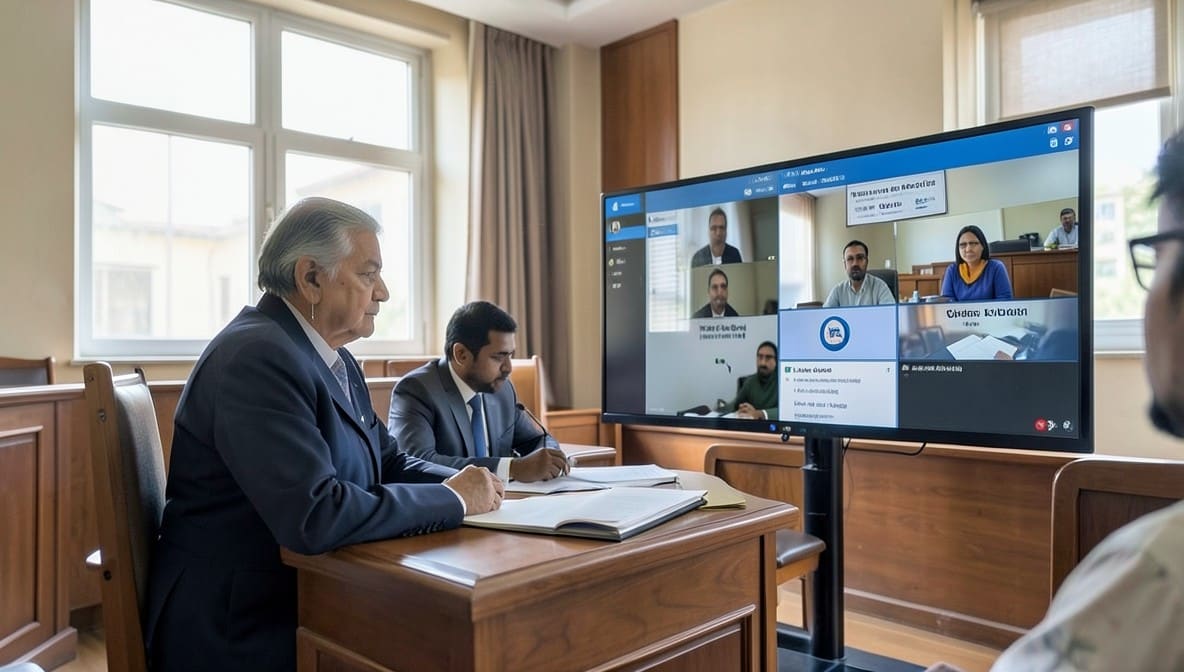
- Conduct of Hearings: Adjudication to be conducted via virtual or hybrid modes by the In-charge Presiding Officer.
- Urgent Matters: Coordination for same-day virtual listing in cases of statutory emergencies, such as imminent asset auctions.
The Court concluded that the temporary charge arrangement provided an efficacious alternative remedy, negating the need for interim relief under Article 226.
The Verdict
The writ petition was dismissed. The Court held that:
- The Union of India’s order dated 04.06.2026 assigning additional charge of DRT Jabalpur to the Presiding Officer of DRT Ahmedabad validated the existence of an alternative forum.
- The principle of alternative remedy precluded the grant of interim relief under Article 226 when the petitioners could approach the designated forum.
- No costs were awarded.
What This Means For Similar Cases
Writ Courts Cannot Bypass Alternative Remedies
- Practitioners must note that writ petitions under Article 226 cannot be used as a substitute for interim relief when an alternative efficacious remedy exists, even if the primary forum is temporarily non-functional.
- Courts will relegate parties to the designated forum if it is demonstrated to be functional, as in this case where the Union of India’s order provided a clear mechanism for adjudication.
Temporary Charge Arrangements Are Legally Valid
- The judgment affirms that temporary charge arrangements under Section 4(2) of the Recovery of Debts and Bankruptcy Act, 1993 are legally valid and sufficient to address judicial vacancies.
- Such arrangements, when backed by operational regulations (e.g., virtual hearings, e-filing), satisfy the requirement of an efficacious remedy, thereby barring the invocation of writ jurisdiction for interim relief.
Practical Implications for Litigants
- Borrowers/Litigants: Must exhaust remedies before the designated forum (e.g., DRT) before approaching writ courts. Mere inconvenience or delay does not justify bypassing alternative remedies.
- Banks/Financial Institutions: Can rely on this judgment to oppose writ petitions filed on grounds of judicial vacancy, provided the alternative forum is demonstrably functional.
- DRT Practitioners: Should familiarize themselves with virtual adjudication mechanisms and e-filing portals to ensure compliance with temporary charge arrangements.
This judgment reinforces the doctrine of exhaustion of remedies and underscores the limited scope of writ jurisdiction for interim relief when alternative forums are available.