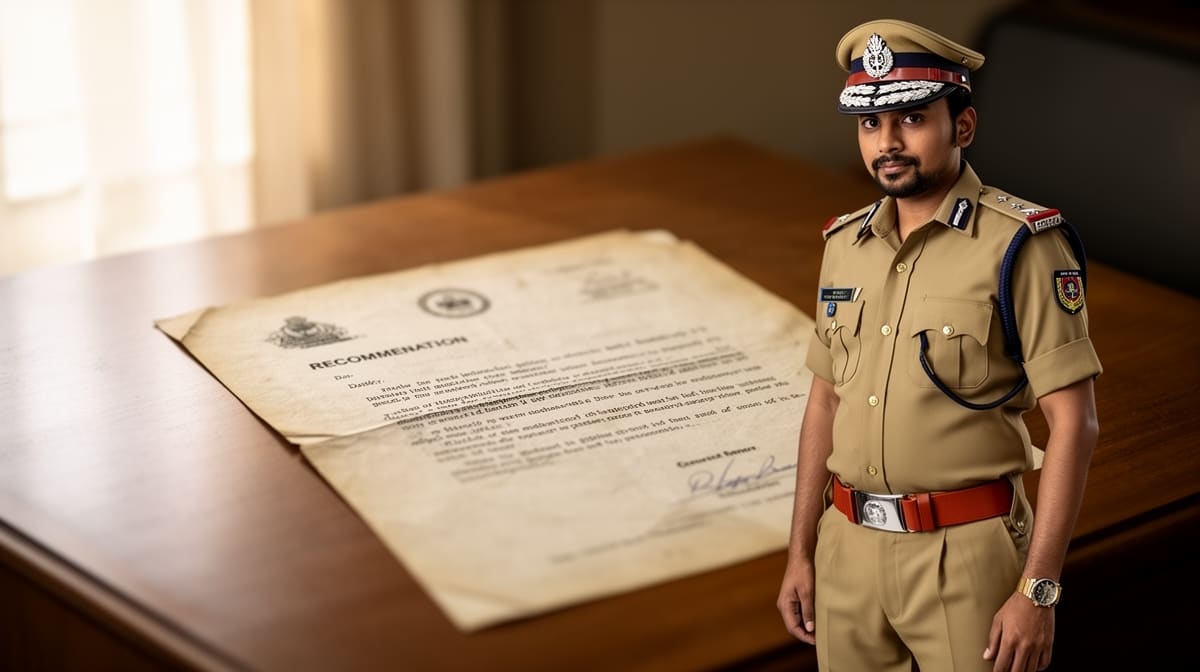
The Madhya Pradesh High Court has affirmed that acts of extraordinary bravery, such as risking one’s life to prevent a mass disaster, constitute clear grounds for out-of-turn promotion under Regulation 70-A of the Madhya Pradesh Police Regulations. The judgment rejects the State’s attempt to classify such conduct as routine duty and establishes that administrative bodies cannot approbate and reprobate the same act - recognizing it as brave enough for a cash reward while denying statutory promotion.
Background & Facts
The Dispute
The petitioner, Indramani Patel, a Sub-Inspector in the Madhya Pradesh Police, sought out-of-turn promotion to the rank of Inspector under Regulation 70-A of the Madhya Pradesh Police Regulations following an act of exceptional gallantry on the night of 22.04.2004. Despite unanimous recommendations from senior officers and recognition by local authorities, his claim was repeatedly rejected by the Screening Committee, culminating in the impugned order dated 28.12.2012.
Key Facts
- On the intervening night of 22.04.2004, a heavily loaded brick truck lost control near Bharughat, Indore, and dangled over a 200-foot-deep gorge.
- Professional crane operators refused to descend into the gorge due to extreme danger.
- The petitioner, then SHO at Police Station Simrol, voluntarily climbed down using a rope in darkness to rescue the driver and helper and secured the truck to a tree.
- His actions prevented the truck from falling onto a public road below, averting a potential mass casualty incident.
- On Republic Day 2005, the petitioner received a shield and certificate of appreciation from the Collector, Indore.
- The Narula Goods Transport Corporation, owner of the truck, formally commended his bravery to the Superintendent of Police, Indore.
- On 10.02.2005, the Superintendent of Police recommended out-of-turn promotion.
- On 15.02.2005, the Deputy Inspector General of Police forwarded the recommendation.
- On 20.02.2005, the Inspector General of Police referred the case to the DIG (Selection).
- On 31.03.2005, the Screening Committee rejected the promotion and awarded a cash reward of Rs. 5,000/-.
- The petitioner challenged this rejection in W.P. No. 2975 of 2011.
- On 24.07.2012, this Court quashed the rejection order as cryptic and non-speaking, directing the Screening Committee to reconsider the claim in light of paragraph 3 of the rejoinder filed in that petition.
- On 28.12.2012, the Screening Committee issued the impugned order, again rejecting promotion on the ground that the act was routine duty.
- The petitioner was later promoted to Inspector through the regular channel in 2015.
Procedural History
- 22.04.2004: Act of gallantry at Bharughat gorge.
- 10.02.2005: First recommendation for out-of-turn promotion by Superintendent of Police, Indore.
- 15.02.2005: Recommendation forwarded by Deputy Inspector General of Police.
- 20.02.2005: Case referred by Inspector General of Police to DIG (Selection).
- 31.03.2005: Screening Committee rejects promotion; awards Rs. 5,000/- cash reward.
- 2011: W.P. No. 2975 of 2011 filed challenging the rejection.
- 24.07.2012: High Court quashes 2005 rejection order and remands for fresh consideration.
- 28.12.2012: Screening Committee issues impugned order rejecting promotion again.
- 15.06.2017: Writ Petition No. 9716 of 2017 filed before the High Court.
- 15.05.2026: Arguments concluded.
- 15.06.2026: Judgment delivered.
The Parties' Positions
For the Petitioner
The petitioner contended that his act was not routine duty but an extraordinary act of gallantry that met the threshold of Regulation 70-A. He highlighted that senior officers who witnessed the event unanimously recommended promotion. He argued that the Screening Committee’s decision was arbitrary, perverse, and in violation of the Court’s earlier direction to consider paragraph 3 of the rejoinder, which cited instances of promotions granted for trivial achievements like typing competitions. He emphasized that the State could not simultaneously recognize the act as brave (by awarding cash) and dismiss it as routine (to deny promotion).
For the Respondent/State
The State contended that out-of-turn promotion is not a right but a discretionary privilege. It argued that police officers are duty-bound to protect life and property, and such acts, however commendable, do not automatically entitle an officer to promotion. It relied on State of Madhya Pradesh v. Sanjay Shukla to assert that courts must not interfere unless the committee’s decision is palpably arbitrary. It also argued that the petitioner’s reference to typing competition cases was an improper claim of parity.
Relief Sought
The petitioner sought:
- Quashing of the impugned order dated 28.12.2012.
- Grant of out-of-turn promotion to the rank of Inspector with retrospective effect from 10.02.2005.
- All consequential benefits including seniority fixation and future promotion eligibility.
- Exclusion of arrears of salary for the period he did not officiate as Inspector.
The Legal Issue
The central question was whether an act of extraordinary bravery - risking one’s life to rescue others from a life-threatening situation and preventing a potential mass disaster - constitutes "distinguished service" under Regulation 70-A of the Madhya Pradesh Police Regulations, and whether an administrative body can lawfully deny statutory promotion while simultaneously awarding a cash reward for the same act.
Arguments Presented
For the Petitioner
The petitioner relied on the statutory language of Regulation 70-A, which permits promotion for officers who "distinguished himself... in some other field of duty" or for "meritorious/distinguished services." He argued that the act met the threshold of conspicuous gallantry, as confirmed by multiple senior officers. He cited Mohd. Aftab Mir v. State of J&K to show that judicial intervention is warranted when ground-level recommending officers unanimously endorse promotion but higher authorities override them without objective reasoning. He further argued that the Screening Committee’s reliance on "routine duty" was legally unsustainable, especially given the extreme danger involved and the fact that professional rescue teams refused to act. He emphasized that the reference to typing competition cases was not a claim of parity but a demonstration of the Committee’s irrational standards.
For the Respondent/State
The State contended that Regulation 70-A is an exceptional provision requiring subjective satisfaction of the Screening Committee and the Director General of Police. It argued that the petitioner’s act, while commendable, was part of the ordinary duty of a police officer to protect life and property. It relied on State of Madhya Pradesh v. Sanjay Shukla to assert that courts must not substitute their opinion for that of the committee unless the decision is palpably arbitrary. It maintained that the cash reward was a sufficient recognition and that the Committee’s decision was within its discretion.
The Court's Analysis
The Court began by examining the text and intent of Regulation 70-A, which explicitly permits out-of-turn promotion for acts of "conspicuous gallantry," "exceptional merit," or "distinguished services." The Court held that the Regulation is not meant to reward routine duty but to incentivize conduct that goes beyond the ordinary expectations of police service.
"The very fact that professional crane operators refused to descend into the gorge highlights the extreme danger involved. The petitioner went beyond the call of duty and took a life-threatening decision and by suspending himself on a mere rope in darkness over 200 feet to secure an overloaded truck and saving it from falling is an act of extraordinary bravery."
The Court found that the Screening Committee’s conclusion that the act was "routine duty" was legally unsustainable. A routine response would have involved securing the perimeter and calling for specialized equipment - not descending a 200-foot gorge alone in darkness. The Court emphasized that the act was not merely rescue but prevention of a potential mass disaster.
The Court further held that the Committee’s decision was perverse because it approbated the act as brave enough for a cash reward while reprobating it as routine for promotion. This contradiction rendered the order legally invalid. The Court cited Mohd. Aftab Mir v. State of J&K to affirm that when senior officers who witnessed the event on the ground unanimously recommend promotion, and higher authorities override them without objective reasoning, judicial intervention is justified.
The Court also rejected the State’s reliance on Sanjay Shukla, noting that in that case, the committee had provided cogent reasons for denial. Here, the Committee failed to apply the statutory parameters at all. The Court further held that the reference to typing competition cases was not a claim of parity but a valid illustration of the Committee’s irrational standards, especially in light of the Court’s earlier remand direction.
The Court concluded that the Committee’s failure to follow the 2012 remand order constituted a clear case of non-application of mind and arbitrariness. The prolonged litigation since 2005, coupled with the fact that the petitioner had already been promoted through the regular channel, made further remand an exercise in futility.
The Verdict
The petitioner succeeded. The Court quashed the impugned order dated 28.12.2012. The respondents are directed to grant the petitioner out-of-turn promotion to the rank of Inspector notionally with retrospective effect from 10.02.2005, along with all consequential benefits including seniority fixation and eligibility for future promotions. The petitioner shall not be entitled to arrears of salary for the period he did not officiate as Inspector. His salary shall be notionally fixed from 10.02.2005 for the purpose of future increments. The respondents shall complete this exercise within 60 days of receipt of the certified copy of this order.
What This Means For Similar Cases
Bravery Must Be Objectively Assessed, Not Dismissed as Routine
- Practitioners must argue that any act involving disproportionate risk, exceptional initiative, or prevention of mass harm qualifies as "distinguished service" under special promotion regulations.
- Administrative bodies cannot reduce acts of life-saving gallantry to "routine duty" merely because the officer was on duty.
Cash Reward and Promotion Are Not Mutually Exclusive
- Granting a cash reward for bravery does not preclude eligibility for statutory promotion under special provisions.
- Denying promotion while awarding cash for the same act constitutes approbation and reprobation, rendering the decision perverse.
Judicial Review Applies to Arbitrariness, Not Merits
- Courts will not substitute their judgment on promotion eligibility but will intervene where the decision-making process is arbitrary, non-speaking, or ignores prior judicial directions.
- When multiple recommending officers concur and higher authorities override without reasoning, judicial interference is not only permissible but necessary.
Parity References Are Permissible to Expose Irrational Standards
- Citing other cases where trivial achievements led to promotion is not a claim of parity but a valid tool to demonstrate arbitrariness in decision-making.
- Such references are especially relevant when courts have directed authorities to reconsider based on comparative benchmarks.
Timeliness Matters in Administrative Justice
- Where litigation spans over two decades and the petitioner has already been promoted through regular channels, courts may directly grant relief to avoid further injustice.
- Repeated remands without compliance justify final adjudication by the court.