Income Tax Appellate Tribunal judgments

893 Income Tax Appellate Tribunal judgments explained in plain English: what was decided, the law applied and why it matters. Page 4 of 38.

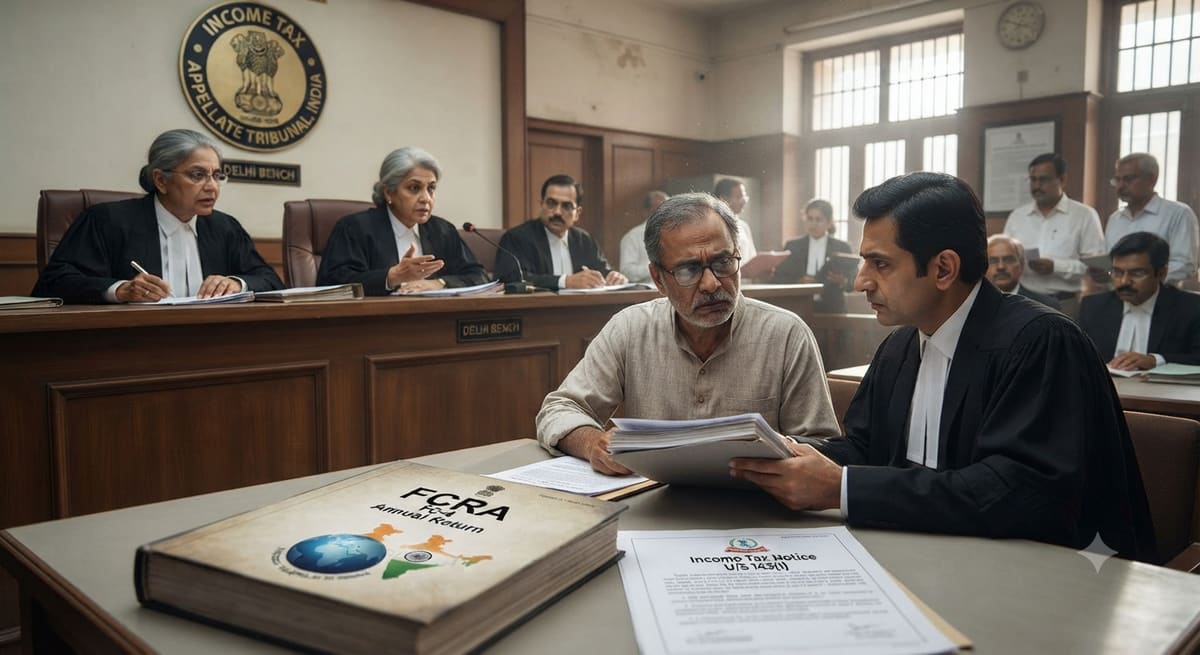
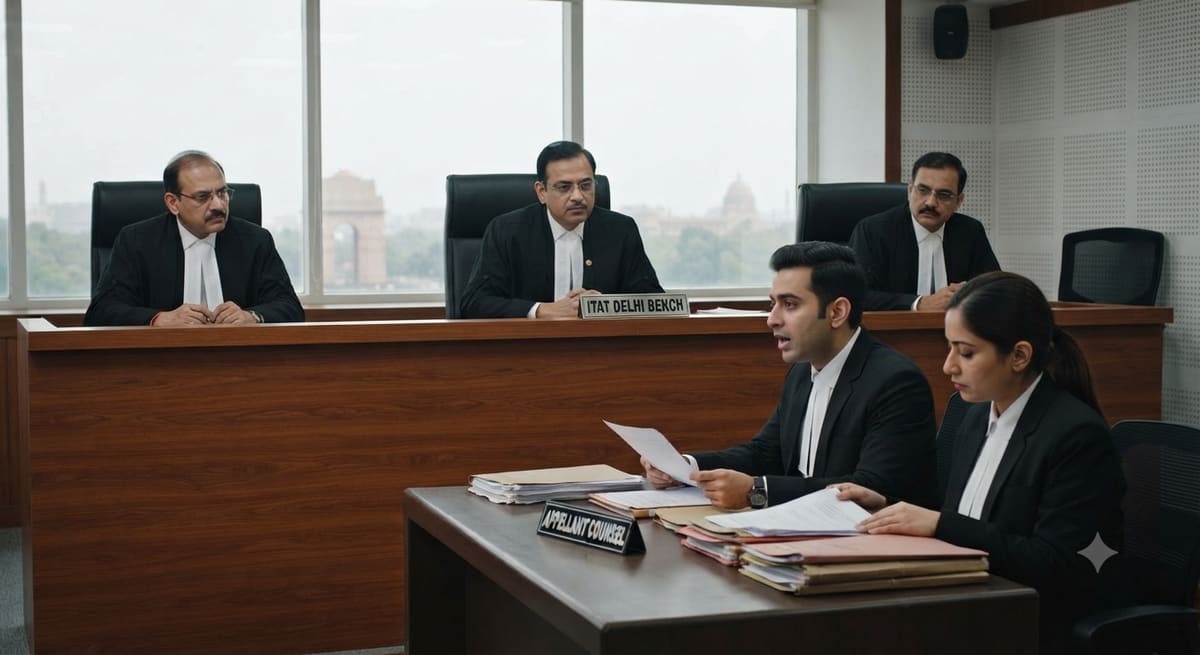
Section 250(6) IT Act | Ex-Parte Appellate Orders Without Reasoning Violate Natural Justice: ITAT Delhi
Case Law Analysis
|Income Tax Appellate Tribunal

Section 250(6) IT Act | Ex-Parte Appellate Orders Without Reasoning Violate Natural Justice: ITAT Delhi

The ITAT Delhi has held that dismissing a tax appeal ex-parte without addressing merits or providing reasons violates Section 250(6) of the Income Tax Act, which mandates reasoned appellate orders. This ruling reinforces that procedural fairness cannot be sacrificed even when notices are allegedly missed, and sets a precedent for taxpayers facing technical dismissals due to administrative or personal hardship.
Section 69A IT Act | Cash Withdrawals from Proprietorship Capital Account Within Week of Search Establish Source, Reversing Unexplained Income Addition : ITAT Delhi
Case Law Analysis
|Income Tax Appellate Tribunal

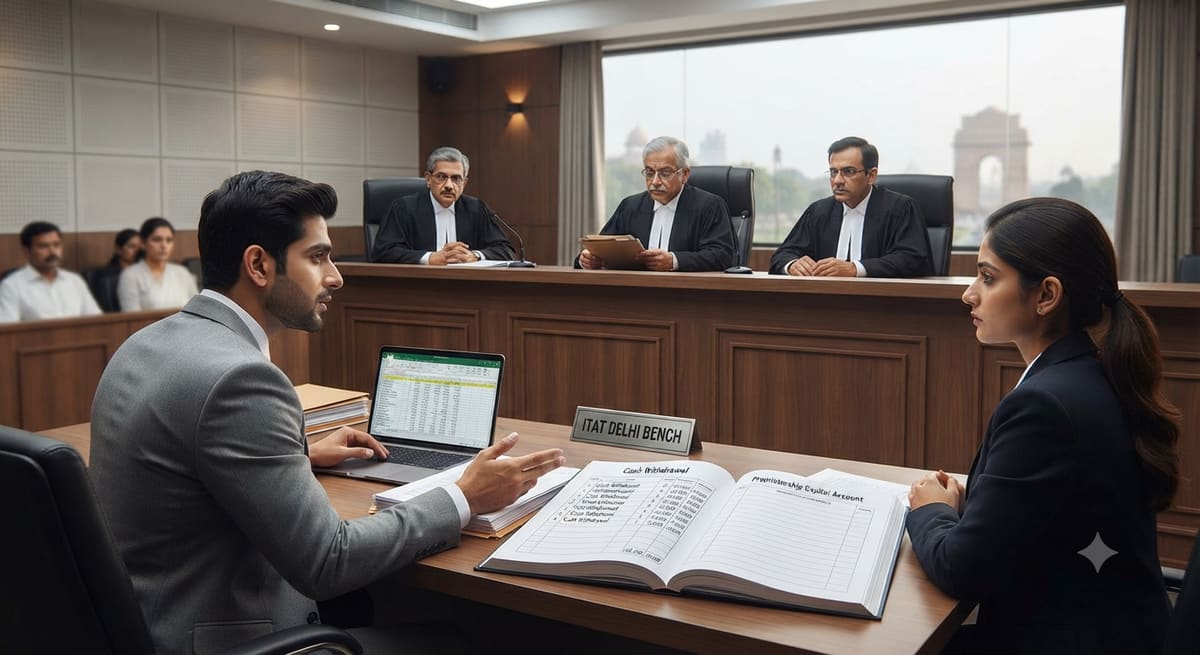
Section 69A IT Act | Cash Withdrawals from Proprietorship Capital Account Within Week of Search Establish Source, Reversing Unexplained Income Addition : ITAT Delhi

ITAT Delhi has ruled that cash withdrawn from a proprietor’s capital account shortly before a search can constitute a credible source for unexplained cash, overturning an addition of Rs. 9 lakh under Section 69A. This sets a critical precedent for small business owners facing scrutiny during income tax searches, affirming that ledger entries alone - even without vouchers - may suffice if consistent with business practice and timing.

Natural Justice Requires Hearing Before Rejecting Appeal for Delay | ITAT Raipur
Case Law Analysis
|Income Tax Appellate Tribunal

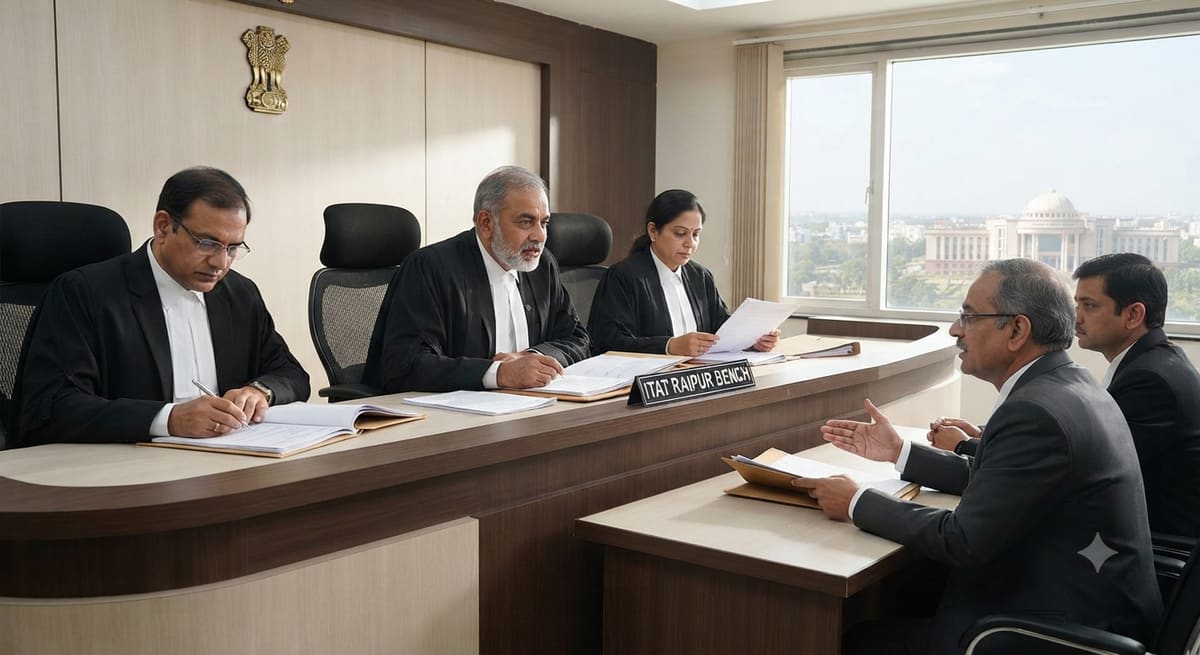
Natural Justice Requires Hearing Before Rejecting Appeal for Delay | ITAT Raipur

The ITAT Raipur bench ruled that dismissing an income tax appeal solely due to delay, without affording the appellant an opportunity to explain the reason, violates fundamental principles of natural justice. This sets a critical precedent for taxpayers and tax authorities alike: procedural fairness trumps technical non-compliance when substantive rights are at stake.

Section 12A(1)(ac)(iii) | Delay in Filing Form 10AB Cannot Override Substantive Charitable Intent: ITAT Agra
Case Law Analysis
|Income Tax Appellate Tribunal

Section 12A(1)(ac)(iii) | Delay in Filing Form 10AB Cannot Override Substantive Charitable Intent: ITAT Agra

The ITAT Agra bench ruled that technical non-compliance with Form 10AB filing deadlines cannot justify summary rejection of charitable trust registration when the entity’s core charitable purpose is clear and undisputed. This reinforces that natural justice and substantive fairness must prevail over rigid procedural defaults in tax exemption matters.

Section 68 Income Tax Act | Cash Deposits from Documented Sales Cannot Be Taxed as Unexplained Income If Books Are Maintained : ITAT Delhi
|Income Tax Appellate Tribunal

Section 68 Income Tax Act | Cash Deposits from Documented Sales Cannot Be Taxed as Unexplained Income If Books Are Maintained : ITAT Delhi

The ITAT Delhi has ruled that cash deposits made during demonetization, if fully supported by genuine, audited cash sales recorded in the books of account and already taxed as turnover, cannot be reclassified as unexplained income under Section 68. This protects businesses with transparent cash-based operations from double taxation and reinforces that proper bookkeeping is a valid defense against presumptive tax additions.

Section 153C IT Act | Reassessment Barred if Deemed Search Date Is on or After 01.04.2021: ITAT Delhi
Case Law Analysis
|Income Tax Appellate Tribunal

Section 153C IT Act | Reassessment Barred if Deemed Search Date Is on or After 01.04.2021: ITAT Delhi

The ITAT Delhi has ruled that reassessments under Section 153C cannot proceed if the deemed date of search falls on or after April 1, 2021, due to the Finance Act 2021 amendment that eliminated the power to initiate such proceedings beyond that date. This decision protects taxpayers from retrospective application of reassessment powers and clarifies the temporal limits of search-related assessments under the Income Tax Act.

Section 13(1)(c)(ii) IT Act | Refund of CSR Funds to Donor Does Not Constitute Direct/Indirect Benefit : ITAT Delhi
Case Law Analysis
|Income Tax Appellate Tribunal

Section 13(1)(c)(ii) IT Act | Refund of CSR Funds to Donor Does Not Constitute Direct/Indirect Benefit : ITAT Delhi

The ITAT Delhi has ruled that returning excess CSR funds to the original donor does not violate Section 13(1)(c)(ii) of the Income Tax Act, as it lacks the element of benefit to a prohibited person. This clarifies that charitable trusts can return unutilized corporate donations without forfeiting their tax exemption under Section 11, providing critical relief to NGOs managing CSR compliance.

Section 12AB Income Tax Act | Charitable Registration Cannot Be Restricted to Religious Activities Alone When Education/Medical Relief Are Core Objects : ITAT Delhi
|Income Tax Appellate Tribunal

Section 12AB Income Tax Act | Charitable Registration Cannot Be Restricted to Religious Activities Alone When Education/Medical Relief Are Core Objects : ITAT Delhi

The ITAT Delhi has ruled that an entity pursuing both religious propagation and active charitable work-such as education and medical relief for the underprivileged-cannot be registered solely as a religious body under Section 12AB. This decision ensures that entities fulfilling broader public welfare objectives are not unfairly confined to narrow religious classification, expanding access to tax exemptions for genuinely charitable initiatives.

DTAA Article 12(4)(b) | 'Make Available' Test Not Triggered Without Transfer and Retention of Technical Knowledge: ITAT Mumbai
Case Law Analysis
|Income Tax Appellate Tribunal

DTAA Article 12(4)(b) | 'Make Available' Test Not Triggered Without Transfer and Retention of Technical Knowledge: ITAT Mumbai

The ITAT Mumbai ruled that fees for research management support services do not constitute Fees for Technical Services under the India-Singapore DTAA unless the recipient receives and retains transferable technical knowledge. This clarifies the boundary between advisory support and taxable technical service, impacting multinational corporations structuring intra-group support arrangements in India.

Section 263 IT Act | Post-Assessment DVO Report Revealing Understated LTCG Justifies Revision to Protect Revenue : ITAT Ahmedabad
Case Law Analysis
|Income Tax Appellate Tribunal

Section 263 IT Act | Post-Assessment DVO Report Revealing Understated LTCG Justifies Revision to Protect Revenue : ITAT Ahmedabad

The ITAT Ahmedabad affirmed that the Principal Commissioner can invoke revisional powers under Section 263 even after assessment is complete, if a subsequent DVO report proves the original valuation was materially understated, leading to significant revenue loss. This sets a critical precedent for tax authorities to act on credible post-assessment evidence that exposes deliberate or negligent undervaluation of capital assets.

CAM Charges Are Service Payments, Not Rent | Section 194C Overrides Section 194I for TDS: ITAT Delhi
Case Law Analysis
|Income Tax Appellate Tribunal

CAM Charges Are Service Payments, Not Rent | Section 194C Overrides Section 194I for TDS: ITAT Delhi

The ITAT Delhi has ruled that Common Area Maintenance charges collected by mall owners from tenants constitute service payments under Section 194C, not rent under Section 194I, reversing the TDS demand at 10%. This clarifies a critical distinction for commercial property managers, mall operators, and deductors who must now apply 2% TDS on such service fees instead of 10% on rent, reducing compliance risk and tax liability.

Section 143(1) IT Act | CPC Cannot Treat FCRA Contributions as Undisclosed Income Without Scrutiny or Reconciliation: ITAT Delhi
Case Law Analysis
|Income Tax Appellate Tribunal

Section 143(1) IT Act | CPC Cannot Treat FCRA Contributions as Undisclosed Income Without Scrutiny or Reconciliation: ITAT Delhi

The ITAT Delhi has ruled that the CPC cannot unilaterally treat foreign contributions disclosed under FCRA as undisclosed income under Section 143(1), especially when the assessee has consistently reported them over multiple years. This sets a critical precedent for NGOs and non-profits, affirming that mechanical adjustments without verification violate procedural fairness and the principle of tax consistency.

Section 37(1) IT Act | Business Expenditure Cannot Be Disallowed Solely Due to Wrong Address or Disregard of KYC Documents: ITAT Delhi
Case Law Analysis
|Income Tax Appellate Tribunal

Section 37(1) IT Act | Business Expenditure Cannot Be Disallowed Solely Due to Wrong Address or Disregard of KYC Documents: ITAT Delhi

The ITAT Delhi ruled that disallowance of business expenditure under Section 37(1) is unlawful when the tax authority fails to verify a vendor at the correct address provided by the assessee and ignores supporting KYC, TDS, and payment records. This sets a critical precedent for taxpayers: documentary compliance must be evaluated on substance, not procedural missteps by revenue officials.

Section 263 IT Act | Cannot Be Invoked to Revise Assessment Where Reassessment Was Fully Examined and No Revenue Loss Proven : ITAT Surat
Case Law Analysis
|Income Tax Appellate Tribunal

Section 263 IT Act | Cannot Be Invoked to Revise Assessment Where Reassessment Was Fully Examined and No Revenue Loss Proven : ITAT Surat

The ITAT Surat has ruled that the Principal CIT cannot use Section 263 to reopen an assessment already concluded under Section 147 if the AO conducted a thorough scrutiny, accepted the assessee’s return, and no evidence of revenue loss was established. This reinforces that revisionary powers are not a substitute for proper reassessment and protects taxpayers from arbitrary re-litigation after full adjudication.

Natural Justice Requires Disclosure of Secret Evidence in 80G/12AB Proceedings | ITAT Delhi Quashes Cancellation of Trust Registration
Case Law Analysis
|Income Tax Appellate Tribunal

Natural Justice Requires Disclosure of Secret Evidence in 80G/12AB Proceedings | ITAT Delhi Quashes Cancellation of Trust Registration

The ITAT Delhi has ruled that tax authorities cannot cancel a charitable trust’s registration or deny 80G approval based on undisclosed field enquiry reports, violating the fundamental right to be heard. This sets a critical precedent for all trusts and NGOs facing tax scrutiny, ensuring procedural fairness in exemption decisions grounded in secret evidence.

Section 80G | Inadvertent Clause Selection in Form 10AB Is a Curable Procedural Defect: ITAT Pune
Case Law Analysis
|Income Tax Appellate Tribunal

Section 80G | Inadvertent Clause Selection in Form 10AB Is a Curable Procedural Defect: ITAT Pune

The ITAT Pune has ruled that a mistaken selection of clause in Form 10AB under Section 80G-such as filing under clause (ii) instead of (iii)-does not invalidate the application if the error is inadvertent. This sets a vital precedent for charitable trusts and NGOs, ensuring administrative oversights don't derail tax exemptions when substance and intent are intact.

Condonation of Delay | Service of Notice at Outdated Address Despite Portal Updates Constitutes Sufficient Cause: ITAT Delhi
Case Law Analysis
|Income Tax Appellate Tribunal

Condonation of Delay | Service of Notice at Outdated Address Despite Portal Updates Constitutes Sufficient Cause: ITAT Delhi

The ITAT Delhi has ruled that sending tax notices to an outdated address, even when the assessee updated their details on the Income Tax Portal and Form 35, amounts to sufficient cause for condoning delay in filing appeals. This sets a critical precedent for taxpayers with mobility or health constraints, reinforcing that procedural fairness must override technical non-compliance when the tax department fails to use verified digital records.

Section 249(3) IT Act | Delay in First Appeal Condoned for Widow Caring for Seriously Ill Daughter on Substantial Justice Grounds : ITAT Agra
Case Law Analysis
|Income Tax Appellate Tribunal

Section 249(3) IT Act | Delay in First Appeal Condoned for Widow Caring for Seriously Ill Daughter on Substantial Justice Grounds : ITAT Agra

The ITAT Agra bench condoned a 59-day delay in filing an appeal before the CIT(A), holding that personal hardship-specifically, a widow’s sole responsibility for her daughter’s prolonged medical care-constitutes sufficient cause under Section 249(3). The ruling reinforces that technical limitation bars cannot override substantive justice in tax appeals, especially when the appellant faces extraordinary personal circumstances with no mala fide intent.

Section 153C ITA | Jurisdiction Hinges on Date of AO's Satisfaction Note, Not Search or Handover Date: ITAT Delhi
Case Law Analysis
|Income Tax Appellate Tribunal

Section 153C ITA | Jurisdiction Hinges on Date of AO's Satisfaction Note, Not Search or Handover Date: ITAT Delhi

For assessments under Section 153C, the Income Tax Appellate Tribunal Delhi ruled that the assessing officer’s date of satisfaction - not the search date or handover of seized material - determines jurisdictional validity. This clarifies a critical procedural gap for post-2021 searches where handover records are missing, protecting assessees from invalid proceedings based on administrative delays.

Section 270A IT Act | Mere TDS Credit Mismatch Without Intent Constitutes Underreporting, Not Misreporting: ITAT Ahmedabad
Case Law Analysis
|Income Tax Appellate Tribunal

Section 270A IT Act | Mere TDS Credit Mismatch Without Intent Constitutes Underreporting, Not Misreporting: ITAT Ahmedabad

The ITAT Ahmedabad ruled that discrepancies between Form 26AS TDS credits and declared income, without evidence of intentional concealment, amount to underreporting - not misreporting - under Section 270A. This reduces penalty exposure from 200% to 50%, offering critical relief to businesses with clerical or documentation gaps in commission reporting.

Section 250 IT Act | Dismissing Tax Appeal Without Hearing Despite Adjournment Request Violates Natural Justice: ITAT Kolkata
Case Law Analysis
|Income Tax Appellate Tribunal

Section 250 IT Act | Dismissing Tax Appeal Without Hearing Despite Adjournment Request Violates Natural Justice: ITAT Kolkata

The ITAT Kolkata has held that the CIT(A)’s dismissal of an income tax appeal without considering a timely adjournment request constitutes a fatal breach of natural justice, rendering the order void. This reinforces that even in faceless appeal systems, the right to be heard is non-negotiable and cannot be waived by procedural technicalities or non-appearance.

Section 28(i) IT Act | PE Maintenance Expenses Not Automatically Disallowed After Business Transfer: ITAT Delhi
Case Law Analysis
|Income Tax Appellate Tribunal

Section 28(i) IT Act | PE Maintenance Expenses Not Automatically Disallowed After Business Transfer: ITAT Delhi

The ITAT Delhi ruled that expenses incurred to sustain a Permanent Establishment after a business transfer cannot be disallowed under Section 28(i) merely due to the transfer-each cost must be evaluated for its direct nexus to ongoing business operations. This clarifies a critical loophole for multinational firms restructuring Indian operations, ensuring tax treatment aligns with economic substance rather than corporate form.

Section 44AD Income Tax Act | Presumptive Taxation Invalid Beyond Rs. 1 Crore Turnover; Disallowed Expenses Must Be Reconsidered on Remand : ITAT Pune
Case Law Analysis
|Income Tax Appellate Tribunal

Section 44AD Income Tax Act | Presumptive Taxation Invalid Beyond Rs. 1 Crore Turnover; Disallowed Expenses Must Be Reconsidered on Remand : ITAT Pune

The ITAT Pune has ruled that a partnership firm cannot claim presumptive taxation under Section 44AD once gross receipts surpass Rs. 1 crore, even if income was initially declared at 8%. Crucially, it directed the Assessing Officer to reconsider disallowed business expenses on remand, reinforcing that denial of presumptive benefit does not automatically justify blanket expense rejection without proper scrutiny.

Section 12A(1)(ac)(ii) | No University Affiliation Required for Educational Exemption if Activities Are Purely Non-Profit & Educational : ITAT Delhi
Case Law Analysis
|Income Tax Appellate Tribunal

Section 12A(1)(ac)(ii) | No University Affiliation Required for Educational Exemption if Activities Are Purely Non-Profit & Educational : ITAT Delhi

The ITAT Delhi has ruled that an educational institution qualifies for tax exemption under Section 12A(1)(ac)(ii) even without formal affiliation to a university or board, provided its objects and activities are exclusively educational and non-profit. This clarifies a critical ambiguity for small schools, nurseries, and alternative education trusts seeking tax status without institutional ties, reinforcing that substance overrides formality under the Income-tax Act.