High Courts judgments

10239 High Courts judgments explained in plain English: what was decided, the law applied and why it matters. Page 106 of 427.

BNSS Section 482 | Absence from Crime Scene Invalidates Conspiracy Allegations for Anticipatory Bail: Karnataka HC
Case Law Analysis
|Karnataka High Court

BNSS Section 482 | Absence from Crime Scene Invalidates Conspiracy Allegations for Anticipatory Bail: Karnataka HC

The Karnataka High Court held that mere inclusion in an FIR as an accused under conspiracy provisions of BNS, without any evidence of presence or active participation in the crime, cannot justify denial of anticipatory bail. This clarifies that suspicion alone, absent overt acts or corroborative links, is insufficient to override the presumption of innocence in pre-arrest liberty cases, setting a critical precedent for non-participating co-accused in group offences.

Section 55 Karnataka Police Act | Externment Order Invalid If Hearing and Order Issued Same Day: Karnataka HC Upholds Right to Meaningful Hearing
Case Law Analysis
|Karnataka High Court

Section 55 Karnataka Police Act | Externment Order Invalid If Hearing and Order Issued Same Day: Karnataka HC Upholds Right to Meaningful Hearing

The Karnataka High Court has struck down an externment order passed on the very day of the hearing, ruling that natural justice demands a genuine opportunity to respond before liberty is curtailed. This sets a critical precedent for police authorities using Section 55, ensuring procedural fairness cannot be reduced to a formality.

Order XIV Rule 5 CPC | Plaintiff Bears Burden to Prove Trademark Infringement Even When Defendant Cites Industry Practice: Karnataka HC
Case Law Analysis
|Karnataka High Court

Order XIV Rule 5 CPC | Plaintiff Bears Burden to Prove Trademark Infringement Even When Defendant Cites Industry Practice: Karnataka HC

The Karnataka High Court clarified that defendants cannot shift the burden of proof by merely alleging industry-wide reuse of packaging; the plaintiff must still establish likelihood of confusion and prior rights. This reinforces that procedural defenses like trade practice are not admissions and do not alter the foundational burden in trademark suits, impacting brand owners and manufacturers relying on recycled packaging.

Section 20(2) RTI Act | Commission Cannot Order Disciplinary Action Against Non-PIOs or Demand Action Taken Reports : Karnataka HC
Case Law Analysis
|Karnataka High Court

Section 20(2) RTI Act | Commission Cannot Order Disciplinary Action Against Non-PIOs or Demand Action Taken Reports : Karnataka HC

The Karnataka High Court has ruled that the Information Commission lacks power under Section 20(2) of the RTI Act to direct disciplinary action against senior bureaucrats who are not Public Information Officers, or to compel submission of Action Taken Reports. This clarifies the statutory limits of the Commission’s authority, protecting non-PIO officials from overreach and reinforcing that remedial powers under the RTI Act are confined to PIOs alone.

Order XXVI Rule 9 CPC | Delay in Seeking Court Commissioner Appointment Not Fatal Where Physical Inspection Is Essential to Resolve Encroachment Dispute: Karnataka HC
|Karnataka High Court

Order XXVI Rule 9 CPC | Delay in Seeking Court Commissioner Appointment Not Fatal Where Physical Inspection Is Essential to Resolve Encroachment Dispute: Karnataka HC

The Karnataka High Court has ruled that procedural delays in filing applications under Order XXVI Rule 9 CPC cannot override the need for accurate fact-finding when encroachment claims require on-site inspection. This reinforces judicial discretion to prioritize substantive justice over technical non-compliance, benefiting property litigants in rural and contested land cases where visual evidence is decisive.

Section 14B EPF Act | Technical Glitches Do Not Excuse Statutory Damages for Delayed Contributions : Karnataka HC
Case Law Analysis
|Karnataka High Court

Section 14B EPF Act | Technical Glitches Do Not Excuse Statutory Damages for Delayed Contributions : Karnataka HC

The Karnataka High Court has ruled that employers cannot evade full statutory damages under Section 14B of the EPF Act by citing technical issues in online remittance uploads. The order quashes a 50% reduction of Rs. 2.42 lakh, reinforcing that compliance is non-negotiable and digital barriers do not override statutory obligations - a critical precedent for all EPF-covered establishments.

CrPC 451 & 457 | Seized Vehicle May Be Released on Bond If Not Integral to Proof, Even in Fraud Cases: Karnataka HC
|Karnataka High Court

CrPC 451 & 457 | Seized Vehicle May Be Released on Bond If Not Integral to Proof, Even in Fraud Cases: Karnataka HC

The Karnataka High Court ruled that prolonged detention of a vehicle seized in a fraud case violates property rights under CrPC 451 and 457 if it is not essential to the prosecution’s evidence. Citing the Supreme Court’s precedent in Perichi Gounder, the court held that such assets can be released on bond to prevent irreparable loss, setting a critical precedent for economic offence defendants whose property is held without necessity.

Section 17 Arbitration Act | Right to Inspect Firm Records Upheld Pending Arbitration Despite Disputed Partnership Status: Bombay HC
Case Law Analysis
|Bombay High Court

Section 17 Arbitration Act | Right to Inspect Firm Records Upheld Pending Arbitration Despite Disputed Partnership Status: Bombay HC

Bombay High Court affirms that an arbitral tribunal's interim order under Section 17 of the Arbitration Act mandates disclosure of partnership records, even when the partner's status is contested. The ruling reinforces that access to firm documents is a substantive right, not contingent on final determination of partnership disputes, ensuring transparency in ongoing arbitration.

Tender Clause 21.1(g) | Contractual Blacklisting for NSQ Drugs Not Vitiated by Drug Inspectorate Procedural Lapses: Karnataka HC
Case Law Analysis
|Karnataka High Court

Tender Clause 21.1(g) | Contractual Blacklisting for NSQ Drugs Not Vitiated by Drug Inspectorate Procedural Lapses: Karnataka HC

The Karnataka High Court held that a pharmaceutical supplier’s blacklisting for supplying non-standard quality drugs under a government tender clause is valid even if the Drug Inspectorate failed to follow statutory procedures, as long as the supplier received a specific show-cause notice and opportunity to respond in writing. This reinforces that contractual enforcement in public procurement can proceed independently of administrative lapses, setting a critical precedent for tendering authorities and drug manufacturers alike.

Parole on Humanitarian Grounds Mandatory for Life Convict to Attend Ailing Mother | Prison Authorities Cannot Arbitrarily Reject: Karnataka HC
Case Law Analysis
|Karnataka High Court

Parole on Humanitarian Grounds Mandatory for Life Convict to Attend Ailing Mother | Prison Authorities Cannot Arbitrarily Reject: Karnataka HC

Karnataka High Court rules that parole must be granted on humanitarian grounds when a life convict seeks to attend an ailing parent, setting aside arbitrary rejection orders by prison authorities. The judgment reinforces that prisoner rights under judicial review cannot be overridden by administrative discretion without valid justification.

Doctrine of Election | Party Cannot Claim Benefits Under Settlement While Challenging Its Obligations: Karnataka HC
Case Law Analysis
|Karnataka High Court

Doctrine of Election | Party Cannot Claim Benefits Under Settlement While Challenging Its Obligations: Karnataka HC

The Karnataka High Court reaffirmed the doctrine of election, holding that a party cannot simultaneously accept benefits under a settlement agreement and later challenge its obligations. The ruling dismisses attempts to withdraw deposited funds while contesting the same instrument, reinforcing contractual estoppel in commercial disputes.

Section 31(7)(a) Arbitration Act | Arbitrators Cannot Deviate from Contractual Interest Rates: Bombay HC Sets Aside Award
Case Law Analysis
|Bombay High Court

Section 31(7)(a) Arbitration Act | Arbitrators Cannot Deviate from Contractual Interest Rates: Bombay HC Sets Aside Award

Bombay High Court rules that arbitral awards must strictly adhere to contractual interest rate clauses under Section 31(7)(a) of the Arbitration Act. The court set aside an award granting 18% compounded interest, remanding the dispute for fresh arbitration, reinforcing that arbitrators cannot override agreed terms even under judicial review.

Section 34 Arbitration Act | MOU Without Development Agreement & NOC Not Legally Binding: Bombay HC Upholds Arbitral Award
Case Law Analysis
|Bombay High Court

Section 34 Arbitration Act | MOU Without Development Agreement & NOC Not Legally Binding: Bombay HC Upholds Arbitral Award

Bombay High Court reinforces that a memorandum of understanding (MOU) for redevelopment lacks binding force unless followed by a final Development Agreement and government NOC. The ruling underscores the limited judicial scrutiny under Section 34 of the Arbitration Act, offering clarity for developers and housing societies in contract disputes.

Section 19 PC Act | Speaker’s Permission, Not Formal Sanction, Required for Legislator Prosecution: Karnataka HC
Case Law Analysis
|Karnataka High Court

Section 19 PC Act | Speaker’s Permission, Not Formal Sanction, Required for Legislator Prosecution: Karnataka HC

Karnataka High Court clarifies that prosecution of legislators under the Prevention of Corruption Act only requires the Speaker’s permission, not a formal sanction. The ruling sets aside the Speaker’s refusal to grant approval, reinforcing procedural safeguards for legislative immunity while ensuring accountability for corruption allegations.

Section 321(3) Karnataka Municipal Corporations Act | 48-Hour Demolition Notice Violates Natural Justice Without Appellate Opportunity : Karnataka HC
|Karnataka High Court

Section 321(3) Karnataka Municipal Corporations Act | 48-Hour Demolition Notice Violates Natural Justice Without Appellate Opportunity : Karnataka HC

Karnataka High Court rules that a 48-hour demolition notice under Section 321(3) of the Karnataka Municipal Corporations Act is unreasonable when an appellate remedy under Section 443-A exists. The Court directed a 7-day compliance period, emphasizing that administrative actions must align with principles of natural justice to avoid arbitrariness.

Section 10 Specific Relief Act | Proof of Agreement & Payment Endorsements Suffices for Specific Performance Even Against Collusive Sales: Karnataka HC
Case Law Analysis
|Karnataka High Court

Section 10 Specific Relief Act | Proof of Agreement & Payment Endorsements Suffices for Specific Performance Even Against Collusive Sales: Karnataka HC

The Karnataka High Court ruled that a plaintiff's entitlement to specific performance under Section 10 of the Specific Relief Act is established by proving the agreement of sale and payment endorsements, even if the property was subsequently sold to others in a collusive manner. The Court emphasized that witness admissions and documentary evidence outweigh technical denials, setting a precedent for land dispute resolutions.

Rule 23 KCSR | Promotion on Superannuation Day Entitles Employee to Higher Pay Scale for Pensionary Benefits : Karnataka HC
|Karnataka High Court

Rule 23 KCSR | Promotion on Superannuation Day Entitles Employee to Higher Pay Scale for Pensionary Benefits : Karnataka HC

The Karnataka High Court ruled that an employee promoted on the day of superannuation must be granted the pay scale of the promoted post for pension calculations, provided they assume charge. This interpretation of Rule 23 of the Karnataka Civil Services Rules ensures constitutional rights to fair pensionary benefits, overriding the State's narrow reading of the rule.

Judicial Independence as Basic Structure | State’s Constitutional Duty to Provide Residential Accommodation for Judges Upheld : Karnataka HC Dismisses PIL Against Land Allotment
Case Law Analysis
|Karnataka High Court

Judicial Independence as Basic Structure | State’s Constitutional Duty to Provide Residential Accommodation for Judges Upheld : Karnataka HC Dismisses PIL Against Land Allotment

Karnataka High Court reaffirms judicial independence as a basic structure of the Constitution, holding that the State is constitutionally obligated to provide residential accommodation for judges. The Court dismissed a PIL challenging the allotment of 7 acres of KVAFSU land for judicial residences and a Super-Speciality Hospital, emphasizing that policy decisions on land use for judicial infrastructure fall outside judicial review.

Order VII Rule 11 CPC | Plaint Rejection Mandatory for Stale Partition Claims Beyond Limitation Period: Karnataka HC
Case Law Analysis
|Karnataka High Court

Order VII Rule 11 CPC | Plaint Rejection Mandatory for Stale Partition Claims Beyond Limitation Period: Karnataka HC

Karnataka High Court holds that partition suits challenging a 20-year-old registered partition deed are barred by limitation and lack cause of action, reinforcing that courts must reject such plaints under Order VII Rule 11 CPC. The ruling underscores the finality of settled property divisions and protects defendants from vexatious litigation.

Government Resolution Pay Protection Limited to Same-Management Absorption | Bombay HC Denies Service Continuity for Surplus Lecturer Under Article 14 : Bombay HC
|Bombay High Court

Government Resolution Pay Protection Limited to Same-Management Absorption | Bombay HC Denies Service Continuity for Surplus Lecturer Under Article 14 : Bombay HC

Bombay High Court rules that service protection under Government Resolutions applies only if a surplus lecturer is absorbed within the same management. The judgment underscores that pay-scale benefits and continuity rights under educational reforms are not extended to lecturers shifting to different managements, even if declared surplus.

Section 34 Arbitration Act | Damages Cap Unenforceable for Fundamental Breach of EPC Contract: Bombay HC
Case Law Analysis
|Bombay High Court

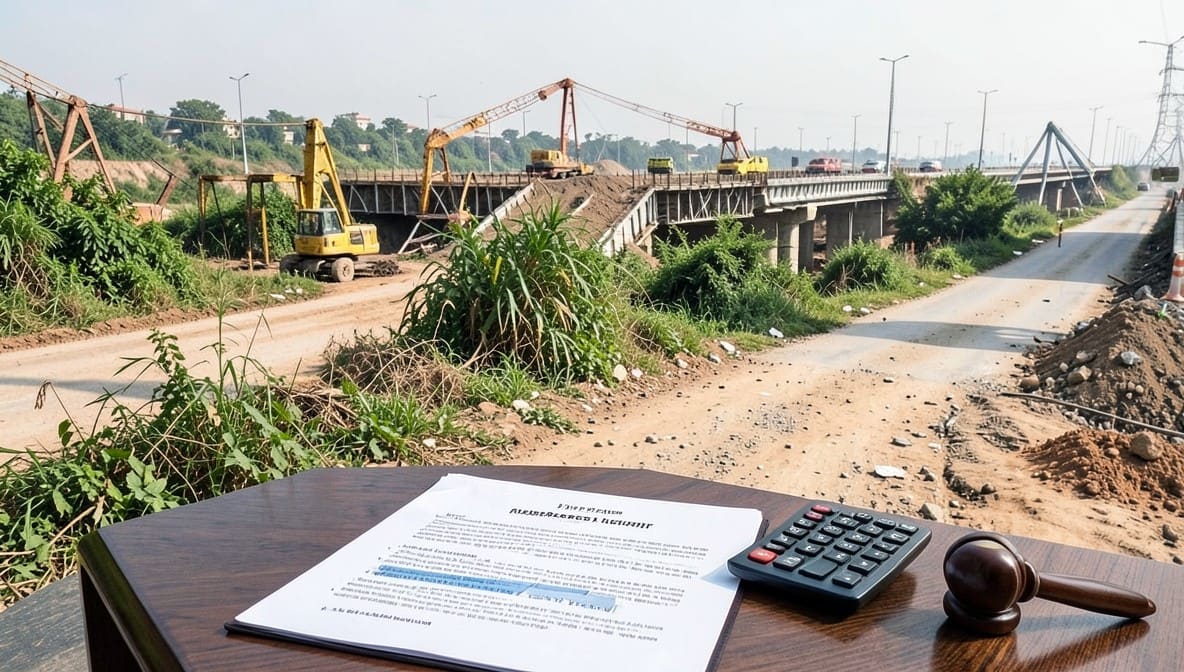
Section 34 Arbitration Act | Damages Cap Unenforceable for Fundamental Breach of EPC Contract: Bombay HC

Bombay High Court rules that a 1% damages cap in an EPC contract cannot limit liability when the employer fails to provide critical right-of-way, constituting a fundamental breach. The judgment reinforces the business efficacy test and restricts judicial interference under Section 34 to only patent illegality, while setting aside compounded interest for violating contractual terms.

Section 28(3) Arbitration Act | Damages Cap Unenforceable for Foundational Breach of EPC Contract: Bombay HC
|Bombay High Court

Section 28(3) Arbitration Act | Damages Cap Unenforceable for Foundational Breach of EPC Contract: Bombay HC

Bombay High Court rules that a 1% contractual damages cap cannot limit liability when a party fails to fulfill foundational obligations, such as providing 90% Right of Way within 15 days. The Court applied the business efficacy test under Section 28(3) of the Arbitration Act, reinforcing that rigid contractual limits do not survive fundamental breaches. However, the 18% compounded interest awarded was set aside as contrary to the contract terms.