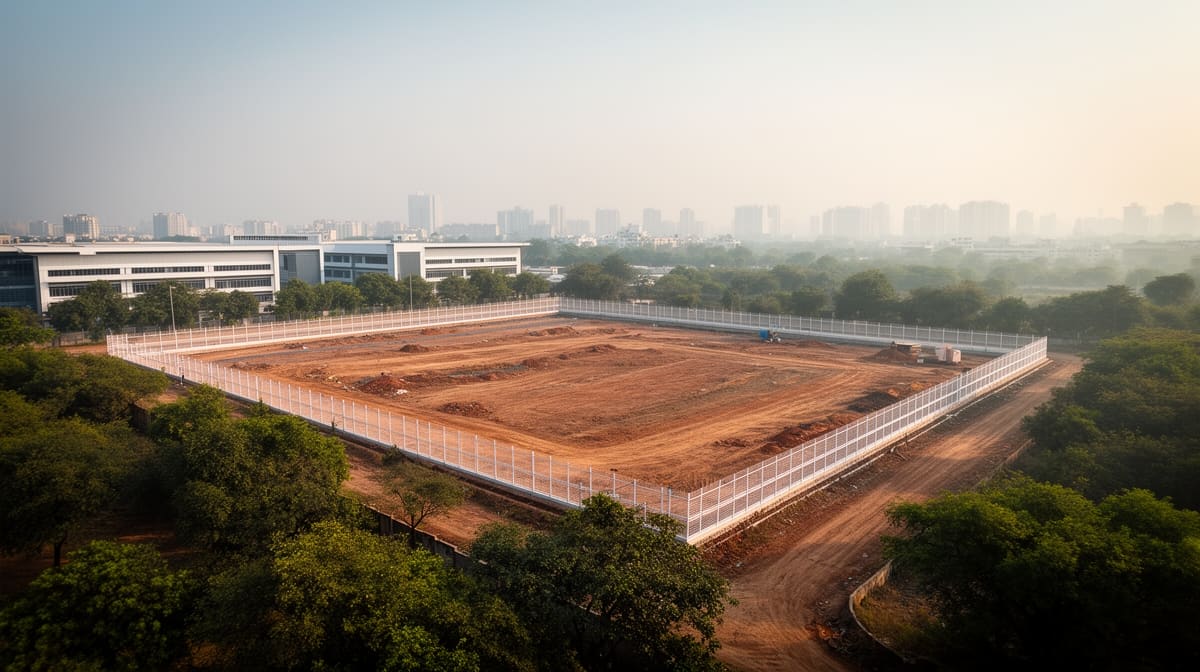
The Karnataka High Court dismissed a Public Interest Litigation challenging a Government Order dated 08.01.2026 that allocated 4 acres of land belonging to Karnataka Veterinary, Animal and Fisheries Science University (KVAFSU) for construction of residential quarters for High Court Judges and 3 acres for a Super-Speciality Hospital. The Court reaffirmed that judicial independence is a basic structure of the Constitution and that providing residential accommodation to Judges is a constitutional obligation of the State, not subject to judicial review absent arbitrariness or procedural impropriety.
Background & Facts
The Dispute
The petitioners, comprising various veterinary associations, challenged the Government Order dated 08.01.2026 issued by the State of Karnataka. The Order directed the transfer of 4 acres of land belonging to KVAFSU for constructing residential quarters for the Hon'ble Judges of the Karnataka High Court and another 3 acres for constructing a Super-Speciality Hospital for the general public.
Key Facts
- The Veterinary College, Bengaluru, was established in 1958 and is part of KVAFSU, which was created under the Karnataka Veterinary, Animal and Fisheries Science University Act, 2004.
- The College campus spans 317.73 acres, used for undergraduate, postgraduate, and doctoral programmes, research activities, and vaccine manufacturing.
- The Veterinary Council of India prescribes a minimum of 30 acres for veterinary colleges, while the College currently utilizes only 39.50 acres for ongoing projects.
- The petitioners argued that the diversion of 7 acres would impair compliance with Veterinary Council of India norms, affect research activities, and risk de-recognition.
- The State contended that the land allotment was a policy decision in larger public interest, aimed at ensuring judicial independence and providing healthcare facilities.
Procedural History
- 03.12.2010: State Government issued a Circular identifying 30 acres of land for judicial residences.
- 05.01.2011: State directed transfer of 21 acres 6 guntas for judicial residences.
- W.P.No.41784/2010: Petitioner No.1 challenged the 2010 Circular; the State later dropped the proposal and used adjacent lands of Karnataka Agro Industries Corporation instead.
- 08.01.2026: Impugned Government Order issued, allocating 4 acres for judicial residences and 3 acres for a Super-Speciality Hospital.
- 15.04.2026: Present writ petition (W.P.No.6908/2026) heard and reserved for orders.
The Parties' Positions
Petitioners:
- Argued that the land diversion would impair teaching, research, and extension activities, violate Veterinary Council of India norms, and risk de-recognition.
- Contended that the College requires 200 acres for its activities and that the diversion would adversely affect funding and ranking.
- Asserted that the Government Order was issued without consultation with stakeholders and lacked public interest.
Respondents:
- Argued that the petitioners lacked locus standi to maintain the PIL, as they failed to demonstrate any legal injury or enforceable right.
- Contended that the land allotment was a policy decision in larger public interest, aimed at ensuring judicial independence and providing healthcare facilities.
- Highlighted that the College possesses excess land (317.73 acres) far exceeding the minimum requirement of 30 acres prescribed by the Veterinary Council of India.
- Asserted that the decision was taken after due consideration and did not suffer from arbitrariness, procedural impropriety, or mala fides.
Relief Sought
The petitioners sought:
- Quashing of the Government Order dated 08.01.2026.
- A mandamus directing the respondents to consider their representations for withdrawal of the Order.
- A declaration that the land diversion was prejudicial to public interest and violated Veterinary Council of India norms.
The Legal Issue
The central question was whether:
- The allotment of 7 acres of KVAFSU land for judicial residences and a Super-Speciality Hospital violated statutory norms or public interest.
- The petitioners had locus standi to challenge a policy decision of the State in a Public Interest Litigation.
- The State's obligation to provide residential accommodation to Judges outweighed the educational and research needs of the Veterinary College.
Arguments Presented
For the Petitioners
- Violation of Norms: The diversion of land would result in a shortfall of the minimum land requirements prescribed by the Veterinary Council of India, risking de-recognition and affecting funding.
- Adverse Impact on Research: The College's research activities, including vaccine manufacturing and funded projects, would be impaired due to reduced land availability.
- Lack of Consultation: The Government Order was issued without consulting students, faculty, or stakeholders, violating principles of natural justice.
- Public Interest: The diversion of land for non-veterinary purposes was against larger public interest, as it would affect agricultural progress and public health.
For the Respondents
- Locus Standi: The petitioners lacked locus standi to maintain the PIL, as they failed to demonstrate any legal injury or enforceable right.
- Policy Decision: The land allotment was a policy decision taken in larger public interest, aimed at ensuring judicial independence and providing healthcare facilities.
- Excess Land: The College possessed excess land (317.73 acres) far exceeding the minimum requirement of 30 acres prescribed by the Veterinary Council of India.
- Judicial Independence: Providing residential accommodation to Judges was a constitutional obligation of the State, essential for institutional efficiency and independence of the judiciary.
- No Arbitrariness: The decision was taken after due consideration and did not suffer from arbitrariness, procedural impropriety, or mala fides.
- Precedent: Relied on Rajeev Suri v. Delhi Development Authority to argue that consultation with stakeholders was not legally required for policy decisions.
The Court's Analysis
The Court conducted a multi-pronged analysis, focusing on judicial independence, policy decisions, and maintainability of PILs:
Judicial Independence as a Basic Structure
The Court reaffirmed that judicial independence is a basic structure of the Constitution, citing:
- His Holiness Kesavananda Bharati Sripadagalvaru v. State of Kerala: Independence of the judiciary cannot be abrogated by constitutional amendment.
- Supreme Court Advocates-on-Record Association v. Union of India: Judicial independence is essential for sustaining democracy and the rule of law.
- S.P. Gupta v. Union of India: The judiciary acts as a bulwark against executive excesses and ensures the rule of law.
- Kartar Singh v. State of Punjab: An independent judiciary is indispensable for democracy and the rule of law.
The Court emphasized that judicial independence encompasses:
- Institutional safeguards (appointment, transfer, removal of Judges).
- Security of tenure and immunity from executive interference.
- Adequate facilities, including residential accommodation, to ensure functional efficiency and independence.
"The independence of Judiciary is a fundamental, basic-structure feature of the Constitution, and the conditions of service of High Court and Supreme Court Judges (including salary, pension, housing, libraries, training, transport and retirement age) are part of the framework that sustains judicial independence."
Policy Decisions and Judicial Review
The Court relied on Akola Municipal Corporation v. Zishan Hussain Azhar Hussain to hold that policy decisions cannot be challenged in the absence of:
- Arbitrariness.
- Procedural impropriety.
- Perversity shocking the conscience of the public.
- Blatant derogation of governing provisions.
The Court quoted extensively from Balco Employees’ Union v. Union of India and Kirloskar Ferrous Industries Ltd. v. Union of India to emphasize that:
- Economic and fiscal policies are not amenable to judicial review unless they violate statutory or constitutional provisions.
- Courts should defer to the expertise of policymakers and avoid second-guessing policy decisions.
- Judicial interference is warranted only if a policy infringes fundamental rights or violates statutory provisions.
"The duty of the court in policy-related cases is primarily to determine whether the policy falls within the scope of the authority granted to the relevant body. If the policy decision is within the executive's legal authority and has been made following proper procedures, the courts should defer to the expertise and discretion of the policymakers."
Maintainability of the PIL
The Court held that the petitioners failed to demonstrate:
- Locus standi: The petitioners, being registered/unregistered associations, lacked legal injury or enforceable rights to challenge the Government Order.
- Public Interest: The petition was based on speculative grievances without establishing legal prejudice or public injury.
- Arbitrariness: The Government Order was a legitimate administrative decision taken in larger public interest, without mala fides or abuse of power.
"The writ petition is based on a speculative and generalized grievance without establishing how the alleged change in land use would cause any legal prejudice. The absence of demonstrable public injury renders the present writ petition as not maintainable."
Land Requirements and Public Interest
The Court noted:
- The Veterinary Council of India prescribes a minimum of 30 acres for veterinary colleges, while the College possesses 317.73 acres.
- The transfer of 7 acres would not affect the minimum land requirements or ongoing activities of the College.
- The Super-Speciality Hospital would serve larger public interest by providing healthcare facilities.
"When the respondent No.4-College has huge excess land than what is required at the present, 3 acres of land allotted to construct the Super-Specialty Hospital for general public cannot be termed to be against the public interest. In fact, the larger public interest would be served by having a Super-Speciality Hospital for general public by the State."
The Verdict
The Court dismissed the writ petition, holding:
- The allotment of 4 acres for judicial residences and 3 acres for a Super-Speciality Hospital was a policy decision taken in larger public interest, aimed at ensuring judicial independence and providing healthcare facilities.
- The petitioners lacked locus standi to challenge the Government Order, as they failed to demonstrate legal injury or public interest.
- The College possessed excess land (317.73 acres) far exceeding the minimum requirement of 30 acres, and the diversion of 7 acres would not impair its teaching, research, or extension activities.
- The decision did not suffer from arbitrariness, procedural impropriety, or mala fides.
- The Court dismissed the petition without costs.
What This Means For Similar Cases
Limits of Judicial Review in Policy Decisions
- Courts will defer to policy decisions of the Executive unless they violate statutory provisions, constitutional rights, or suffer from arbitrariness.
- Economic and fiscal policies are not subject to judicial review unless they infringe fundamental rights or derogate from governing laws.
- Practitioners must demonstrate clear illegality or public injury to challenge policy decisions; speculative grievances will not suffice.
Locus Standi in Public Interest Litigations
- Registered/unregistered associations cannot maintain a PIL unless they demonstrate legal injury or enforceable rights.
- Generalized grievances without demonstrable public injury will render a PIL non-maintainable.
- Courts will scrutinize the maintainability of PILs strictly, especially where the petitioners lack direct stake in the matter.
State's Obligation to Ensure Judicial Independence
- Providing residential accommodation, facilities, and infrastructure to Judges is a constitutional obligation of the State, essential for judicial independence.
- Judicial independence is a basic structure of the Constitution, and adequate housing is a necessary component of this framework.
- The State must ensure functional efficiency and security of Judges by providing suitable accommodation in close proximity to judicial premises.