The Karnataka High Court has reaffirmed that parole on humanitarian grounds is a right, not a privilege, when it set aside arbitrary orders rejecting a convict’s application to attend his ailing mother. The judgment underscores the judiciary’s role in balancing penal objectives with compassionate considerations, particularly where no risk of flight or recidivism is evident.
Background & Facts
The Dispute
The petitioner, Mallamma w/o Dodda Pakeerappa, filed a writ petition under Articles 226 and 227 of the Constitution of India seeking to quash two administrative orders rejecting her husband’s application for general parole. Her husband, Dodda Pakeerappa (CTP No. 14047), is serving a life sentence in District Prison, Bellary, following his conviction in S.C. No. 57/2022 by the Sessions Court on 01.04.2025. The petitioner sought parole for her husband to attend to his ailing mother, who is elderly and suffering from multiple diseases.
Key Facts
- The convict, Dodda Pakeerappa, was sentenced to life imprisonment on 01.04.2025 in S.C. No. 57/2022
- The petitioner’s mother-in-law (convict’s mother) is old and ailing, requiring her son’s presence
- The petitioner filed a representation dated 31.07.2025 seeking general parole for her husband
- The petitioner earlier approached the High Court in W.P. No. 202525/2025, which was disposed of on 06.03.2026 directing the jail authorities to consider her representation within two weeks
- Respondent No. 3 (Additional Inspector General of Prisons) rejected the parole application vide order dated 27.04.2026
- Respondent No. 2 (Chief Superintendent of Prison) issued an endorsement dated 02.04.2026 rejecting the parole application
Procedural History
- 31.07.2025: Petitioner filed representation seeking general parole for her husband
- 06.03.2026: High Court disposed of W.P. No. 202525/2025, directing jail authorities to consider the representation within two weeks
- 02.04.2026: Respondent No. 2 issued endorsement rejecting the parole application (Annexure-E)
- 27.04.2026: Respondent No. 3 issued order rejecting the parole application (Annexure-F)
- 12.06.2026: Present writ petition (W.P. No. 202198/2026) filed before the Karnataka High Court, Kalaburagi Bench
Relief Sought
The petitioner sought the following reliefs:
- Quashing of the endorsement dated 02.04.2026 issued by Respondent No. 2
- Quashing of the order dated 27.04.2026 issued by Respondent No. 3
- General parole for her husband for 90 days to attend to his ailing mother
- Any other relief deemed fit by the Court
The Legal Issue
The central question before the Court was whether administrative orders rejecting parole on humanitarian grounds could be sustained when the convict’s presence was urgently required to attend to an ailing family member, and whether such rejections were arbitrary and illegal under Articles 226 and 227 of the Constitution.
Arguments Presented
For the Petitioner
- The petitioner contended that the rejection orders were arbitrary and failed to consider the humanitarian grounds for parole
- The convict’s mother was old and ailing, and her son’s presence was necessary for her care
- The petitioner relied on photographic evidence showing the mother’s condition
- The earlier direction of the High Court in W.P. No. 202525/2025 was not complied with, rendering the rejection orders illegal and unjust
For the Respondents
- The respondents, represented by the Additional Government Advocate, did not present substantive arguments but relied on the administrative discretion exercised in rejecting the parole application
The Court's Analysis
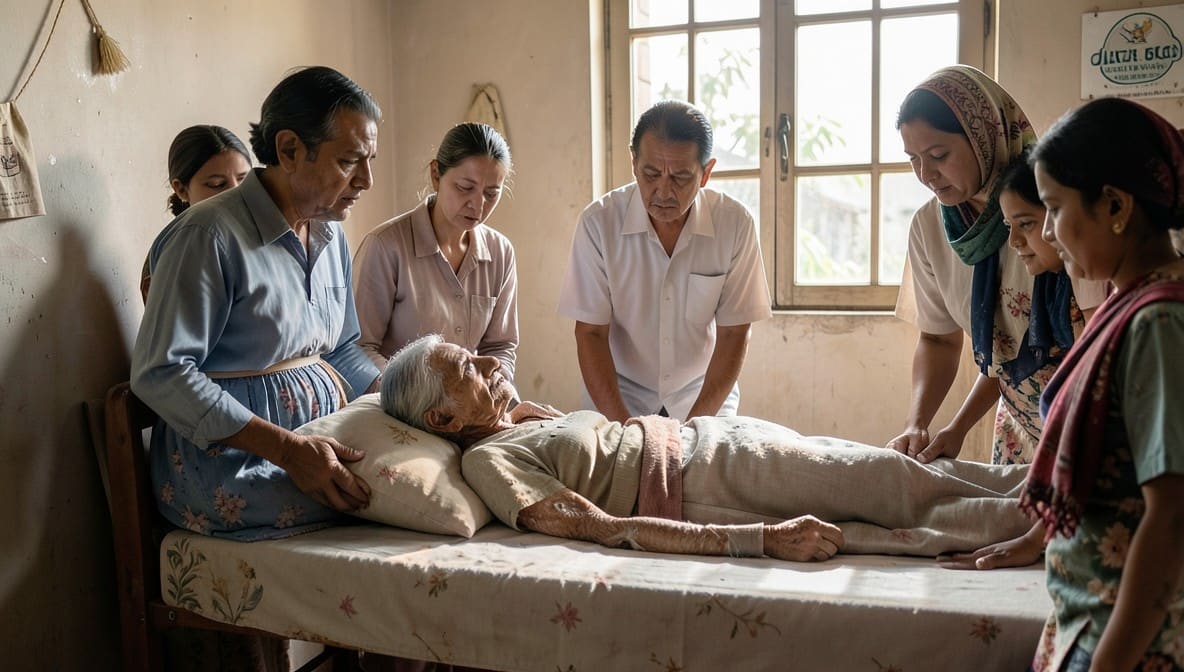
The Court examined the material on record, including the photographs of the convict’s ailing mother, and observed that the humanitarian grounds for parole were compelling. The Court held that the rejection orders were arbitrary as they failed to consider the urgent need for the convict’s presence to attend to his mother.
The Court relied on the principle that parole is not merely a privilege but a right when justified by humanitarian considerations, particularly where no risk of flight or recidivism is evident. The Court noted:
"Having regard to the material on record, including the photographs which clearly indicates that the mother of the convict is age old and suffering from various diseases and I deem it just and appropriate to quash the impugned order and endorsement and grant parole for a period of six weeks."
The Court further emphasized that administrative discretion must be exercised judiciously, especially in matters involving humanitarian grounds, and that arbitrary rejections would not withstand judicial scrutiny under Articles 226 and 227 of the Constitution.
The Verdict
The Court allowed the writ petition and granted the following reliefs:
- Quashed the endorsement dated 02.04.2026 issued by Respondent No. 2
- Quashed the order dated 27.04.2026 issued by Respondent No. 3
- Granted general parole to the convict, Dodda Pakeerappa (CTP No. 14047), for a period of six weeks, operational from 13.06.2026 to 24.07.2026
- Directed the convict to mark attendance before the SHO of the jurisdictional police station weekly during the parole period
- Imposed strict conditions on Respondents No. 2 to 4 to ensure the convict’s return to jail after the parole period
- Directed the Additional Government Advocate and Registry to communicate the order to Respondents No. 2 to 4 forthwith via telephone and email
What This Means For Similar Cases
Humanitarian Grounds Override Administrative Discretion
- Courts will scrutinize arbitrary rejections of parole applications, particularly where humanitarian grounds are evident
- Photographic or medical evidence of an ailing family member can be decisive in securing parole
- Administrative authorities must exercise discretion judiciously and cannot reject parole applications without valid justification
Conditions for Parole Must Be Reasonable
- The Court imposed weekly attendance requirements to ensure the convict’s return to jail
- Strict conditions may be stipulated to prevent flight risk, but they must be proportionate to the humanitarian need
- The jurisdictional police are responsible for ensuring the convict’s compliance with parole conditions
Judicial Review of Parole Orders
- Writ petitions under Articles 226 and 227 are an effective remedy against arbitrary administrative orders
- Courts will intervene where administrative authorities fail to consider humanitarian grounds or act unreasonably
- Earlier judicial directions (such as those in W.P. No. 202525/2025) must be complied with, and non-compliance can lead to quashing of orders